Define the treatment objective before choosing equipment
For chemical wastewater in Skippack, choose MBR when reuse, tight discharge limits, poor sludge settleability, slug events, or limited space justify higher capital and operating costs. Choose conventional activated sludge (CAS) when the wastewater is readily biodegradable, permit limits are stable, land is available, and sludge hauling is inexpensive. A hybrid retrofit may be the lowest-risk option when existing CAS equipment can remain in service. Directional comparisons report MBR TSS below 5 mg/L versus 10–30 mg/L for CAS, a footprint roughly 60% smaller, and 20–40% less waste activated sludge, but MBR operating cost is higher. Final selection requires current permit terms, influent testing, reuse targets, and vendor guarantees.
The design basis begins with the wastewater envelope, not a treatment technology. Chemical-plant influent may show COD swings of 800–4,000 mg/L, pH excursions, high chloride concentrations, and recalcitrant SVOCs, according to HydropureWater’s 2026 Central US chemicals-wastewater comparison. Collect representative data for COD, BOD, pH, salinity or chloride, toxicity, surfactants, solvents, recalcitrant SVOCs, temperature, flow, and slug characteristics. The sampling program must identify whether individual batches or routine production changes produce the design load.
Then define the endpoint: direct permitted discharge, discharge to a POTW, cooling or scrubber reuse, or boiler-feed reuse after additional polishing. These endpoints impose different acceptance criteria. An MBR permeate that satisfies solids and turbidity limits is not automatically boiler-feed water, and the supplied evidence does not establish that MBR or CAS alone controls PFAS. PFAS-precursor monitoring should therefore be treated as a separate investigation, not proof of membrane removal.
Permit verification remains site-specific. The Pennsylvania Bulletin, September 5, 2020, illustrates that NPDES conditions and monitoring requirements are established for individual facilities and may be updated during permit actions. No supplied source establishes the applicable Skippack permit limits or industrial sewer requirements. Before issuing a bid, obtain the current permit, sewer-use or pretreatment agreement, monitoring requirements, and proposed renewal conditions.
| Design-basis input | Evidence to obtain | Procurement consequence |
|---|---|---|
| Influent envelope | COD, BOD, pH, chloride or salinity, toxicity, surfactants, solvents, recalcitrant SVOCs, temperature, flow and slug data | Defines biological loading, pretreatment, equalization, and membrane-fouling risk |
| Discharge endpoint | Current NPDES or POTW conditions, sewer limitations, discharge point and monitoring requirements | Sets enforceable performance guarantees and compliance risk |
| Reuse endpoint | Process-water quality specification for cooling, scrubber or boiler feed | Determines whether additional polishing belongs in the bid |
| Contaminant scope | Whole-effluent toxicity and any PFAS-precursor monitoring program | Prevents unsupported claims that MBR or CAS alone provides PFAS removal |
The fabricated-metals wastewater pretreatment and compliance guide provides a useful framework for translating chemical production conditions into pretreatment and discharge obligations.
Compare biological performance and separation reliability
MBR provides more reliable solids separation than CAS because it retains biomass on submerged membranes instead of depending on final settling. CAS combines aerated biological treatment with a downstream clarifier; its typical SRT is 5–15 days and HRT is 6–12 hours in the HydropureWater 2026 comparison. Performance deteriorates when sludge settleability worsens, so clarifier hydraulics and sludge properties remain part of the biological process rather than a minor auxiliary consideration.
An MBR operates at longer SRT and higher biomass concentration. The cited design range is 20–60 days SRT, 8,000–15,000 mg/L MLSS, and 10–25 LMH flux on 0.1–0.4 μm PVDF membranes. The longer SRT can retain slowly growing nitrifiers and organisms associated with degradation of recalcitrant compounds. The physical membrane barrier also prevents biomass washout when a chemical slug causes bulking, pinpoint floc, or poor settling in a CAS clarifier.
The resulting separation difference is specific: HydropureWater’s 2026 comparison reports MBR TSS below 5 mg/L and turbidity below 1 NTU, against a best-case CAS TSS of 10–30 mg/L. These are directional technology benchmarks, not guarantees for a Skippack installation. Final values must be tied to the plant’s influent, permit endpoint and vendor design validation.
| Parameter | Conventional activated sludge | MBR | Procurement interpretation |
|---|---|---|---|
| Separation mechanism | Secondary clarifier | Submerged membrane barrier | MBR is less dependent on sludge settleability |
| Typical SRT in cited comparison | 5–15 days | 20–60 days | Higher MBR SRT may support slower-growing organisms |
| Typical HRT in cited comparison | 6–12 hours | Not stated in supplied research | Require vendor basis rather than assuming equivalence |
| MLSS | Not stated in supplied research | 8,000–15,000 mg/L | Higher inventory affects aeration and membrane design |
| Reported TSS | 10–30 mg/L at best | Below 5 mg/L | Benchmarks only; require guaranteed site-specific values |
| Reported turbidity | Not stated in supplied research | Below 1 NTU | Separate this from reuse and boiler-feed guarantees |
| Membrane configuration | Not applicable | 0.1–0.4 μm PVDF at 10–25 LMH | Ask bidders to define flux at peak and average loading |
The MBR cost and selection guide provides additional context on membrane operation and commercial implications. For a related separation decision, the DAF versus clarifier guide for chemical wastewater is relevant when the buyer is evaluating whether upstream solids removal should precede biological treatment.
Score MBR, CAS, and hybrid options against five procurement gates
The five-gate method should be completed before prices are compared because the lowest bid will not necessarily produce the lowest lifecycle cost or the lowest compliance risk. HydropureWater’s 2026 Central US chemicals-wastewater comparison recommends selecting an MBR or membrane-retrofit package when at least three of five gates favor it: discharge headroom, reuse value, available footprint, influent complexity, and sludge-disposal cost.
| Procurement gate | MBR favored when | CAS favored when | Hybrid favored when | Buyer entry |
|---|---|---|---|---|
| 1. Discharge headroom | Permit requires low, stable TSS or turbidity and MBR performance creates margin | CAS can comply with stable limits without tight solids separation | Existing biology remains adequate but downstream separation needs improvement | Current permit and renewal terms |
| 2. Reuse value | Cooling, scrubber or boiler-feed reuse after polishing has material value | No valuable reuse endpoint | Existing CAS biology can feed a membrane separation stage | Reuse flow, quality specification and displaced-water value |
| 3. Available footprint | Civil expansion is constrained and eliminating clarification is valuable | Land is available and the clarifier arrangement is workable | Retaining the aeration basin limits construction disruption | Surveyed available area, structures and access routes |
| 4. Influent complexity | Recalcitrant load, pH swings, salinity, toxicity concerns or slugs make biomass retention valuable | Wastewater is readily biodegradable and stable | Existing biological capacity is adequate after pretreatment | COD range, pH, toxicity, surfactants, solvents and slug data |
| 5. Sludge-disposal cost | Lower sludge yield materially reduces hauling and handling cost | Sludge is easy to settle, dewater and haul | Existing sludge handling can accommodate the selected separation stage | Haul distance, route, receiving rate and dewatering performance |
Footprint can be decisive on a constrained brownfield site. HydropureWater’s 2026 comparison describes an MBR layout as roughly 60% smaller than CAS because the secondary clarifier and most tertiary filtration are eliminated. That is a directional layout comparison, so bidders must confirm equipment envelopes, maintenance access, equalization, sludge handling, utility rooms and future expansion against the actual site.
Cost must be evaluated with the same flow basis. For a 1,000 m³/day chemicals stream, the cited 2026 comparison places MBR at roughly 1.4–1.8 times CAS capital cost and 1.2–1.5 times CAS operating cost per cubic metre treated. It gives CAS operating cost of $0.15–$0.30/m³ and MBR operating cost of $0.25–$0.50/m³. These figures are directional screening values, not Skippack quotations; energy tariff, chemical demand, solids concentration, staffing, membrane replacement and disposal costs still require a site-specific model.
Reuse can alter the economics. The same source cites purchased process water at $1.50–$3.00/m³ and states that water reuse can shorten the economic crossover from decades to years. Score the quantity and quality of reusable water separately from treatment cost. For sludge, the reported MBR yield is 20–40% lower than CAS, which can matter where hauling exceeds 100 km. Require each bidder to price annual sludge mass, dewatering performance, hauling distance and disposal route rather than accepting a percentage advantage without a mass balance.
The Central US chemicals-wastewater comparison provides the underlying directional framework for this scorecard. Local Skippack permit and sewer verification remains outside that evidence base.
Specify pretreatment and operating safeguards
Neither MBR nor CAS should receive an untested chemical wastewater stream directly into its biological train. HydropureWater’s 2026 comparison calls for equalization, pH control and, when applicable, oil/water separation before either process. These functions must be included in the treatment envelope because they control hydraulic shock, pH shock, free oil, surfactants and contaminants that could inhibit biology or damage equipment.
Chemical compatibility testing is a bid prerequisite, especially for MBR. Specific chemical toxicity must be pretreated to protect membrane flux, according to the cited comparison. Before sizing, require a constituent-by-constituent review of the stream against membrane compatibility, biological inhibition and product-contact materials. Confirm whether surfactants, solvents, biocides, cleaners or process leaks can reach the membrane system, and identify the isolation or pretreatment required for each identified hazard.
| Safeguard | Procurement requirement | Evidence or acceptance basis |
|---|---|---|
| Equalization | Verify flow, volume and mixing performance across batch and continuous production | Plant flow profile and vendor hydraulic calculations |
| pH control | Confirm adjustment capacity, probe arrangement, control loop and chemical demand | Influent pH range and worst-case batch conditions |
| Oil or solids exclusion | Provide separation where the wastewater contains free oil or settleable solids | Influent characterization and equipment compatibility review |
| Toxicity and fouling control | Complete chemical and membrane compatibility testing before final MBR sizing | Constituent inventory, material compatibility and toxicity data |
| Membrane cleaning | Budget scouring, weekly maintenance cleaning and semiannual recovery cleaning | 500–1,000 mg/L NaOCl for maintenance cleaning; citric acid or NaOH for recovery cleaning |
| Cold-weather operation | Confirm heat balance, biological rates, membrane flux and minimum SRT | Mixed-liquor design temperature and seasonal influent data |
| Sludge handling | Provide handling, conditioning and dewatering for either train | Plate-and-frame filter press result of 22–28% dry solids |
For an MBR, maintenance access is part of the mechanical design. HydropureWater’s 2026 comparison calls for continuous scouring aeration, weekly maintenance cleaning and semiannual recovery cleaning, using 500–1,000 mg/L NaOCl and citric acid or NaOH. The bid should identify isolation access, chemical storage, cleaning-water demand, recovery time and membrane replacement criteria.
Cold weather also changes biological and separation risk. The cited comparison reports mixed-liquor temperatures of 8–12 °C in Central US winter operation and states that a 30-day SRT at 10 °C can support full nitrification, while a 10-day CAS SRT at the same temperature typically cannot. That does not establish the correct SRT for Skippack; bidders must use the plant’s minimum temperature and wastewater characteristics. Specify the automatic chemical dosing system used for pH adjustment or cleaning, and require a plate-and-frame filter press proposal with a verified solids-capture basis.
Turn the decision into a vendor-ready acceptance checklist
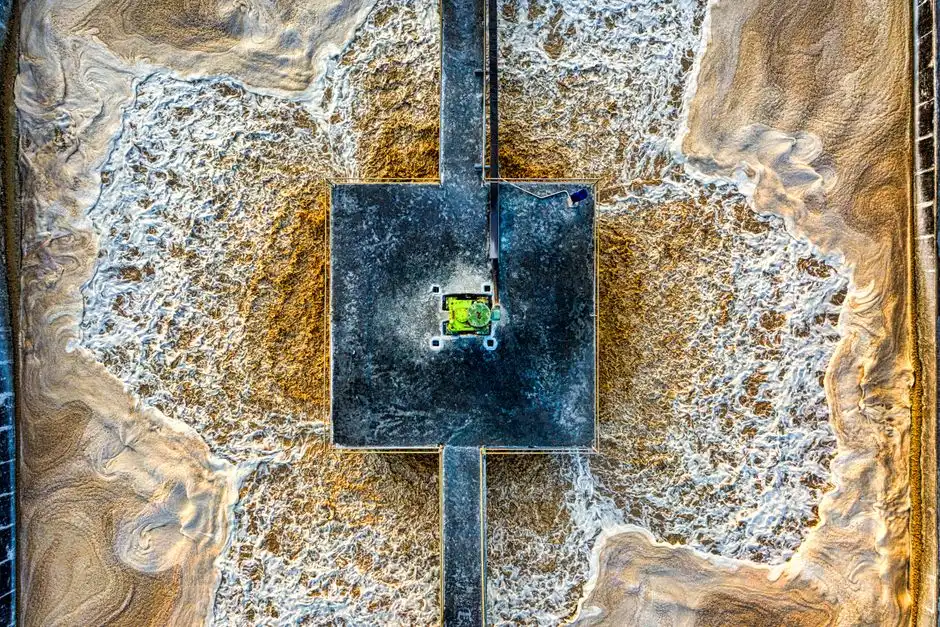
Comparable bids require the same influent envelope, endpoint and performance guarantees. Give every bidder the same daily average flow, peak flow, COD range, pH range, temperature, toxicity characterization, surfactant and solvent data, and documented slug events. A bidder that assumes a more dilute or more uniform stream is not offering a comparable proposal.
| Bid section | Required bidder response | Buyer acceptance check |
|---|---|---|
| Design basis | Design flow, average and peak load, equalization, pretreatment and utility demands | Uses the common influent and operating basis without hidden exclusions |
| Process guarantee | Guaranteed TSS, turbidity, COD or BOD removal, and ammonia performance where relevant | Stated at an agreed flow, loading and sample point |
| Hydraulic and membrane guarantee | Peak hydraulic loading, membrane flux, cleaning frequency, membrane life and system availability | Defines normal and peak conditions and acceptance tests |
| Reuse scope | Separate treatment guarantees from reuse claims and identify extra polishing for boiler feed | No boiler-feed claim without a defined polishing train |
| Sludge scope | Provide sludge handling, dewatering, mass balance and disposal assumptions | Annual cost and performance are based on the same waste basis |
| Compliance and validation | Identify permit assumptions, site-test requirements, start-up and performance-testing protocol | Final selection remains conditional on permit review and vendor validation |
Require a clear compliance responsibility matrix: who supplies analyses, conducts pilot work, prepares permit calculations, performs factory and site acceptance tests, and demonstrates sustained compliance. Permit limits should be cited directly from the current permit or sewer agreement, not inferred from a general technology comparison.
The final recommendation should remain conditional on current Skippack-area permit review, site testing and vendor design validation because no supplied source establishes site-specific permit limits. The integrated MBR wastewater treatment system is a product reference for an MBR proposal, but its catalog description does not replace the common bid basis or performance validation.
Frequently Asked Questions
How should the buyer compare MBR and CAS cost without choosing the wrong option from generic price ranges?
Use the five-gate scorecard first, then request a lifecycle model with the same flow, energy tariff, sludge route and reuse value for both technologies. The directional 2026 comparison gives CAS at $0.15–$0.30/m³ and MBR at $0.25–$0.50/m³, but these are not quotations. Ask bidders for CAPEX, annual OPEX, membrane replacement, chemical cleaning, energy, labor, sludge disposal and the disposal value of reusable water. A purchase decision should be based on a site-specific net present value, not the headline treatment-cost range alone.
Can catalog treatment capacities be used to size an MBR for the Skippack plant?
No. The verified catalog describes an integrated MBR system for projects from 10 to 2,000 m³/day, but that is preliminary screening information rather than a plant selection. Before requesting final sizing, provide average and peak flow, COD and BOD loading, pH, temperature, toxicity, surfactants, solvents, slug characteristics, reuse requirements and available footprint. Require the vendor to confirm the applicable capacity against those inputs and its own hydraulic, biological and membrane calculations.
What permit and PFAS information must be verified before selecting MBR or CAS?
Obtain the current NPDES permit or POTW discharge and sewer-acceptance requirements directly from the applicable authority and review any proposed renewal conditions. The Pennsylvania Bulletin, September 5, 2020, shows that effluent limits and monitoring can be facility-specific, but it does not establish the Skippack plant’s requirements. Neither MBR nor CAS should be presented as a stand-alone PFAS-removal solution on the supplied evidence; investigate PFAS-precursor monitoring and any required treatment or disposal controls separately.
When does reusing existing CAS basins and adding membrane separation reduce implementation risk?
Consider that retrofit when the existing aeration basin has adequate biological capacity, the current solids-handling system can be adapted, and the objective is to improve separation or reuse quality without replacing working biology. HydropureWater’s 2026 comparison describes the hybrid approach as a lower-risk upgrade path where existing CAS equipment remains in service. The recommendation still requires hydraulic and biological validation, membrane compatibility testing, confirmation of available footprint and a current permit and reuse-quality review. The DF-series flat-sheet MBR modules provide a reference for the added separation stage, not proof that the existing basin is suitable.