Separate every wastewater stream before selecting equipment
A data center in Balbala, Djibouti, should divide its wastewater into cooling-tower blowdown, sanitary sewage, oily runoff, equipment-wash water, humidification bleed, air-handling condensate, generator and UPS coolant, and glycol-loop waste. The treatment sequence then follows each stream’s chemistry and destination instead of combining them into a common collection system. Cooling blowdown is usually the principal recoverable stream, while sanitary, oil-bearing and concentrated wastes require distinct treatment or disposal routes.
Cooling blowdown contains concentrated dissolved solids, hardness, silica, iron, treatment chemicals and warm water because evaporation leaves most nonvolatile contaminants in the circulating loop. Humidification bleed and air-handling condensate generally have lower total dissolved solids, but corrosion inhibitors may require a compatibility review before reuse or discharge. Keep these streams separate until their actual chemistry is measured.
Staff sanitary wastewater needs a biological treatment system sized from site headcount, fixture-use patterns and wastewater characteristics. Generator-yard runoff and equipment-wash water need oil-water separation before they reach any discharge point. Generator and UPS coolant and glycol-loop waste must enter segregated storage and proceed through licensed or otherwise approved disposal; dilution into cooling blowdown would spread contaminants and complicate waste classification.
This stream segregation follows the source-specific approach in the regional data-center cooling-blowdown treatment framework and the data-center blowdown recovery decision guide, but their local assumptions must be replaced with Balbala measurements and written acceptance requirements.
| Stream | Contaminants or risks | Required treatment route |
|---|---|---|
| Cooling-tower blowdown | Concentrated TDS, hardness, silica, iron, biocides, anti-scalants and warm water | Solids removal, scaling control, optional membrane recovery, then reuse or permitted residual discharge |
| Humidification bleed and air-handling condensate | Generally lower TDS; possible corrosion inhibitors | Separate characterization, polishing if required, and chemical-compatibility review |
| Sanitary wastewater | Organic load determined by headcount and fixture use | Separate biological treatment and an authorized effluent route |
| Generator-yard runoff and equipment wash water | Free oil, suspended solids and wash chemicals | Oil-water separation, solids removal and route-specific polishing |
| Generator/UPS coolant and glycol-loop waste | Concentrated chemicals unsuitable for dilution | Segregated storage followed by licensed or otherwise approved disposal |
Build the Balbala water balance around measured blowdown
The theoretical blowdown ratio is 1/(CoC−1), but it is only a screening calculation: Genesis Water Technologies (2025) calculates blowdown at 25% of makeup volume at 4 CoC and 20% at 6 CoC.
The difference between those two screening cases is five percentage points of makeup, not a 50% reduction. Moving from 4 to 6 CoC therefore lowers theoretical blowdown by 20% relative to the 4-CoC case. The gain comes with higher concentrations of hardness, silica and treatment chemicals, so it cannot be selected without checking the source-water chemistry and the cooling-tower OEM’s operating limits.
Actual blowdown can exceed theoretical values by 15–30% because of unmeasured losses and emergency dumps, according to Genesis Water Technologies (2025). Before equipment capacity is fixed, meter makeup, blowdown and evaporation, and monitor conductivity, pH and suspended solids. These measurements establish both hydraulic loading and the condition of the feed entering treatment.
The commercial design basis should therefore include cooling-system flow, measured blowdown, expected operating variability, standby requirements and the selected recovery target. The source-water analysis must cover seasonal hardness, silica, chloride, TDS and alkalinity, together with the biocide, anti-scalant and corrosion-control program. The cooling-tower OEM and treatment supplier should set the operating CoC jointly after reviewing those results and the selected recovery process.
Use the water-treatment components shown in the water-treatment parts and filter-media guide only after the measured duty and water chemistry are established; valves and media cannot compensate for an incorrect flow balance.
| Water-balance input | Procurement use |
|---|---|
| Measured makeup, blowdown and evaporation | Defines actual hydraulic loading and reveals water losses or emergency dumping |
| Cooling-system flow and operating variability | Sets the treatment duty, operating envelope and storage requirements |
| Cycles of concentration | Controls concentrate chemistry and the likely scaling burden |
| Source-water chemistry | Determines whether softening, antiscalant dosing or membrane pretreatment is required |
| Recovery target and standby provision | Defines recovered-water capacity, storage and contingency treatment |
Treat cooling blowdown for recovery and scaling control
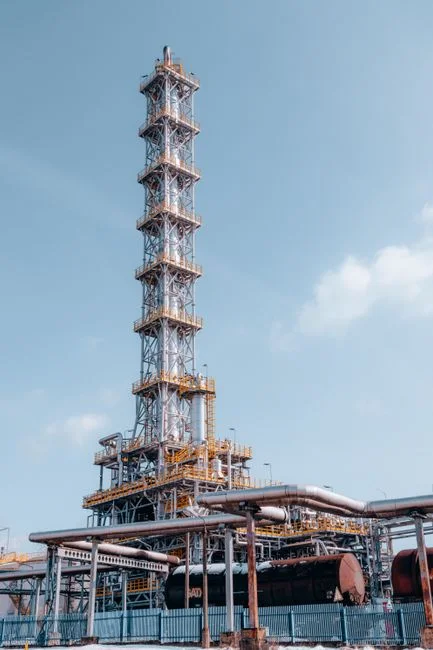
A defensible cooling-blowdown treatment train removes suspended material before controlling hardness, dissolved solids and residual oxidants. The selected sequence depends on measured feed chemistry and the cooling-water specification; each stage should have a defined purpose and acceptance criterion.
- Protect the collection and treatment system. Use intake screening and grit removal where debris can enter the collection system, followed by multi-media filtration for general solids removal. Add UF pretreatment for the RO recovery train where the feed requires additional membrane protection.
- Control hardness and scaling. Where hardness would force a low practical CoC, evaluate a side-stream twin-tank softener and automatic antiscalant dosing. The final chemical program must be compatible with the membrane, cooling chemistry and discharge route.
- Evaluate RO only after pretreatment is defined. An industrial RO system for cooling-blowdown recovery may be appropriate, but a product-level recovery claim is not a site guarantee. HydropureWater states that its industrial RO systems provide recovery rates up to 95%; the tender should guarantee recovery and permeate quality against the actual feed.
- Manage residual disinfectants. Use dechlorination or equivalent residual-oxidant removal where chlorine or chlorine dioxide is used. Where acceptable to the cooling designer, UV can provide non-oxidizing disinfection.
- Confirm cooling compatibility before return. Reclaimed water should re-enter the cooling loop only after the design team approves scaling, corrosion, biological-control and chemical-compatibility requirements.
- Close the residual-waste route. Segregate concentrated RO reject, softener brine and pretreatment sludge. The sludge requires dewatering and a destination confirmed with the relevant local authority; reuse does not remove this obligation.
Lifecycle energy can change the apparent benefit of recovery. Open Engineering Inc. (2026) found that its UF+RO reclaimed-water scenario used more than five times the freshwater-case energy, although the higher CoC reduced blowdown and chemical consumption. The Balbala tender should therefore guarantee performance at the specified feed composition and report the energy basis for each recovery scenario rather than compare treatment skids by permeate flow alone.
Treat sanitary, oily and concentrated wastes on separate routes
Sanitary, oil-bearing and concentrated wastes must remain outside the cooling-blowdown train because their biological loads, hydrocarbons and chemical concentrations require different treatment objectives and residual-waste routes.
Size the sanitary system from site headcount, fixture-use characteristics and wastewater composition. An MBR wastewater treatment system is an available option where near-reuse-quality sanitary effluent is appropriate, but it should not determine equipment intended for cooling-blowdown recovery. Physical separation protects the RO train from organic loading, variable biological demand and chemical incompatibilities.
Generator-yard runoff and equipment-wash water should pass through oil-water separation, followed by solids removal and any further treatment required by the selected discharge route. A DAF system can remove suspended solids, oil and grease, FOG and colloidal matter where characterization supports flotation. The DAF design criteria for oily wash water should be used to establish hydraulic loading and test conditions rather than relying on a generic skid rating.
Store generator and UPS coolant and glycol-loop waste in segregated tanks and arrange licensed or otherwise approved disposal. A plate-and-frame filter press can dewater resulting sludge, but selection depends on sludge volume, solids characteristics, cake-moisture target, operating hours and an approved destination. If no destination is confirmed, the downstream obligation remains unresolved even if the dewatering equipment operates as specified.
| Non-cooling stream | Primary process | Decision required before purchase |
|---|---|---|
| Sanitary wastewater | Separate biological treatment | Headcount, fixture use, effluent route and biological loading |
| Oily generator-yard runoff | Oil-water separation and solids removal | Oil and solids characterization and permitted destination |
| Equipment-wash water | DAF or equivalent where supported by testing | Flow variability, FOG and colloidal load, and final treatment |
| Generator/UPS coolant and glycol waste | Segregated storage and approved disposal | Waste classification, licensed route and storage requirements |
| Treatment sludge | Dewatering with a plate-and-frame filter press or other selected method | Sludge volume, solids behavior, cake target, operating hours and disposal site |
Compare reuse, sewer discharge and receiving-water options
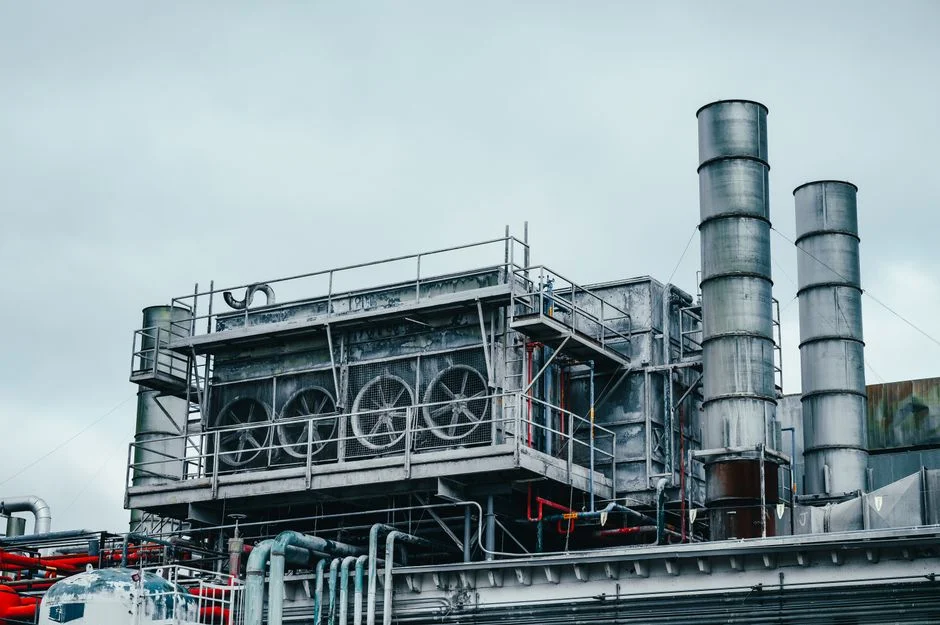
On-site reuse, controlled sewer discharge and receiving-water discharge have different proof burdens, operating requirements and residual-waste consequences. The comparison should be based on the selected Balbala route and written authority decisions, not on an assumed reduction in water use.
| Route | Principal benefits | Conditions to resolve |
|---|---|---|
| On-site treatment and cooling-loop reuse | Can reduce freshwater demand and residual discharge | Recovery target, storage, operator capability, water balance and residual-waste destinations |
| Controlled discharge to municipal sewer | May retain a lower-capital discharge route where accepted | Industrial-user acceptance, pretreatment, sewer capacity, monitoring and permit responsibility |
| Treated discharge to receiving water | Provides an alternative where a receiving point is confirmed | Temperature, residual chemicals, effluent quality, mixing-zone assessment and regulator approval |
On-site reuse requires storage, operator capability, a complete water balance and an approved route for every residual stream. A controlled residual discharge to a municipal sewer may require less onsite treatment capital, but only if the utility accepts the industrial flow and confirms pretreatment, monitoring and permit duties.
Treated discharge to a receiving water normally requires the most stringent demonstration of temperature, residual chemicals and effluent quality. The supplied research contains no Balbala-specific sewer acceptance criteria, residual-chlorine caps, temperature limits, receiving-water mixing-zone limits or permit durations. These values must be obtained in writing from the relevant Djibouti authority and utility before the discharge equipment or final P&ID is fixed.
The European Investment Bank reports investment in wastewater treatment plants serving Balbala and other parts of Djibouti’s capital region. That infrastructure does not, by itself, establish that a data-center industrial discharge will be accepted or identify the applicable data-center requirements.
Do not assume reuse automatically reduces cost or emissions. Open Engineering Inc. (2026) reported about twice the GWP for its wastewater scenario, although the indirect water penalty was approximately 0.93 L/m³ and less than 0.1% of the direct displacement benefit. The result is scenario-specific; the Balbala decision must include its own energy, chemical, water, sewer and residual-disposal inputs.
Put performance guarantees and residual-waste duties into the tender
A tender should expose every provisional assumption, performance boundary and residual-waste obligation before a supplier fixes a price. The bid package must state the design basis rather than hiding incomplete inputs inside equipment allowances.
| Tender item | Required bidder response |
|---|---|
| Design basis | Source analysis, measured flows, CoC, recovery target, discharge route, exclusions and provisional allowances |
| Performance guarantee | Guaranteed flow, recovery, filtrate or permeate quality, acceptance-test conditions, membrane warranty and cleaning method |
| Controls and commissioning | Functional description, approved cause-and-effect matrix, alarms, instrument support, commissioning criteria and outage response |
| OPEX | Separate energy, chemicals, labor, consumables, maintenance, sludge hauling and spare parts with calculation bases |
| Asset life | Documented basis for membrane life, media life and cartridge replacement |
| Residual wastes | Documented sludge, brine and RO-reject destinations, supported by written local approval or an explicit exclusion |
| Supplier support | Relevant reference installations, local technical support, spare-parts availability and training scope |
Require the bidder to demonstrate treatment of the actual or representative Balbala feed and provide an integrated P&ID rather than disconnected equipment skids. Specify that treatment cannot stop safely with the cooling loop, so the controls section needs an approved cause-and-effect matrix, documented outage response and local instrument support. Where chemical dosing is proposed, the scope should identify metering, containment, calibration and control interfaces; automatic chemical dosing systems are only one part of that obligation.
Also request a membrane and filter-element supply schedule, including replacement assumptions, cleaning methods, storage requirements and spare-parts pricing.
No Djibouti-specific installed price appears in the supplied research. Compare bids using total cost of water rather than a generic equipment price: include avoided potable water, sewer charges, permit costs, energy, chemicals, labor, maintenance, consumables and residual disposal. Any incomplete input must remain visible as a bidder exclusion or priced allowance.
Frequently Asked Questions
How much should a Balbala data center budget for cooling blowdown treatment?
No reliable installed price or Djibouti utility tariff appears in the supplied research, so a defensible budget cannot be calculated from generic equipment costs. Request site-specific capital and operating quotations, then compare avoided potable water, sewer charges, permit costs, energy, chemicals, labor, maintenance, consumables and residual disposal on a total-cost-of-water basis.
What flow should a cooling blowdown treatment system be sized for?
Use measured blowdown plus operating variability and standby provision. The theoretical CoC calculation alone is insufficient because Genesis Water Technologies (2025) reports that actual blowdown can exceed theoretical values by 15–30%. Freeze capacity only after metering makeup, blowdown and evaporation and confirming the feed chemistry.
Which treatment equipment should a supplier offer for a cooling-blowdown recovery system?
Require an integrated process covering solids removal, hardness or scale control, membrane protection where RO is proposed, residual-oxidant management, storage, controls and residual-waste handling. Require guaranteed flow, recovery and water quality against the actual feed, plus an acceptance test and commissioning criteria.
Can Balbala treated blowdown be discharged to the municipal sewer?
The supplied research does not establish acceptance criteria. Obtain written confirmation of industrial-user status, pretreatment obligations, monitoring, chemical and temperature limits, sewer capacity, permit duration and the responsible permit holder. Keep the P&ID and discharge-equipment specification open until those requirements are issued.