What wastewater streams does a Djibouti data center need to treat?
A data center in Djibouti needs a source-specific treatment train that separates cooling-tower blowdown, sanitary wastewater, oil-bearing wash water, generator coolant and other regulated wastes. Cooling accounts for roughly 80–90% of data-center water demand in the United States, while about 20–40% of intake may leave as blowdown, according to Genesis Water Technologies (2025). Final source-water analysis, cooling chemistry, receiving route and regulator requirements must be confirmed before equipment sizing.
Cooling-tower blowdown is normally the largest recoverable stream. It carries concentrated dissolved solids, hardness, silica, iron, treatment chemicals and warm water. Humidification bleed and air-handling condensate should remain separate because they generally have lower TDS but may contain corrosion inhibitors. Generator and UPS coolant, glycol loops and floor drains need dedicated holding and licensed or otherwise approved disposal rather than dilution into the cooling stream.
Staff sanitary wastewater belongs in a separate biological system sized from site headcount and wastewater characteristics. Generator-yard runoff and equipment-wash water should pass through oil-water separation before any discharge point. The source-water analysis and utility interfaces then determine whether the site can rely on a municipal supply, needs storage, or should incorporate reuse before final treatment.
| Waste stream | Main characteristics | Required treatment boundary |
|---|---|---|
| Cooling-tower blowdown | Concentrated TDS, hardness, silica, iron, biocides, anti-scalants and warm water | Filtration, chemistry control and qualified softening or RO; reuse or permitted residual discharge |
| Humidification bleed and air-handling condensate | Usually lower TDS; possible corrosion inhibitors | Separate polishing and chemical-compatibility review |
| Sanitary wastewater | Organic load determined by site headcount and fixture use | Separate biological treatment and authorized effluent route |
| Generator-yard and equipment-wash water | Possible oil and sediment | Oil-water separation, solids removal and subsequent treatment |
| Generator and UPS coolant; glycol loops | Regulated chemical waste | Segregated storage and approved disposal |
This stream separation follows the framework in a water-stressed data-center treatment guide, but Djibouti-specific utility and regulatory inputs still have to replace its local assumptions.
How source water and cooling design change the treatment train
The treatment train must follow the measured source-water chemistry and the selected cooling architecture, not a generic package. Ask the cooling-tower OEM and treatment supplier to set cycles of concentration jointly after testing source hardness, silica, chloride, TDS, alkalinity and the biocide and anti-scalant program. These variables determine both blowdown quantity and the contaminants entering the recovery train.
Genesis Water Technologies (2025) gives typical cooling-makeup targets of TDS 500–1,500 mg/L, suspended solids roughly 10–25 mg/L, hardness below 200–400 mg/L as CaCO₃, pH 6.5–8.5 and alkalinity 50–200 mg/L as CaCO₃. Higher cycles reduce blowdown but increase TDS and scale risk, making side-stream softening or RO polishing more important. Brackish or saline source water can lower practical cycles, increase blowdown and improve the value of source-water recovery; seasonal variation must be tested before the process train is fixed.
Cooling architecture changes the wastewater profile. S5 reports that closed-loop, hybrid and dry-assisted cooling can reduce direct water consumption by up to 70% versus open-loop designs, but residual bleed still requires filtration, corrosion-product control and microbial management. Open Engineering Inc. (2026) also found that its UF+RO reclaimed-water scenario used more than five times the freshwater-case energy, while the resulting increase in cycles of concentration reduced blowdown and chemical consumption.
| Design input | Engineering question | Decision consequence |
|---|---|---|
| Measured source chemistry | What are hardness, silica, chloride, TDS and alkalinity across seasonal samples? | Sets practical cycles of concentration and pretreatment requirements |
| Cooling architecture | Is the site open-loop, closed-loop, hybrid or dry-assisted? | Determines the recoverable blowdown volume and equipment footprint |
| Chemical program | Which biocides, anti-scalants and corrosion inhibitors are used? | Controls residual oxidant, membrane compatibility and discharge quality |
| Reclaimed-water option | Can the utility provide UF+RO-treated municipal wastewater? | Adds membrane pretreatment and energy evaluation |
For comparable design logic, the Bhilai and Niigata discussions illustrate how the same calculation changes with local water and discharge conditions: cooling-blowdown treatment in Bhilai and cooling-blowdown treatment in Niigata.
Calculate blowdown before sizing the equipment
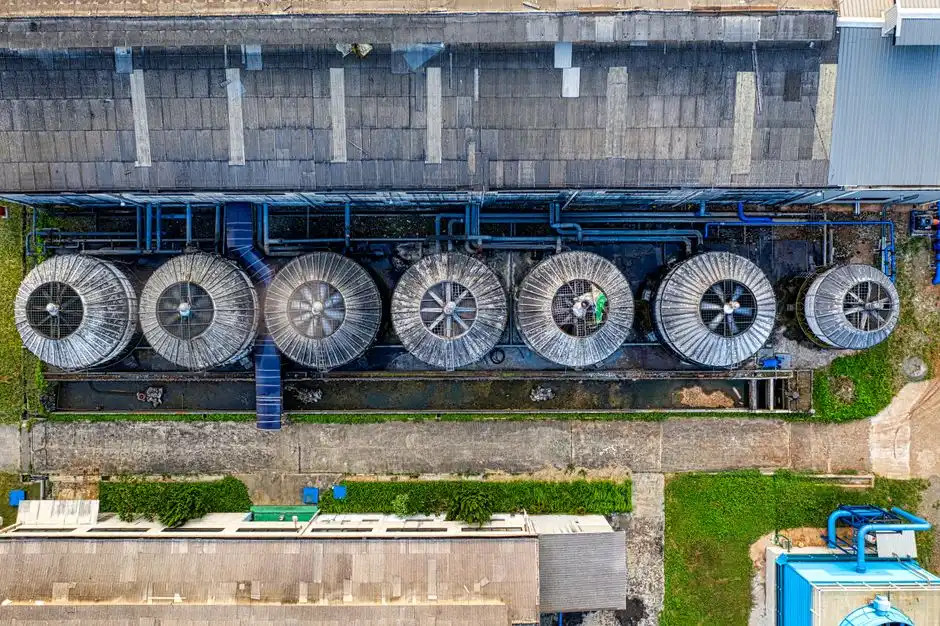
The theoretical blowdown ratio is 1/(CoC−1), so the apparent saving from a higher cycles-of-concentration target is smaller than many initial estimates assume. Genesis Water Technologies (2025) calculates blowdown at 25% of makeup volume at 4 CoC and 20% at 6 CoC.
Moving from 4 to 6 CoC therefore reduces blowdown by five percentage points of makeup, or 20% relative to the 4-CoC blowdown—not 50%. The higher cycle also concentrates hardness, silica and treatment chemicals, so the apparent hydraulic saving must be balanced against additional pretreatment, chemical control and membrane fouling risk.
The commercial flow should not be ordered from the theoretical calculation alone. Genesis Water Technologies (2025) reports that actual blowdown can exceed theoretical values by 15–30% because of unmeasured losses and emergency dumps. Install metering for makeup, blowdown and evaporation, together with conductivity, pH and suspended-solids monitoring, before equipment capacity is frozen.
| Cycles of concentration | Theoretical blowdown ratio, 1/(CoC−1) | Blowdown as a percentage of makeup |
|---|---|---|
| 4 CoC | 1/3 | 25% |
| 6 CoC | 1/5 | 20% |
Use this calculation as front-end screening. Final equipment sizing needs the operating cooling flow, measured blowdown, expected operating variability, standby requirements and the selected recovery target. The industrial wastewater OPEX breakdown is useful for identifying which operating assumptions must appear in the supplier quote.
Build a cooling-blowdown treatment and recovery train
A workable treatment train removes solids and stabilizes the feed before the operations that control scaling, residual oxidants and biological risk. Start with intake screening and grit removal where the source or collection system can introduce debris. Follow with multi-media filtration for general pretreatment and UF pretreatment for the RO train where the feed requires membrane protection.
Use a side-stream twin-tank softener where hardness would otherwise force a low practical cycle. Provide automatic antiscalant or other pretreatment dosing before RO. For high-recovery polishing or blowdown recovery, evaluate an industrial RO system for cooling-blowdown recovery; the HydropureWater industrial RO product description states recovery rates up to 95%. Because that is a product-level claim rather than a guaranteed site performance, require guaranteed recovery and permeate quality against the actual feed analysis.
Residual-oxidant control comes before biological-sensitive reuse or an environmentally sensitive discharge. Use dechlorination or equivalent residual-oxidant removal where chlorine or chlorine dioxide is used. Chlorine dioxide can provide controlled disinfection for suitable streams, while UV provides non-oxidizing disinfection where that operating approach is acceptable to the cooling designer.
Return reclaimed water to the cooling loop only after the design team confirms scaling, corrosion, biological-control and chemical-compatibility requirements. Also separate concentrated RO reject, softener brine and pretreatment sludge. Sludge from the relevant process units requires dewatering and a destination confirmed with the relevant local authority; the reuse decision does not eliminate the residual-waste obligation.
- Screen and remove grit.
- Apply multi-media filtration and, where required, UF.
- Control hardness with side-stream softening and protect RO with dosing.
- Polish with industrial RO where recovery and reuse justify it.
- Remove residual oxidants and apply the selected disinfection method.
- Verify cooling-loop compatibility before returning water to service.
- Dewater and separately route sludge, brine and RO reject.
| Process step | Primary purpose | Key procurement evidence |
|---|---|---|
| Screening and grit removal | Protect downstream equipment | Design flow, selected screen and grit-removal arrangement |
| Multi-media filtration and UF | Reduce suspended matter and protect membranes | Filtrate quality, backwash method and operating envelope |
| Side-stream softening | Control hardness and support higher cycles | Flow, resin model, regeneration basis and brine handling |
| RO and antiscalant dosing | Reduce dissolved solids for recovery | Guaranteed recovery, permeate quality, membrane warranty and cleaning method |
| Dechlorination or UV | Control residual oxidants or biological risk | Residual-monitoring basis and performance guarantee |
| Sludge, brine and reject handling | Manage concentrated residuals | Mass balance, dewatering arrangement and approved destination |
Reuse also needs a lifecycle-energy caveat. Open Engineering Inc. (2026) found that its wastewater scenario carried about twice the GWP of the freshwater case, with treatment energy accounting for roughly 80% of the difference. In the decarbonized-grid sensitivity case, chemical production remained the main contributor.
Choose the discharge route without assuming Djibouti limits
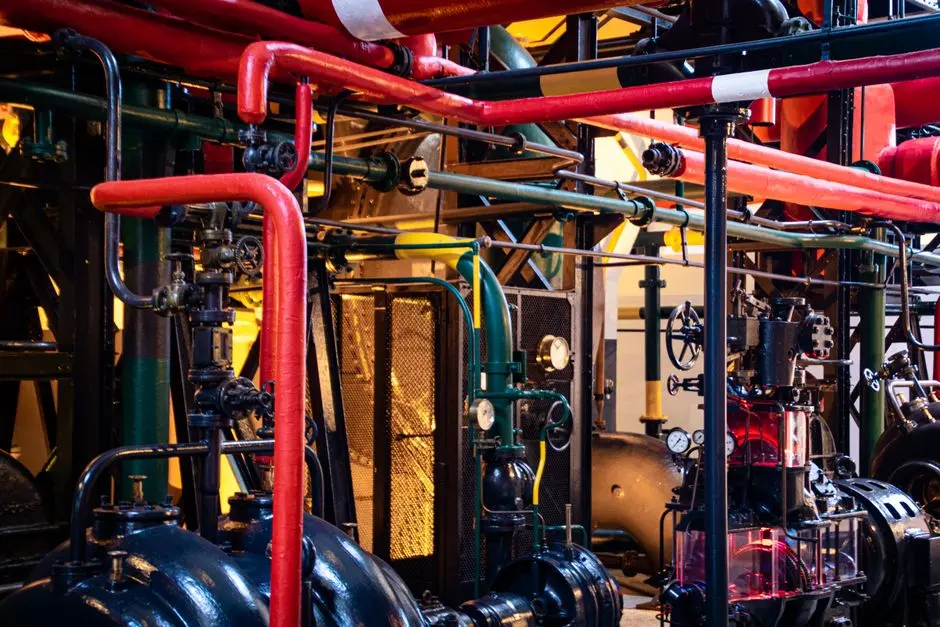
On-site treatment and cooling-loop reuse reduce the residual discharge burden, but only if recovery equipment, storage and operating capacity are available. Controlled residual discharge to a municipal sewer remains a possible route if the utility accepts the industrial flow and confirms pretreatment, monitoring and permit duties. Treated discharge to a receiving water normally requires the most stringent demonstration of temperature, residual chemicals and effluent quality.
The supplied research does not contain Djibouti-specific sewer acceptance criteria, residual-chlorine caps, temperature limits, receiving-water mixing-zone limits or permit durations. Obtain these requirements in writing from the relevant Djibouti authorities and utility before selecting the final discharge equipment. A discharge route should not be inferred from a general coastal-data-center precedent.
Where a biological package is appropriate for sanitary flows, S2 identifies an MBR as an option capable of near-reuse-quality effluent. Keep that sanitary design separate from the cooling-water train so biological loading, chemical controls and residual streams do not dictate equipment intended for blowdown recovery.
| Route | Principal benefit | Information required before selection |
|---|---|---|
| A — On-site treatment and cooling-loop reuse | Reduces freshwater demand and residual discharge | Recovery target, storage, operator capability, water balance and residual-waste destinations |
| B — Controlled residual discharge to municipal sewer | Retains a lower-capital discharge route where accepted | Industrial-user acceptance, pretreatment requirements, sewer capacity, monitoring and permit responsibility |
| C — Treated discharge to receiving water | Provides an alternative where a receiving point is confirmed | Receiving point, temperature and chemical limits, mixing-zone analysis and regulator approval |
The sequence used for industrial sewer-compliance planning is relevant even though the jurisdiction differs: industrial wastewater sewer-compliance planning. Apply the method to Djibouti, but obtain current local rules rather than importing another jurisdiction’s limits.
Build the supplier tender around measurable performance
A defensible quotation must be based on measured source-water chemistry, cooling-system flow, selected cycles of concentration, daily blowdown, recovery target, available footprint, utility interfaces and the required discharge route. If those inputs are incomplete, ask the bidder to identify exclusions and provisional design allowances rather than accept a universal flow or capacity.
Require the bidder to split OPEX into energy, chemicals, labor and consumables. State the basis for membrane life, media life, cartridge replacement, sludge hauling and spare parts. The treatment train should not be priced as a collection of unrelated skids without process integration, controls and commissioning responsibilities.
Ask for documented recovery performance, guaranteed feed and permeate limits, controls scope, alarm response, local instrument support and commissioning criteria. PLC control, instrument support and a strategy for unstable power or long outages are critical because the treatment train cannot stop safely with the cooling loop.
No Djibouti-specific installed price for a data-center blowdown train is available in the supplied research. A generic equipment price would therefore create false precision. Obtain site-specific pricing and evaluate it through total cost of water, including avoided potable water, sewer charges, chemicals, energy, labor, consumables, maintenance and residual disposal.
| Tender item | Required response | Acceptance basis |
|---|---|---|
| Design basis | Source analysis, flows, CoC, recovery target and discharge route | Supplier identifies assumptions and design deviations |
| Equipment performance | Guaranteed flow, recovery, filtrate and permeate quality | Acceptance test using agreed feed and operating conditions |
| OPEX | Energy, chemicals, labor, consumables and hauling | Units, prices, duty assumptions and calculation boundary stated |
| Lifecycle | Membrane, media and cartridge life; cleaning schedule | Experience range and replacement assumptions documented |
| Controls and resilience | PLC scope, alarms, instrument support and outage response | Functional description and approved cause-and-effect matrix |
| Residual handling | Sludge, brine and RO-reject destinations | Written local destination approval or explicit exclusion |
Do not claim reuse automatically reduces cost or emissions. Open Engineering Inc. (2026) reported a wastewater-scenario GWP about twice that of the freshwater case, although the indirect water penalty was approximately 0.93 L/m³ and less than 0.1% of the direct displacement benefit. The financial decision remains site-specific.
Frequently Asked Questions
What treatment does a data center in Djibouti need for cooling blowdown?
It normally needs solids removal, hardness and scale control, membrane-compatible pretreatment where RO is used, residual-biocide management, a controlled reuse loop and a permitted route for the residual discharge. The final train depends on measured source-water chemistry, the cooling architecture, the chemical program and written requirements from the relevant Djibouti authority and utility.
How should cooling-blowdown equipment be sized for a Djibouti data center?
Use the measured blowdown flow and recovery target as the commercial design basis, not the theoretical CoC calculation alone. At 4 CoC, Genesis Water Technologies (2025) calculates theoretical blowdown at 25% of makeup; actual blowdown can exceed theory by 15–30% because of unmeasured losses and emergency dumps. Include operating variability, standby provision and measured-feed conditions in the tender.
Is blowdown-to-cooling reuse cheaper than discharging it?
It may be, but the supplied research contains no Djibouti-specific installed price or utility tariff from which to calculate a reliable payback. Request site-specific capital and operating quotations, then compare them with avoided potable water, sewer charges, permit costs, energy, chemicals, labor, maintenance and residual disposal on a total-cost-of-water basis.
What should a Djibouti wastewater-equipment supplier demonstrate?
Require demonstrated treatment of the actual or representative Djibouti feed, guaranteed flow and water-quality performance, an integrated P&ID, controls and alarm scope, commissioning criteria, OPEX assumptions, reference installations and support arrangements. Also require a documented outage-response strategy, local instrument support, spare-parts availability and a clear destination for sludge, brine and RO reject.
Which Djibouti discharge requirements must be confirmed before selecting equipment?
Obtain written confirmation of sewer acceptance criteria, pretreatment obligations, monitoring requirements, residual-chlorine limits, temperature limits, receiving-water conditions, permit duration and responsible permit holder. The supplied research provides none of these Djibouti-specific limits, so the P&ID and discharge-equipment specification should remain open until the applicable authority and utility provide current requirements.