Start with the wastewater stream, not the equipment
For Fallon mining and metals plants, neither dissolved air flotation nor a clarifier removes every wastewater fraction by itself. Choose gravity sedimentation for dense, rapidly settling mineral fines; choose DAF for conditioned oil, emulsions, flotation reagents, colloids and low-specific-gravity precipitates. Most mixed streams require clarification followed by flotation polishing. Dissolved metals must first be converted into removable solids through precipitation or other chemistry. Final selection therefore depends on site-specific flow, TSS, particle size, pH, metals, settleability, seasonal variation and the current permit, supported by jar testing and pilot verification.
Mining and metals wastewater can combine tailings-thickener overflow, mill discharge, colloidal clay, oils and greases, residual flotation reagents and dissolved heavy metals. A clarification step handles bulk settleable solids; flotation addresses the material that remains suspended, buoyant or poorly settled after conditioning. Neither mechanism directly removes a dissolved contaminant unless upstream chemistry makes it particulate.
Request the minimum dataset before asking vendors to size equipment:
- Average flow and diurnal or seasonal peaks
- TSS and the particle-size distribution
- Settleability data for representative solids
- pH, temperature, oil and grease, and target metals
- The current permit limits and the destination of treated water
Use representative samples taken across operating conditions. A single grab sample cannot establish peak hydraulic loading, worst-case chemistry or the clarification and flotation duty. Include chemical feed requirements in the same dataset; an automatic chemical dosing system can be evaluated with the treatment train rather than added later as an accessory.
| Influent input | Question it must answer | Selection consequence |
|---|---|---|
| Flow and seasonal variation | What hydraulic and solids loads must be handled? | Defines peak equipment capacity and equalization need. |
| TSS and particle-size distribution | What proportion is dense, colloidal or floatable? | Separates bulk clarification from flotation polishing. |
| Settleability | Which solids separate effectively under gravity? | Determines whether a clarifier can perform the duty. |
| pH and target metals | What chemistry is required before solids separation? | Defines precipitation, pH control and analytical monitoring. |
| Oil and grease | Is the oil free, emulsified or surfactant-stabilized? | Establishes the need for DAF and chemical conditioning. |
| Permit and reuse specification | What final quality must be achieved? | Determines whether filtration or membrane polishing is required. |
How clarifiers and DAF remove different solids
A clarifier removes solids by gravity sedimentation, withdrawing settled sludge from the bottom; lamella plates increase effective settling area within a compact footprint without changing the underlying gravity mechanism. DAF instead uses microbubbles to attach to conditioned particles, float them and remove the resulting blanket with a skimmer. Clearwater Industries describes its DAF systems as using 30–50 micron microbubbles and recommends chemical coagulation and flocculation to improve contact and separation (Clearwater Industries, 2026-04-27).
Clarifier selection is governed by particle settleability, the applicable surface-loading calculation and sludge-withdrawal design. DAF selection depends on conditioning chemistry, bubble-to-solids contact, hydraulic loading and skimmer capacity. Clearwater Industries also identifies heavier nonfloating material as an unsuitable feed for DAF, supporting bulk clarification ahead of flotation where silt and clay are substantial (Clearwater Industries, 2026-04-27).
The lamella clarifier catalog states surface-loading rates of 20–40 m/h and chemical consumption up to 30% lower than a comparable conventional design. Treat those as product-specific catalog claims, not universal design rules for a Fallon stream. The applicable rate must be supported by the bidder’s calculations using site-specific settleability, geometry, loading and sludge-handling criteria.
For DAF, Clearwater Industries describes a paddle skimmer for floated solids and an auger for heavier solids that settle into the collection zone. That arrangement does not eliminate the need to characterize the feed: solids that neither float nor settle cleanly require further conditioning or downstream treatment.
| Selection factor | Clarifier or gravity sedimentation | DAF or dissolved air flotation |
|---|---|---|
| Primary mechanism | Settling under gravity | Attachment to microbubbles followed by flotation |
| Best-fit material | Dense tailings fines, mineral slurries and metallurgical solids that settle readily | Emulsified oil, conditioned colloids, flotation-reagent carryover and low-specific-gravity precipitates |
| Chemical conditioning | May assist aggregation, but performance remains governed by settling and withdrawal design | Central to floc size, bubble contact and separation performance |
| Main solids outlet | Bottom sludge withdrawal | Skimmer and collection trough, with settled solids withdrawal where applicable |
| Main limitation | Colloidal and buoyant material may remain in the clarified stream | Heavy silt and clay are poor primary flotation targets |
| Key design inputs | Settleability, surface loading, hydraulic residence, geometry and sludge withdrawal | Solids loading, conditioned floc, recycle flow, rise rate, skimmer duty and sludge removal |
When comparing an industrial DAF system with a clarifier, require the bid to state which contaminant fraction each unit is designed to remove. Otherwise, a generic removal percentage can conceal an unresolved treatment objective.
Use a stream-by-stream decision framework
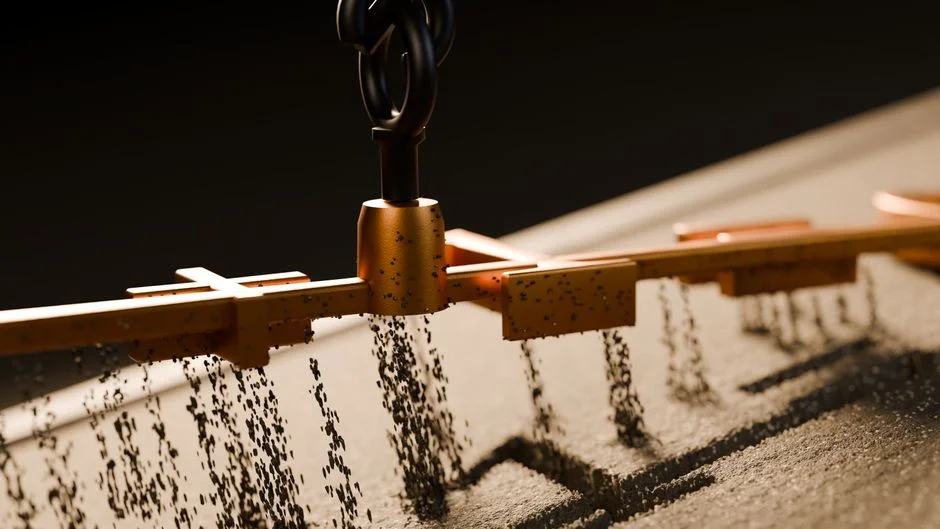
A clarifier or thickener is the normal starting point for dense tailings fines, mineral slurries and metallurgical solids that settle readily under gravity. DAF is the appropriate unit for oil-water emulsions, flotation-reagent carryover, biological flocs, conditioned colloids and precipitates with low specific gravity. A single mechanism is more defensible when the stream contains one dominant fraction than when several sources are combined without characterization.
Do not assign high concentrations of heavy silt and clay to DAF as the primary bulk-solids unit. Clearwater Industries states that DAF is not well suited to water containing high levels of heavier, nonfloating particles such as silt and clay (2026-04-27). Use clarification first, then evaluate DAF for the remaining floatable fraction.
For a combined stream, use this sequence:
- Collect and equalize the relevant wastewater sources.
- Adjust pH and apply chemical coagulation and flocculation where required.
- Remove bulk settleable solids in a clarifier or thickener.
- Polish the clarified stream with DAF for buoyant, conditioned and colloidal material.
- Add filtration or membrane treatment when the reuse or discharge specification requires it.
- Dewater and dispose of the collected solids.
This sequence separates competing mechanisms instead of asking one vessel to perform incompatible functions. It also makes responsibility for performance clearer: the clarifier handles settleable solids, DAF handles the remaining floatable fraction, and downstream polishing handles whatever still exceeds the reuse or discharge specification.
For process-water reuse, appearance after clarification or flotation is not enough to establish suitability. The ultrafiltration system described here is a potential downstream polishing step, but the required train must follow the actual reuse specification, including residual solids, metals and any process-sensitive constituents. DAF can support process-water recycling, but the downstream barrier still has to be selected against the intended use.
| Stream condition | Provisional selection | Required verification |
|---|---|---|
| Dense mineral fines with reliable gravity settling | Clarifier or thickener | Settleability, surface loading and underflow capacity |
| Emulsified oil or flotation-reagent carryover | DAF with chemical conditioning | Oil character, reagent dose, skimmer duty and emulsion stability |
| Colloidal clay with slow settling | Clarification followed by DAF or another specified polishing step | Particle size, coagulation and flocculation performance |
| Heavy silt and clay plus emulsified oil | Clarifier followed by DAF | Combined-train pilot test under peak solids loading |
| Dissolved metals | Precipitation or other conversion chemistry followed by solids separation | Target metals, pH response and permit limit |
| Reuse requiring further solids control | DAF or clarifier plus filtration or membrane treatment | Complete reuse specification and downstream barrier selection |
Turn the comparison into a Fallon-ready RFQ
A defensible RFQ asks bidders to submit separate treatment-train options for each stream so that the selection can be compared on the same performance basis. Require design flow, peak flow, TSS loading, target removal, clarified-water quality, footprint, utilities, controls and sludge-disposal scope. A unit selected for the combined plant header should not conceal a different duty from the stream that actually drives peak loading.
For a clarifier, require the surface-loading calculation, hydraulic approach, settling assumptions and sludge-withdrawal design. For DAF, require the solids-loading basis, rise-rate calculation, conditioned-solids assumptions, recycle-flow basis and skimmer duty. Include sludge-discharge capacity in both cases. These calculations should be traceable to the submitted influent dataset rather than to a generic catalog capacity.
Materials selection must reflect the actual chemistry. Clearwater Industries states that its standard DAF clarifiers use 304 stainless steel, with 316 stainless steel, polypropylene and other materials available on request (2026-04-27). Ask bidders to identify the proposed material and explain its corrosion basis; do not accept a material name without the water chemistry that supports it.
The RFQ should also include automatic coagulant, flocculant and pH-control scope. An automatic chemical dosing system with PLC control can be included in the performance basis and priced with the treatment train.
Request evidence from comparable metal-bearing streams, a pilot-test protocol, proposed acceptance tests, controls narrative, spare-parts list, local service capability and compliance support against the facility’s actual permit. Manufacturer performance claims should remain separate from independently verified test results. A catalog removal percentage is not a substitute for a site-specific acceptance criterion.
Require both quoted price and lifecycle-cost alternatives covering chemical consumption, compressed air, power, sludge dewatering, operator labor and maintenance. The supplied research provides no defensible 2026 unit-price range for DAF or clarifiers, so a responsible budget request must define the flow, TSS, contaminant profile, treatment objective, materials and site constraints. Include a plate-and-frame filter press alternative where the collected sludge requires mechanical dewatering.
| RFQ package | Information required from each bidder | Basis for comparison |
|---|---|---|
| Stream-specific option | Flow, peak load, TSS, particle size, pH, target contaminants, reuse or discharge objective | Same influent and performance basis for all bids |
| Design calculation | Clarifier loading or DAF solids, hydraulic, recycle, rise-rate and skimmer calculations | Engineering traceability rather than catalog selection |
| Equipment and materials | Configuration, materials, corrosion rationale, utilities and footprint | Compatibility with actual chemistry and site constraints |
| Conditioning and controls | Chemical dosing, pH control, sensors, alarms, PLC interface and control narrative | Operability across variable loading |
| Solids handling | Skimmer or underflow duty, sludge concentration, dewatering and disposal | Complete mass balance and lifecycle cost |
| Verification and support | Comparable references, pilot protocol, acceptance tests, spares and service capability | Risk allocation before purchase |
Pilot-test, operate and verify the selected train
Pilot testing should verify the complete proposed treatment train under representative loading, not merely demonstrate an isolated vessel. Clearwater Industries recommends jar testing to establish the coagulant and flocculant for DAF (2026-04-27). Do not transfer the 30 mg/L aluminum sulfate optimum reported in a 2011 Utah lagoon-effluent study to a Fallon metals stream; the source, water chemistry and treatment objective are different (Utah State University, 2011).
The supplied research describes 15–45 seconds of flash-mixing contact in serpentine flocculation tubes or impeller mix tanks, while also stating that contact time should be established empirically by jar testing (Clearwater Industries, 2026-04-27). Treat the time range as an equipment description, not a dosing or mixing prescription for every stream.
If the proposed train is clarification followed by DAF, test that sequence with representative solids, chemistry and flow variation. During the pilot, verify TSS, target metals, oil and grease, pH and flow stability. Establish operating controls for chemical dose, pH, recycle flow, differential pressure, skimmer performance and sludge withdrawal. Tie alarms and sampling to permit limits, including the treatment objectives required for process-water reuse.
Include downstream sludge dewatering in the acceptance plan. The selected train must demonstrate that collected DAF or clarifier sludge can be removed and conditioned within the proposed solids-handling system; otherwise, nominal liquid treatment performance does not establish operability.
At commissioning, verify the submitted calculations against measured flow, solids loading and chemical consumption. Review operating trends against the pilot baseline, and correct chemistry, recycle or withdrawal settings when the full-scale hydraulic and solids behavior differs from the test conditions.
Frequently Asked Questions
Is DAF or a clarifier better for a mining wastewater stream with heavy tailings fines and emulsified oil?
Use a clarifier for the bulk tailings fines and DAF for the emulsified oil, generally in that order. Clearwater Industries states that DAF is not well suited to high levels of heavy nonfloating particles such as silt and clay (2026-04-27), while chemical conditioning and flotation are intended to separate conditioned oil and other floatable solids. Confirm the arrangement with representative solids and a combined-train pilot test.
How much does a DAF or clarifier cost for a Fallon metals plant, and what should the quote include?
The supplied research does not provide a defensible 2026 unit-price range, so request a budgetary quotation rather than use an unsupported generic estimate. Give each bidder the stream-specific design flow, peak flow, TSS, particle-size data, pH, target metals, reuse or discharge objective, materials and footprint constraints. Require the quote to include conditioning equipment, controls, utilities, skimmer or underflow handling, sludge dewatering, pilot testing, commissioning and lifecycle-cost alternatives.
What wastewater data is needed to size a DAF or lamella clarifier?
Provide average and peak flow, TSS, particle-size distribution, settleability, pH, temperature, oil and grease, target metals, permit limits and the treated-water destination. For DAF, also provide jar-test results identifying coagulant and flocculant selection; for the clarifier, include the proposed surface-loading and sludge-withdrawal calculations. Use representative seasonal data rather than one grab sample.
Should a mining plant pilot-test DAF before purchasing a full-scale unit?
Pilot-test the proposed combination when buying clarification followed by DAF, because DAF performance depends on upstream clarification, chemical conditioning and solids loading. Verify TSS, target metals, oil and grease, pH, flow stability, sludge withdrawal and downstream dewatering across representative operating conditions. The DAF selection checklist for FOG and TSS provides a useful starting point for structuring the test.
Can DAF alone meet a strict metals discharge or water-reuse limit?
Do not assume that it can. Dissolved metals must be converted into removable solids through precipitation or another chemistry before physical separation, and the treated water may require filtration or membrane treatment for reuse. Define acceptance limits against the current permit or reuse specification, then verify the complete treatment train through jar testing and pilot operation.