
Why Parshall Mining Plants Are Re-Evaluating DAF vs Clarifier in 2026
Parshall, Colorado sits inside a mining-services corridor that supports aggregate quarries, gold operations, and critical-minerals milling for the Front Range, and almost every site in that corridor either discharges under a U.S. NPDES permit or recycles water back into a tailings or milling circuit (per EPA 40 CFR 122). NPDES permits in 2026 impose strict suspended-solids and heavy-metal limits — lead, arsenic, zinc, and copper — on mine effluents, and Colorado's Reissued Permit No. CO-004486 series has tightened both TSS monthly averages and individual metal ceilings compared with the 2023 cycle. The pressure is not theoretical: tailings throughput varies seasonally, mill campaigns push flow swings of 2–3× nominal, and any solid–liquid separation unit upstream of discharge or reuse has to absorb those swings without breaking permit. This article scopes the decision to pre-treatment solid–liquid separation only — not biological, brine, or zero-liquid discharge — so the reader can focus on the unit operation that decides whether the rest of the train is compliant. The commercial backdrop matters too: industrial wastewater is the fastest-growing high-rate clarifier segment at a 28% share through 2035, and mining and mineral processing represents 12% of that demand, driven by water-scarcity and stricter oversight (per Indexbox 2026 forecast). Parshall-area plants sit directly inside that growth lane.
How a DAF System Removes Solids From Mine Water
A dissolved air flotation unit separates suspended matter by attaching microbubbles to particles and floating them to the surface, rather than letting them settle. Pressurized recycle water saturated with air is released into the flotation tank through proprietary nozzles, generating bubbles in the 30–50 micron range that nucleate on conditioned flocs and lift them to the surface, where a paddle skimmer removes the float layer (per Clearwater Industries / SigmaDAF USA 2026-04 technical bulletin). DAF achieves a published performance band of up to 97% TSS reduction and 60–80% COD removal on industrial feeds, and it consistently outperforms gravity units on fine, low-density particles and on floated metal-hydroxide precipitates from pH adjustment (per Wastewater Machinery 2026 product specification). For a Parshall mill processing tailings thickener overflow, mill water with frothers and lubricants, or precipitate-laden neutralization effluent, that fine-particle capture is the difference between meeting an NPDES metal limit and a permit excursion. Material selection is operationally relevant at a mine site: standard construction is 304 stainless with 316SS, FRP, and polypropylene available for acidic or high-chloride streams (per Clearwater Industries 2026-04). DAF also pairs with chemical pre-treatment — coagulant plus flocculation in a serpentine mix tube ahead of the cell — to build a strong, bubble-attachable floc, which is where an automated chemical dosing system protects performance on a variable mine feed.
How a Lamella (High-Rate) Clarifier Settles Mining Solids
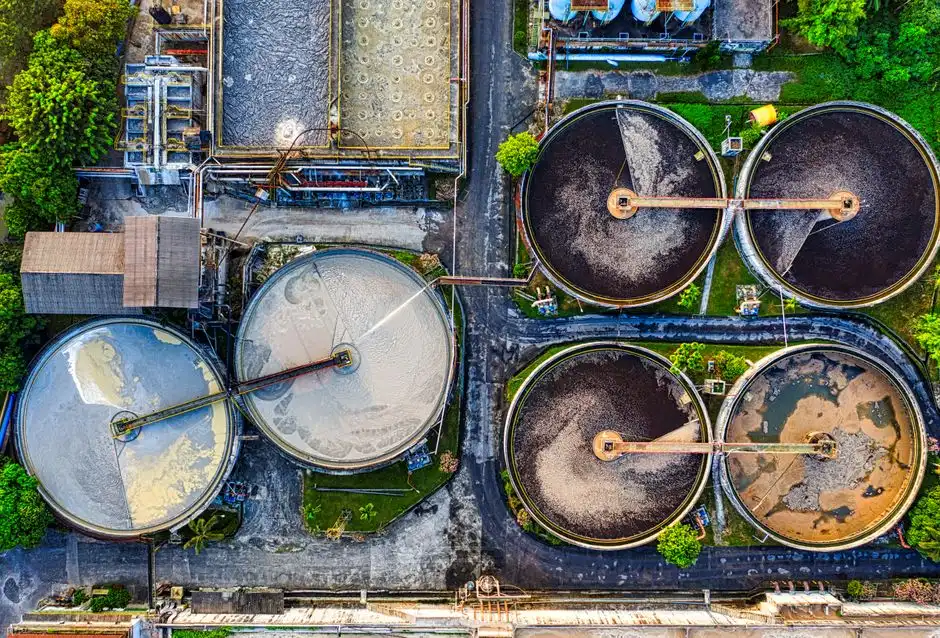
A lamella clarifier is a gravity settler fitted with an inclined-plate module that multiplies the effective settling footprint inside a compact vessel; surface loading rates climb to roughly 20–40 m/h, which is an order of magnitude higher than a conventional basin (per HydropureWater high-efficiency sedimentation tank engineering spec). Sludge recirculation keeps the slurry bed active, heavy coarse sediment drops to the hopper, and clarified water exits over the launder. In a documented mine-service case with heavy sediment load, a clarifier reduced solids by 90% at materially lower operating cost than a comparable flotation cell (per Ecologix 2026 selection guide). That benchmark is the reason a Parshall aggregate or gold mill dealing with coarse tailings thickener overflow — large, dense, settleable particles — typically picks lamella first. The limit case is what defines the gap a DAF fills: lamellas lose efficiency on particles that are too fine, too buoyant, or coated with oils and reagents, and on floated metal-hydroxide flocs that simply will not sink. Operationally, a lamella has no air compressor, no saturation recycle pump, and a lower operator skill floor, and it containerizes cleanly for remote mine sites — a real advantage in the Parshall-area aggregate pits where seasonal access and crew size both shrink in winter (per Indexbox 2026 trend on modular pre-assembled clarifier systems).
Head-to-Head: DAF vs Clarifier on the Parameters That Matter for Parshall Mills
The table below scores both technologies on the parameters a Parshall engineer weighs in an RFQ. Use the bottom row — altitude and cold-climate fit — to catch the most common sizing miss on Front Range sites.
| Parameter | DAF (Dissolved Air Flotation) | Lamella / High-Rate Clarifier |
|---|---|---|
| Separation mechanism | Microbubble flotation (30–50 µm bubbles) | Gravity settling on inclined plates |
| Best-fit contaminant | Fine particles, oils/grease, floated metal-hydroxide precipitates | Coarse, dense sediment and tailings thickener overflow |
| Published TSS removal | Up to 97% (per Wastewater Machinery 2026) | ~90% in documented heavy-sediment mine service (per Ecologix 2026) |
| Oil & grease removal | ~95% on oily industrial feed (per Ecologix 2026) | ~70% on the same feed (per Ecologix 2026) |
| Surface loading / hydraulic rate | Typically 5–25 m/h hydraulic surface loading | 20–40 m/h on the inclined-plate footprint (per HydropureWater spec) |
| Footprint (per m³/h treated) | Compact; smaller tank, adds skimmer and saturator | Smallest for coarse sediment; plate pack reduces plan area |
| Energy / auxiliaries | Air compressor, saturation recycle pump, VFD recommended | Sludge pump only; no air system |
| OPEX driver | Power for compressor + polymer for floc build | Polymer and periodic plate cleaning |
| Standard materials | 304SS standard, 316SS / FRP / PP for acidic or high-Cl⁻ (per Clearwater Industries 2026-04) | Carbon steel with coating standard; 304/316SS for corrosive service |
| Sensitivity to feed swings | Tolerates surges if saturator is sized for peak recycle | Tolerates surges; sludge bed can bleed during extreme events |
| Altitude / cold-climate fit (Parshall ~5,000 ft) | Reduced air solubility at ~5,000 ft lowers transfer efficiency; specify saturation pressure ≥ 5 bar and VFD on recycle pump (per Wastewater Machinery 2026 selection criteria) | Insensitive to altitude; cold tolerant with simple enclosure and low-temp grease |
The single line a Parshall engineer should not miss is the altitude row. At roughly 5,000 ft elevation, atmospheric pressure drops near 17% versus sea level, which lowers the mass of air a saturator can hold at any given psig and can quietly shave 10–15% off DAF transfer efficiency if the vendor sizes to sea-level curves. The published selection rule is to specify saturation pressure ≥ 5 bar with a VFD on the recycle pump so the A/S (air-to-solids) ratio stays on target (per Wastewater Machinery 2026).
Three Realistic 2026 Flowsheets for a Parshall Mine or Metals Plant
Each flowsheet below is built around the parameters in the table above. The choice is driven by which axis of the permit binds — TSS, total metals, or oil/grease — and how variable the feed is across a milling campaign.
Flowsheet A — Lamella clarifier only. Lowest CAPEX and OPEX of the three, and the right pick when TSS is the binding permit limit, the feed is coarse (tailings thickener overflow, aggregate wash water, crusher rinse), and metals are being controlled upstream by precipitation and settling. Use the documented 90% solids reduction in a heavy-sediment mine service as the sizing benchmark (per Ecologix 2026). For a Parshall aggregate plant with steady flow and no reagent or oil contamination, a single high-efficiency lamella clarifier sized at 25–30 m/h surface loading is typically sufficient.
Flowsheet B — DAF only. Right pick when the binding limit is oil and grease, fine particles, or floated metal-hydroxide precipitates from pH adjustment (arsenic, lead, zinc co-precipitation). Use the 95% DAF oil-removal case as the benchmark (per Ecologix 2026) and the 60–80% COD / up to 97% TSS band for sizing (per Wastewater Machinery 2026). For a Parshall mill with frothers, lubricants, or precipitate-laden neutralization effluent, a DAF system sized with the altitude correction above is the primary workhorse, with a sludge hopper feeding a filter press or bag unit downstream.
Flowsheet C — DAF primary + lamella polish (the 2026 default for variable feed). When flow surges seasonally and the contaminant mix shifts between milling campaigns, the hybrid train captures the strengths of both. DAF removes oils, fines, and floated metals first; the lamella polishes residual TSS and thickens the sludge for dewatering. This is the configuration most Parshall-area metals plants are moving to in 2026 because it gives the engineer a single compliance envelope across both an NPDES direct-discharge permit and a tailings water reuse loop. The hybrid also lets the plant run either unit in standby during a planned outage, which is a real operational gain in a remote location.
Cost, Compliance, and Cold-Altitude Fit: The 2026 Decision Checklist
Use the checklist and the matrix below to convert the comparison into an RFQ-ready decision before the engineering review.
- Confirm the binding permit limit in the site's NPDES permit — TSS, total metals (Pb, As, Zn, Cu), and oil/grease — and write the target value next to each.
- Characterize the feed: particle density, fraction below 50 µm, oil/reagent loading, and diurnal flow range. If fines plus oils exceed ~20% of the load, DAF is in the train.
- Size DAF for Parshall altitude: saturation pressure ≥ 5 bar, VFD on the recycle pump, and verify A/S ratio at ~5,000 ft (per Wastewater Machinery 2026 selection criteria).
- Match materials to the water: 316SS or FRP for acidic tailings or high-chloride wash water, 304SS for near-neutral mill water (per Clearwater Industries 2026-04).
- Decide OPEX tolerance: clarifier has lower recurring cost; DAF adds compressor power and polymer but unlocks tighter metals and oil/grease compliance (per Ecologix 2026).
- If flow or contaminant profile swings seasonally, default to the hybrid DAF + lamella train.
| Site Condition (2026) | Recommended Pick | Compliance Anchor |
|---|---|---|
| Coarse tailings thickener overflow; TSS is the only binding limit; steady flow | Lamella only | 90% TSS reduction benchmark (per Ecologix 2026) |
| Oils, frothers, or floated metal-hydroxide precipitates dominate | DAF only | 95% oil/grease, up to 97% TSS, 60–80% COD (per Ecologix 2026, Wastewater Machinery 2026) |
| Variable flow or mixed contaminants; permit binds on multiple parameters | Hybrid DAF + lamella polish | Combines DAF fine capture with lamella polish and sludge thickening |
| Site at ~5,000 ft elevation; freezing winters | Add saturation ≥ 5 bar + VFD on DAF; enclose/enclose-and-heat lamella | Altitude correction per Wastewater Machinery 2026 |
For a Parshall-area engineer sizing a 2026 RFQ, the short version is: lamella first if TSS is the binding limit and the feed is coarse; DAF first if metals, oils, or fines dominate; hybrid when the feed swings. The 90% clarifier and 97% DAF benchmarks are real and citable, and the altitude correction is the detail that separates a defensible design from a permit excursion.
Frequently Asked Questions
For a Parshall mine, is a DAF or a lamella clarifier the better first pick in 2026?
Start with the binding permit limit. If TSS is the only binding parameter and the feed is coarse tailings or aggregate wash water, a lamella clarifier is the correct first pick and gives 90% solids reduction at the lowest OPEX (per Ecologix 2026). If metals, oils, or fine particles dominate, start with a DAF system for its 95% oil/grease and up to 97% TSS performance.
What removal efficiency can I expect on oils, frothers, and reagent residues?
DAF achieves roughly 95% oil and grease removal on industrial feeds, compared with about 70% for a clarifier on the same stream (per Ecologix 2026). For frothers and floated metal-hydroxide precipitates from pH adjustment, DAF is the correct primary unit because those particles will not settle reliably in a lamella.
Which option is cheaper to operate long-term?
A lamella clarifier has lower recurring cost — no air compressor, no saturation recycle pump, and a lower polymer dose on coarse feed. A DAF adds compressor power and flocculant demand but unlocks tighter NPDES compliance on metals, oil/grease, and fine TSS, which is often the cheaper path when permit excursions and consent-order risk are priced in (per Ecologix 2026).
How does Parshall's ~5,000 ft elevation affect DAF sizing?
Lower atmospheric pressure at ~5,000 ft reduces the mass of air a saturator can hold at any given psig, which can quietly cut DAF transfer efficiency. Specify saturation pressure ≥ 5 bar, a VFD on the recycle pump, and confirm the air-to-solids ratio at site elevation (per Wastewater Machinery 2026 selection criteria). Lamellas are insensitive to altitude.
Can the treated water be reused back into the mill or tailings circuit?
Yes, and for a Parshall-area mill this is often the bigger economic driver than direct discharge. A hybrid DAF + lamella train typically returns water clean enough for mill process reuse, gland service, or dust suppression, with the lamella polishing residual TSS and thickening the sludge for filtered tailings storage. For a broader view of reuse train design, see the broader 2026 industrial wastewater engineering guide for the U.S. West and the companion DAF-vs-clarifier guide for the Dallesport mining corridor.
