
What 'Pretreatment' Actually Means for a Jeffersonville-Area Mining Plant
Pretreatment, as defined in Section 307(b) of the Clean Water Act and codified at 40 CFR 403, refers to the control of pollutants discharged by industrial users (IUs) into the sewer system of a publicly owned treatment works (POTW) before that flow reaches the receiving treatment plant. Federal pretreatment standards prohibit two specific failure modes: pass-through, where a pollutant exits the POTW in the effluent without being removed, and interference, where a pollutant disrupts the biological or physical treatment processes inside the POTW or threatens worker safety in the collection system.
The rule stack a Jeffersonville-area plant sits on has three layers. The first is the National Categorical Standards at 40 CFR Parts 405–471, which set technology-based effluent limits for specific industry categories; for metal mining the relevant subcategory sits in 40 CFR Part 440. The second is EPA's Local Limits, derived using the Maximum Allowable Headworks Loading (MAHL) methodology in the 2004 Local Limits Development Guidance (134 pages). The third is the receiving POTW's sewer-use ordinance, which translates the MAHL-based allocation into site-specific numeric limits that apply to your discharge permit. In Kentucky, NPDES authority is delegated to the state as the Kentucky Pollutant Discharge Elimination System (KPDES); the Kentucky Division of Water approves local limits through the approval authority mechanism in 40 CFR 403.8 (per the 2004 EPA Local Limits Development Guidance, Chapter 6).
The Jeffersonville 2020 Consumer Confidence Report (CCR) confirms the regional regulatory context: it explicitly lists "KPDES permitted wastewater treatment facilities" as a potential source-water concern in the protection area for Mt. Sterling and Cave Run, demonstrating that KPDES-enforced discharge permits are an active, named presence in the regulatory geography surrounding Jeffersonville (per the Jeffersonville 2020 CCR). The CCR also shows that metals such as nickel (2.1 ppb) and barium (0.014 ppm) are already detectable in source water from "erosion of natural deposits" and "metal refineries" — a baseline that the receiving POTW will fold into its local-limits development.
A hard-rock or smelting operation almost always triggers Significant Non-Categorical Industrial User (SNIU) status at minimum, and may be Categorical Industrial User (CIU) status if it falls under Part 440. An SNIU is one that discharges more than 25,000 gpd of process wastewater or contributes more than 5% of the POTW's organic or hydraulic loading (per 40 CFR 403.3). The framework documents to keep open are the EPA Local Limits Development Guidance (2004) and the ACS EST Engineering review of mine water treatment practices (Miller et al., 2021).
From Federal Rule to Jeffersonville Sewer Permit: How Local Limits Are Set
EPA's MAHL approach to local limits development is a five-step process codified in Chapter 2 of the 2004 Local Limits Development Guidance. Step 1 is to determine Pollutants of Concern (POCs); Step 2 is to collect and analyze influent, effluent, and sludge data at the POTW; Step 3 is to calculate MAHLs for each POC; Step 4 is to designate and implement local limits; Step 5 is to address collection-system concerns such as corrosion, H2S generation, and worker safety. The receiving POTW is required to revisit its local limits whenever actual loadings approach the MAHL, whenever pass-through or interference is documented, or whenever biosolids quality threatens 40 CFR 503 land-application limits (per the EPA Local Limits Development Guidance, 2004, Chapter 7).
Chapter 5 of the Guidance defines four Allowable Headworks Loading (AHL) categories, and the binding one varies by pollutant. Effluent-quality-based AHLs are constrained by the POTW's NPDES permit limits and ambient water-quality criteria. Sludge-quality-based AHLs are constrained by 40 CFR 503 pollutant ceilings (e.g., 300 mg/kg for lead on a dry-weight basis in exceptional-quality biosolids). Inhibition-based AHLs are constrained by toxic inhibition of the POTW's biological treatment, typically derived from literature values like the Wood et al. (1989) IC50 dataset. Air-quality-based AHLs are constrained by volatile pollutant stripping in aeration basins. Mining and metal IUs are almost always constrained first by sludge-based and inhibition-based AHLs because of metals, not by effluent-quality-based AHLs (per the EPA Local Limits Development Guidance, 2004, Chapter 5, Section 5.2).
The Maximum Allowable Industrial Loading (MAIL) is the share of the MAHL that can be allocated to controlled industrial sources after subtracting background contributions. The standard MAIL allocation formula in Chapter 6 is:
MAIL = (MAHL − Uncontrolled Source Load − Hauled Waste Load) × Safety Factor − Expansion Allowance
Safety factors typically range from 0.2 to 0.5 in the Guidance's worked examples, with 0.5 used when variability and data uncertainty are high. The Jeffersonville 2020 CCR provides a useful Kentucky-specific anchor even though it is a drinking-water report, not a sewer-use ordinance: Barium MCL 2 ppm, Fluoride MCL 4 ppm, TTHM MCL 80 ppb, and HAA5 MCL 60 ppb under 401 KAR Chapter 8. These are Safe Drinking Water Act MCLs, not CWA sewer local limits, so the IU's actual local limits on the sewer side will typically be tighter on metals (because the POTW must protect biosolids) and looser on disinfection byproducts (because the POTW is not a drinking-water plant).
| AHL Category | Source Document Reference | Binding Constraint for Mining/Metals IUs? |
|---|---|---|
| Effluent-quality-based | EPA LL Guidance Ch. 5 §5.2.2 | Sometimes |
| Sludge-quality-based | EPA LL Guidance Ch. 5 §5.2.3; 40 CFR 503 | Usually (metals) |
| Inhibition-based | EPA LL Guidance Ch. 5 §5.2.4 | Usually (metals, ammonia) |
| Air-quality-based | EPA LL Guidance Ch. 5 §5.2.5 | Rarely (VOCs only) |
One operational fact the engineer must confirm before sizing equipment: the Jeffersonville Water System is a small consecutive system purchasing finished water from Mt. Sterling and Cave Run (per the Jeffersonville 2020 CCR), so the Jeffersonville Water Department is not the pretreatment authority. The actual control mechanism is the receiving POTW that treats the IU's discharge flow, and the engineer must identify that POTW and obtain its sewer-use ordinance before any design is committed.
The Pollutants of Concern Jeffersonville-Area Mining Plants Must Treat
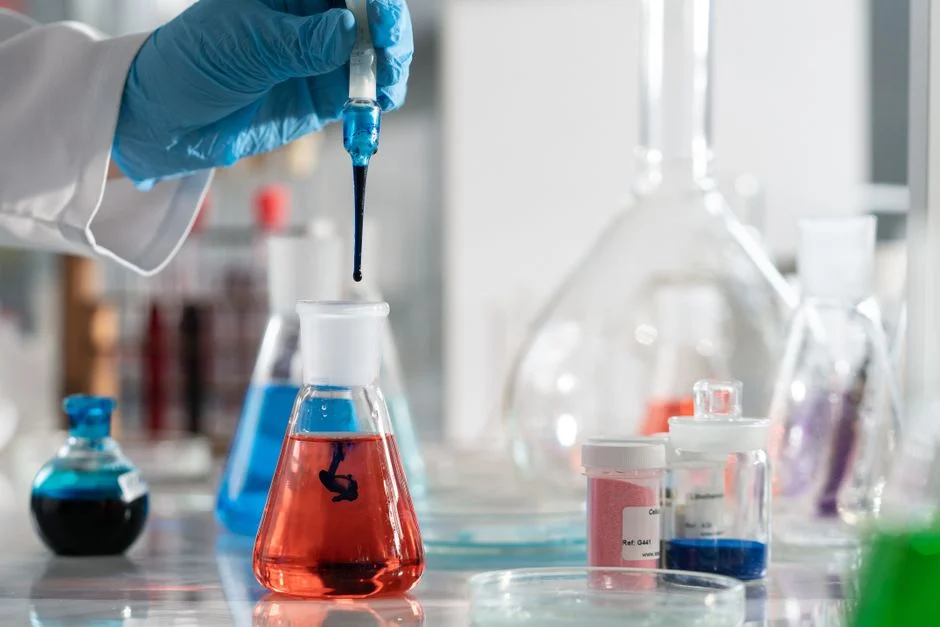
The standard metals of concern for a Jeffersonville-region mining or metals plant mirror the priority-pollutant set EPA references in the categorical standards review at 40 CFR Part 440 and the Local Limits Guidance at Chapter 3: lead, cadmium, copper, zinc, nickel, chromium (total and hexavalent), arsenic, mercury, silver, and total iron. Conventionals sit alongside them — TSS, BOD, oil & grease, pH, sulfides, and total dissolved solids — plus cyanide where gold or silver heap-leach operations are present (per the EPA Local Limits Development Guidance, 2004, Chapter 3).
The Jeffersonville 2020 CCR provides on-the-ground evidence that these metals are already migrating into Kentucky source water: nickel at 2.1 ppb in Mt. Sterling's finished water, and barium at 0.014 ppm in both Mt. Sterling and Cave Run sources, both attributed in the CCR to "drilling wastes; metal refineries; erosion of natural deposits." That same geology and refining activity is what your receiving POTW will write into its local-limits development as background load.
Typical local-limit concentrations the engineer should design to — these are industry-typical ranges and must be confirmed against the specific sewer-use ordinance — are: total metals often 0.5–10 mg/L combined, TSS ≤30–250 mg/L depending on POTW capacity, oil & grease ≤100 mg/L, pH 6.0–9.0, and sulfides ≤1 mg/L (per industry-typical sewer-use ordinances; confirm against your specific receiving POTW). Many POTWs also impose mass-based limits in lb/day in addition to concentration limits, and the engineer must design to whichever is more restrictive at the IU's actual design flow.
| Pollutant | Typical Local Limit Range | Critical AHL Driver |
|---|---|---|
| Total metals (combined) | 0.5–10 mg/L | Sludge-quality / inhibition |
| Total Suspended Solids | 30–250 mg/L | Effluent-quality / biosolids |
| Oil & Grease | ≤100 mg/L | Interference / collection system |
| pH | 6.0–9.0 | Collection-system corrosion / worker safety |
| Sulfides | ≤1 mg/L | H2S in collection system |
A Compliant Treatment Train for Jeffersonville-Area Mining Wastewater
A compliant treatment train for metal-bearing mine wastewater near Jeffersonville follows a six-step flow. The first step is influent screening with a rotary bar screen for headworks protection at 3–6 mm opening, sized to protect downstream pumps and clarification equipment from rags and debris.
Step 2 is flow and load equalization, with 6–24 hours of hold-up designed to dampen pH swings and slug loads of metals. The equalization tank is the most common single point of pretreatment failure: under-sized EQ tanks let diurnal pH excursions exceed the local-limits range, and the IU goes into noncompliance within hours of a process upset. Step 3 is pH adjustment and metal precipitation, using PLC-controlled chemical dosing for pH and metal precipitation to deliver caustic (NaOH) or lime to a target pH of 8.5–9.5, with coagulant (ferric chloride at 50–200 mg/L or alum at 100–300 mg/L) and flocculant (anionic polyacrylamide at 0.5–2.0 mg/L) to precipitate target metals as hydroxides. Per the ACS EST Engineering review, high-density sludge (HDS) processes achieve 85–95% metals removal at this stage for most priority metals (Miller et al., 2021).
Step 4 is the primary clarification step, with a choice between a DAF system for mining wastewater (preferred when oil & grease or colloidal metals dominate the feed) and a lamella clarifier for high-flow metal precipitation (preferred when total suspended solids is the limiting parameter and oil content is low). For sites that want a packaged turnkey alternative, an integrated coagulation–sedimentation–filtration package combines steps 3–5 in a single skid. Step 5 is polishing: sand or multi-media filtration down to 5–10 µm nominal, followed by ion exchange or membrane ultrafiltration when the local limit drops below 1 mg/L on dissolved metals. UF also protects any downstream reverse osmosis from TSS fouling, and the 2021 ACS EST Engineering review confirms UF is increasingly specified for mining wastewater polishing to meet sub-ppm metal targets (Miller et al., 2021).
Step 6 is sludge handling with a plate-and-frame filter press for metal hydroxide sludge, dewatering the clarifier underflow to 25–35% dry solids for off-site disposal. Without mechanical dewatering, hauling liquid sludge at 2–4% solids dominates the operating cost of the entire treatment train — at $0.10–$0.25 per gallon for liquid disposal, a 50 gpm hydroxide sludge stream costs $7,200–$18,000 per day to haul, versus $1,500–$3,500 per day to dewater and haul the same stream as a filter cake (per HydropureWater field data, 2026). A worked example of an acidic wastewater treatment system design is available for operations whose feed pH runs below 5.
DAF vs. Lamella Clarifier: Which Should a Jeffersonville Mining Plant Pick?

The procurement decision between DAF and lamella for a Jeffersonville-area mining plant is driven by the feed characteristics, not by a generic preference. Five dimensions matter: influent oil & grease, target effluent TSS, footprint, hydraulic loading, and capex/opex. A DAF system for mining wastewater covers 4–300 m³/h standard range, surface loading 5–25 m/h, and handles 50–500 mg/L oil & grease down to less than 10 mg/L — ideal when flotation-favorable contaminants dominate. A lamella clarifier for high-flow metal precipitation runs at 20–40 m³/h surface loading with chemical consumption reduced up to 30% compared to a conventional clarifier — ideal when TSS is the limiting parameter and oil content is low. A head-to-head comparison for similar sites is in the guide on DAF vs. clarifier for mining wastewater in Elkhorn City.
The decision rule for mining and metals: pick DAF when influent O&G exceeds 50 mg/L or when feed includes machining or smelter rinse waters, and pick lamella when the stream is precipitation/clarifier overflow with low O&G. For mixed feeds, a DAF–lamella series is a defensible configuration but doubles the equipment footprint. In every case, cross-check both options against the receiving POTW's required effluent quality expressed in mg/L and the 24-hour composite sample protocol specified in the local IU permit, not against an unverified vendor cut-sheet.
| Parameter | DAF | Lamella Clarifier |
|---|---|---|
| Standard flow range | 4–300 m³/h | 20–200 m³/h per unit |
| Surface loading | 5–25 m/h | 20–40 m/h (effective) |
| Influent O&G tolerance | 50–500 mg/L | <50 mg/L preferred |
| Effluent TSS | 5–20 mg/L typical | 10–30 mg/L typical |
| Footprint | Larger (rectangular basin) | Compact (inclined plates) |
| Best fit feed | O&G-bearing, colloidal metals | Precipitated metal hydroxides |
Monitoring, Reporting, and Sludge-Side Compliance
Standard IU monitoring under 40 CFR 403 requires 24-hour composite sampling at a designated monitoring point, with self-monitoring reports (SMRs) submitted at the frequency the POTW specifies — typically monthly for SIs and quarterly for non-significant IUs (per the EPA Local Limits Development Guidance, 2004, Chapter 4). Sampling locations sit at the IU's monitoring point after all in-plant treatment but before the connection to the public sewer; analytical methods must come from 40 CFR 136, and the receiving POTW may impose additional parameters under its sewer-use ordinance.
The Jeffersonville 2020 CCR is a useful cautionary tale on the administrative side. Violations 2020-9950877, 2020-9950878, 2020-9950882, and 2020-9950883 all stemmed from late Monthly Operating Reports and one missed HAA5 monitoring window, not from contaminated water (per the Jeffersonville 2020 CCR). For an IU, the analog failure mode is a late or incomplete SMR, which puts a compliant plant into noncompliance on paperwork alone.
Sludge-side compliance is the half most pretreatment programs neglect. Metal-bearing hydroxide sludge from precipitation/clarification is frequently a RCRA characteristic waste under 40 CFR 261 — D004 (arsenic), D005 (barium), D006 (cadmium), D007 (chromium), D008 (lead), D009 (mercury), D010 (selenium), and D011 (silver) toxicity codes all apply once the TCLP leachate exceeds the 100× drinking-water threshold. TCLP testing per SW-846 Method 1311 is mandatory before disposal routing, and dewatering on a filter press to 25–35% DS is what makes disposal economically viable rather than ruinous. The POTW can be forced to develop local limits specifically because biosolids quality is threatened, which feeds back to the IU's permit conditions (per the EPA Local Limits Development Guidance, 2004, Chapter 5, Section 5.2.3). Similar administrative and sludge-side patterns apply to other process sectors, as outlined for pretreatment limits for petroleum plants in comparable jurisdictions.
Frequently Asked Questions
What does "pretreatment" mean for a mining plant near Jeffersonville, Kentucky?
Pretreatment is the set of federal and local rules under CWA §307(b) and 40 CFR 403 that require industrial dischargers to remove pollutants before sending wastewater to a POTW. For a Jeffersonville-area plant, the binding layers are 40 CFR Part 440 categorical standards for metal mining, EPA MAHL-based local limits, KPDES-enforced Kentucky delegation, and the specific sewer-use ordinance of the receiving POTW (per 40 CFR 403 and the EPA Local Limits Development Guidance, 2004).
How does EPA's MAHL calculation work for a mining industrial user?
MAHL stands for Maximum Allowable Headworks Loading, and it is the highest mass loading of a pollutant that the POTW can accept without violating its NPDES permit, biosolids quality under 40 CFR 503, biological inhibition thresholds, or air-emission limits. The MAIL allocated to controlled industrial sources is calculated as MAIL = (MAHL − Uncontrolled Source Load − Hauled Waste Load) × Safety Factor − Expansion Allowance, with safety factors typically 0.2–0.5 (per the EPA Local Limits Development Guidance, 2004, Chapter 5 and Chapter 6).
What metals should a Jeffersonville-area metals plant design its treatment train to remove?
The standard priority-pollutant set is lead, cadmium, copper, zinc, nickel, chromium (total and hexavalent), arsenic, mercury, silver, and total iron, with conventionals TSS, BOD, oil & grease, pH, and sulfides alongside. The Jeffersonville 2020 CCR documents nickel (2.1 ppb) and barium (0.014 ppm) already in regional source water from "metal refineries" and "erosion of natural deposits," which the receiving POTW will reflect in its local-limits development.
Does the Jeffersonville Water Department act as the pretreatment authority for industrial users?
No. The Jeffersonville Water System is a small consecutive system purchasing finished water from Mt. Sterling and Cave Run (per the Jeffersonville 2020 CCR), so it does not operate the receiving wastewater treatment works. The actual pretreatment authority is the receiving POTW that treats the IU's flow, and the engineer must obtain that POTW's sewer-use ordinance before any design is committed.