Which Rules Govern a Sewer Discharge Near East Wenatchee?
A sewer discharge near East Wenatchee is controlled through the City of Wenatchee’s pretreatment program, while a direct discharge to waters of the United States follows the NPDES permitting pathway. The City classifies industrial users as Significant Industrial Users, Minor Industrial Users, and Domestic Equivalent Users; all dischargers must meet local limits and prohibited-discharge rules, and Significant Industrial Users require a Wastewater Discharge Permit (City of Wenatchee Wastewater Pre-Treatment Program, 2026). Equipment selection should therefore start with Wenatchee Code 4.08.080 and the site-specific permit—not representative federal effluent limits alone.
For sewer discharge, the federal pretreatment framework includes Clean Water Act §307(b), 40 CFR Part 403, and applicable categorical standards such as 40 CFR Part 437 for ore mining and dressing or 40 CFR Part 433 for metal finishing, as discussed in the mining and metals pretreatment guide. The City enforces local limits under its sewer-use ordinance and may inspect commercial and industrial facilities or collect wastewater samples to verify compliance (City of Wenatchee, 2026).
Do not conflate that sewer pathway with a direct surface-water discharge. EPA’s mineral mining and processing effluent guidelines cover wastewater from mine drainage, mineral processing operations, and stormwater runoff, and those requirements are incorporated into NPDES permits (US EPA, Mineral Mining and Processing Effluent Guidelines, 2026).
| Discharge route | Controlling authority | What the plant must establish |
|---|---|---|
| To the City sewer | City of Wenatchee pretreatment program; Wenatchee Code 4.08.080; applicable categorical requirements | Industrial-user classification, applicable local limits, prohibited discharges, permit conditions, sampling and reporting |
| To waters of the United States | NPDES permit; applicable EPA effluent guidelines | Outfall-specific limits, monitoring and reporting under the NPDES permit |
| Both routes present | Both authorities | A process-water map that separates each stream and its destination before equipment sizing |
Build a Permit-to-Discharge Compliance Path
The permit-to-discharge path should begin with an industrial-user survey and written confirmation of the controlling requirements before a treatment skid is specified. The City of Wenatchee uses industrial-user surveys to identify and locate dischargers, then categorizes them as Significant Industrial Users, Minor Industrial Users, or Domestic Equivalent Users (City of Wenatchee, 2026).
- Request the current local limits, prohibited discharges, monitoring frequency, sampling point, reporting method, and enforcement provisions from the City.
- For a Significant Industrial User, obtain the Wastewater Discharge Permit and use its customized limits as the design basis.
- Map process water by source, including batch dumps, washdown, floor drainage, maintenance-shop water, non-contact cooling water, and other possible contributors.
- Characterize the wastewater during representative production, cleanup, and shutdown periods using the analytes and methods specified by the City.
- Use site records and current permit documents to define the operating envelope and retain the evidence used in the design basis.
This sequence matters because the researched pretreatment material provides representative federal values, but it does not establish an East Wenatchee-specific numerical limit for every mining or metals parameter. For fabricated-metals wastewater pretreatment, request the actual City requirements rather than substituting a generic metals suite.
| Stage | Required design input | Decision or output | Evidence to retain |
|---|---|---|---|
| Classification | Industrial-user survey and process inventory | SIU, MIU, or DEU status | Survey, correspondence, and classification record |
| Permit basis | Wastewater Discharge Permit and local ordinance | Applicable limits, monitoring, sampling, and reporting conditions | Current permit and code version |
| Characterization | Representative sampling by production and operating condition | Peak flow, pollutant load, variability, and control needs | Laboratory reports, sample locations, dates, and field records |
| Treatment selection | Permit targets plus confirmed wastewater profile | DAF, lamella clarification, hybrid train, or additional polishing | Design calculations, jar tests, vendor proposal, and approval record |
| Compliance proof | Final sampling and operating records | Conformance with permit and local requirements | Results, calibration records, chemical logs, trends, and bypass notices |
Match the Wastewater Profile to the Treatment Train
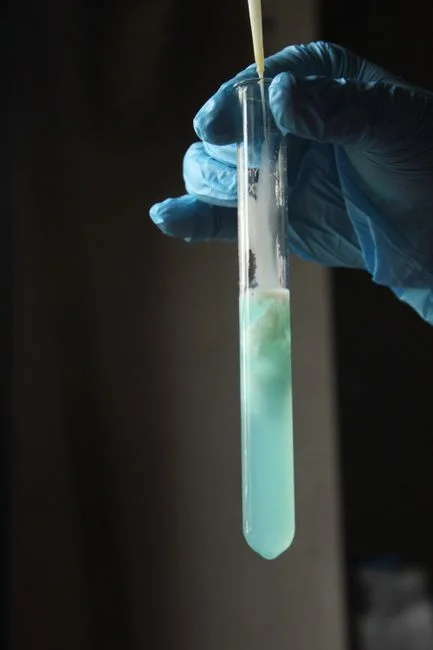
Equalization is the first hydraulic control because batch discharges can otherwise pass directly into clarification. The pretreatment guide recommends 8–24 hours of average daily flow and warns that a 4-hour basin can pass upstream spikes into the clarifier (HydropureWater, 2026). Confirm the required detention through actual batch, cleanup, and shutdown data rather than adopting the range as a permit requirement.
Control pH before metals removal. Lime and caustic are common pH-adjustment reagents; the guide recommends staged reactors when influent swings exceed 2 pH units and gives pH 6.5–9.0 as a practical starting range for testing, not as a substitute for jar testing or the permit (HydropureWater, 2026). Hydroxide precipitation is the default metals-removal approach. Sulfide precipitation is an option where residual-metal targets require it, but sealed reactors and managed off-gas are necessary because sulfide dosing introduces hydrogen sulfide risk (HydropureWater, 2026).
Use DAF when the stream contains free oil, emulsified oil, grease, or colloidal fines. The East Wenatchee DAF comparison reports more than 90% removal for TSS, FOG, COD, and BOD in its described mining service class and identifies 4–300 m³/h across 13 standard models (HydropureWater, 2026). For procurement, see the industrial DAF system for mining wastewater.
Use lamella clarification for dense, oil-free metal-hydroxide floc at higher flow. The East Wenatchee guide gives 20–40 m/h surface loading for well-conditioned floc, while the lamella product data identifies sludge recirculation and flocculation as ways to reduce chemical consumption by up to 30% (HydropureWater, 2026). The high-efficiency lamella clarifier should be selected against confirmed solids density, loading, and sludge-handling conditions.
A DAF-primary and lamella-polish arrangement is justified when oil-bearing and high-flow solids streams must be protected together; it is not mandatory. The pretreatment guide states that neither DAF nor a clarifier is explicitly required by 40 CFR Part 437 (HydropureWater, 2026). A PLC-controlled chemical dosing skid supports staged pH and coagulant control during batch dumps and shift changes.
| Wastewater condition | Preferred unit | Reason | Verification required |
|---|---|---|---|
| Oil, grease, emulsified oil, or colloidal fines | DAF | Microbubbles float oil-associated and conditioned fine solids | Representative oil and solids tests; demonstrated flotation performance |
| Dense, oil-free metal-hydroxide floc | Lamella clarification | Inclined plates provide effective settling area for dense floc | Floc density, expected loading, and carryover testing |
| Oil-bearing flow plus high-flow solids stream | DAF followed by lamella polishing | DAF protects against oil and colloidal material; lamella handles residual settleable solids | Full-train mass balance and representative batch testing |
| Highly variable discharge | Equalization plus controlled chemical feed | Reduces hydraulic and chemical shocks | Hydrograph, batch records, and dose-response testing |
Apply the guide’s peak 2-hour flow and 20–30% turndown design rule (HydropureWater, 2026), then confirm the final flow basis through wastewater characterization. The East Wenatchee DAF versus lamella comparison provides the broader equipment-selection context.
Control Cold-Weather Performance and Variable Industrial Flows
Winter design must account for reduced bubble formation and freezing, not merely average-flow treatment capacity. The East Wenatchee guide reports that DAF micro-bubble nucleation slows 20–30% at 5°C compared with 20°C and supports a 10–15% margin on the recycle pump and saturation volume (HydropureWater, 2026).
- Insulate or heat-trace exposed saturation lines and consider an insulated enclosure for a skid installation where winter access and restart reliability are important.
- Protect lamella sludge hoppers and piping from freezing; the East Wenatchee guide identifies freeze risk in an unheated vault (HydropureWater, 2026).
- Verify automatic pH and coagulant dosing against batch dumps and shift changes rather than demonstrating only steady average flow.
- Specify how the treatment train responds to high flow, low flow, off-spec pH, excessive solids, and loss of recycle pressure.
Use the DAF selection checklist for FOG and TSS to define the acceptance-test conditions. The winter margin is a design allowance from the cited guide, not a confirmed City limit; the final equipment proposal should show the calculation, selected equipment configuration, and demonstrated restart response.
Treat and Document the Residual Waste Stream
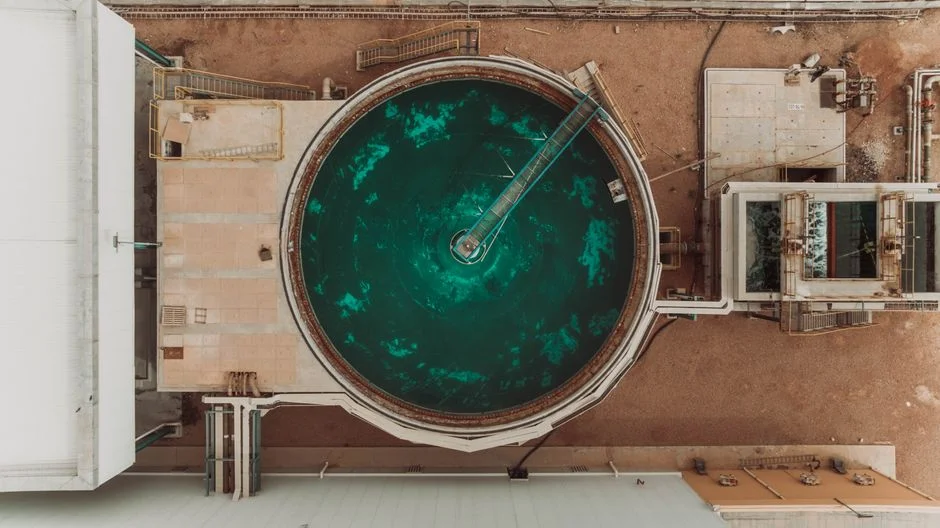
Filtration should be added only when the permit, discharge route, or downstream risk requires a solids or turbidity barrier. The pretreatment guide describes a multimedia filter as a possible polishing step and identifies a 1–2 m/h filtration rate (HydropureWater, 2026). The multimedia filtration option should therefore be justified by residual solids risk and backwash requirements, not added automatically.
Evaluate disinfection against the City’s current sewer-use requirements and collection-system conditions. Do not assume chlorine dioxide or another disinfectant is required without an ordinance or permit citation.
DAF float and clarifier underflow require a disposal route. The cited pretreatment guide describes treatment sludge as a regulated waste and presents a plate-and-frame filter press as a dewatering option (HydropureWater, 2026). The available plate-and-frame filter press range covers filtration areas from 1 m² to 500 m² with manual, hydraulic, or fully automatic PLC control.
Maintain chain-of-custody and disposal records for the resulting sludge. Also retain influent, intermediate, and final sampling results; calibration records; chemical-batch logs; operating trends; bypass notifications; filter-press records; and permit correspondence. These records demonstrate both the treatment result and the controls used to produce it.
Verify Compliance Before the Sewer Manhole
Final compliance must be demonstrated against the most restrictive applicable requirement while keeping each legal source and averaging basis distinct. The Significant Industrial User permit, Wenatchee Code 4.08.080, and any applicable categorical standard may serve different functions; identify which source controls each parameter and whether the requirement is instantaneous, daily maximum, or monthly average.
Do not treat the guide’s representative 40 CFR Part 437 zinc values of 1.0 mg/L daily maximum and 0.5 mg/L monthly average as confirmed East Wenatchee limits (HydropureWater, 2026). Obtain the City’s current local limit and site-specific permit, and preserve the applicable averaging basis in the compliance matrix.
| Acceptance item | Required evidence | Pass condition |
|---|---|---|
| Permit and local-limit matrix | Current permit, WCC 4.08.080, applicable categorical requirements | Every monitored parameter has a confirmed source, limit, averaging basis, and sampling point |
| Process performance | Representative influent and final-effluent results across operating conditions | Final effluent meets every confirmed requirement |
| Hydraulic resilience | Batch-dump and flow-surge test records | Equalization and treatment remain within validated operating conditions |
| Chemical control | Dose logs, pH trends, and upset-response records | Setpoints and excursion responses follow the approved control narrative |
| Cold-weather readiness | Heat-tracing, insulation, enclosure, and restart test records | Critical equipment remains operable under the agreed winter condition |
| Noncompliance response | Alarm, hold, recirculation, diversion, and notification procedures | Affected wastewater is held, recirculated, or diverted from sewer discharge as required |
Frequently Asked Questions
What cost inputs should a buyer request before pricing treatment equipment?
Request a total-cost comparison for equalization, pH and chemical systems, DAF or lamella equipment, foundations and enclosure, sludge dewatering, utilities, maintenance, controls, and disposal. Ask the supplier to state which assumptions are exclusions and provide operating-energy and chemical-consumption estimates for the proposed duty. The researched DAF and lamella comparison reports a DAF capital multiplier of 1.5–2.5 times the comparable lamella at equal flow and identifies compressor and recycle power as operating-cost items (HydropureWater, 2026). Those figures are comparison inputs, not a quotation for an East Wenatchee site; request a site-specific proposal and payment schedule.
How should a supplier be selected and sized for variable mining or metals wastewater?
Select the supplier against the confirmed wastewater profile, City permit, peak-flow basis, sludge properties, and winter operating condition—not an advertised flow range alone. Require the proposal to show applicable treatment capacity, equalization logic, chemical-control philosophy, sludge balance, utilities, materials, controls, testing, spare parts, warranty, delivery schedule, and commissioning criteria. For DAF comparison, the researched product range spans 4–300 m³/h across 13 models (HydropureWater, 2026), but final sizing must follow the characterization and peak 2-hour flow basis. Also request the compliance risk allocation for permit misses, rejected shipments, and performance guarantees.
Does a mining plant need an NPDES permit if it discharges only to the City sewer?
Not for the sewer discharge itself. The sewer route is administered through the City’s pretreatment program and applicable federal pretreatment requirements, including 40 CFR Part 403 and any applicable categorical standard (HydropureWater, 2026). An NPDES permit may still be required for a separate direct discharge to waters of the United States; EPA states that mineral mining and processing requirements are incorporated into NPDES permits (US EPA, 2026). Map each outfall and obtain the City’s classification before treating the legal pathways as interchangeable.
Which records should be retained to demonstrate ongoing pretreatment compliance?
Retain the industrial-user survey, current permit, local-limit matrix, influent and final-effluent results, calibration records, chemical-batch logs, operating trends, bypass notices, sludge-disposal records, and equipment maintenance and acceptance-test records. The City may inspect facilities and collect wastewater samples when necessary to verify compliance (City of Wenatchee, 2026). Keep sampling locations, dates, methods, and averaging periods consistent with the permit so the record can be reconciled without reconstructing missing facts.
Related Equipment
- industrial DAF system for mining wastewater — specifications, capacity range, and technical data