Start with the permit route, not the treatment skid
Wastewater at an acquired German semiconductor fab should be segregated at the tool or drain level, treated to the confirmed site and sewer requirements, and discharged through the route authorized under the German water-discharge permit. An indirect discharger normally requires authorization under Section 59 WHG, while the industrial facility also needs an integrated BImSchG permit under 4. BImSchV. AbwV Annex 36 is the principal semiconductor reference, but municipal Übergabewerte may impose tighter conditions. The practical train combines fluoride precipitation, clarification, ammonia segregation, biological treatment, filtration and controlled reuse.
A direct discharger releases treated wastewater directly to surface water or groundwater. An indirect discharger sends wastewater through the public sewer to a municipal sewage treatment plant. Under the WHG framework described in the HydropureWater German acquisition analysis, a direct discharger faces AbwV limits at its outfall, while an indirect discharger normally needs a Section 59 authorization demonstrating compliance at the site boundary and must also satisfy Übergabewerte negotiated with the municipal operator.
The wastewater permit cannot be separated from the facility approval. The industrial installation requires an integrated BImSchG permit under 4. BImSchV, with the treatment concept, sampling program and discharge route coordinated consistently. Annex 36 of the AbwV is the principal reference for semiconductor and flat-panel manufacturing; where it does not fully address a parameter, other AbwV annexes or authority requirements may apply. Municipal sewer conditions remain a separate commercial and technical constraint. For comparison, German industrial wastewater treatment under the 2026 permit framework illustrates why route selection affects equipment scope.
| Acquisition question | Evidence required | Decision consequence |
|---|---|---|
| Is the discharge direct or indirect? | Current permit, outfall description and sewer agreement | Sets the applicable authorization and receiving constraints |
| What must be met at the site boundary? | AbwV Annex 36 conditions, sampling program and permit limits | Defines the required treatment performance |
| What must be met at the sewer connection? | Written Übergabewerte from the Kläranlage operator | Can require pretreatment beyond AbwV alone |
| Can the inherited system support the business plan? | Flows, mass balances, batch records, drainage drawings and sludge route | Determines whether a go/no-go investment is technically feasible |
Before fixing the treatment concept, the acquirer should obtain the current permit, sewer acceptance conditions, monitoring results, stream-by-stream mass balances, drainage plans and any enforcement or remediation history. The industrial wastewater pretreatment framework for acquired German facilities is useful for structuring that evidence request. Treat corporate recycling or pollution indicators as business objectives, not substitutes for permit limits.
Segment the wastewater before designing a treatment train
TSMC’s Fab 20 program shows that concentration-based routing must be established at tool level before equipment capacity is committed. TSMC reported that its first-phase ammonia-diversion inspection covered approximately 1,000 tools and 5,887 drain ports, creating concentration-based diversion rules and confirming tool configurations and routing before wastewater entered the treatment system (TSMC ESG, 2025-06-02).
For the German site, create separate management zones for high-concentration ammonia, low-concentration ammonia, fluoride-bearing process water, general organics and suspended solids, and sanitary wastewater. Their appropriate destinations differ: concentrated ammonia may justify stripping or membrane degassing, dilute ammonia may be biologically treated, fluoride may require precipitation, while sanitary wastewater needs collection and biological treatment. Do not mix streams when doing so increases treatment load, disrupts a biological process or prevents compliance with a diversion rule.
| Stream | Diligence parameters | Treatment decision |
|---|---|---|
| High-concentration ammonia | Flow, ammonia nitrogen, pH, conductivity and batch profile | Route separately to stripping or degassing with acid scrubbing |
| Low-concentration ammonia | Ammonia nitrogen, COD, nutrients and flow variability | Route to biological treatment or controlled blending |
| Fluoride-bearing process water | Fluoride, flow, pH, calcium and other precipitating ions | Precipitation followed by solids separation where required |
| Organics and suspended solids | COD, suspended solids, photoresist chemistry and batch generation | Equalization, biological treatment and filtration |
| Sanitary wastewater | Flow, COD, nutrients and process-area segregation | Collection and biological treatment, normally kept separate |
TSMC reported that its Fab 20 Phase 1 system reduced discharged wastewater conductivity by 40% and chemical reagent use by 30% in June 2025 after separating low-concentration ammonia for biological treatment and high-concentration ammonia for a degassing membrane that produces ammonium sulfate (TSMC ESG, 2025-06-02). These are verified operating results from Fab 20, not promised outcomes for the German site. They provide a diligence benchmark: ask whether the inherited drainage can support similarly precise routing.
The required mass balance must cover flow, pH, fluoride, ammonia nitrogen, COD, suspended solids, conductivity, metals and batch-generation patterns by drain and time of day. Include operating history, abnormal discharges, chemical delivery practices and expansion plans. The legacy semiconductor wastewater due-diligence checklist can support the audit scope. For ammonia routing, use the ammonia-nitrogen treatment blueprint for semiconductor fabs as a technical reference, not as a substitute for site data.
Build pretreatment around fluoride, ammonia and variable batches
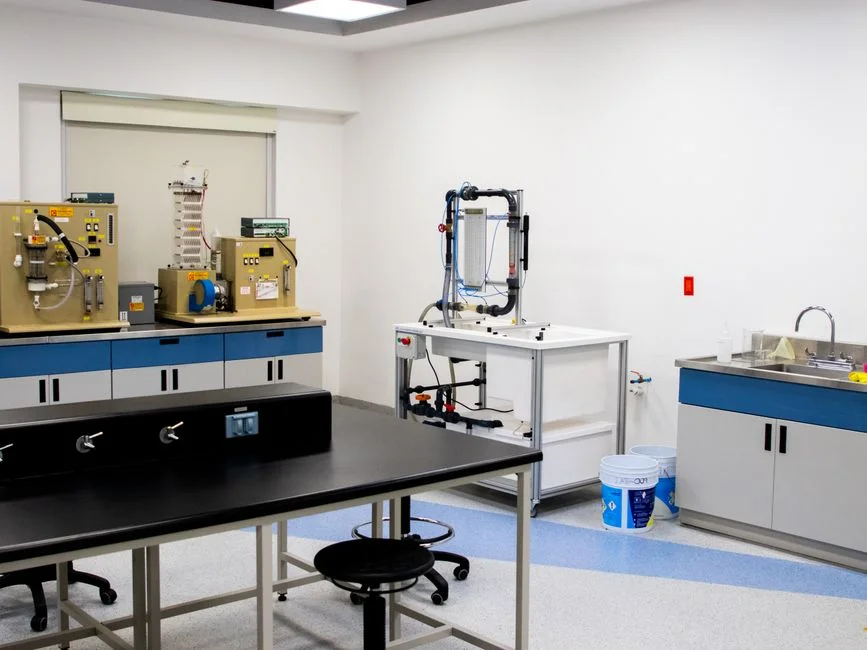
The treatment train must absorb variable semiconductor batches without relying on dilution or unauthorized blending. Start with equalization and controlled pumping, then apply flow-paced pH and coagulant control. If the permitted fluoride target requires precipitation, combine fluoride precipitation with lamella clarification or another validated solids-separation step before biological treatment.
The supplied German analysis reports fluoride of 50–500 mg/L in raw ion-exchange streams and typical municipal Übergabewerte of 20–50 mg/L (HydropureWater German acquisition analysis, 2026). These values are screening evidence, not transferable limits: the acquirer must verify them against the raw wastewater characterization, current permit and written sewer conditions.
Automatic chemical dosing should respond to measured flow and water chemistry rather than a fixed timer. A PLC-controlled chemical dosing skid should control reagent preparation, feed, interlocks and inventory tracking. Before selecting the solids separator, resolve DAF versus clarifier selection for semiconductor wastewater against fluoride loading, precipitated-solids characteristics, required recovery and the available footprint.
| Unit operation | Function | Minimum design inputs |
|---|---|---|
| Equalization and controlled pumping | Absorb batch peaks and stabilize treatment feed | Flow hydrograph, batch profile, storage turndown and emergency containment |
| pH and coagulant dosing | Support precipitation and clarifyability | Reagent demand, water chemistry, storage and dosing-control data |
| Fluoride precipitation | Remove dissolved fluoride into a managed solids stream | Raw fluoride, target limit, calcium availability and sludge chemistry |
| Lamella clarification | Separate precipitated solids | Solids loading, settling behavior, sludge removal and recovery criteria |
| Ammonia stripping or degassing | Remove concentrated ammonia | Ammonia concentration, flow, pH, acid demand and ammonium-sulfate route |
| MBR or SBR with ultrafiltration | Remove COD, residual organics and suspended solids | Organic load, nutrients, biomass criteria, membrane fouling and reuse endpoint |
| Thickening and dewatering | Prepare fluoride-bearing sludge for an authorized route | Sludge mass, solids content, destination and residual-leachate controls |
Route high-concentration ammonia to stripping or degassing with acid scrubbing, following the concentration-separation principle documented by TSMC. Route low-concentration ammonia to biological treatment, where it can support the biological nitrogen requirement. TSMC also identifies reverse osmosis as a concentration step that its new diversion approach can avoid for qualifying mixed streams, reducing chemical and energy demand (TSMC ESG, 2025-06-02).
For residual COD and solids, the supplied analysis identifies an MBR or SBR followed by ultrafiltration as a suitable architecture for low-solids effluent and reuse. An integrated MBR wastewater treatment system should be assessed for membrane area, peak loading, aeration, sludge removal and recovery performance. A sedimentation unit can support fluoride-solids separation, but it does not remove the need for biological treatment where organics require it.
Design the sludge route with the liquid train. Fluoride precipitation produces a fluoride-bearing solid that requires thickening, dewatering, storage and an authorized destination. A treatment concept that meets the sewer limit but has no defensible sludge route is incomplete.
Choose between compliance treatment, reuse and near-zero liquid discharge
TSMC’s Arizona reclamation plant demonstrates a long-term high-recovery model, but its design is not a German permit assumption. KTAR reported on 2025-09-01 that TSMC broke ground on a 15-acre industrial reclamation plant at its north Phoenix site. The design is intended to raise the site’s recycling rate by as much as 90%, achieve near-zero liquid discharge, support two fabs and accommodate future expansion.
| Option | Definition | Decision test |
|---|---|---|
| Compliant discharge | Treat wastewater to the applicable site-boundary and sewer requirements before authorized discharge | Permit and Übergabewerte can be met reliably across batch conditions |
| Wastewater reuse | Treat selected streams to the quality required by a defined fab or on-site use | Stream characterization, water balance and end-user quality specification are verified |
| Near-zero liquid discharge | Recover most liquid and concentrate the residual for further management | Concentrate and sludge routes are permitted, funded and technically operable |
Compliant discharge is the baseline unless reuse has a clear operational or economic role. For reuse, identify the receiving process, required water quality, seasonal availability and impact on tool operations. Do not treat every stream to a common high-purity specification if the receiving use can tolerate lower quality; that unnecessarily increases energy, membrane and concentrate-management demands.
Reverse osmosis and ion exchange are polishing options when the reuse specification requires them. A reverse-osmosis water purification system can support reuse, while ultrafiltration for wastewater treatment can provide the solids barrier before RO. Commercial comparison must include concentrate disposal, chemical consumption, membrane replacement, energy use and operator workload.
Near-zero liquid discharge is a staged strategic option, not a default response to acquisition. First establish compliant pretreatment, a verified reuse water balance and a sludge route. Then assess whether the marginal recovery value justifies the additional concentrate-management infrastructure. A municipal sewer route can remain the legal discharge route while selected streams are reused on site.
Turn acquisition findings into a procurement package
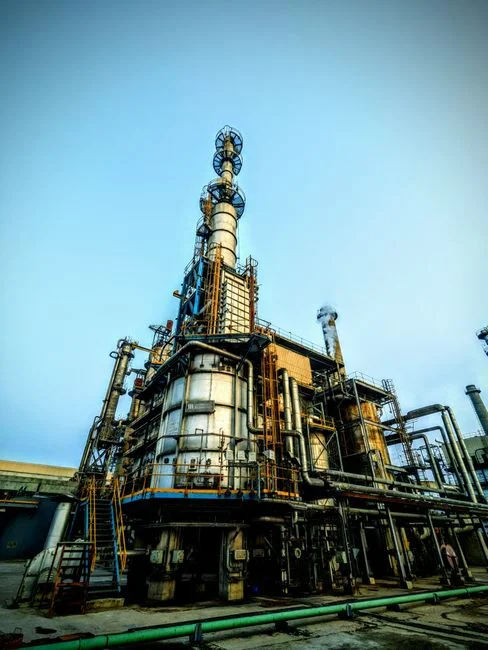
A defensible request for proposal must begin with verified data, not a preferred treatment diagram. Issue the current permit, sewer conditions, stream data, batch records, drainage drawings, expansion plan and sludge information to bidders. Then require each proposal to define the sampling points, guarantees, chemical consumption, sludge generation, turndown, automation and expansion interfaces associated with its design.
Require bidders to demonstrate how the train handles fluoride, ammonia, COD, suspended solids and peak batch loads without dilution or unauthorized blending. Guarantees should be tied to the applicable permit limit or written Übergabewerte. Require a test protocol, representative influent used during acceptance, alarm provisions, redundant critical equipment, bypass prevention and remote monitoring.
Governance should extend beyond incoming equipment. TSMC’s 2025 supplier-wastewater program evaluated 425 critical raw-material suppliers and audited 15 high-risk suppliers. It generated 140 improvement recommendations, of which 85.7% had been closed by July 2026, according to the HydropureWater German acquisition analysis published in 2026. This is a corporate oversight benchmark, not a German regulatory requirement.
| Procurement package | Required deliverable | Acceptance question |
|---|---|---|
| Design basis | Verified stream characterization, permit conditions and batch profile | Does the offer remain valid for the acquired site’s actual loads? |
| Performance guarantee | Permit- or Übergabewerte-linked test criteria | Can performance be demonstrated under representative and peak conditions? |
| Operations | Automation, alarms, redundancy, chemicals and service scope | Can plant operations remain compliant during maintenance or upset? |
| Sludge | Mass balance, thickening, dewatering and authorized destination | Is the residual route technically and legally available? |
| Handover | Analysen- und Messprogramm, emergency concept and training | Are responsibilities, records and acceptance criteria complete? |
The final package should include an Analysen- und Messprogramm defining parameters, sampling points, methods and frequency; a chemical-spill and fire-water emergency concept; bypass-prevention logic; commissioning acceptance tests; and operator training. The dewatering guide for industrial wastewater sludge can inform the residual-solids workstream, but the selected technology must match the actual sludge properties.
Frequently Asked Questions
Does a TSMC recycling target replace German wastewater discharge limits?
No. Corporate recycling and water-pollution indicators are business-performance measures. The binding requirements come from the current permit, applicable AbwV provisions, the Section 59 WHG authorization where applicable, and municipal Übergabewerte. TSMC’s reported Fab 20 reductions establish an operating benchmark, not an enforceable limit at a German site.
How can the treatment equipment be sized and budgeted during an acquisition?
Request a verified stream-by-stream mass balance, flow records, batch profiles, permit and sewer conditions, sludge quantities and expansion assumptions. Then ask each bidder for a priced design with stated performance guarantees, chemical and energy consumption, sludge route, delivery schedule and exclusions. No reliable price or capacity can be assigned from the fab name alone; the acquisition team should require the missing design inputs before comparing capital or operating budgets.
Can the German fab retain a municipal sewer route while increasing wastewater reuse?
Yes, provided the sewer discharge remains legally authorized and the Übergabewerte are met. On-site pretreatment can improve quality, while selected streams can be routed to reuse after their quality and water balance are verified. The treatment architecture should therefore separate the sewer-compliance train from the reuse train and prevent reuse decisions from weakening permit compliance.
How should an acquirer select a wastewater treatment supplier?
Prioritize demonstrated semiconductor treatment experience, permit-oriented guarantees, performance under batch variability, chemical and energy consumption, sludge handling, service capability and lifecycle support. Also ask about upstream integration: the Berlin wastewater-treatment cost framework can identify cost categories, but a supplier comparison still needs site-specific quotations and verified operating data.
What is the most important acquisition risk for wastewater infrastructure?
The largest risk is discovering after the purchase agreement that inherited drains, permits, sewer acceptance conditions or sludge routes cannot support the planned production and treatment ramp-up. Resolve this before the final investment decision by reviewing the current permit, enforcement history, drainage drawings, sampling data, mass balances, municipal commitments and expansion assumptions. A late discovery could force capital upgrades, constrain production or delay the operating permit.