
What Belt Filter Presses Can Achieve for Detergent Wastewater
A belt filter press dewaters detergent wastewater by removing water from conditioned solids to produce a non-liquid cake. The US EPA states that belt filter presses remove water from liquid wastewater residuals, while dewatering reduces residual volume and supports subsequent storage, processing, transfer, end use or disposal. The equipment separates water from solids; it does not remove dissolved detergent or other dissolved contaminants simply because the liquid phase has been removed. For detergent manufacturing wastewater, suitability depends on the concentrated sludge sent to the press, not on raw wastewater flow or COD alone. No universal cake-solids result can be derived from the supplied research, so a waste characterization and representative bench trial must establish the application target.
There are two distinct design bases. The liquid treatment train must address soluble detergent, surfactant and other waterborne constituents before solids separation. The dewatering duty handles the concentrated solids stream delivered to the press. A supplier may therefore need to review upstream solids removal, equalization and chemical dosing rather than treat a belt filter press as the complete detergent wastewater treatment process.
That distinction is important when comparing formats. A plate-and-frame sludge dewatering alternative may be considered for batch treatment or flexible filtration area, while a belt filter press is suited to a continuous solids stream. The choice remains application-specific: neither format converts dissolved detergent into captured cake, and neither should be guaranteed from generic wastewater data.
Detergent Wastewater Properties That Affect Press Selection
Detergent-manufacturing wastewater changes conditioning demand and drainage behavior when formulations, fillers or insoluble additives change. The American Water College identifies sludge type and sludge conditioning as factors affecting belt-press operation in its 2010 Sludge Dewatering training material. That municipal reference establishes the variables to investigate, but it does not establish a detergent-specific dose or performance guarantee.
Request a waste profile covering the detergent or surfactant formulation, fillers or insoluble additives, suspended solids, pH, temperature, conductivity, COD, oil and grease, and expected batch or campaign variation. Give particular attention to representative sludge samples rather than relying only on raw wastewater analysis. Soluble detergent chemistry and insoluble product, filler or precipitate should be recorded separately because the insoluble fraction primarily determines conditioning demand and solids retention.
Confirm whether the stream has upstream equalization, solids removal and chemical conditioning before it reaches the press. If upstream treatment is inadequate, changes in detergent formulation can propagate directly to feed consistency, belt drainage and cake release. Ask the supplier to define the required inlet condition in writing; a proposal based only on wastewater flow or COD does not establish dewatering capacity.
The table separates the information needed for selection from the operating response it may affect.
| Waste-profile input | What the buyer must establish | Decision affected |
|---|---|---|
| Detergent or surfactant formulation | Products used and changes between campaigns | Conditioning, feed consistency, washout risk |
| Fillers, insoluble additives and precipitate | Composition and tendency to retain water or blind equipment | Polymer demand, belt selection, cake release |
| Suspended solids | Representative concentration in the sludge fed to the press | Hydraulic loading and throughput |
| pH, temperature, conductivity, COD and oil and grease | Values and permitted variation for the actual press feed | Polymer compatibility and upstream process limits |
| Batch and campaign variation | Expected feed and flow ranges | Control strategy, operating window and trial protocol |
The upstream train may include an dissolved-air flotation unit for solids removal and an automatic polymer dosing system for controlled conditioning. Neither device replaces waste characterization. Their suitability and sizing must follow from the characterized feed and trial results.
How Conditioning, Compression and Cake Release Work
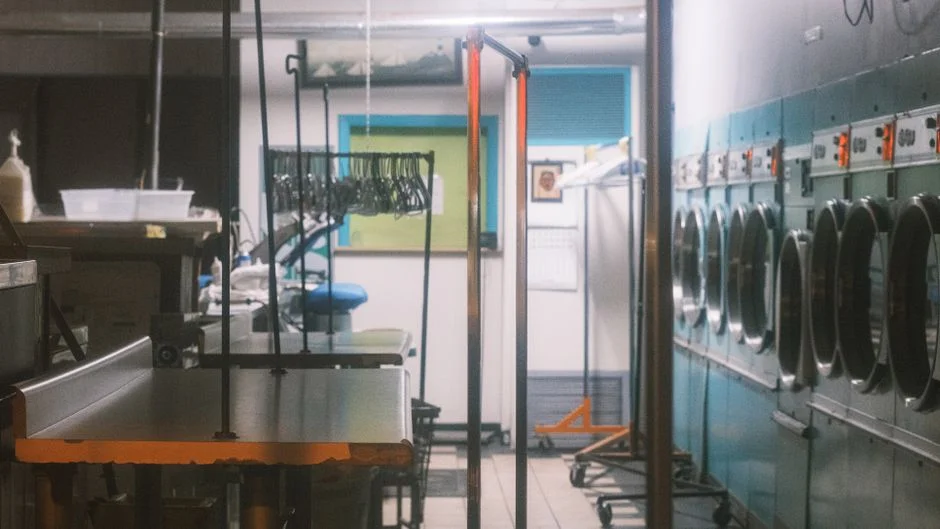
The American Water College’s published operating sequence is: precondition sludge with polymer, allow gravity drainage, compress solids between two belts, scrape the solids from the belt, spray the belts and repeat the cycle. In process terms, controlled conditioned-sludge feed enters the gravity zone, then the pressure zones, followed by cake discharge, belt washing and filtrate collection.
Polymer assists separation of solids from water. Its appropriate dose must be established through bench testing because the American Water College specifically identifies bench tests as the method for determining the ideal dose. Municipal guidance cannot be transferred directly to detergent wastewater, where formulation changes, fillers and operating temperature may alter sludge behavior.
- Characterize representative press-feed sludge and test polymer compatibility.
- Determine the conditioning dose through jar or bench trials.
- Feed conditioned sludge uniformly into the gravity-drainage zone.
- Apply controlled compression as the sludge moves through the pressure zones.
- Discharge cake and collect filtrate in separate streams.
- Wash the belts before the cycle repeats.
Surfactants, fillers, temperature and variable sludge composition should be included in the conditioning trial. If the selected detergent products change across production campaigns, revisit dose and the operating window. An automatic polymer dosing system can support repeatable feed preparation, but automation cannot compensate for an inappropriate polymer, an unstable feed or an incorrect dose.
Operating Parameters and Commissioning Targets
The American Water College identifies sludge type, sludge conditioning, belt tension or pressure, belt speed, hydraulic loading and belt type as the six factors affecting belt-press operation. Its 2010 municipal sludge training material also provides published control references that can structure commissioning; these are trial starting points, not guaranteed targets for detergent wastewater.
| Control | Published municipal-sludge reference | Commissioning interpretation |
|---|---|---|
| Belt speed | 2–10 ft/min | Slower operation gives more time in the pressure zone, but excessive slowing can cause solids buildup and improper drainage. |
| Hydraulic loading | 20–50 gpm/meter of belt width, also stated as 7–16 gpm/ft of belt width | Washout becomes more likely near the upper end of the published loading band. |
| Belt tension | Higher tension increases compression and water removal | Excessive tension may squeeze sludge from between the belts or force it through the belt; insufficient tension may leave cake too wet. |
| Belt porosity | Too porous may produce poor filtrate quality | Insufficient porosity can cause blinding, plugging and washout. |
| Polymer conditioning | Dose determined through bench tests | Confirm the dose using representative detergent sludge rather than copying municipal values. |
| Sludge type | Listed as an operating factor | Record formulation, fillers, temperature and batch variation in the commissioning baseline. |
Commissioning should vary one control at a time where practical and record feed solids, polymer dose, belt speed, tension, hydraulic loading, filtrate quality and cake condition. The American Water College characterizes the ideal speed as the slowest speed that does not cause washout, and the ideal tension as the highest level that keeps sludge between the belts. Those are operating principles to test, not substitute acceptance criteria for a detergent application.
Specify the feed condition and test method for acceptance. If the supplier compares the proposed press with a plate-and-frame sludge dewatering alternative, require both proposals to use the same characterized sludge and defined performance protocol.
Belt Filter Press or Plate-and-Frame Press?
A belt filter press is a continuous dewatering format, while the verified HydropureWater plate-and-frame range covers filtration areas from 1 m² to 500 m² with manual, hydraulic or fully automatic PLC-controlled operation. The correct choice depends on feed consistency, control requirements, labor, wash-water demand, footprint and cake handling—not on a universal claim that one format produces better results.
| Procurement factor | Belt filter press | Plate-and-frame press |
|---|---|---|
| Feed pattern | Requires a suitable continuous solids stream and controlled hydraulic loading | Can suit batch treatment and variable filtration demand |
| Filtration area | Specified through belt width, speed and loading basis | Verified product range of 1–500 m² |
| Operation | Continuous belt cycle with cake scraping and washing | Manual, hydraulic or fully automatic PLC-controlled options |
| Operator intervention | Requires attention to feeding, conditioning, washing and control changes | Depends on selected configuration and batch-cycle requirements |
| Wash-water demand | Continuous belt washing is integral to the process | Must be evaluated for the selected plate-and-frame configuration |
| Footprint and cake handling | Compare the complete belt, drive, wash and discharge arrangement | Compare frame area, opening requirements and cake-discharge route |
Use explicit if-then logic to select the system. Prioritize belt filtration when the solids stream is continuous and consistent enough for controlled loading, continuous operation is valuable and the proposed washing and cake-discharge arrangement fits the available floor space. Consider a plate-and-frame format when batch treatment, flexible filtration area or the available manual, hydraulic or automatic PLC control configuration is decisive.
Require every supplier to separate evidence based on municipal sludge from evidence involving industrial or detergent-like waste. Ask for trial data, the feed condition behind it, the conditioning method and the acceptance test. The verified plate-and-frame range establishes available configurations, not detergent-specific performance.
Diagnose Common Belt-Press Problems
Belt washout is usually a process interaction involving polymer dose, hydraulic loading, belt speed, belt condition and washing performance. The American Water College’s troubleshooting guide directs operators to check those factors and, where indicated, increase polymer dose, reduce sludge flow, raise belt speed or clean the wash equipment. These actions should follow confirmation of the likely cause rather than being applied indiscriminately.
| Symptom | Checks | Corrective action | Prevention |
|---|---|---|---|
| Excessive belt washout | Polymer dose, hydraulic load, belt speed and wash equipment | Increase dose if low, reduce flow if load is high, raise speed if low, and clean the wash system as indicated | Track feed solids, formulation, dose, speed and loading |
| Belt blinding | Polymer overdose and belt cleanliness | Secure and clean the affected belt; review and adjust the dose | Monitor wash effectiveness and conditioning changes |
| Poor filtrate quality | Sludge squeezed between belts, belt tension and washing performance | Reduce excessive tension, improve belt washing or reduce speed where the troubleshooting guide identifies speed as excessive | Record tension, speed and wash-system condition |
| Wet cake | Sludge characteristics and chemical dose | Adjust upstream processing or chemical dose where testing confirms the cause | Track formulation, feed solids, temperature, polymer product and dose |
Preventive control requires a change log covering detergent formulation, feed solids, temperature, polymer product and dose, belt speed, tension and hydraulic loading. Without that record, recurring symptoms are difficult to separate from normal campaign variation.
Do not attribute every failure to the press. The published troubleshooting guide treats sludge characteristics, conditioning and operating controls as causal factors. An automatic polymer dosing system may improve dose repeatability, but it will not correct a variable sludge, unsuitable belt porosity or a failed wash system.
Prepare the Supplier Evaluation and Trial Plan
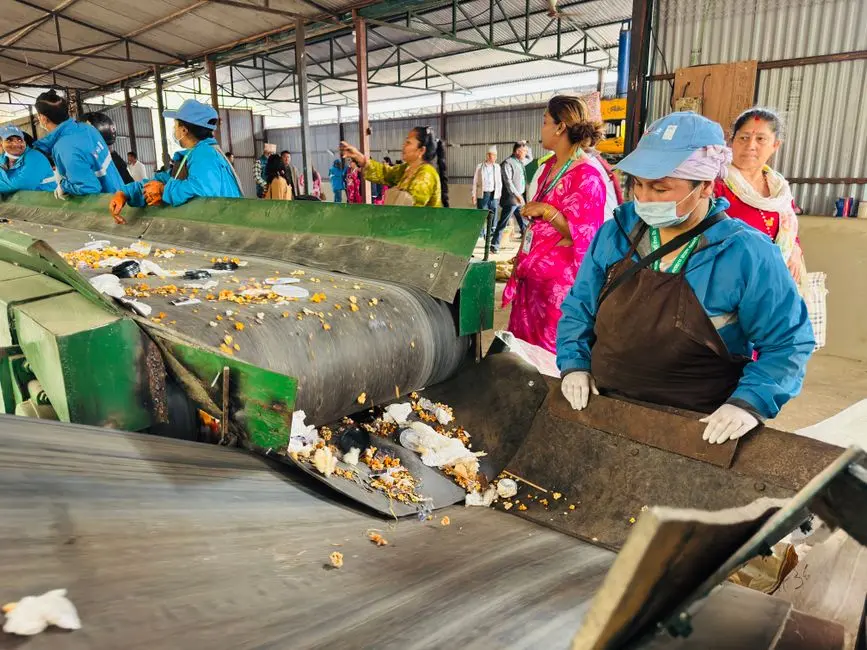
A procurement package should define the operating duty before asking for a price. Provide the wastewater and sludge profile, production variability, required throughput, operating schedule, floor space, utilities, cake destination and local pretreatment constraints. These inputs separate a technically evaluated proposal from one based on generic flow or COD figures.
Require the supplier to state the proposed belt width, hydraulic-loading basis, polymer range, control philosophy, washing arrangement and included ancillaries. Ask for representative trial evidence, acceptance criteria and a commissioning plan that includes polymer bench testing and operator training. The acceptance protocol should identify the feed condition, sampling method and required filtrate and cake outcomes.
Clarify warranty scope, responsibility for process performance, spare-parts strategy, wear-part availability and local service support. Use the water-treatment parts, valves and filter media scope only as part of a complete wear-part and support review; serviceability and critical-spares availability must be explicit in the purchase specification.
Do not convert municipal-sludge figures in the training material into a guaranteed detergent cake-solids percentage. Guarantee an accepted feed condition and a defined test protocol instead. If the supplier cannot supply representative evidence, a conditional trial-based acceptance route is safer than an unsupported percentage.
Frequently Asked Questions
How much does a belt filter press for detergent wastewater cost?
The supplied research contains no equipment price, so a defensible budget cannot be stated without a quotation. Request one based on characterized sludge feed, required throughput, belt width
Frequently Asked Questions
How much does a belt filter press for detergent wastewater cost?
Capital costs for a belt filter press system typically range from $80,000 to $350,000 depending on the belt width, material of construction, and level of automation. Operational costs are generally lower than competing technologies, averaging $50 to $120 per dry ton of solids processed, factoring in energy, polymer consumption, and belt replacement cycles.
How do I size a belt filter press for detergent wastewater?
Sizing is determined by the hydraulic loading rate, typically measured in gallons per minute (GPM) per meter of belt width, and the solids loading rate, expressed in pounds of dry solids per hour per meter. For detergent wastewater, which often contains surfactants that inhibit flocculation, engineers typically target a solids loading rate between 200 and 500 lbs/hr/meter to ensure adequate cake dryness and filtrate quality.
Should I choose a belt filter press or a plate-and-frame filter press?
Choose a belt filter press for high-volume, continuous processing where space is available and lower energy consumption is required. Conversely, select a plate-and-frame (recessed chamber) filter press if your goal is achieving maximum cake dryness, often reaching 35% to 50% solids content compared to the 18% to 25% typically achieved by belt presses in surfactant-heavy applications.
How much polymer does detergent wastewater sludge need for dewatering?
Detergent wastewater sludge is notoriously difficult to dewater due to emulsified oils and surfactants, requiring higher-than-average polymer dosages. You should expect to dose between 15 and 40 pounds of high-molecular-weight cationic polyacrylamide per dry ton of solids to achieve proper floc formation and water release.
What causes belt washout and blinding in detergent wastewater treatment?
Belt blinding is primarily caused by the accumulation of residual surfactants and fine, non-ionic particles that embed into the belt weave, reducing permeability. Washout occurs when high-pressure spray headers—operating below the required 80 to 100 PSI—fail to remove these deposits, leading to poor drainage, increased belt tension, and eventual premature belt failure.