Identify the permit path and the actual discharge limit
Mining and metals plants near Mcclure meet sewer pretreatment limits by treating wastewater at the industrial-user discharge point before it enters a municipal sewer. The controlling requirements are the POTW’s approved local limits, applicable categorical standards under 40 CFR Part 437 or Part 433, and the facility’s industrial-user permit. EPA explains that local limits are site-specific and protect the POTW, sludge, and receiving waters. A typical train uses equalization, pH adjustment, hydroxide or sulfide precipitation, flocculation, DAF or clarification, filtration when needed, and controlled sludge dewatering. Equipment should be sized and verified against the latest sewer-use requirements rather than a generic federal limit.
A discharge to a POTW collection system is an indirect discharge evaluated under the federal pretreatment framework. A separate surface-water outfall remains a direct-discharge pathway subject to its own NPDES authorization; its permit must not be used to size the sewer-pretreatment train. EPA states that POTWs impose local limits at the industrial user’s end-of-pipe discharge, or point of connection to the collection system. These limits may be numeric or narrative and are intended to prevent pass through and interference with POTW operations or sludge handling.
Determine categorical applicability only after mapping the actual industrial process. 40 CFR Part 437 covers ore mining and dressing. 40 CFR Part 433 applies to metal finishing where its scope is met; it is not a generic limit for every metals facility. Where Part 433 applies, the research reports copper limits of 3.38 mg/L daily maximum and 2.07 mg/L monthly average, and total chromium limits of 2.77 mg/L daily maximum and 1.71 mg/L monthly average under 40 CFR 433.15. Confirm those values against the current regulation and facility classification.
Before selecting equipment, obtain the current sewer-use ordinance, POTW-approved local limits, industrial-user permit, sampling protocol, monitoring requirements, and discharge monitoring reports. Use the 2026 fabricated-metals pretreatment guide to compare permit requirements with process chemistry, not as a substitute for the controlling local documents.
| Document or requirement | What it establishes | Procurement implication |
|---|---|---|
| POTW sewer-use ordinance and approved local limits | Binding site-specific limits at the point of connection | Defines the required treatment performance |
| Industrial-user permit | Monitoring, reporting, sampling, and enforceable conditions | Defines compliance verification and operating controls |
| 40 CFR Part 437 | Categorical standards for covered ore-mining and dressing processes | Applies only after process classification |
| 40 CFR Part 433 | Categorical standards for covered metal-finishing processes | Includes the cited copper and total-chromium values only where applicable |
| Separate NPDES permit | Requirements for a direct surface-water discharge | Must be kept separate from sewer sizing |
Characterize the wastewater before selecting process equipment
Waste characterization must identify pollutant peaks and source variability, not merely reproduce a plant-wide average. EPA’s pollutant-of-concern method in Local Limits Development Guidance considers NPDES conditions, water-quality criteria, sludge standards, air-quality criteria, resource protection, treatment interference, collection-system and worker protection, and industrial discharges. The resulting pollutant list should drive both sampling and treatment selection.
Separate continuous drainage from batch process water, dump-leach events, mill clean-outs, shift changes, and other periodic releases. Each stream needs its own flow and pollutant record because equalization and treatment capacity must reflect realistic peaks. As evidence of source variability, the OSMRE Co-treatment of Acid Mine Drainage in Municipal Wastewater Plants final report, issued June 30, 2023, reported a pH range of 3.13–4.58 in raw acid mine drainage from three sources tested in 2023. One average pH would conceal that difference.
Test metals identified by both the applicable categorical standard and the POTW local limits, along with TSS, pH, oil and grease, and other constituents relevant to plant operations or interference. For flow design, the research calls for the peak two-hour flow with 20–30% turndown capacity. Use continuous records and source-specific sampling to establish average flow, peak two-hour flow, and required turndown.
The research gives 2026 screening ranges of 0.3–1.0 mg/L monthly average for zinc and 0.3–0.5 mg/L monthly average for copper. These are not substitutes for the specific POTW ordinance. Confirm the controlling values before setting equipment targets or chemical doses.
| Design input | Evidence or required method | Application |
|---|---|---|
| Source-separated pH and metals | OSMRE raw mine-drainage pH of 3.13–4.58 across three sources, June 30, 2023 | Characterize acidity and precipitation demand by source |
| Flow record | Peak two-hour flow plus 20–30% turndown capacity, per the research | Size equalization and treatment equipment |
| Batch releases | Separate sampling of dump-leach, clean-out, and shift-change events | Test hydraulic and chemical shock conditions |
| Screening metal limits | Zinc 0.3–1.0 mg/L and copper 0.3–0.5 mg/L monthly-average ranges in the 2026 research | Screen the problem; confirm against the POTW ordinance |
Use an automatic chemical dosing system to implement the dose ranges established by jar testing, with controls linked to measured flow and pH rather than a fixed feed assumption.
Build the pretreatment train from the discharge point backward
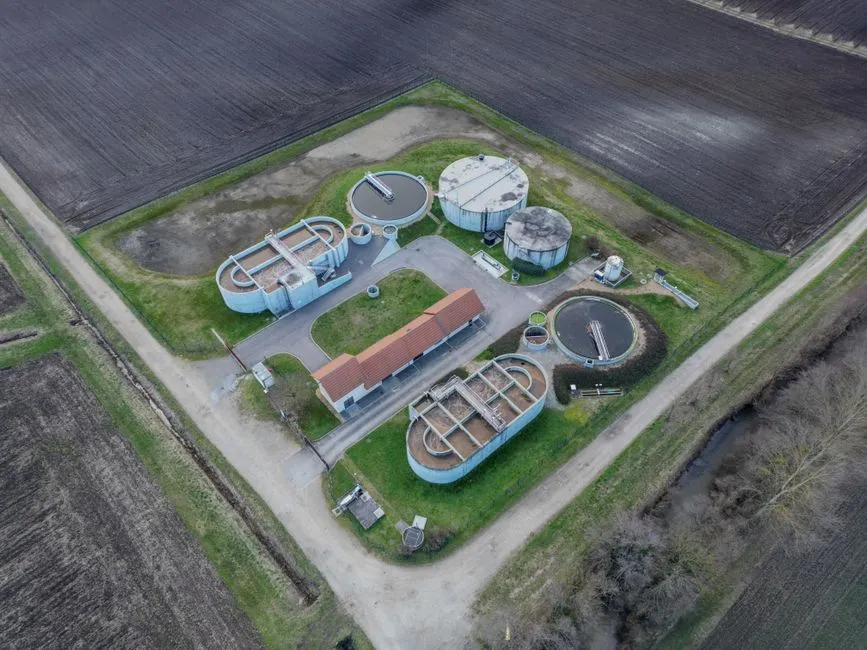
The final discharge point determines the performance required from every upstream stage. Work backward through equalization, chemical treatment, solids separation, and any required filtration, while keeping sampling at the point of connection.
- Equalize. The research recommends 8–24 hours of average daily flow and warns that a 4-hour basin can pass upstream spikes into the clarifier. Verify actual detention time and usable working volume.
- Adjust pH and condition solids. Control chemical feed from measured pH, flow, and jar-test dose data. An automatic chemical dosing system should record operating conditions and support reproducible control.
- Precipitate metals. Use hydroxide precipitation as the baseline when jar tests and permit targets support it. The research cites 85–95% total-metals removal for properly controlled precipitation systems.
- Separate solids. Follow chemical treatment with flocculation and either a DAF system for oil, grease, and colloidal metals or a lamella clarifier for metal-hydroxide sludge.
- Filter only when justified. Add filtration where solids carryover or permit conditions require it.
Reserve sulfide precipitation for cases requiring lower residual metals. The research reports residuals of 0.01–0.05 mg/L for Cu, Zn, Cd, and Ni, compared with 0.5–2.0 mg/L for hydroxide precipitation. It also states that sulfide reagent cost is generally 2–4 times higher and that sealed reactors plus H2S scrubbing are required. These comparisons justify evaluation; they do not replace site testing.
| Stage | Waste or risk controlled | Design basis | Downstream protection |
|---|---|---|---|
| Equalization | Batch releases and hydraulic shocks | 8–24 hours of average daily flow, per the research | Damps chemical demand and solids surge |
| pH adjustment | Acidity and precipitation pH | Measured pH, flow, and test-established dose | Prevents chemical or solids overloading |
| Hydroxide precipitation | Dissolved metals | 85–95% total-metals removal cited for controlled systems | Creates metal-hydroxide solids |
| Sulfide precipitation | Residual metals requiring lower levels | 0.01–0.05 mg/L cited residuals; sealed reactors and H2S scrubbing | Provides polishing or tighter residuals |
| DAF or clarification | Flocs, colloids, oil, and grease | Site-tested hydraulic loading and flow | Reduces solids carried to filtration or discharge |
| Filtration | Residual TSS or solids carryover | Permit requirement and identified carryover | Protects point-of-connection compliance |
Choose DAF or a lamella clarifier using the actual sludge properties
DAF is the stronger candidate when oil, grease, or fine colloidal solids are present; lamella clarification is generally more suitable when the primary solids are metal-hydroxide flocs, flow is comparatively high, and footprint is constrained. The deciding evidence should come from the same site-specific waste characterization and pilot work.
The research lists a DAF hydraulic-loading range of 5–25 m/h and a product-capacity range of 4–300 m3/h across 13 models. These are selection boundaries, not guarantees of performance. The cited practical DAF selection checklist for FOG and TSS provides a useful framework for evaluating those boundaries.
For lamella clarification, the research cites a surface-loading range of 20–40 m/h. It also lists sludge recirculation, integrated flocculation, compact footprint, and up to 30% lower chemical consumption as vendor-reported benefits. Require the selected supplier to substantiate those claims for the proposed flow, solids, pH, and operating point rather than treating them as guaranteed outcomes.
Use the DAF versus clarifier selection for mining wastewater to structure the comparison. Hydraulic loading cannot establish effluent performance; final selection still requires site-specific jar tests, pilot work, and a compliant equipment proposal.
| Selection criterion | DAF | Lamella clarifier |
|---|---|---|
| Preferred waste profile | Oil, grease, or fine colloidal solids | Predominantly metal-hydroxide sludge |
| Cited hydraulic basis | 5–25 m/h | 20–40 m/h surface loading |
| Cited product range | 4–300 m³/h across 13 models | Not stated in the supplied research |
| Key evaluation | Skimming performance and colloidal capture | Floc settling, sludge blanket, and footprint |
| Required common checks | End-of-pipe TSS and metals, chemical consumption, sludge characteristics, peak-flow response, maintenance, and total installed cost | |
Handle the residual solids without creating a new discharge problem
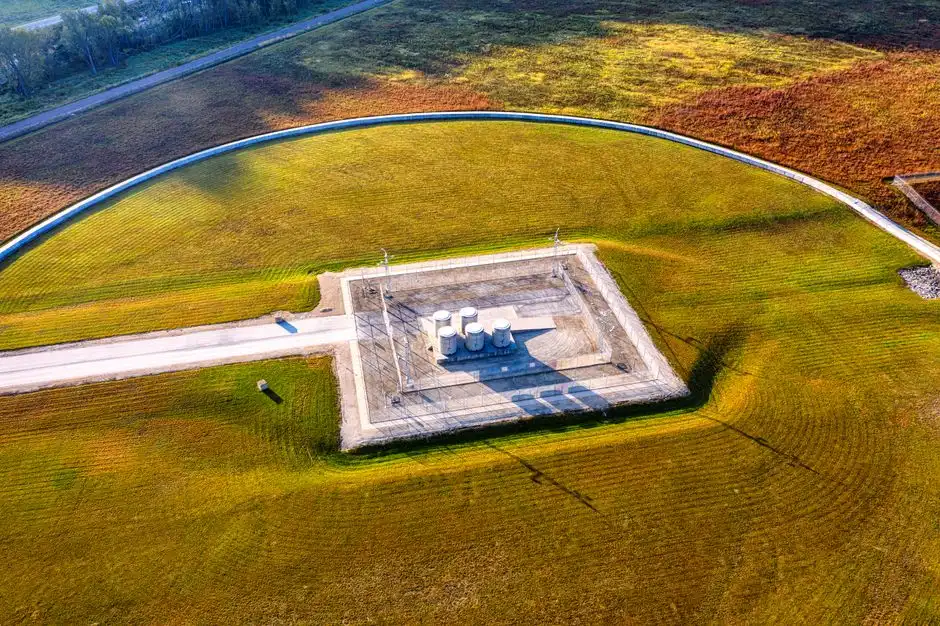
Metals removed from the water become a sludge-management problem, not an automatic disposal decision. Characterize clarifier or DAF sludge for metals content, leachability, waste-code applicability, physical properties, and the available disposal route before selecting dewatering equipment. The regulatory classification may depend on site-specific results rather than the fact that the sludge originated in a wastewater process.
For batch operation and high solids capture, consider a plate-and-frame filter press. The supplied research describes a filtration-area range of 1 m2 to 500 m2 and a dewatering outcome of 25–35% dry solids. These are selection data, not a site guarantee. Confirm feed solids, expected batch volume, cake handling, filtrate volume, and operating cycle with actual sludge.
Filtrate may return to the treatment-plant headworks only when the selected process, hydraulic capacity, controls, and POTW requirements allow it. Do not assume that recycle is automatically acceptable because it leaves the treatment skid; metals and salts then return to the process, and the hydraulic load remains.
Include sludge storage, sampling, transport, and final disposal in the site concept. Operators should participate in sampling-point design so that wastewater compliance and sludge characterization use controlled, documented procedures. The filter-press engineering selection guide provides a practical framework for comparing dewatering options, subject to confirmation with mining and metals sludge data.
Validate performance with a compliance and commissioning plan
A treatment train is complete only when every controlling requirement is traceable to a design feature, operating control, test, and record. Build a compliance register that lists applicable categorical standards, POTW local limits, prohibited discharges, monitoring frequency, sampling method, reporting conditions, and any separate NPDES requirements. This prevents a surface-water permit from being mistaken for sewer authority.
Perform jar and pilot testing to establish pH control, chemical dose, settleability, flotation performance, filtration performance, and sludge generation. Then test startup, upset, high-flow, low-flow, and chemical-failure scenarios. Define hold-and-discharge decisions for noncompliant effluent, including who authorizes release, what monitoring confirms recovery, and how the event is reported.
Use continuous or logged measurements for critical variables such as flow and pH, and reconcile them with the POTW-required compliance samples. A multi-media filter arrangement may provide solids-control assurance, but it does not substitute for treatment adequacy or permit compliance.
EPA’s Local Limits Development Guidance, published in 2021, is guidance rather than regulation. EPA states that a permit or regulation controls in a conflict. For an indirect discharger, the controlling requirements are its industrial-user permit or another regulatory mechanism issued by the POTW.
Frequently Asked Questions
How should treatment equipment be sized for a mining or metals sewer discharge?
Start with the controlling POTW local limit, source-separated influent data, and peak flow—not a catalog hydraulic rate. The research identifies 8–24 hours of average daily flow for equalization, DAF loading of 5–25 m/h, and lamella surface loading of 20–40 m/h. Treat these as design boundaries, then confirm them with jar tests, pilot work, and the final equipment proposal.
What should a buyer include when comparing pretreatment costs and budgets?
Request current site-specific quotations covering equalization, chemical storage and dosing, precipitation reactors, flocculation, DAF or clarification, filtration, controls, foundations, sludge dewatering, utilities, off-gas treatment, maintenance, and disposal. Compare the operating drivers that differ materially: hydroxide versus sulfide chemistry, chemical consumption, sludge volume, DAF versus clarification, and sulfide H2S controls. No defensible price can be stated without flow, analyses, duty cycle, site constraints, and the required effluent performance.
How should a supplier be selected for mining and metals pretreatment equipment?
Require evidence from the proposed operating point for metal removal, final TSS, peak-flow response, chemical demand, and sludge generation. Ask for materials information, controls architecture, service support, spare parts, guarantees tied to documented influent and effluent duties, and reference installations with comparable chemistry. For the DAF-versus-clarifier decision, use the mining-wastewater equipment selection guide to structure the technical comparison rather than comparing brand names.
What compliance risks arise from mixing NPDES and pretreatment requirements?
Use each authorization only for its own discharge path. A surface-water NPDES permit does not establish the sewer discharge limit; the POTW local limits and industrial-user permit do. Categorical standards apply only when the facility’s actual process falls within their scope. EPA’s local-limits guidance supports the permitting framework but does not replace the controlling permit or regulation. The compliance register should keep each requirement, sampling point, monitoring method, and reporting obligation traceable.
What information is needed before requesting a delivery schedule?
The supplied research provides no universal fabrication or delivery period. Before asking for a firm schedule, submit the approved treatment concept, flow basis, preliminary equipment list, site utility and access information, electrical and control requirements, civil assumptions, sludge route, permit constraints, and buyer approval dates. Distinguish equipment manufacturing from fabrication, civil construction, permitting, commissioning, and operator training, because those are separate schedule elements.
Related Equipment
- DAF system for oil, grease and colloidal metals — specifications, capacity range, and technical data