How Wellsville Mining and Metals Wastewater Is Different in 2026
Wellsville-area mining and metals plants face tighter federal scrutiny in 2026 than at any point in the past decade, because 40 CFR Part 437 now drives nearly every discharge and reuse decision. Part 437 covers the active ore mining, ore beneficiation, and aluminum/copper/iron/lead/zinc subcategories, and it sets monitoring expectations for total suspended solids (TSS), total recoverable metals, pH, and — for applicable subcategories — total dissolved solids (TDS) and total recoverable sulfides (TRS) on a minimum monthly basis. A single monitoring report that flags a TSS exceedance or a metals excursion in 2026 is enough to halt a discharge permit renewal and to block a process-water reuse plan; consequently, the choice between a dissolved air flotation (DAF) unit and a clarifier is a compliance decision.
Influent in this region stacks the deck against simple gravity settling. Crushing, washing, and flotation circuits produce wastewater with TSS frequently above 1,000 mg/L, residual flotation reagents (xanthates, dithiophosphates, frothers), and emulsified oils from haul-truck wash bays and equipment degreasing. Seasonal cold influent is the underrated variable: clarifier settling kinetics slow measurably when water temperature drops below 10 °C, and indoor siting in many Wellsville plants keeps influent cold year-round. State-level discharge limits have tightened compared with 2023-2024, and the push to recycle process water rather than discharge raises the bar on suspended-solids polishing before any reverse osmosis (RO) or membrane unit — a typical RO feed spec of <30 mg/L TSS is unattainable from a clarifier alone on this influent.
For context on how the same compliance logic plays out in similar US factory settings, the DAF vs clarifier for mining/metals wastewater in Caddo Gap and the DAF or clarifier for mining/metals wastewater in Dunlap guides reach similar conclusions through different influent paths.
How Dissolved Air Flotation Actually Works in a Mining Plant
Dissolved air flotation (DAF) is a physical separation process where a recycle stream of clarified effluent is pressurized to roughly 6 bar in a saturation vessel, dissolving compressed air into the water. When that stream is depressurized inside the flotation tank, it releases a cloud of micro-bubbles 30 to 50 microns in diameter (Sigma DAF Clarifiers, 2025-08). Those bubbles must match or undershoot the target particle size to attach, which is why DAF is purpose-built for fine, low-density, and chemically flocculated material rather than coarse grit.
Once bubbles attach to flocculated particles, oil droplets, or fine suspended solids, the combined mass becomes buoyant and rises to the surface in minutes. A top-mounted skimmer sweeps the floated layer off into a sludge hopper, while settleable matter drops to a bottom sediment compartment and discharges separately. The two-stream split is operationally important in a mining context: the floated sludge is high-solids (typically 3-6% dry solids) and feeds directly into a filter press or thickener for tailings dewatering, while the bottom underflow catches the dense fraction that the bubbles could not lift. This is also why DAF appears in vendor catalogs as a recognized treatment for tailings water, mineral processing wastewater, and metal production wastewater specifically, including the WWW/PMP DAF line which is positioned for primary metal production (World Water Works, 2025).
For plants evaluating bids, the four engineering numbers to lock down are: (1) saturation pressure around 6 bar, (2) micro-bubble diameter of 30-50 microns, (3) hydraulic retention time in the 20-40 minute range, and (4) a stated removal efficiency of >90% on TSS when paired with proper coagulant/flocculant conditioning. The dissolved air flotation (DAF) system spans 4-300 m³/h across 13 models, which covers most Wellsville-scale mining and metals plants on a single-unit basis (HydropureWater catalog, 2026).
When a Gravity Clarifier or Lamella Clarifier Is the Better Pick
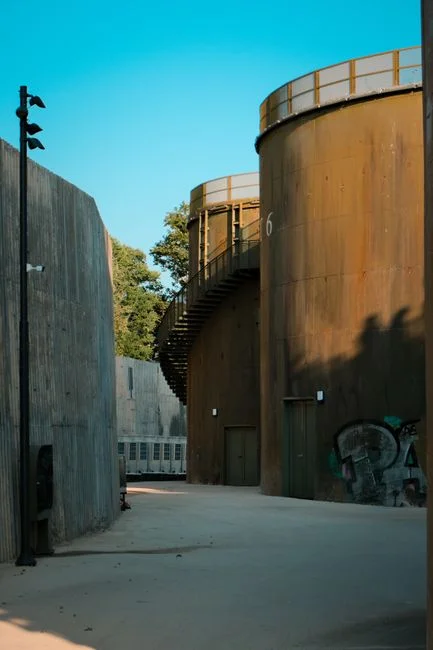
A conventional gravity clarifier is the right answer when the influent is coarse, settleable, and high-volume, and when the operator's main cost concern is energy rather than footprint. A properly sized circular or rectangular clarifier handles hundreds of m³/h with only influent pumping energy, no saturation system, and minimal chemical demand — and it tolerates grit and coarse ore fines that would otherwise blind a DAF's lamella pack or skimmer. The lamella clarifier is the footprint-saving middle ground: inclined plates spaced at 55-60° achieve an effective surface loading rate of 20 to 40 m³/h per m² of projected plate area, which compresses a conventional clarifier's footprint by roughly 5-10× for the same throughput (HydropureWater catalog, 2026).
Both clarifier types share the same failure modes on mining influent. They underperform on emulsified oil, on chemically conditioned floc that has been engineered to stay in suspension, and on sub-100-micron particles. Cold influent slows Stokes-law settling — viscosity rises and settling velocity drops roughly 30% going from 20 °C to 5 °C, which is meaningful for a Wellsville plant running outdoor or unheated equalization. Lamella clarifiers in particular need consistent influent solids character; a slug of reagent-laden or oily wastewater can plug plate packs and force unplanned cleaning. HydropureWater's high-efficiency lamella clarifier cuts coagulant demand by up to 30% compared with conventional clarification, but only on influent where the chemistry is well understood (HydropureWater catalog, 2026).
The decision cue is straightforward: if the influent is mostly settleable grit, scalped fines, and low-reagent wash water, and flow is in the hundreds of m³/h, a gravity or lamella clarifier wins on energy and chemical cost. If the influent is fine, oily, reagent-laden, or destined for RO polishing, DAF wins on removal efficiency and downstream membrane protection.
DAF vs Clarifier vs Lamella: The 2026 Decision Matrix
The table below consolidates the parameters a procurement manager needs to defend a 2026 capex line item. All flow ranges and surface loading values are typical operating envelopes for properly sized industrial units in 2025-2026 vendor literature, not theoretical maxima.
| Parameter | DAF | Gravity Clarifier | Lamella Clarifier |
|---|---|---|---|
| Typical flow range | 4–300 m³/h per unit (13 models) | 50–2,000+ m³/h | 20–500 m³/h per unit |
| Surface loading rate | 5–25 m/h (hydraulic) | 1–3 m/h | 20–40 m/h (on projected plate area) |
| Footprint per m³/h | ~0.05–0.10 m² | ~0.30–0.50 m² | ~0.08–0.15 m² |
| Ideal influent TSS window | 500–5,000 mg/L (high-rate units up to 40 kg DM/m²) | 200–2,000 mg/L settleable | 200–2,500 mg/L settleable |
| TSS removal efficiency | >90% with floc conditioning | 50–80% | 60–85% |
| Oil / FOG removal | 80–95% | 20–50% | 30–60% |
| Energy use | Moderate (recycle pump, saturator) | Low (influent pumping only) | Low–moderate |
| Chemical demand | Coagulant + flocculant required | Often none | Low; up to 30% less than conventional |
| Cold-weather sensitivity | Low (bubble attachment is mechanical) | High (settling slows below 10 °C) | Moderate–high |
| Retrofit ease | High (skid-mounted, upstream of existing unit) | Low (large civil footprint) | Moderate (replaces existing tank) |
| Best fit | Tailings water, fine particles, RO pretreatment, oily streams | High-flow settleable grit, low-energy sites | Footprint-constrained retrofits, settleable-but-variable TSS |
The dissolved air flotation (DAF) system dominates on removal efficiency, footprint, and cold-weather robustness, while the HydropureWater high-efficiency lamella clarifier wins on footprint-per-flow among gravity options, and a conventional clarifier wins only on raw energy cost at very high settleable-solids flows. DAF for primary metal production is a recognized equipment category (World Water Works, 2025) and FPAC-class DAF units can treat up to 40 kg of dry matter per m² of flotation area — a number that matters when the upstream thickener is the bottleneck (Sigma DAF Clarifiers, 2025-08).
Retrofit Playbook: Adding DAF Upstream of an Existing Clarifier

The most common 2026 question from Wellsville plant engineers is not "which one?" but "do I really need to replace what I have?" A DAF installed as a primary unit upstream of an existing clarifier — what the industry calls a DAF/clarifier train — lets each unit do what it does best. The DAF strips FOG, emulsified oil, conditioned floc, and the fine particles that a clarifier cannot catch; the downstream clarifier then polishes residual settleables and acts as a hydraulic buffer against flow surges from washing cycles. Total chemical demand typically drops because the lamella clarifier can run with up to 30% less coagulant once the DAF has handled the bulk of the conditioning work (HydropureWater catalog, 2026).
The protection this gives downstream equipment is a significant financial factor. A DAF ahead of an RO unit is the standard membrane-protection configuration in 2026, because removing flocculated and floated solids upstream minimizes membrane fouling, extends CIP intervals, and stabilizes RO flux (ProChem Water, 2025). For a Wellsville plant considering process-water reuse, that stability is what makes the reuse case defensible to a plant manager. Pair the DAF with a PLC-controlled automatic chemical dosing skid so coagulant and flocculant rates track influent flow, and protect the RO with a multi-media filter for RO pretreatment downstream of the clarifier polish.
When not to retrofit: if the existing clarifier is already underloaded (operating below 60% of design surface loading) and the influent is genuinely settleable grit, adding a DAF in front of it is capex without a compliance or operational return. In that case, the right move is to keep the clarifier and address upstream sources of fines and reagent carryover at the source.
Frequently Asked Questions
Which technology is best for meeting 40 CFR Part 437 TSS and metals limits in a Wellsville mining plant in 2026?
For Wellsville mining and metals plants, a DAF unit paired with an existing clarifier is the most defensible 2026 answer when influent TSS is high and particles are fine or chemically conditioned. DAF routinely delivers >90% TSS removal with proper floc conditioning, and protects downstream RO from fouling (Sigma DAF Clarifiers, 2025-08; ProChem Water, 2025).
How does cold Wellsville-region influent affect DAF vs clarifier performance?
Clarifier settling velocity drops roughly 30% between 20 °C and 5 °C due to higher
Frequently Asked Questions
What is 40 CFR Part 437 and does it apply to a Wellsville mining plant in 2026?
40 CFR Part 437 is the Effluent Limitations Guidelines and Standards for the Centralized Waste Treatment (CWT) Point Source Category. It establishes specific technology-based effluent limits for pollutants such as metals, oil and grease, and total suspended solids for facilities that treat waste received from off-site.
For a mining plant in Wellsville, this regulation applies if the facility operates as a centralized waste treatment unit accepting off-site industrial waste. If the facility only processes its own on-site mining or mineral processing wastewater, it is likely governed by 40 CFR Part 440 instead, though strict compliance with NPDES permit limits remains mandatory for all 2026 operations.
When should a mining plant choose DAF instead of a clarifier?
Dissolved Air Flotation (DAF) is the preferred technology when the wastewater contains particles with a specific gravity near or less than 1.0, or when the contaminants are hydrophobic, such as oils, greases, or fine flotation reagents. Because DAF utilizes micro-bubbles to float solids to the surface rather than relying on gravity settling, it is significantly more effective for light, low-density solids that would otherwise remain suspended in a conventional clarifier.
Mining plants should also opt for DAF when the site footprint is restricted, as DAF systems typically achieve hydraulic loading rates 5 to 10 times higher than conventional circular clarifiers. This allows for a much smaller physical installation while maintaining high treatment efficiency for dilute, fine-particulate process streams.
How much TSS can DAF remove compared to a lamella clarifier?
DAF systems consistently achieve Total Suspended Solids (TSS) removal efficiencies ranging from 90% to 98% for fine, low-density particles. In comparison, a lamella clarifier typically removes 70% to 85% of TSS, depending heavily on the settling velocity of the specific mineral particles and the effectiveness of the flocculation process prior to entry.
While lamella clarifiers are superior for heavy, dense mineral fines that settle rapidly, DAF excels in polishing stages. By removing the lighter fraction that escapes lamella plates, DAF can reduce final effluent TSS to concentrations often below 20 mg/L, whereas lamella clarifiers may struggle to meet these targets without secondary filtration.
Can a DAF be added in front of an existing clarifier without replacing it?
Yes, a DAF unit can be installed upstream of an existing clarifier to function as a primary pretreatment or "roughing" stage. This configuration, often referred to as a hybrid system, allows the DAF to remove the bulk of the light, floatable solids and oil, thereby reducing the solids loading on the downstream clarifier.
By implementing this setup, the existing clarifier can then be repurposed to function as a final settling or polishing tank. This approach effectively increases the overall hydraulic capacity of the wastewater treatment plant without the need for significant civil engineering modifications or complete replacement of the existing settling infrastructure.
What flow rate is too high for DAF and better suited to a lamella clarifier?
DAF systems generally become economically inefficient at flow rates exceeding 2,000 to 3,000 gallons per minute (GPM) due to the substantial energy requirements for air saturation and the increased complexity of the recycle pump systems. At these high volumes, the operational costs of maintaining micro-bubble dispersion across the entire surface area become prohibitive compared to passive sedimentation.
For high-volume mining applications exceeding 3,000 GPM, a lamella clarifier is typically the preferred choice. Lamella clarifiers handle these high flow rates through modular plate packs that provide a large effective settling area within a smaller footprint, offering a much lower cost-per-gallon treated and requiring significantly less power for operation.