The Short Answer for Mining and Metals Plants
For most mixed mining and metals wastewater streams, factories should choose a clarifier for dense, rapidly settling mineral solids and add DAF to remove the colloidal, precipitated, and buoyant fraction that gravity separation leaves behind. A clarifier is the better fit for tailings, metallurgical sludge, and high silt or clay loads; DAF is not well suited to lifting heavy non-floating particles. DAF is better for conditioned oils, flotation reagents, colloids, and low-specific-gravity precipitates, using 30–50 micron microbubbles. Final selection still depends on jar testing, particle-size data, flow variability, materials, sludge handling, and Polish or US permit requirements.
That selection rule is specific to the contaminant fraction, not to the equipment name. Clarifiers use gravity sedimentation to separate particles with a specific gravity greater than water. DAF attaches microbubbles to flocculated particles and removes the resulting float with a skimmer. The comparison is developed further in the broader DAF and clarifier comparison for mining wastewater.
For combined streams, the practical default is usually a lamella or conventional clarifier followed by an industrial DAF system for mining wastewater. A lamella clarifier for dense mineral solids can handle the heavy settleable load, while DAF polishes the residual oil, reagent, colloid, and precipitated fraction.
Neither unit removes dissolved metals merely by separating solids. If metals are in solution, the project may require precipitation, oxidation-reduction, filtration, ion exchange, or another chemistry-based stage. The final duty must be defined against the current Polish or US permit and the plant’s discharge or process-water reuse objective.
Separate the Wastewater into Treatment Fractions
A single clarifier or DAF unit cannot be selected reliably from total flow or TSS alone because the relevant contaminant may not respond to the selected mechanism. Mining and metals plants should characterize each stream separately where practical, including mill discharge, tailings-thickener overflow, equipment washdown, metal-finishing rinse water, and neutralization overflow.
| Fraction or source stream | Principal risk or contaminant | Required separation logic |
|---|---|---|
| Dense mineral fines and tailings wastewater | Heavy, rapidly settling solids | Clarification before any flotation stage |
| Colloidal clays | Fine particles with poor gravity-settling behavior | Conditioning followed by flotation or filtration |
| Oils and greases | Free oil, emulsions, and buoyant material | DAF after suitable chemical conditioning |
| Residual flotation reagents | Surfactants and buoyant contaminants | DAF, with downstream solids control if required |
| Precipitated metal hydroxides | Fine or low-specific-gravity precipitate | Chemical control followed by DAF and solids separation |
| Dissolved heavy metals | Copper, lead, zinc, and other dissolved species | Chemistry-based treatment and polishing |
Fluence’s DAF summary states that DAF is not well suited to water containing high levels of heavy non-floating particles such as silt and clay. That limitation prevents assigning raw tailings overflow to DAF simply because the stream contains oil or flotation reagents. Conversely, gravity settling does not inherently remove emulsified oils, surfactants, colloids, or dissolved metals.
A unit sized only for the settleable fraction can therefore discharge colloidal, buoyant, and dissolved loads. That is why an integrated water-purification approach should begin with a process-by-process inventory rather than one bulk wastewater analysis.
How DAF and Gravity Clarification Work
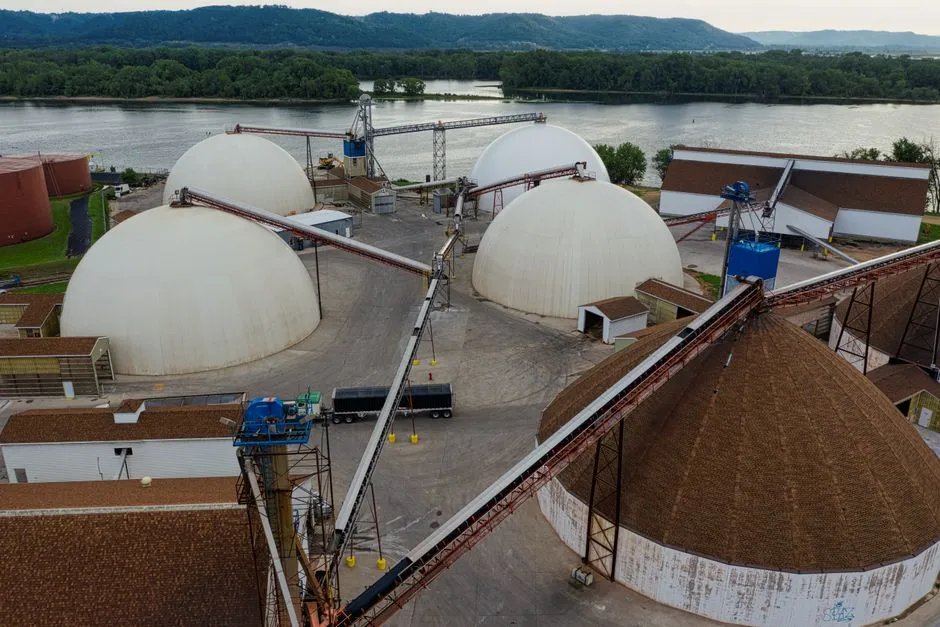
DAF is a flotation process in which pressurized air creates 30–50 micron microbubbles that attach to flocculated particles; the resulting float is removed by a skimmer. Clearwater Industries describes chemical conditioning with coagulant, pH adjustment, and polymer flocculant, including a 15–45 second flash-mix contact time in flocculation tubes in one configuration. The dose and contact regime still require stream-specific verification.
Clarification is gravity separation governed by particle settleability, tank geometry, surface overflow rate, and sludge-withdrawal design. Lamella plates increase effective settling area and reduce the footprint required for that gravity mechanism; they do not make colloidal, emulsified, or dissolved contaminants settle.
The practical distinction is hydraulic as well as chemical. DAF depends on bubble attachment, floc structure, contact time, saturation performance, and float recovery. Clarification depends on the relationship between settling velocity and the available settling area. Neither performance can be established from tank volume alone.
Use jar tests to establish the conditioning response and then verify it through pilot work. The DAF selection guide for oils and suspended solids provides the broader operating context, while a PLC-controlled chemical dosing skid can hold the tested dose once the control basis is agreed.
Match Each Stream to the Right Equipment
Dense solids, buoyant contaminants, and dissolved species require different mechanisms, and mixed streams often require more than one stage. The following matrix translates the contaminant profile into a preliminary configuration.
| Application | Primary equipment | Reason and boundary condition |
|---|---|---|
| Dense tailings and metallurgical fines | Conventional or lamella clarification | Targets particles with a specific gravity greater than water; HydropureWater lists lamella surface loading rates of 20–40 m/h. |
| High silt and clay | Clarification first | Fluence identifies high levels of heavy non-floating silt and clay as unsuitable for DAF. |
| Oils and emulsions | DAF | Targets conditioned oil droplets and buoyant solids; Clearwater Industries reports thick floated sludge that may need little further dewatering. |
| Residual flotation reagents | DAF | Flotation can remove buoyant material when the chemical and bubble-contact conditions are verified. |
| Colloidal fines | DAF after conditioning | Flocculation increases the particle size and floatability that gravity clarification does not inherently create. |
| Low-specific-gravity precipitates | DAF | Condensed metal precipitates can float when chemical conditioning produces an appropriate floc. |
| Dissolved metals | Chemical treatment plus solids separation or polishing | DAF is not a substitute for precipitation or another chemistry-based removal stage. |
| Combined stream | Clarifier followed by DAF | Removes the heavy settleable load first, then recovers the residual buoyant and conditioned colloidal fraction. |
For a combined train, include industrial DAF equipment downstream of the lamella clarifier. If the reuse or discharge objective requires additional solids control, add filtration or membrane treatment at the concept stage; UF polishing for treated process water is one possible downstream technology.
An integrated purification arrangement can suit applicable mine-water duties. HydropureWater’s catalog lists the integrated product at 10–200 m³/h and specifies treatment from 3,000 mg/L turbidity to below 3 mg/L. Those are catalog boundaries, not a substitute for site verification.
Build the Equipment-Sizing and Pilot-Test Basis
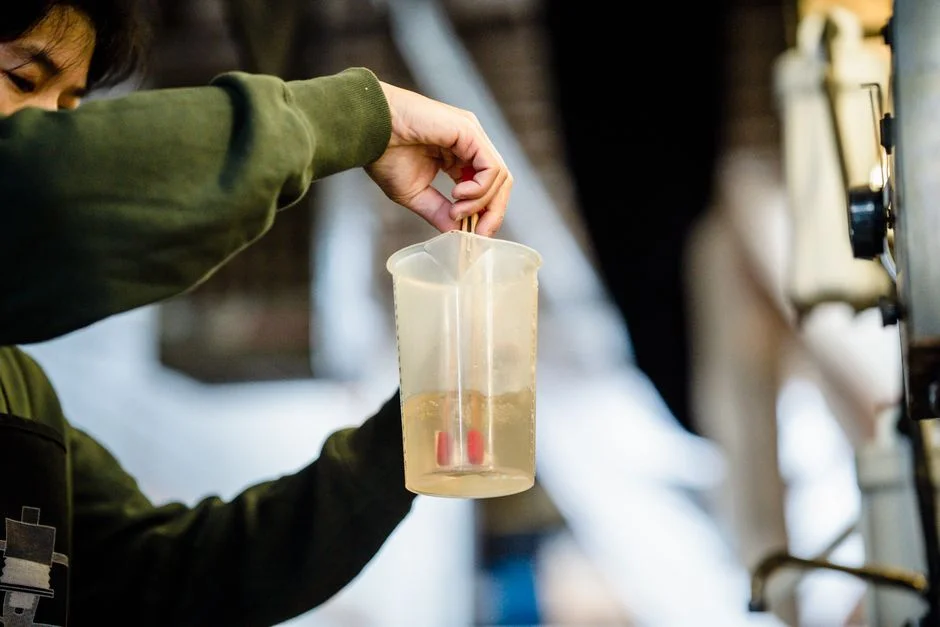
Equipment sizing should follow characterization, jar testing, pilot verification, and then a vendor-specific duty calculation. The buyer needs a representative influent dataset covering TSS, particle-size distribution, pH, temperature, and dissolved metals such as copper, lead, and zinc.
Seasonal and shift variations in flow and contaminant concentration must be included. The supplied research states that inconsistent data across seasonal flow variations can lead to undersized equipment and non-compliance. Do not size from a single grab sample or an annual-average flow.
- Characterize each stream. Establish flow, TSS, particle-size distribution, pH, temperature, dissolved metals, oil content, and the discharge or reuse target.
- Run jar tests. Identify coagulant and flocculant doses, floatability, sludge characteristics, and the required chemical-contact regime.
- Pilot the selected train. Confirm clarification loading, DAF capture, float removal, sludge withdrawal, and chemical consumption.
- Verify variability. Test seasonal and shift conditions and define how the controls respond.
- Issue the RFQ. Require the vendor to state the calculation basis, assumptions, guarantees, and excluded scope.
The Logan, Utah wastewater treatment plant study recorded an optimum dose of 30 mg/L aluminum sulfate for algae and phosphorus removal in lagoon effluent (Utah State University, 2011). That result is an example of stream-specific optimization, not a mining design value or a default DAF dose.
| RFQ item | DAF information required | Clarifier information required |
|---|---|---|
| Design basis | Recycle rate, solids loading, and air-to-solids relationship | Surface loading and settling-velocity basis |
| Hydraulics | Flow profile and float-removal capacity | Surface overflow rate and tank arrangement |
| Solids withdrawal | Skimming and sludge-discharge method | Underflow solids target and withdrawal mechanism |
| Conditioning | Coagulant, pH adjustment, flocculant, and contact regime | Coagulant aid if proposed, with supporting test data |
| Verification | Pilot results and operating assumptions | Settling tests and pilot results where required |
Require the DAF quotation to include the conditioning skid, air-saturation system, controls, and sludge-dewatering interface. Otherwise, the quotation can hide the chemical, maintenance, and downstream-solids costs that determine lifecycle performance.
Plan for Sludge, Corrosion, and Maintenance
DAF and clarification produce different sludge streams, and that difference belongs in the economic comparison. DAF produces a floated sludge blanket that may need little further dewatering after correct conditioning, according to Clearwater Industries. Clarification produces underflow sludge that normally requires thickening or filtration.
HydropureWater’s sludge filter press for clarifier and DAF underflow covers a 1–500 m² filtration area. Use that range to frame the dewatering enquiry, but require actual cake-solids and cycle-time testing for the selected sludge before accepting the duty.
Materials review is equally important. The supplied research identifies 316L stainless steel and specialized coatings as options that may be needed for acidic or abrasive mineral slurry. The final selection should reflect stream chemistry, temperature, abrasiveness, weld and passivation requirements, and the maintenance strategy.
- Provide safe access for sludge withdrawal, inspection, tank cleanout, recycle-pump maintenance, and air-system servicing.
- Define local instruments, alarms, PLC compatibility, automatic chemical control, and the spares strategy.
- Require commissioning support, operator training, controls narratives, and post-commissioning support in the RFQ.
- Ask for a maintenance plan tied to measurable operating conditions rather than an unsupported maintenance interval.
A PLC-controlled chemical dosing skid should be quoted as part of the process scope, not treated as an accessory. Chemical storage, containment, duty/standby arrangements, calibration, and compatibility with the plant control system also need defined boundaries.
Account for Poland and US Site Constraints
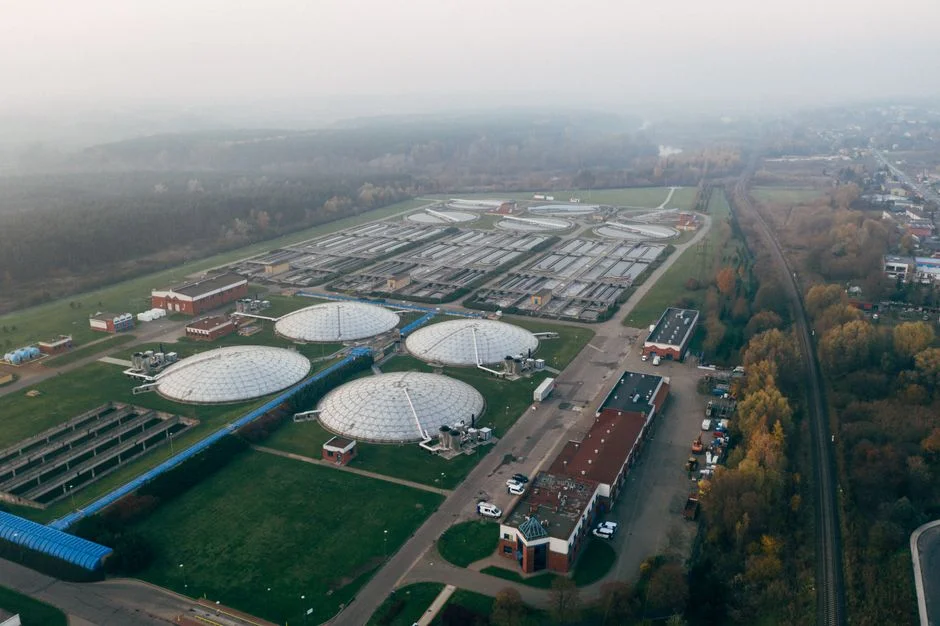
Equipment selection and regulatory approval are separate engineering decisions. Select the separation train from the stream characterization, then define the final treatment duty against the current permit, receiving authority, and process-water reuse objective. Neither country automatically imposes a stricter treatment requirement on every plant.
| Check | United States | Poland |
|---|---|---|
| Environmental basis | Check the current EPA Effluent Guidelines for the Ore Mining and Dressing Point Source Category; the supplied research provides no numeric limits. | Confirm the applicable Polish permit, water-law requirements, local discharge conditions, and any sewer-pretreatment obligations with the responsible engineer and receiving body. |
| Receiving destination | Identify whether the final destination is surface water, a POTW, a reuse system, or another permitted route. | Confirm the specific receiving body and whether the route is direct discharge, sewer discharge, or reuse. |
| Design basis | Use site flow, contaminant profile, current permit conditions, and reuse criteria to set the equipment duty. | Use site flow, contaminant profile, current permit conditions, and reuse criteria to set the equipment duty. |
| Execution | Confirm electrical standards, local service access, chemical supply, site access, and construction interfaces. | Confirm language, electrical standards, local fabrication or service support, chemical supply, and site access. |
Cross-border considerations matter when they affect schedule or execution: language in drawings and operating procedures, electrical compatibility, local service support, chemical availability, permits, construction access, and delivery logistics. They do not change the basic physics of DAF or gravity clarification.
For process-water reuse, include UF polishing for treated process water or another solids barrier in the initial scope when the final use requires it. Bulk-solids removal alone should not be used as a proxy for reuse readiness. For cross-border mining projects, the mining pretreatment requirements near Balkan sites illustrates why the receiving and sewer-discharge route must be checked explicitly.
Turn the Decision into a Supplier RFQ
A comparable RFQ must define the wastewater before asking vendors to select equipment. State the design flow, operating profile, TSS, particle-size distribution, pH, temperature, dissolved-metal suite, oil content, and intended recycle or discharge objective.
Ask each supplier for a stream-by-stream recommendation identifying the selected mechanism, duty basis, materials of construction, controls, design assumptions, performance criteria, and exclusions. Request separate pricing for DAF, lamella clarification, chemical conditioning, sludge dewatering, and downstream polishing so lifecycle scope can be compared.
Also request pilot results from a comparable metallurgical wastewater application, commissioning protocol, operator training, controls narrative, and post-commissioning support. A supplier should explain how its design basis addresses the reported stream variability rather than repeat a generic performance guarantee.
The supplied research provides no defensible 2026 unit price for DAF or clarifiers. Request budgetary pricing tied to the site’s flow, TSS, contaminant-fraction profile, materials, construction conditions, sludge destination, and polishing requirements. A generic equipment range is not a basis for award.
HydropureWater’s relevant capabilities are scope items for comparison: DAF systems are listed at 4–300 m³/h across 13 standard models, while lamella clarification is offered with 20–40 m/h surface loading rates. Compare the DAF system specification, lamella clarification basis, and sludge-dewatering scope against the complete project duty rather than treating those catalog entries as standalone bids.
Frequently Asked Questions
Should a mining or metals factory buy DAF or a clarifier?
Choose by contaminant fraction. Use clarification first for dense, rapidly settling mineral fines, tailings, and metallurgical solids. Use DAF for oils, flotation reagents, biological flocs, conditioned colloidal material, and suitable low-specific-gravity precipitates. For a mixed stream, evaluate a clarifier followed by DAF rather than forcing one mechanism to perform both duties.
What data is needed for a 2026 DAF-versus-clarifier comparison?
Require flow, TSS, particle-size distribution, pH, temperature, dissolved metals, oil content, seasonal and shift data, and bench-test results. Those inputs determine the mechanism and sizing basis. Price-only comparisons cannot establish whether the equipment will meet the stream or reuse objective.
How should a buyer qualify an equipment supplier?
Request pilot data from a comparable metallurgical stream, the proposed design basis, materials of construction, controls narrative, commissioning protocol, operator training, post-commissioning support, and separate lifecycle pricing for conditioning, sludge handling, and polishing. Check that each supplier’s guarantees identify the test conditions and acceptance method.
Do Poland and the United States require different DAF or clarifier equipment?
The separation physics are the same, but the project package differs. The current permit, receiving requirements, sewer or discharge route, reuse objective, electrical standards, construction conditions, and local service availability can change the required scope. Verify the site-specific obligations with the responsible engineer and receiving authority rather than transferring a generic limit from one jurisdiction to another.
Can DAF remove dissolved heavy metals by itself?
No. DAF separates solids that can be conditioned and floated. Dissolved metals require an appropriate chemistry-based stage, such as precipitation or oxidation-reduction, followed by solids separation and any polishing needed for the discharge or reuse objective. The DAF and clarifier comparison for another industrial stream reinforces the need to match the mechanism to the contaminant form.