Make the decision from the wastewater—not the equipment name
Food and beverage plants should generally choose DAF when FOG, emulsified oils, fine solids, or product-loss organics dominate the treatment challenge; they should choose a clarifier when most solids are readily settleable and lower operating cost is the priority. DAF uses microbubbles to float conditioned pollutants, while a clarifier uses gravity sedimentation to withdraw settleable solids as sludge. DAF generally consumes more energy because it requires air compression, so the final choice should be based on wastewater analysis, jar or pilot testing, CIP peak flow, and Nushagak permit and discharge requirements rather than equipment name alone.
A dissolved air flotation clarifier attaches microbubbles to suspended solids, oils, fats, and related material. The resulting float is skimmed from the surface. A clarifier instead removes particles that settle under gravity, concentrating them as bottom sludge. The distinction matters because food-processing wastewater can contain FOG, TSS, BOD, product losses, and cleaning chemicals, but neither the presence of those constituents nor the operating name establishes which process will perform better. Their physical form, relative load, variability, and required effluent quality do.
Use the following rule: favor DAF where floatable FOG and emulsified oils are material; favor a clarifier where the stream is mainly settleable solids and energy use matters; consider both where light FOG and heavy, readily settling solids occur together. Ecologix’s 2026 selection guide supports the physical distinction, noting that DAF is suited to light and emulsified pollutants while clarifiers suit heavy solids (Ecologix Environmental Systems, 2026).
For preliminary budgeting, compare an industrial DAF system against a lamella clarifier, but leave the selection open until the wastewater characterization, conditioning tests, and Nushagak permit basis are available.
How DAF and sedimentation handle the same food-processing stream
DAF and sedimentation can share the same upstream preparation train, but they separate conditioned solids in opposite directions. The relevant process sequence for DAF is screening, flow equalization, chemical coagulation, flocculation, saturated recycle-water introduction, microbubble attachment, surface skimming, and withdrawal of any sinking sludge. A lamella clarifier uses sludge recirculation, flocculation, and inclined-plate separation to recover settleable material as sludge.
| Element | Dissolved air flotation | Lamella clarification |
|---|---|---|
| Separation mechanism | Microbubbles attach to conditioned solids and lift them to the surface. | Gravity sedimentation and inclined plates separate settleable solids. |
| Primary removal path | Surface float removed by a skimmer. | Bottom sludge removed by collection and withdrawal. |
| Best-fit pollutants | Floatable FOG, emulsified material, fine solids, and related organics. | Predominantly settleable solids. |
| Conditioning requirement | Coagulant and flocculant addition to improve particle size and bubble contact. | Flocculation supports clarification and sludge handling. |
| Residual solids path | Provide bottom-sludge withdrawal as well as float removal. | Provide sludge collection, recirculation, and withdrawal. |
Clearwater Industries describes DAF microbubbles as 30–50 microns and explains that a paddle skimmer removes the surface solids while heavier material settles in a bottom collection zone and is removed by an auger (Clearwater Industries, April 27, 2026). This two-path solids design matters in beverage plants because detergent, fruit pulp, spent grain, and other particulates may not float with the conditioned FOG.
Chemical conditioning is not a discretionary accessory. Clearwater Industries states that proper coagulation and flocculation increase particle size and improve contact with microbubbles (Clearwater Industries, April 27, 2026). For Nushagak, verify the proposed automatic chemical dosing skid against the selected coagulant and polymer, available utilities, storage requirements, and the operating labor available on site.
DAF can outperform conventional sedimentation where emulsified oil or FOG does not settle readily, according to Ecologix’s food-and-beverage industry guidance (Ecologix Environmental Systems, 2026). That makes flotation especially relevant for lines handling emulsified products or concentrated cleaning waste. By contrast, a lamella clarifier remains appropriate when the target solids are mainly dense and settleable. The DAF selection checklist for FOG and TSS provides a useful basis for defining the separation test.
Compare performance, footprint, energy, and operating burden
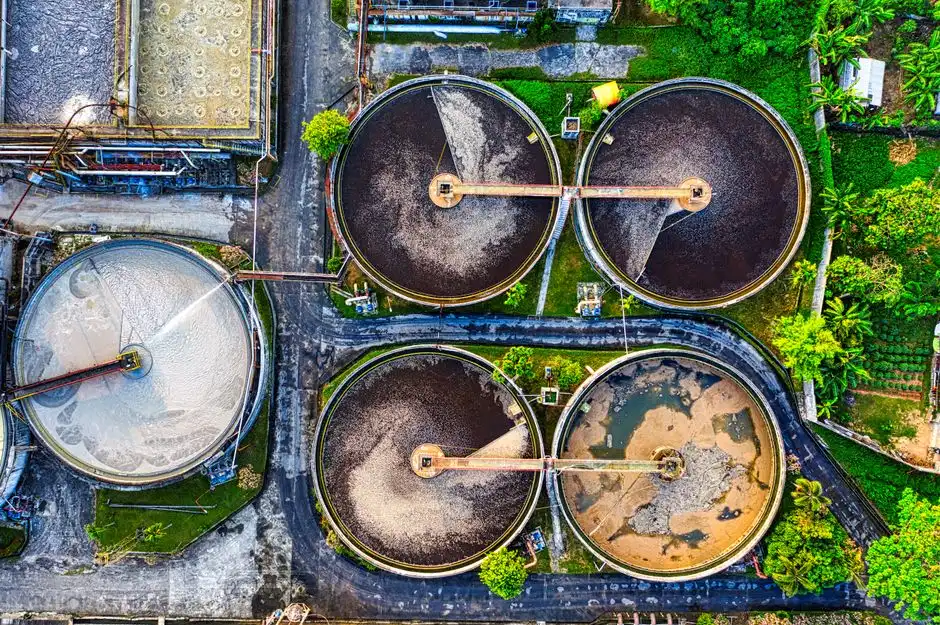
DAF generally uses more energy than sedimentation because it includes air compression, while clarifiers generally have lower operating costs, according to Ecologix’s 2026 selection guide. The comparison must still be site-specific because chemical demand, pump loads, sludge handling, and capture of pollutants that are difficult to settle can change the operating result.
| Evaluation point | DAF | Clarifier |
|---|---|---|
| Contaminant fit | Strong fit for floatable FOG, emulsified oils, fine solids, and product-loss organics. | Strong fit for mainly settleable solids. |
| Energy profile | Higher operating-energy demand because air compression is required. | Generally lower operating energy because there is no air-compression step. |
| Chemical dependence | Conditioning is central to particle enlargement, bubble contact, and skimming. | Flocculation can support separation, but the treatment objective differs. |
| Solids handling | Requires float removal and provision for bottom sludge. | Requires sludge collection, recirculation, and withdrawal. |
| Mechanical attention | Air saturation, recycle, skimming, dosing, and float removal. | Sludge collection, recirculation, and solids withdrawal. |
| Changing loads | Requires attention to conditioning and skimming as load and chemistry change. | Requires attention to settling, sludge inventory, and withdrawal capacity. |
Ecologix publishes a food-processing example showing 95% FOG removal for DAF and 70% for a clarifier on the same stream (Ecologix Environmental Systems, 2026). The supplied excerpt does not disclose the test conditions, so this is a vendor-published example—not a universal performance guarantee. The same guide reports a clarifier reducing solids by 90% at a mining facility with heavy sediment loads, but that evidence came from mining rather than food processing (Ecologix Environmental Systems, 2026). It supports the physical case for sedimentation; it does not establish food-processing performance.
Equipment scope also needs explicit definition. Clearwater states that its standard DAF clarifiers use 304SS, with 316SS, polypropylene, and other materials available on request (Clearwater Industries, April 27, 2026). HydropureWater’s product catalog records a DAF range of 4–300 m³/h across 13 standard models (HydropureWater, 2026). These are catalog facts, not confirmation that a standard configuration will meet the Nushagak peak flow, wastewater chemistry, or permit targets.
Do not accept a generic removal guarantee, purchase price, or universal energy figure. Require current utility and chemical costs, site-specific duty calculations, and vendor performance curves. The DAF versus sedimentation comparison for industrial wastewater is useful as a technical screen, but site test data and the final proposal should govern procurement.
Size the equipment around CIP peaks and actual wastewater chemistry
Equipment sized on average production flow may fail during clean-in-place cleaning, when wastewater flow, FOG, detergent, and suspended material change sharply. Obtain a written wastewater characterization covering hourly average flow, peak hourly flow during CIP cleaning, influent TSS, FOG, BOD/COD, pH, and temperature, as specified in HydropureWater’s 2026 beverage-wastewater design guide.
Each shortlisted vendor should state its hydraulic loading rate, air-to-solids ratio, recycle rate as a percentage of forward flow, and flocculation retention time. The guide requires the air-to-solids relationship to be supplied as a performance curve at the proposed solids loading, not as a single test point. It also provides no beverage-specific numeric values for those design parameters, so the buyer must obtain written vendor values and verify them through bench or pilot work before purchase.
| Required design input | Information needed before selection |
|---|---|
| Flow | Hourly average flow and CIP peak hourly flow, including relevant production and product-loss periods. |
| Wastewater chemistry | TSS, FOG, BOD/COD, pH, temperature, product losses, cleaning chemicals, and material that may sink. |
| DAF loading | Hydraulic loading rate and an air-to-solids performance curve at the proposed solids loading. |
| Recycle and flocculation | Recycle rate as a percentage of forward flow and flocculation retention time. |
| Conditioning | Coagulant and polymer identity, dose, chemical consumption, storage, and dosing-control scope. |
| Solids handling | Expected float and bottom-solids characteristics, dewatering acceptance limits, and final disposal route. |
Use the minimum bench-test matrix documented by HydropureWater’s 2026 guide: three coagulants crossed with at least one polymer at three dose levels each. The candidate chemicals are alum, poly aluminum chloride, poly aluminum sulfate, ferric chloride, bentonite, and organic polymers, subject to site chemical review and compatibility testing (HydropureWater, 2026). HydropureWater’s guide also reports that monomeric aluminum performed better than polymeric or colloidal forms for TSS and soluble COD, while polymeric and colloidal forms performed better for soluble silica. Use that finding as a starting point for jar testing, not as a universal recipe.
Pilot validation should use the actual CIP-spiked stream when load, product-loss events, or permit targets make scale-up uncertain. Observe float recovery, settleability, skimming behavior, chemical demand, and residual solids. Product-loss streams containing syrup, fruit pulp, or spent grain can alter both peak load and whether material floats or sinks.
Size dewatering from both float and bottom solids. HydropureWater records plate-and-frame filter presses with filtration areas from 1 m² to 500 m² (HydropureWater, 2026), but model selection still requires actual solids concentration, viscosity, and dewatering results. Review the proposed plate-and-frame sludge filter press against those test results and the 2026 beverage wastewater DAF design guide.
Build a Nushagak-specific compliance and logistics case
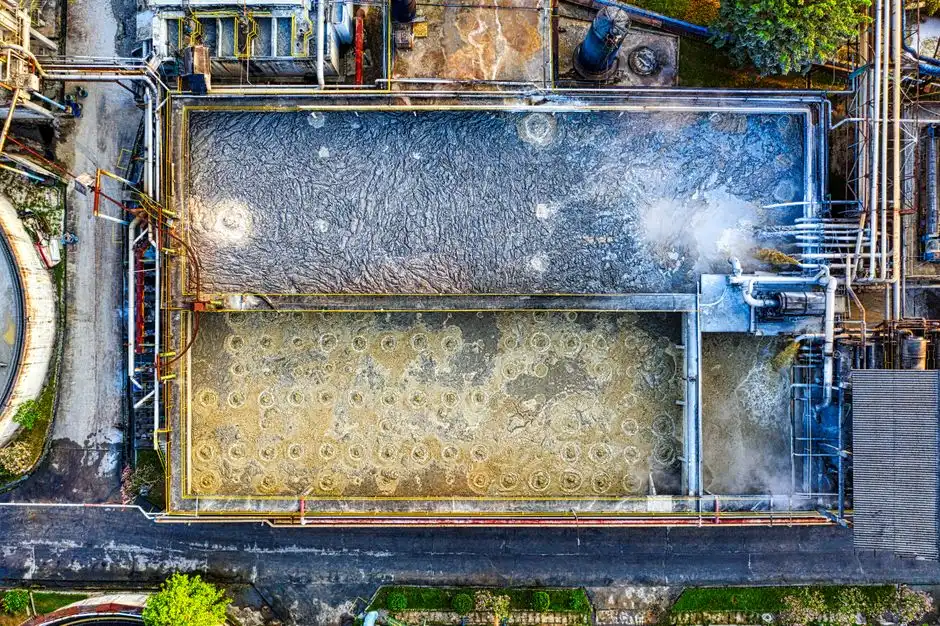
A technically suitable unit is not necessarily deliverable, supportable, or permit-ready in Nushagak. The governing requirement must be identified from the plant’s discharge permit, reuse condition, or applicable consent; the supplied research contains no Nushagak-specific numeric effluent limit, so one must not be invented for the RFQ.
| RFQ package | Information or commitment required from the supplier |
|---|---|
| Permit basis | Written guarantee against the plant’s actual discharge or reuse targets for TSS, FOG, BOD, and other applicable parameters. |
| Design basis | Design flow, treatment train, chemical storage, utilities, controls, shipping dimensions, lifting requirements, foundation loads, and commissioning prerequisites. |
| Remote-site delivery | Shipping cost, delivery constraints, field-service availability, spare-parts stocking, startup support, operator training, and site acceptance testing. |
| Evidence | Named food-and-beverage references and site-specific performance curves rather than transferable generic claims. |
| Cold-weather readiness | Explicit design information for the site environment because no Nushagak-specific climate-design criteria were supplied in the research. |
| Acceptance | Defined FAT and SAT methods, test conditions, acceptance criteria, training deliverables, documentation, and warranty boundaries. |
Request food-and-beverage reference projects because HydropureWater’s 2026 guide warns that beverage influent is not interchangeable with refinery or metalworking wastewater (HydropureWater, 2026). Also require the supplier to state how the proposed system addresses actual product-loss and CIP streams rather than only routine production wastewater.
Remote Alaska logistics belong in the quotation, not in a post-award discussion. Require the delivery scope, access constraints, lifting plan, temporary utilities, commissioning sequence, field-service response, parts inventory, training plan, and site acceptance procedure. Cold-weather operation should be an explicit supplier question because the supplied evidence does not establish site-specific climate criteria.
Use the 2026 food-and-beverage DAF-versus-clarifier procurement guide to structure the commercial comparison, while making the plant’s actual permit and reuse conditions—not a generic claim—the acceptance basis.
Use a four-step selection and validation workflow
- Characterize the wastewater. Sample normal production, CIP cleaning, and relevant product-loss periods using a sampling plan appropriate to actual operations. Record flow, TSS, FOG, BOD/COD, pH, temperature, and the physical form of each material.
- Bench-test conditioning and separation. Run the documented chemical matrix, then observe float recovery, settleability, skimming behavior, residual solids, and chemical demand.
- Pilot when scale-up remains uncertain. Use actual CIP-spiked wastewater when the peak load, product-loss events, or permit targets could defeat a larger unit selected from averaged data.
- Issue a performance-based RFQ. Compare guarantees, curves, chemical consumption, energy assumptions, FAT/SAT, training, documentation, freight, remote service, and warranty terms. Award only after the proposed train satisfies the permit basis.
The final rule is straightforward: select DAF if floatable FOG and emulsified material dominate; select a clarifier if the stream is mainly settleable solids and minimum energy use is the priority; select a hybrid DAF–clarifier train if both fractions are material. Ecologix’s 2026 guide supports the hybrid arrangement because it can combine oil flotation with gravity sedimentation (Ecologix Environmental Systems, 2026).
For procurement diligence beyond the unit process, use the food and beverage ETP due-diligence guide to check whether the proposed treatment train matches the wastewater, discharge route, and operational reality.
Frequently Asked Questions
Is DAF or a clarifier cheaper for food and beverage wastewater?
A clarifier generally has lower energy use, but that does not prove it has the lower total cost at a Nushagak plant. DAF adds air-compression demand while potentially capturing more emulsified FOG. Obtain current electricity and chemical prices, expected chemical doses, sludge-disposal costs, maintenance scope, and site-specific performance estimates from each vendor. Compare those inputs over the same flow and duty basis rather than accepting a generic purchase price or energy claim.
How should a buyer select a wastewater-treatment supplier?
Select on wastewater matching and evidence, not catalog capacity alone. Require a treatment proposal based on the plant’s analysis, site-specific guarantees, loading curves, named food-and-beverage references, FAT/SAT criteria, operator training, documentation, spare-parts support, warranty terms, and quoted Alaska freight and field-service obligations. Ask the supplier to demonstrate that the proposed train meets the plant’s actual discharge or reuse conditions.
Can a standard DAF handle a Nushagak food or beverage plant?
Possibly, but the standard model must pass the site checks. HydropureWater offers DAF units from 4–300 m³/h across 13 standard models (HydropureWater, 2026). Verify that arrangement against peak CIP flow, peak pollutant loading, wastewater chemistry, required conditioning, solids handling, utilities, delivery constraints, and permit targets. A catalog flow range does not establish treatment performance.
How can poor skimming and residual solids be reduced before purchase?
Test the conditioning chemistry and solids behavior before selecting the skimmer and sludge system. Run the documented matrix of three coagulants with at least one polymer at three dose levels each, then pilot the selected condition using the actual CIP-spiked stream if scale-up uncertainty remains. Include both surface-float removal and bottom-sludge withdrawal because chemicals and particulates may sink rather than float.
When does a hybrid DAF and clarifier system make sense?
A hybrid train makes sense when the same wastewater contains substantial floatable FOG or emulsified oil alongside readily settleable solids. DAF can recover the floatable fraction, while clarification handles the denser settleable fraction. Validate the sequence with the actual wastewater because chemical conditioning can change particle flotation and settling behavior; the DAF selection checklist for FOG and TSS should be used to define those tests.