What Port Charlotte Food and Beverage Plants Need to Decide
For most Port Charlotte food and beverage factories, choose DAF when FOG, product-loss organics, or floatable solids are the main pretreatment challenge; choose a lamella clarifier when the load is predominantly settleable solids and lower energy use is the priority. A 2026 comparison must include CIP peak flow, TSS, FOG, BOD/COD, pH, and temperature. DAF generally uses more energy because it requires air compression, but it can remove suspended solids, organics, hydrocarbons, phosphorus, and nitrogen. The final choice should follow jar or pilot testing and the plant’s discharge or reuse specification.
The procurement decision is not simply whether to buy a DAF or a clarifier. It is whether the selected separator can handle the plant’s actual production schedule, cleaning cycles, product-loss streams, and downstream solids-handling constraints without forcing an upgrade later. A unit selected from average production flow can be hydraulically inadequate during CIP cleaning; a unit selected only from TSS can be chemically or hydraulically wrong for a wastewater containing syrup, rejected batches, fruit pulp, pulp fines, or FOG.
Separate average flow from the peak hourly flow during CIP cleaning before requesting bids. The HydropureWater 2026 beverage design guide identifies screening and flow equalization as the first steps in a DAF treatment train, because the wastewater is not a uniform production stream. Product-loss wastewater can change particle density and organic loading independently of the normal discharge pattern.
Require the plant’s discharge or reuse specification before comparing equipment. The supplied research does not provide a Port Charlotte numerical limit, so a buyer should obtain the applicable permit, reuse criteria, and internal quality requirements in writing. Also require written influent data for TSS, FOG, BOD/COD, pH, and temperature, as specified in the guide. Where a mechanical preliminary screen is part of the proposed train, the rotary mechanical bar screen should be evaluated against the actual flow and solids condition rather than included by default.
Treat DAF and lamella sedimentation as pretreatment decisions. The supplied research does not establish that either unit alone provides biological treatment or final disinfection. The unit may remove contaminants that would otherwise interfere with a downstream biological process, but the required treatment train must be defined from the discharge or reuse specification.
How DAF and Lamella Clarifiers Separate Wastewater Solids
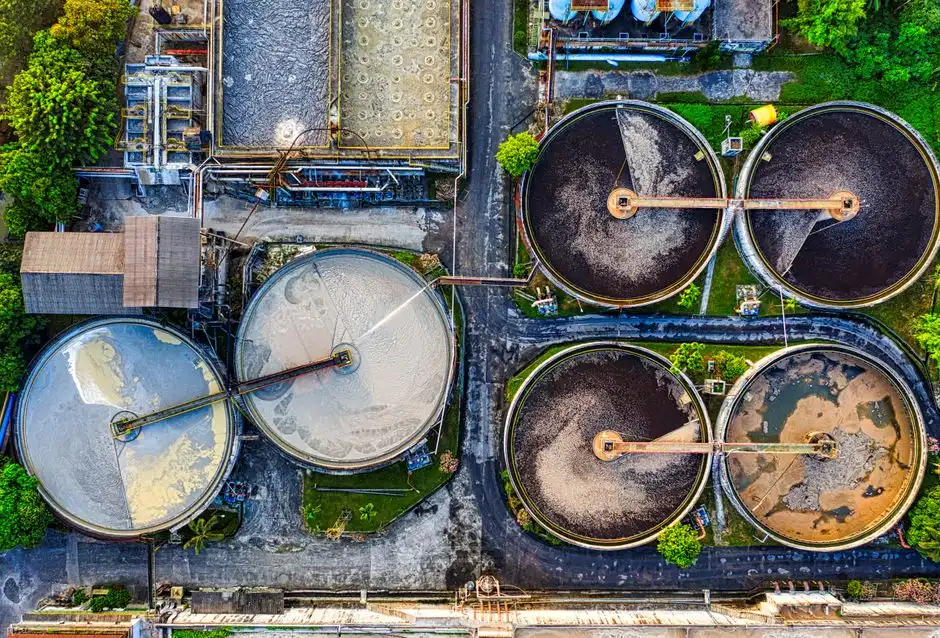
DAF separates material by flotation, while lamella clarification separates conditioned solids by settling through inclined plates. The distinction matters because FOG, pulp, and product-loss particles do not necessarily behave alike, and because a separator that captures one fraction can accumulate another fraction that must also be removed.
According to Clearwater Industries, DAF releases compressed air as 30–50 micron microbubbles. Conditioned particles attach to the bubbles, rise to the surface, and are removed by a skimmer. Clearwater Industries also states that DAF should be paired with coagulation and flocculation so particles become large enough for effective bubble contact. The HydropureWater 2026 guide identifies suspended solids, organic matter, hydrocarbons, phosphorus, and nitrogen as DAF removal targets, but it does not publish a beverage-specific numeric performance guarantee.
DAF cannot float every particle simply because the process is called flotation. HydropureWater’s guide warns that chemicals and particulates that do not float can create a sinking-sludge layer and recommends a bottom-sludge withdrawal path. This is a design issue for food and beverage streams containing pulp, grain, chemical precipitates, or other material with unsuitable density or surface characteristics.
A lamella clarifier uses flocculation, sludge recirculation, and inclined-plate separation. HydropureWater reports 20–40 m/h surface loading rates for its lamella tanks and states that chemical consumption can be reduced by up to 30% compared with the referenced alternative. Those are vendor-stated screening values, not a guaranteed Port Charlotte result. A lamella clarifier for wastewater sedimentation is most credible when the solids are reliably settleable and the pretreatment chemistry is validated.
Academic research on combining DAF and MMBBR for synthetic oily wastewater supports treating DAF as a physical separation step that can be paired with biological treatment. The supplied excerpt provides no transferable performance result for a Port Charlotte food and beverage plant, so it cannot substitute for site-specific testing.
| Feature | Dissolved air flotation | Lamella clarification |
|---|---|---|
| Separation mechanism | 30–50 micron microbubbles attach to conditioned particles; the float is skimmed (Clearwater Industries) | Conditioned solids separate through inclined plates |
| Important precondition | Coagulation and flocculation to improve particle size and bubble contact (Clearwater Industries) | Reliable settling behavior and adequate flocculation |
| Residual solids path | Provide bottom-sludge withdrawal for non-floatable material (HydropureWater 2026 guide) | Confirm sludge recirculation and drawdown arrangement |
| Published screening data | Catalog range of 4–300 m³/h across 13 standard models (HydropureWater 2026 guide) | 20–40 m/h surface loading; up to 30% chemical-consumption reduction stated by HydropureWater |
| Energy distinction | Generally higher because compressed air is required (HydropureWater 2026 guide) | No air-compression step; generally lower energy use |
Which Treatment Fits the Factory's Wastewater?
Favor DAF when FOG, oil and grease, product-loss organics, or floatable solids dominate the pretreatment problem and the plant values broad solids capture over lower energy use. Favor a lamella clarifier when most solids are reliably settleable, chemical conditioning is adequate, and compressed-air energy is a significant operating concern.
Do not classify the wastewater from one sample. Analyze production wastewater separately from CIP wastewater, product-loss streams, and any incompatible cleaning stream that may be segregated. The production schedule should be overlaid on the hourly flow record so the design sees when CIP demand occurs, how long it lasts, and whether equalization can attenuate the peak without changing the treatment objective.
Use a combined treatment train when neither physical process alone addresses the required treatment train. The supplied academic source concerns DAF combined with MMBBR for synthetic oily wastewater, but its excerpt supplies no design values. That supports a separation-plus-biological-treatment concept, not a transferable Port Charlotte sizing result. For a food plant, also evaluate whether the chosen physical separation step protects downstream biological treatment or reuse equipment.
For a DAF application with very high solids loads, evaluate a high-solids cross-flow configuration. Clearwater Industries separately describes a lamella-pack DAF design for low-to-medium solids loads. Clarifier suppliers, meanwhile, must demonstrate that the proposed plate area, hydraulic loading, feed arrangement, and sludge handling work with the plant’s actual solids range—not just its average TSS.
Do not size either unit from TSS alone. Include the production schedule, CIP demand, soluble organics, FOG, settling or flotation behavior, and shift-to-shift variation. A supplier’s quoted capacity does not resolve whether pulp will float, FOG will emulsify, or chemically conditioned solids will settle at the required rate.
HydropureWater’s 2026 guide identifies suspended solids, organic matter, hydrocarbons, phosphorus, and nitrogen as DAF removal targets, but it does not publish a beverage-specific numeric performance guarantee. The industrial DAF system for food-processing wastewater should therefore be evaluated through written influent, performance curves, validation, and guarantees. A lamella clarifier should be evaluated through the same discipline rather than treated as a lower-cost default.
| Plant condition | Initial direction | Evidence required before selection |
|---|---|---|
| FOG, oil and grease, or floatable product-loss solids dominate | Shortlist DAF | Flotation behavior, chemical conditioning, air loading, float recovery, and downstream dewatering |
| Solids are predominantly settleable and compressed-air energy is a concern | Shortlist lamella clarification | Settling velocity, plate loading, sludge recirculation, chemical demand, and drawdown |
| FOG and solids both require capture | Evaluate DAF with a tested solids-handling path | Surface float and bottom sludge removal, including non-floatable material |
| Discharge or reuse criteria require biological treatment or other unit operations | Define the full treatment train | Written permit or reuse specification and downstream performance requirements |
Build the Correct Pretreatment Process Around the Separator
The separator should be designed as part of a controlled process train, not as a standalone tank. The sequence identified in the supplied beverage design guide is screening and flow equalization, coagulant dosing, floc formation, saturated recycle-water introduction, micro-bubble attachment, and float skimming. This sequence gives the buyer a concrete P&ID and equipment-scope check for each bid.
Use the PLC-controlled chemical dosing system only after the chemical program is established through bench testing. The guide states that a polyelectrolyte or polymer may be needed when floc is fragile or skimming is incomplete. It specifically notes that beverage streams with high sugar or detergent carry-over can require polymer aid. That is a warning to test, not a reason to add polymer by default.
Provide both surface-float removal and bottom-sludge withdrawal in a DAF design. Chemicals and particulates that do not float can create a sinking layer, so a skimmer alone does not define complete solids handling. The vendor drawing should show how float is removed, how bottom solids are withdrawn, and how both streams enter downstream treatment.
Integrate float and sludge removal with thickening and dewatering. The supplied guide identifies a plate-and-frame filter press as a typical downstream option for beverage DAF float. A plate-and-frame filter press still requires a defined feed-solids condition and an interface from the separator; the press cannot compensate for an upstream design that sends excessive or poorly conditioned solids to it.
Assess the complete DAF energy demand, including the recycle pump, saturation tank, and air compressor, rather than quoting compressor power alone. The equipment submittal should identify connected loads, operating demand, controls, and the assumptions used in the energy estimate.
For a lamella clarifier, confirm sludge recirculation, inclined-plate geometry, collection capacity, feed-well arrangement, and the drawdown arrangement with the supplier. These details determine whether settleable solids actually reach a removal path and whether the unit can sustain performance during CIP peaks.
Compare Capital, Energy, Footprint, and Maintenance
Compare installed cost, electrical demand, chemical consumption, footprint, skimmer or sludge-collector maintenance, controls, and downstream solids handling as separate cost categories. Purchase price alone hides the operating consequences of the separator choice, especially when the two technologies generate different float and sludge volumes.
The HydropureWater 2026 guide states that DAF consumes more energy than sedimentation because of air compression. It reports 20–40 m/h surface loading rates for lamella clarification and an up-to-30% chemical-consumption reduction for its lamella tanks. These are vendor-stated screening data, not guaranteed Port Charlotte outcomes. The bidder must demonstrate them against the submitted wastewater chemistry and performance guarantee.
The DAF catalog range of 4–300 m³/h across 13 standard models is a useful first screening check. It shows whether the preliminary flow requirement falls within a standard model; it is not a total-plant flow guarantee. CIP duration, equalization behavior, and the treatment train’s hydraulic profile still determine the actual duty.
Request energy and chemical consumption at the design flow and influent solids condition because the supplied research gives no site-specific operating-cost figures. Each bid should state the measurement boundary, test condition, equipment configuration, and included utilities. Otherwise, bidders may compare different parts of the treatment plant.
Do not select on purchase price alone. A separator that creates more float or sludge volume can increase downstream dewatering, chemical, labor, and disposal costs. Request a solids balance covering float, bottom sludge, and expected off-spec or recycle streams, then connect that balance to the downstream dewatering equipment.
| Cost or design item | DAF bid must state | Clarifier bid must state |
|---|---|---|
| Installed cost | Equipment, foundations or supports, installation, controls, and required ancillary equipment | Equipment, support, installation, controls, feed arrangement, and sludge collection |
| Energy | Recycle pump, saturation tank, compressor, and other connected loads under the design condition | Mixing, recirculation, collection, and auxiliary loads |
| Chemicals | Coagulant and polymer demand with dose basis and operating condition | Chemical demand with dose basis and operating condition |
| Solids handling | Float volume, bottom-sludge withdrawal, concentration basis, and dewatering interface | Sludge volume, concentration basis, collection method, and dewatering interface |
| Footprint and access | Skimmer, saturation equipment, maintenance access, and downstream connection | Plate-package footprint, sludge collection, access, and downstream connection |
Turn the Decision into a Vendor RFQ and Performance Test
A comparable bid starts with the same written dataset for every equipment supplier. Provide average flow, peak flow, CIP peak duration, TSS, FOG, BOD/COD, pH, temperature, production schedule, and the discharge or reuse targets. If these inputs are missing, the procurement has not yet reached a defensible selection stage.
Require DAF suppliers to quote hydraulic loading in m³/m²·h, an air-to-solids ratio as a curve, recycle rate as a percentage of forward flow, and flocculation retention time. The supplied research provides no beverage-specific numeric values, so the RFQ should require each supplier to populate those fields from the submitted design basis and support them with test results or validated calculations.
For clarifier bids, require hydraulic loading, plate area, sludge recirculation, feed-well arrangement, collection method, and the treatment train’s solids capacity. A catalog surface-loading figure alone does not show how the proposed configuration handles the plant’s peak wastewater condition.
Request comparable guarantees for TSS, FOG, BOD, phosphorus, and nitrogen, together with evidence from food and beverage—not generic industrial—reference sites. Reference projects should be relevant to the proposed equipment configuration and wastewater characteristics. Generic refinery or metalworking experience is not a substitute for food-and-beverage operating experience.
Include FAT/SAT, PLC automation, operator training, spare parts, and the interface to sludge dewatering in the bid package. The automatic dosing system scope should identify tanks, metering pumps, controls, interlocks, alarms, and the chemical solution accepted by the guarantee.
Use jar testing or pilot testing on the actual CIP-spiked stream before final sizing. The supplied guide explicitly calls for bench- or pilot-validation of quoted performance. The test should use representative concentrations of sugar, detergent, FOG, pulp, and other identified constituents—not a single production-period composite that conceals the peak condition.
| RFQ stage | Required document or action | Procurement decision supported |
|---|---|---|
| Design basis | Written flow, CIP, wastewater-characteristics, and discharge or reuse data | Whether the bid covers the actual plant duty |
| Technical proposal | Process P&ID, hydraulic basis, chemical strategy, energy estimate, and solids balance | Process suitability and downstream impacts |
| Performance evidence | Curves, food-and-beverage references, guarantees, and pilot or jar-test protocol | Confidence that quoted performance is achievable |
| Commercial scope | Installed price, utilities, chemicals, maintenance, commissioning, training, spares, and dewatering interface | Comparable life-cycle procurement |
| Acceptance | FAT/SAT procedures, acceptance limits, training deliverables, and documentation | Commissioning readiness and handover |
Avoid the Main Causes of a Poor Equipment Decision
The most common failure is treating wastewater as a steady, uniform stream. A Port Charlotte food or beverage plant may have average production flow, short CIP surges, batch product loss, and changing wastewater characteristics within the same shift. Size the flow-equalization and treatment system around those conditions, not around a daily average.
Do not assume all beverage solids float or settle. Validate pulp, grain, product-loss solids, chemical precipitates, and FOG behavior. This is particularly important when comparing a flotation process with an inclined-plate separator: a promising average result can hide poor recovery during the specific event that created the load.
Do not omit the sinking-sludge path from a DAF design. Non-floatable material may accumulate below the float blanket, and a system with only surface skimming can create a maintenance and solids-handling problem.
Do not treat a vendor’s generic flow range as a guaranteed fit. Check CIP peaks, hydraulic loading, chemical demand, equalization, controls, and downstream solids capacity. The catalog range of 4–300 m³/h is a screening envelope for the standard DAF models, not evidence that every wastewater within that range will meet the plant’s targets.
Do not use generic refinery or metalworking reference projects as substitutes for food-and-beverage operating experience. The different combination of sugar, detergent, FOG, pulp, and product-loss material changes both chemistry and operations.
Finally, do not design a clarifier around nominal solids removal when the plant’s requirement depends on organic load, FOG, phosphorus, nitrogen, or reuse quality. A full food and beverage wastewater pretreatment limits review should identify which contaminants must be removed before deciding whether sedimentation is sufficient.
Frequently Asked Questions
Is DAF or a clarifier cheaper for a food and beverage plant in Port Charlotte?
The supplied research does not provide a local installed-cost comparison. Ask each bidder for the same scope: equipment, installation, controls, compression or pumping energy, chemicals, maintenance, float or sludge handling, downstream dewatering, commissioning, and spare parts. Then compare the life-cycle consequence of the solids each unit produces. Do not accept a purchase-price-only comparison.
Which wastewater characteristics should determine DAF equipment sizing?
Provide average flow, CIP peak flow and duration, TSS, FOG, BOD/COD, pH, temperature, and the effluent or reuse specification. Require the DAF submittal to show hydraulic loading, air-to-solids curves, recycle rate, flocculation retention time, and float and bottom-sludge handling. Jar or pilot testing on the CIP-spiked stream should precede final sizing.
How should a factory select a wastewater equipment supplier near Port Charlotte?
Require food-and-beverage references, site-specific guarantees, FAT/SAT, automation and training terms, spare parts, downstream sludge interfaces, and a validated design basis. Ask bidders to identify which guarantees were demonstrated on comparable wastewater and which depend on jar or pilot testing. Do not treat a generic industrial reference list as equivalent experience.
Can DAF meet a plant's full wastewater treatment requirements?
No conclusion can be drawn without the permit or reuse specification. The supplied research supports DAF as a physical separation step for suspended solids, organics, hydrocarbons, phosphorus, and nitrogen, but biological treatment or other unit operations may still be required. Review the biological treatment options for food wastewater after defining the pretreatment objective.