
Why ETP Due Diligence Is a Separate Workstream in Beverage M&A
ETP due diligence for an AB InBev acquisition must verify the target's wastewater discharge consent, review 12 months of inlet/outlet flow and water-bill records, audit 35 ETP-specific documents (equipment list, O&M manual, calibration certificates, sludge manifests, lab ISO accreditation), physically inspect unit processes (screening, equalization, biological, filtration, sludge dewatering), and quantify legacy sludge liability under hazardous-waste rules. Findings should price upgrade CAPEX against AB InBev's 2025 water-stewardship baseline of 2.6 hl of water per hl of beer and structure EHS-specific reps, warranties, and indemnity escrows in the SPA.
Brewery and beverage wastewater is high-strength: typical raw effluent runs BOD 1,000–3,000 mg/L, COD 2,000–5,000 mg/L, and pH swings from 3 to 11 during clean-in-place (CIP) chemical discharge. A mis-sized or under-audited ETP on a 15-year-old brewing site is the single most common hidden liability in beverage M&A. AB InBev's published 2025 Water Stewardship target of 2.6 hl/hl and 2040 net-zero water goal are the operational benchmarks any acquired plant must be capable of meeting post-closing, which makes the ETP a strategic asset, not just a compliance line item. A standard ASTM Phase I ESA covers historical contamination from prior land use; it does not assess whether the ETP's discharge consent is in force, whether the biological stage is healthy, or whether legacy sludge is misclassified. This scope gap is where beverage deals go wrong. Consent violations in brewery plants routinely run six to seven figures once you combine regulatory fines, retrofit CAPEX, and reputational damage to the buyer's ESG reporting. For a parallel data-room structure in food-processing M&A, the Tyson Foods Malaysia plant acquisition compliance guide applies a similar logic.
The 35-Item ETP Audit Checklist Mapped to a Phase II Diligence
The ETP Assessment Audit Checklist organizes 35+ diligence requests into seven review categories drawn from the source checklist. Items marked "high priority" should block signing until resolved; "post-signing condition" items can be covenanted in the SPA. Translate each line into a Phase II question before issuing the data-room request: e.g., "Is the ETP design flow rate consistent with current production volume and a future 20% expansion?"
| # | Category | Diligence Item | Phase II Question / Red-Flag Trigger | Timing |
|---|---|---|---|---|
| 1 | General documents | List of equipment used in the ETP (pumps, blowers, diffusers, dosing skids) | Are all unit-process assets present and tagged with nameplate data? | Pre-signing |
| 2 | General documents | List of spare parts inventory | Are critical spares (membranes, diffusers, pump seals) stocked? | Pre-signing |
| 3 | General documents | List of water meters and locations | Does metering cover inlet, outlet, and reuse streams? | Pre-signing |
| 4 | General documents | List of wastewater testing instruments (pH, DO, COD, TSS analyzers) | Are online analyzers present at biological stage outlet? | Pre-signing |
| 5 | General documents | Working hours of pumps and blowers | Does run-time data indicate equipment near end-of-life? | Pre-signing |
| 6 | General documents | Wastewater discharge permit / Consent to Operate (CTO) | Is the CTO current and matched to current production capacity? | Pre-signing, HIGH PRIORITY |
| 7 | General documents | Authorization to discharge domestic wastewater to sewer | Is there a separate STP or is domestic flow co-treated? | Pre-signing |
| 8 | General documents | Drainage plan (process, foul, storm separation) | Are process and storm drains separated to prevent bypass? | Pre-signing |
| 9 | General documents | Production records (last 24 months) | Is current flow within original ETP design envelope? | Pre-signing |
| 10 | General documents | Future production plan (3–5 year) | Is the ETP sized for 20% expansion? | Pre-signing |
| 11 | ETP design documents | ETP flow process chart (P&ID) | Does the as-built match the design P&ID? | Pre-signing, HIGH PRIORITY |
| 12 | ETP design documents | ETP flow chart submitted to regulator | Does the regulator-approved version match current operation? | Pre-signing |
| 13 | ETP design documents | ETP designed flow rate (m³/day) and peak factor | Is current peak flow within 1.3× design? | Pre-signing |
| 14 | ETP design documents | Initial commissioning analysis from ETP constructor | Does the baseline show BOD/COD removal efficiency the plant still achieves? | Pre-signing |
| 15 | Water & wastewater records | Overall water consumption report (last 12 months) | Calculate hl/hl water-to-beer ratio against 2.6 hl/hl baseline | Pre-signing, HIGH PRIORITY |
| 16 | Water & wastewater records | Water bills (last 12 months) | Do billed volumes match internal metering? | Pre-signing |
| 17 | Water & wastewater records | Breakdown water consumption (brewery, packaging, CIP, utilities) | Identify which stream is the largest water user | Pre-signing |
| 18 | Water & wastewater records | ETP inlet and outlet flow record (last 12 months) | Calculate specific effluent volume (L/L of beer) | Pre-signing, HIGH PRIORITY |
| 19 | Water & wastewater records | Records of analysis done to identify improvement areas | Has the seller quantified water-recovery potential? | Post-signing condition |
| 20 | ETP operations | ETP O&M manual | Is there a written, current SOP for each unit process? | Pre-signing |
| 21 | ETP operations | ETP O&M records (logbooks, shift reports) | Is there a 12-month continuous log of operations? | Pre-signing |
| 22 | ETP operations | Chemical dosing records (coagulant, polymer, acid, alkali, nutrient) | Is dosing proportional to flow, or overdosed? | Pre-signing |
| 23 | ETP operations | On-site wastewater quality test records | Frequency and parameters tested? | Pre-signing |
| 24 | ETP operations | Instrument calibration certificates | Are pH, flow, and online analyzers calibrated within 12 months? | Pre-signing, HIGH PRIORITY |
| 25 | ETP operations | Internal calibration procedure | Documented SOP for pre-use calibration? | Post-signing condition |
| 26 | ETP operations | Supplier manuals for testing instruments | Available and referenced in SOPs? | Post-signing condition |
| 27 | ETP operations | Wastewater testing plan (frequency, parameters, locations) | Matches consent schedule? | Pre-signing |
| 28 | ETP operations | Advanced treatment manual (RO/MEE/ZLD if applicable) | Membrane cleaning logs, antiscalant dosing records? | Pre-signing |
| 29 | ETP operations | Action plan for parameters above limits (excursion SOP) | Documented escalation and notification procedure? | Pre-signing |
| 30 | External (sludge) documents | Agreement with sludge contractor | Is the contractor authorized for the actual sludge class? | Pre-signing, HIGH PRIORITY |
| 31 | External (sludge) documents | Contractor authorization to handle the specific sludge | Hazardous-waste transporter authorization valid? | Pre-signing, HIGH PRIORITY |
| 32 | External (sludge) documents | Sludge disposal method (TSDF, co-processing, landfill, reuse) | Are TSDF manifests matched to sludge quantity? | Pre-signing, HIGH PRIORITY |
| 33 | External (sludge) documents | External wastewater testing reports (accredited lab) | Is the lab ISO 17025 accredited? | Pre-signing |
| 34 | External (sludge) documents | Laboratory certification (government / ISO) | Accreditation in scope for the parameters tested? | Pre-signing |
| 35 | ETP organization | ETP organization chart and operator personnel files | Is there a qualified ETP supervisor on each shift? | Pre-signing |
| 36 | ETP organization | Operator external training certificates | Are operators trained on the actual installed equipment? | Post-signing condition |
| 37 | ETP organization | Internal wastewater-management training records | Annual refresh documented? | Post-signing condition |
| 38 | Emergency response | Factory risk assessment including ETP emergency scenarios | Does it cover shock load, power failure, chemical spill, bypass? | Pre-signing, HIGH PRIORITY |
| 39 | Emergency response | ETP-specific emergency response plan | Is the plan integrated with plant-wide ERP? | Pre-signing, HIGH PRIORITY |
| 40 | Emergency response | ETP drill records (last 12 months) | At least one annual ETP-specific drill documented? | Pre-signing |
| 41 | Emergency response | Action plan / process to follow in case of ETP failure | Includes diversion, holding capacity, regulator notification? | Pre-signing, HIGH PRIORITY |
The five "HIGH PRIORITY" red flags that should block signing: missing ETP flow process chart, no 12-month inlet/outlet flow record, no instrument calibration certificate, no sludge contractor authorization, and no ETP emergency response plan. Items 19, 25–27, 36, and 37 can be post-signing covenants because they are typically incomplete at smaller plants and represent improvement obligations rather than latent violations.
Physical ETP Condition Assessment: What to Walk-Down on Site

Walk the ETP in flow order: bar screen → oil/grease trap → equalization → pH correction → coagulation/flocculation → primary clarifier → biological stage (MBBR, MBR, ASP, or SBR) → secondary clarifier → sand/carbon/UF filtration → RO/MEE/ZLD if present → sludge dewatering (filter press, centrifuge, or screw press) and any dryer. For each unit, score the visible condition signals: clarifier scum buildup, aeration tank foam or pinpoint floc, membrane fouling or broken fibers, filter media channeling, dewatering cake moisture above 75% TS, and corroded blowers or diffusers. Specify what instrumentation must be verified on site: pH meter with two-point calibration, inlet and outlet flow meters (mag or ultrasonic), online COD/TSS analyzers, dosing pump stroke calibration against measured output, and blower airflow against nameplate (HydropureWater field data, 2026).
The biological stage is the highest-risk for legacy liability because biomass health is invisible from documents. Require a 30-day influent and effluent profile with F/M ratio, SVI, MLSS, and residual DO before signing. If the seller cannot produce this, commission a 30-day on-site monitoring program as a pre-signing condition. Buyers who skip this step routinely discover post-closing that the basin is short-circuiting, the MBR membranes are at end-of-life, or the dewatering cake is 82% moisture and untreatable for off-site disposal. Where a biological-stage upgrade is required, an MBR membrane bioreactor system is the typical retrofit for a 15-year-old ASP plant struggling to meet a tightened COD or TSS consent. For the dewatering end, a plate and frame filter press brings cake moisture into the 55–65% TS range that most TSDFs will accept.
Legacy Sludge Liability: The Most Under-Scoped Item
Request sludge generation quantity records (kg/day or ton/month), moisture content (%), hazardous-waste classification test results (leachate characterization per applicable rules), TSDF manifests, transporter authorization, and co-processing or landfill receipts covering the past 5 years. ETP sludge is rarely a single class: it can be organic, inorganic, biological, chemical, oily, hazardous, non-hazardous, or salt-rich (per sludgedryer.in's industrial ETP guide). A single disposal route rarely works, and a misclassified load can trigger retroactive liability under hazardous-waste rules if regulators determine the generator knew or should have known the waste characteristics.
Quantify the financial impact by working backward from the seller's manifest history. Typical industrial TSDF disposal runs USD 80–250 per ton for non-hazardous sludge and USD 300–800 per ton for hazardous sludge, plus transport at USD 1.50–4.00 per ton-km depending on region. If the seller has been storing sludge on-site because the disposal route lapsed, add a one-time legacy removal line item sized to the stored volume plus 12 months of forward generation. For a brewing ETP generating 8–15 ton/day of dewatered cake at 70% moisture, a one-year escrow of USD 400,000–900,000 is a defensible range to cover TSDF closure, transport, and any retroactive classification challenge. For the OPEX side, a lamella clarifier operating cost breakdown shows where pre-dewatering can cut sludge mass by 30–50%, and the plate and frame filter press reference is the standard dewatering step before any TSDF movement.
Compliance Status Against Consent, CPCB, and Receiving-Route Limits
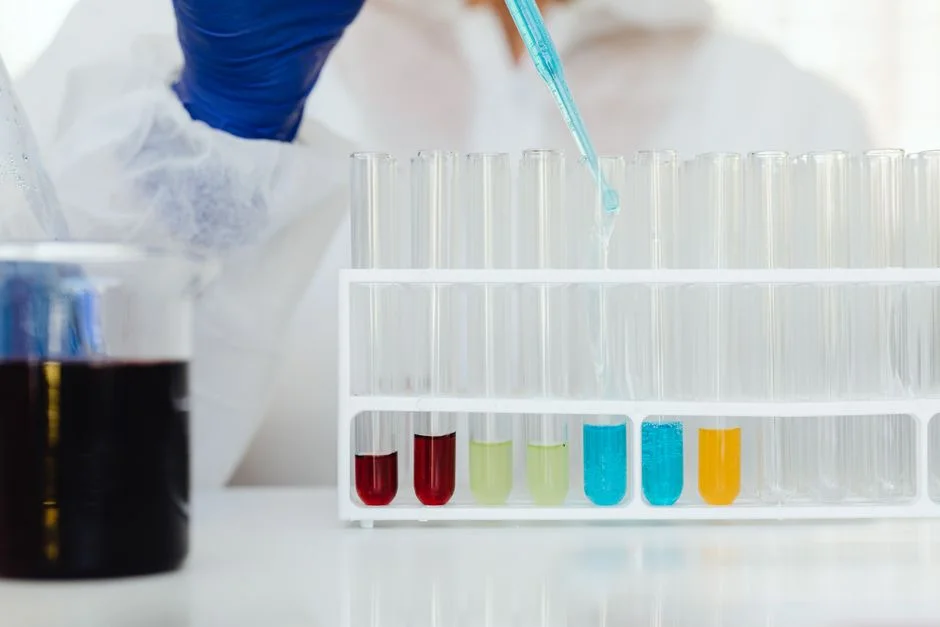
CPCB general discharge standards specify pH 5.5–9.0, with BOD, COD, and TSS limits that vary by receiving route (per sludgedryer.in). For a beverage plant discharging to sewer under typical consent, the practical operating envelope is BOD <30 mg/L, COD <250 mg/L, TSS <100 mg/L; for discharge to inland surface water the limits tighten and the receiving-body assimilative capacity becomes the binding constraint. Land-disposal and ZLD routes trigger irrigation-quality parameters including total nitrogen, total phosphorus, and specific metals.
Distinguish four separate consents: Consent to Establish (CTE), Consent to Operate (CTO), reuse permission, and any ZLD condition. Each has a different renewal cycle and a different trigger event — production capacity change, effluent quality change, or receiving-water body reclassification. A CTO granted 8 years ago for 200 kL/day is not a valid CTO for a 350 kL/day operation, even if the ETP effluent quality is unchanged. Identify the typical retrofit triggers: high TDS from RO reject (often 800–2,000 mg/L above the inland discharge limit of 100–210 mg/L depending on river class), tightening nutrient limits (total nitrogen <10 mg/L and total phosphorus per the total phosphorus discharge standard 2026 guide), and sector-specific metals limits that did not exist when the plant was commissioned.
Structuring ETP Findings in the SPA: Reps, Warranties, and Escrow
Translate the technical findings into deal-document language with three ETP-specific representations: (1) no outstanding consent violations or show-cause notices in the past 5 years, (2) all required permits (CTE, CTO, hazardous-waste authorization, sludge transporter authorization) in force and not subject to renewal within 12 months of closing, and (3) sludge disposal compliant with applicable hazardous-waste rules for the past 5 years, with all manifests available for inspection. Add an EHS-specific indemnity escrow sized at 1.5–2.0× the estimated upgrade CAPEX (typically USD 1.5–6.0 million for a 200–500 kL/day brewery ETP upgrade to meet the 2.6 hl/hl baseline plus nutrient limits), released against documented compliance milestones over 24–36 months. Recommend a pre-closing covenant requiring the seller to deliver 12 months of compliant monitoring data and any open consent-renewal applications, plus a post-closing special indemnity for any latent sludge liability discovered within 5 years.
Reference objective benchmarks in the SPA so the parties do not litigate the standard: World Bank/IFC Environmental, Health, and Safety Guidelines for breweries, the EU Industrial Emissions Directive 2010/75/EU Best Available Techniques reference document for food and beverage manufacturing, and CPCB sector-specific discharge norms. This anchors the warranty to a published standard rather than an open-ended "comply with all laws" clause, which is harder to enforce in cross-border deals.
Frequently Asked Questions
What is the minimum ETP document set a buyer should require before signing a beverage plant acquisition?
The 35-item ETP audit checklist covers seven categories: general documents, ETP design, water and wastewater records, operations, external sludge documents, organization, and emergency response. Pre-signing, the buyer must have the discharge permit, 12-month inlet/outlet flow record, instrument calibration certificates, sludge contractor authorization, ETP flow process chart, and the ETP emergency response plan; the remaining items can be post-signing covenants (per the ETP Assessment Audit Checklist).
How much does it cost to bring a non-compliant brewery ETP to AB InBev's 2.6 hl/hl Water Stewardship baseline?
For a 200–500 kL/day brewery, retrofit CAPEX typically ranges from USD 1.5 million (targeted upgrade: pH correction, MBR biological stage, sand/carbon filtration) to USD 6.0 million (full upgrade to MBR plus RO plus thermal sludge dryer for ZLD). The range is driven by receiving-water body class, whether ZLD is required, and the gap between current and target specific water consumption. OPEX rises 15–25% as reuse loops are added.
What is the typical Phase II ESA timeline for a 15-year-old brewery ETP?
Allow 6–10 weeks: 2 weeks for the data-room document review against the 35-item checklist, 2 weeks for the physical walk-down and instrumentation verification, 2–4 weeks for the 30-day influent/effluent monitoring program and accredited lab turnaround on sludge classification, and 1–2 weeks for the final ETP retrofit CAPEX and SPA inputs. A 12-month flow record is requested in week 1 because it gates the rest of the analysis.
How should legacy sludge liability be priced into the SPA?
Build the EHS indemnity escrow from three lines: (1) retroactive cleanup reserve for any sludge stored beyond manifest timelines, typically 1–3× the past 12 months of TSDF spend; (2) forward-looking disposal reserve for 24 months of post-closing sludge generation at current TSDF rates (USD 80–250/ton non-hazardous, USD 300–800/ton hazardous); and (3) a contingent reclassification reserve equal to the incremental cost if 20% of stored sludge is re-tested and reclassified as hazardous. Combined escrow for a mid-size brewing ETP typically lands at USD 400,000–1,200,000, held for 3–5 years.
Related Equipment
- dissolved air flotation (DAF) system — specifications, capacity range, and technical data