What Lamella Clarifier Operating Cost Actually Includes in 2026
Lamella clarifier operating cost in 2026 typically runs $0.02–$0.18 per cubic meter treated, depending on plant size and influent load. For a 100–200 m³/h industrial plant, budget roughly $45,000–$95,000 per year in total OPEX, dominated by polymer consumption (35–45%) and energy (15–25%). Sludge handling, labor, and plate maintenance make up the balance.
Five OPEX buckets define the picture: energy (recirculation pump, sludge pump, optional flocculation mixer), polymer/coagulant dosing, sludge handling and disposal, operator labor, and periodic maintenance (plate cleaning, pump rebuilds, instrument calibration). Across flow rates from 25 m³/h to 500 m³/h, the all-in operating cost ranges from $0.02/m³ at large municipal scale with low TSS to $0.18/m³ at small food-processing plants with high FOG and TSS load. The 100–200 m³/h band — the most common industrial size — sits at $0.06–$0.11/m³, which lines up with comparable internal benchmarks: IFAS systems run $0.04–$0.18/m³, and forward osmosis pilots $0.06–$0.28/m³ (HydropureWater field data, 2026).
What is deliberately excluded from this number: CAPEX amortization, influent screening and grit removal, downstream biological treatment, and final sludge dewatering. The dewatering line — typically a plate-and-frame filter press or centrifuge — is its own OPEX bucket and is covered separately in Filter Press Operating Cost in 2026: OPEX Breakdown & Savings. When evaluating the full clarifier skid as primary treatment, the $/m³ figure is only meaningful alongside influent characteristics: TSS 200–5,000 mg/L, FOG presence, and pH swings drive polymer dose more directly than flow does. A 100 m³/h stream at 4,000 mg/L TSS with FOG will not cost the same as 100 m³/h at 400 mg/L with no oil, even though flow is identical. Engineers should therefore treat the $/m³ figure as a denominator they divide into their own influent profile, not as a vendor-quoted line item. For sizing reference on the equipment itself, see the HydropureWater high-efficiency sedimentation tank (lamella clarifier) product specification.
Itemized OPEX Breakdown: Where the Money Goes
Polymer and energy together account for 50–70% of lamella OPEX in most industrial plants, with polymer alone being the single largest line at 35–45% of total spend. The table below gives a copy-ready budget template at 100 m³/h nominal flow; scale by your actual annual volume to populate your own P&L.
| OPEX Bucket | Share of Total | Unit Driver | Typical 2026 Range | Comment |
|---|---|---|---|---|
| Energy | 15–25% | 0.04–0.12 kWh/m³ | $0.005–$0.020/m³ | Recirculation pump + sludge pump; 2026 industrial tariff $0.08–$0.14/kWh (US/EU averages, 2026-01 EIA / Eurostat) |
| Polymer (coagulant + flocculant) | 35–45% | 2–15 mg/L dose | $0.010–$0.070/m³ | Polyacrylamide at $2.50–$4.50/kg; dose scales with TSS and FOG |
| Sludge handling & disposal | 15–25% | 2–6% dry solids out | $0.010–$0.045/m³ | Driven by hauling $/ton; downstream HydropureWater plate and frame filter press sets cake dryness and disposal cost |
| Labor | 10–20% | 0.5–2 operator-hr/day | $0.005–$0.025/m³ | Loaded $25–$45/hr; well-instrumented skids run the lower end |
| Maintenance | 5–10% | Annual service + parts | $0.003–$0.012/m³ | $3,000–$12,000/yr for 100–200 m³/h; plate inspection, pump rebuilds, instrument calibration |
Working the math for a 100 m³/h plant on 16 h/day, 330 days/year (528,000 m³/yr), the bucket midpoints land at roughly $58,000/year — comfortably inside the $45,000–$95,000 band quoted in the opening. Polymer is where procurement gets the most leverage: a 1 mg/L reduction in dose at 528,000 m³/yr and $3.50/kg polymer saves about $1,850/year, and most plants have 2–4 mg/L of recoverable dose in their current curve. Energy is the second lever, since 0.02 kWh/m³ saved on the recirculation pump at $0.10/kWh on the same volume saves about $1,050/year — small individually, but cumulative across multiple cost levers. A well-tuned automatic polymer dosing system addresses both lines simultaneously by holding dose at the jar-test optimum instead of running a safety margin.
Lamella vs. DAF vs. Conventional Clarifier: OPEX Comparison
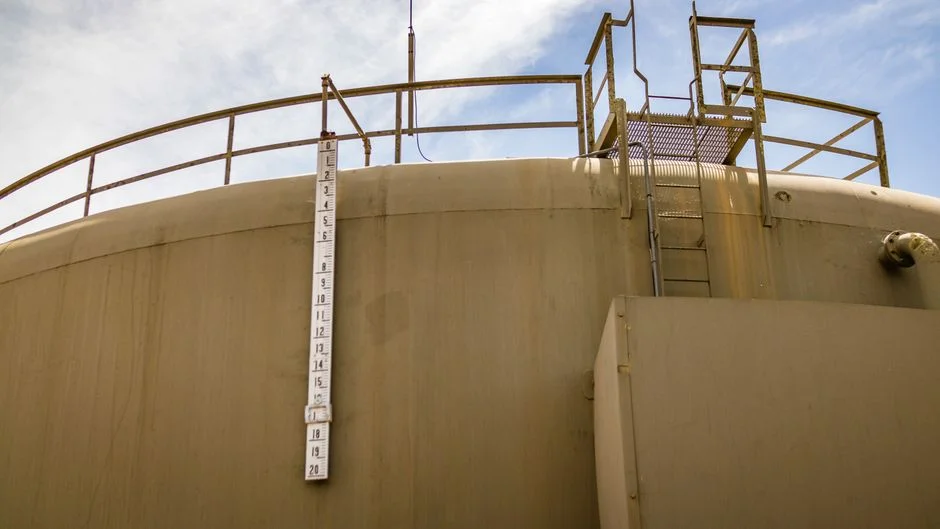
Lamella is the cost winner on footprint and $/m³ for moderate-TSS industrial streams without free oil, while DAF is the right call when FOG dominates the influent. Conventional rectangular clarifiers are only competitive at very large municipal flows where land cost is low. The table below summarizes the 2026 operating cost envelope and the engineering envelope that drives selection.
| Parameter | Lamella Clarifier | DAF (e.g., HydropureWater) | Conventional Rectangular |
|---|---|---|---|
| 2026 OPEX range | $0.02–$0.18/m³ | $0.08–$0.30/m³ | $0.04–$0.14/m³ |
| Footprint vs. conventional | 10–20% (80–90% smaller) | 20–35% | 100% (baseline) |
| TSS removal | 85–95% | 90–95% | 60–80% |
| FOG removal | 20–40% (poor on free oil) | 95%+ | 30–50% |
| Surface / hydraulic loading | 20–40 m/h (inclined plate settler mode) | 5–25 m/h | 1–2 m/h |
| Flow range | 25–500 m³/h typical | 4–300 m³/h (13 DAF models) | >500 m³/h typical |
| Best-fit influent | TSS 200–3,000 mg/L, no FOG, footprint-constrained | FOG >50 mg/L, floatable-dominant, food & meat processing | Very large municipal flows, land available, low TSS |
The decision rule: pick lamella when TSS is in the 200–3,000 mg/L band, FOG is below 50 mg/L, and civil space is constrained or expensive. Pick DAF when FOG exceeds 50 mg/L or when floatable solids dominate — typical in meat processing, dairy, edible oil, and refinery applications. Pick conventional only for large municipal primary tanks (typically >1,000 m³/h) where land cost is low and the slower settling kinetics are acceptable. A common mistake is forcing a lamella onto a high-FOG stream: the plates foul with oil, wash cycles double, and the polymer line balloons past the DAF cost. A related high-turbidity application context is covered in the High Turbidity Wastewater Treatment Solution: 2026 Process Guide.
Five Cost-Reduction Levers That Actually Move the Number
Sludge recirculation, plate spacing, surface loading, polymer selection, and automated backwash are the five levers that produce measurable $/m³ movement. Ranked by 2026 impact at a typical 100–200 m³/h plant, they are:
- Sludge recirculation (return 10–20% thickened sludge to the flocculation zone). 20–30% polymer reduction by using returned solids as nuclei for floc growth; saves $0.005–$0.015/m³ and is the highest-leverage change available. The trade-off is a slightly higher solids loading on the plates, so plate spacing should be confirmed at 60 mm minimum.
- Polymer selection — switch from generic polyacrylamide to high-molecular-weight cationic. Cuts dose 15–25% at the same settling performance on most TSS/FOG profiles; pilot-test for 2–4 weeks before full conversion. Savings of $0.003–$0.010/m³ are realistic.
- Surface loading rate tuning (run at 25–30 m/h, below the 40 m/h max). Improves TSS removal by 5–8 percentage points and often eliminates a downstream polish step. Energy per m³ is unchanged, but $/m³ net of avoided downstream cost drops $0.002–$0.008.
- Optimized plate spacing 50–80 mm and plate angle 55–60°. Improves capture and reduces wash cycles; cuts polymer 5–10% and reduces water used for plate flushing. Combined savings $0.002–$0.006/m³.
- Automated backwash and inline TSS control. Cuts operator hours 30–50% and prevents polymer overdosing on cleaner days (e.g., after CIP cycles in food plants). Typical savings $0.002–$0.005/m³ on labor and polymer together.
For polymer-line optimization specifically, the Flocculant Dosing Unit Explained: Engineering Specs, Costs & Wastewater Treatment Optimization guide covers dosing skid selection, jar-test protocols, and instrumentation. Apply levers 1, 2, and 5 together for the largest combined impact — they reinforce each other, since recirculation reduces the dose the dosing skid has to deliver, and inline TSS control prevents the dose from drifting back up.
2026 ROI Example: Mid-Sized Industrial Plant (200 m³/h)
A 200 m³/h metal-finishing or food-processing plant running 16 hours/day, 330 days/year treats 1,056,000 m³ annually. At a baseline OPEX of $0.11/m³, that is roughly $116,000/year in operating cost before any optimization. Apply the top three cost levers: sludge recirculation at –22% on the polymer line, optimized plate spacing at –8% on the polymer and wash-water lines, and automated dosing control at –5% across polymer and energy. The combined OPEX reduction lands near 25%, taking the all-in figure to approximately $87,000/year — a $29,000/year saving.
The CAPEX premium for an optimized lamella package — sludge recirculation pump, high-MW cationic polymer system, automated dosing skid, plate geometry upgrade — runs about $40,000–$80,000 incremental versus a standard rectangular clarifier retrofit at 200 m³/h. Simple payback is therefore 16–33 months and typically under 24 months once avoided downtime and compliance risk are factored in. Lamella effluent under 50 mg/L TSS typically meets EPA secondary-equivalent discharge limits and EU 91/271/EEC requirements for primary treatment effluent, which avoids compliance penalties that often dwarf the OPEX gain on their own. For a deeper compliance walkthrough, see the Chemical Wastewater Discharge Standard: 2026 Global Compliance & Treatment Guide.
Frequently Asked Questions
What is the typical 2026 OPEX for a lamella clarifier per cubic meter?
$0.02–$0.18/m³ depending on plant size, with 100–200 m³/h industrial plants running $0.06–$0.11/m³ (HydropureWater field data, 2026).
What is the dominant operating cost line for a lamella clarifier?
Polymer consumption at 35–45% of total OPEX, driven by dose of 2–15 mg/L at $2.50–$4.50/kg for polyacrylamide-based flocculants.
How much energy does a lamella clarifier use?
0.04–0.12 kWh/m³ for the recirculation pump and sludge pump combined, equating to $0.005–$0.020/m³ at 2026 industrial tariffs of $0.08–$0.14/kWh.
What surface loading rate gives the best TSS removal on a lamella?
25–30 m/h on inclined plates at 55–60° angle and 50–80 mm spacing typically delivers 90–95% TSS removal, versus 85–90% at the 40 m/h maximum design rate.
Can a lamella clarifier reduce polymer use by 20–30%?
Yes — returning 10–20% thickened sludge to the flocculation zone reduces polymer demand 20–30% by providing floc nuclei, and the HydropureWater high-efficiency sedimentation tank (lamella clarifier) is rated for up to 30% chemical reduction in this configuration at 20–40 m/h surface loading (HydropureWater field data, 2026).