How a Disc Filter Works (and Why That Dictates Maintenance)
A disc filter is a tertiary wastewater filter built from a stack of round polyester or polypropylene meshes (typically 10–40 µm pore size) that capture suspended solids on the disc surface and release them via automatic high-pressure backwash. In a documented Danish WWTP (Hydrotech HF2220, 13 discs, 18 µm mesh, 10,040 m³/day), it cut suspended solids from ~20 mg/L to 3–8 mg/L and retained ~89.7% of microplastic particles (per MDPI, 2019).
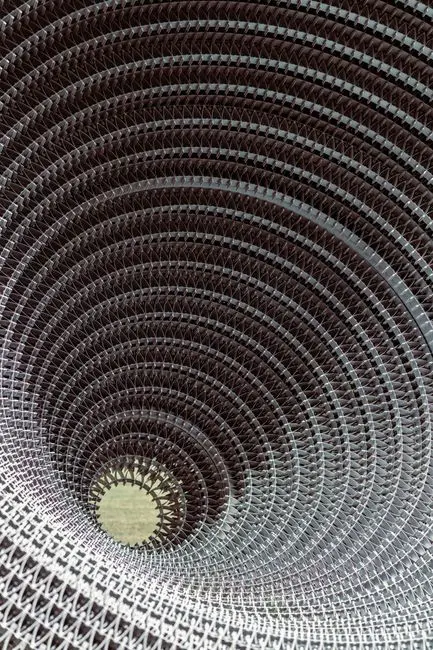
The construction is straightforward: a stack of round filter discs is mounted on a central rotor inside a closed tank, with influent fed from the center of the drum outward through the mesh (per WesTech SuperDisc design). The mesh is a woven material — typically polypropylene, polyester, or polyamide — with a defined pore size in the 10–40 µm range (MDPI, 2019). Liquids pass through the media; solids stay on the surface and in the progressively forming sludge cake, which improves removal but raises headloss across the disc pack.
Headloss is the trigger for maintenance. As solids accumulate, the influent level inside the tank rises and signals a backwash cycle. The rotor turns, the discs pass high-pressure spray nozzles, and the dislodged cake falls into an internal reject flume. The system continues to filter during backwash, so the cleaning event itself is not a production outage (WesTech).
For an industrial operator, this means almost every maintenance decision — from spray-nozzle cleaning to mesh replacement — is about restoring the cake-formation and cake-removal cycle. A 10,040 m³/day plant running 1,200 m³/h through 13 discs of 18 µm polyester mesh is the realistic baseline: 3–8 mg/L effluent SS, 89.7% MP retention (MDPI, 2019), and a backwash trigger that should be ΔP-based, not timer-based. Upstream protection of that mesh with a well-sized multi-media filter for upstream TSS reduction keeps the maintenance program on schedule rather than reactive.
Routine Maintenance Schedule: Daily, Weekly, Monthly, Annual
Disc filter reliability comes from short, repeatable tasks performed on a fixed cadence. The schedule below assumes a unit in the Hydrotech HF2220 class (13 discs, 18 µm mesh, ~1,200 m³/h, effluent SS 3–8 mg/L from a ~20 mg/L secondary feed, per MDPI 2019).
Pin this to the MCC wall:
| Frequency | Task | Trigger / Pass Criterion |
|---|---|---|
| Daily | Log backwash cycle count, check reject flume flow, listen for abnormal drive noise, clear control-panel alarms. | Cycle count within expected shift range; reject flow visible; no active faults. |
| Weekly | Record ΔP across disc stack at start and end of week; inspect backwash pump for leaks; verify spray-nozzle pressure to OEM spec. | ΔP trending flat week-on-week; backwash pressure within ±10% of setpoint. |
| Monthly | Visually inspect accessible mesh through FRP hatches; check tank-level sensor calibration; exercise manual backwash from HMI to confirm mechanical operation. | No visible fouling; level reading matches sight glass; manual cycle completes without fault. |
| Quarterly | Pull one disc for close mesh inspection (torn fibers, blinding, scaling); clean backwash spray nozzles; lubricate drive bearings per OEM chart; verify anchor bolts on tank and frame. | No torn fibers; nozzles free of scale; bearing temps within OEM band; anchor torque confirmed. |
| Annual | Full mesh condition assessment across all discs; replace any disc with tearing or irreversible blinding; replace spray-nozzle tips if flow has degraded; full function-test of all instrumentation. | Effluent SS within 3–8 mg/L target; backwash interval unchanged from prior quarter. |
The "trigger / pass criterion" column turns a checklist into a maintenance program: every task has a measurable outcome, so the operator knows when a value has drifted and intervention is needed before effluent quality does.
Backwash Tuning: Pressure, Cycle Frequency, and Water Use
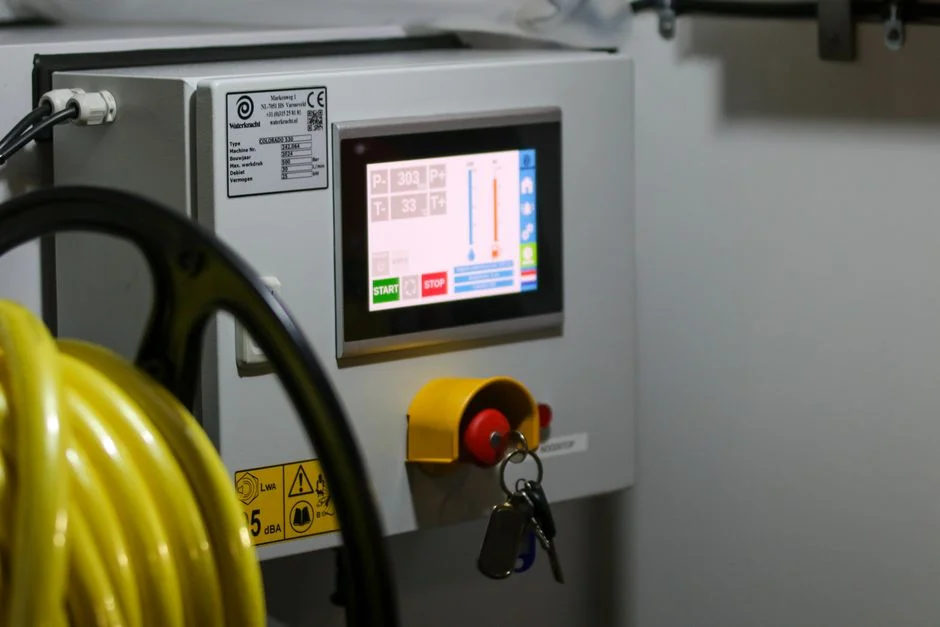
Backwash on a properly configured disc filter is triggered by differential pressure (or the equivalent tank-level signal), not by a clock. That means cycle frequency itself is a maintenance KPI: if cycles are climbing while flow and influent SS are constant, the discs are blinding faster than the spray nozzles can clear them.
On a Hydrotech HF2220-class unit, normal operating effluent SS is 3–8 mg/L (MDPI, 2019). The first sign of incomplete cake removal is effluent SS drifting toward 10+ mg/L, even with the backwash system running on schedule. Two failure modes produce that drift: a clogged spray nozzle starves one section of mesh of cleaning energy, causing ΔP to rise faster week-on-week at constant flow; or, a partially blinded mesh from mineral scaling or biofilm shows the same symptom but only clears with a manual wash and a chemistry step. Since these systems continue filtering during backwash, increasing backwash frequency rarely costs throughput, but it does increase water and energy use. Tuning means finding the lowest frequency that still holds ΔP below the trigger setpoint and effluent SS inside spec, and then re-validating that point whenever upstream solids load shifts. Stocking the right replacement spray tips and gauges from HydropureWater spare parts and consumables is the practical enabler of that tuning loop.
Mesh Inspection, Cleaning, and Replacement Intervals
Expected mesh life for a 10–40 µm polyester disc in tertiary duty is 2–5 years, driven almost entirely by influent solids load. A plant that runs steady at 15–20 mg/L secondary effluent will sit near the long end; a food-and-beverage site with periodic load spikes will sit near the short end (HydropureWater field data, 2026).
Physical inspection criteria are concrete. Pull a disc and look for torn or frayed fibers along the seam and the outer edge, white mineral deposits that do not dissolve under a low-pressure rinse, and biofilm that returns within days of a sodium hypochlorite wash. Irreversible blinding — where the mesh looks clean but ΔP will not return to baseline after a manual backwash — is the replacement trigger.
Cleaning protocols should be gentle. Use a low-pressure rinse for routine loose solids, a mild acid wash (typically 1–3% citric or sulfamic) for calcium-based scaling, and 50–100 mg/L sodium hypochlorite for biofilm. High-pressure washing accelerates fiber fatigue and shortens mesh life, so it should be reserved for discs already scheduled for retirement. Replacement is a performance decision: pull the disc when effluent SS no longer meets the 3–8 mg/L target (MDPI, 2019) or when manual backwash cannot restore ΔP baseline. When replacement is due, source through the same filter element supply chain that feeds the downstream RO/UF train so media specs stay consistent.
Troubleshooting: Symptoms, Causes, and Corrective Actions
The fastest path to a fix is a symptom-to-cause lookup. Use the table below before opening the maintenance manual.
| Symptom | Likely Cause | Corrective Action |
|---|---|---|
| Rising effluent SS at constant flow | Torn mesh; clogged spray nozzle leaving a sector unwashed; wrong pore size for upstream load | Pull a disc and inspect mesh under light; clean spray nozzles; review upstream settling and pre-filtration. |
| Backwash cycles becoming more frequent | Blinding from elevated influent SS; backwash pump pressure drop; partially blocked nozzle | Sample upstream SS; check pump discharge pressure; clean or replace nozzle tips. |
| Drive unit noise or vibration | Bearing wear; loose rotor; debris caught in disc pack | Lock out, inspect bearings and rotor alignment per OEM; remove any debris from the disc pack. |
| Continuous backwash (no idle) | Failed ΔP sensor; control setpoint too low; fully blinded mesh | Verify sensor calibration against a manual gauge; raise setpoint temporarily; schedule mesh pull. |
| Visible solids in effluent after backwash | Torn mesh; bypass around disc pack at the seal | Pull discs and inspect; replace any damaged units; check tank seal and rotor face. |
When a torn mesh is the working diagnosis, check upstream to see if a coarse screen has been lost or bypassed. Debris from a failing bar screen often migrates into the disc pack and accelerates mesh damage; protecting the discs with a properly serviced rotary mechanical bar screen is the most effective preventative measure.
Cost and Lifecycle Considerations for Industrial Operators
Disc-filter OPEX consists of three line items: backwash water and energy, spare mesh discs, and the labor hours for inspection. The expensive failure mode — a sudden mesh tear that lets a slug of solids through to downstream RO or UF membranes — can cost thousands in membrane fouling, making a scheduled quarterly inspection the best insurance against that scenario.
Backwash water is typically 1–5% of throughput for a well-tuned unit, and the backwash pump's energy use scales with that fraction. Disc replacement, on a 2–5 year cycle, is the most predictable line item. Keeping all three in balance is straightforward when the consumables and parts stream is consolidated through HydropureWater spare parts and consumables so that spray tips, gauges, and replacement discs arrive on the same predictable lead time.
Frequently Asked Questions
How often should a disc filter backwash?
Backwash on a disc filter is triggered by differential pressure across the disc pack, not by a fixed timer. On a Hydrotech HF2220-class unit running 1,200 m³/h with an 18 µm polyester mesh, cycles typically occur every 30–90 minutes depending on influent SS. If cycle frequency is climbing at constant flow and influent SS, the spray nozzles are likely partially clogged and need cleaning before any timer adjustment is made.
What is the expected mesh life on a polyester disc filter?
Woven polyester mesh in the 10–40 µm range typically lasts 2–5 years in tertiary duty, with the variation driven by influent solids load rather than by the calendar. Plants running steady at 15–20 mg/L secondary effluent sit at the long end; food-and-beverage or pulp/paper sites with periodic load spikes sit at the short end (HydropureWater field data, 2026).
When should I replace a disc versus clean it?
Replace when physical inspection shows torn or frayed fibers, when manual backwash cannot restore ΔP to baseline, or when effluent SS drifts outside the 3–8 mg/L target documented for 18 µm polyester mesh (MDPI, 2019). Clean — using low-pressure rinse, mild acid for mineral scaling, or 50–100 mg/L sodium hypochlorite for biofilm — for everything short of those triggers. High-pressure washing accelerates fiber fatigue and should be avoided.
What effluent quality should a disc filter be producing?
A properly tuned disc filter on a secondary effluent feed of ~20 mg/L SS should produce 3–8 mg/L effluent SS. In the documented Billund, Denmark installation (Hydrotech HF2220, 13 discs, 18 µm mesh, 10,040 m³/day), the same unit also retained 89.7% of microplastic particles by count and 75.6% by mass, with an effluent MP concentration of 3 MP/L (MDPI, 2019). If your numbers are drifting outside those bands, troubleshoot against the symptom table above before assuming the mesh needs replacement.