Start with the contaminant fraction, not the equipment name
For mining and metals wastewater in Edgar Springs, choose DAF when the target load is oily, buoyant, colloidal, or can be chemically conditioned into floc that attaches to bubbles. Choose a conventional or lamella clarifier when heavy, rapidly settleable solids dominate and gravity separation is adequate. DAF uses 30–50 micron microbubbles and skims floatable sludge; lamella clarification adds inclined plates to improve settling in a compact tank. Mixed streams may justify pretreatment or a combined train, but the final choice should follow stream-specific characterization, peak-flow analysis, jar testing, and review of the downstream sludge route.
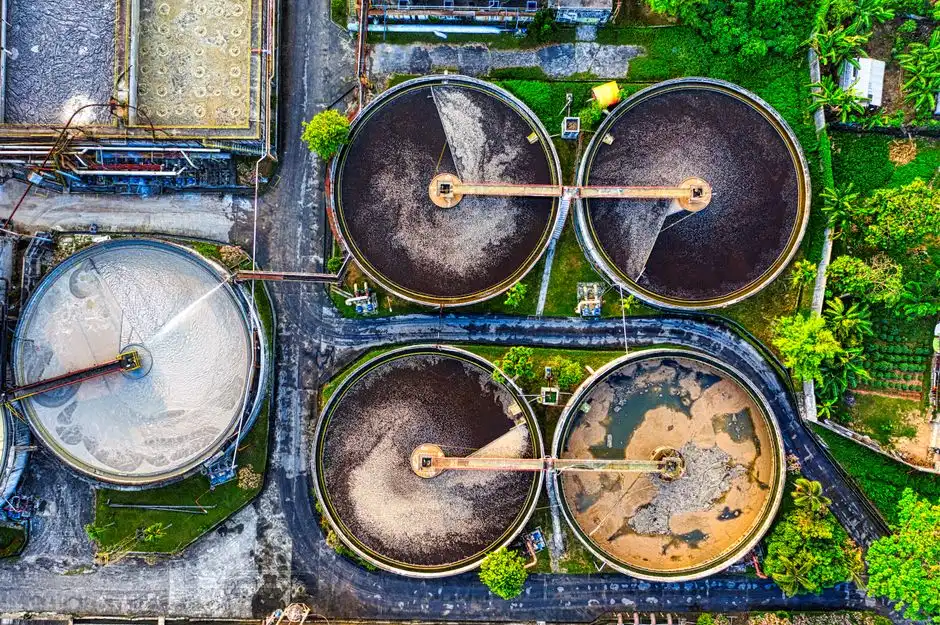
Dissolved air flotation is a flotation process: pressurized water releases microbubbles that attach to suspended particles or conditioned floc, which rise and are removed by a skimmer. Conventional clarification relies on gravity settling. A lamella plate clarifier retains the same settling principle but uses inclined plates to increase effective settling area within a compact tank; it may also include sludge recirculation and flocculation.
Clearwater specifies 30–50 micron microbubbles for its DAF systems in an April 27, 2026 publication. That bubble-attachment mechanism distinguishes flotation from gravity separation. The procurement consequence is direct: “dissolved air flotation clarifier” and “gravity settling clarifier” must not be compared as interchangeable labels. The RFQ should state the separation principle, target contaminant fraction, and required removal mechanism, as discussed in the DAF selection checklist for FOG and TSS.
Heavy sand and gravel should be treated as a possible pretreatment duty before either separator. Metals alone also do not select the equipment: dissolved metals remain in the water phase, while metals attached to settleable or floatable solids can be removed only if the relevant solids are separated. This is the central logic in the broader mining and metals DAF-versus-clarifier guide.
Match the separator to the stream and its dominant solids
A mining and metals plant near Edgar Springs should separate process, contact, washdown, and stormwater inflows before selecting a primary separator. Each stream needs its own average flow, peak flow, batch-discharge profile, and share of the total wastewater load. Equalization may dampen hydraulic surges, but it does not make an oil stream suitable for gravity settling or a heavy-solids stream suitable for flotation.
Favor DAF for oils, fats, low-density solids, flotation reagents, and colloidal material that jar testing shows can be conditioned into bubble-attached floc. Favor conventional or lamella clarification for dense mineral fines, tailings solids, sand, grit, and metallurgical precipitates that settle readily. Lamella plates improve settling area; they do not remove dissolved metals, emulsified oil, or colloidal particles that do not settle.
| Stream or fraction | First screening decision | Reason |
|---|---|---|
| Process water and equipment washdown | Separate by source and characterize | Flow, chemistry, oil content, and solids behavior may differ materially between streams. |
| Contact water | Identify oil, reagent, and suspended-solids fractions | DAF may be appropriate for buoyant or conditioned material; clarification does not remove dissolved contaminants. |
| Washdown with sand, grit, or mineral fines | Evaluate solids exclusion or pretreatment | Heavy nonfloating material can overload a flotation mechanism and should not be forced through the primary separator. |
| Stormwater | Determine contribution and variability | Storm events can change both hydraulic and solids loading; a representative averaged sample may conceal the governing condition. |
| Combined stream with substantial sand plus significant FOG | Define pretreatment before selecting the final separator | Removing heavy material first may make downstream flotation or clarification more effective. |
The treatment train should follow a clear sequence:
- Segregate sources and document their flow and contaminant contributions.
- Equalize variable flows and remove damaging or high-solids material where required.
- Adjust pH and apply coagulant, flocculant, or flotation-conditioning chemicals established by testing.
- Select DAF or clarification for the dominant separable fraction.
- Withdraw, store, and dewater the resulting sludge.
- Add polishing where the required effluent quality requires it.
For streams containing both substantial sand and significant FOG, pretreatment is more informative than forcing every fraction into one unit. The mining and metals pretreatment compliance guide provides a useful framework for checking pretreatment limits against site-specific wastewater data rather than substituting experience from another location.
Build the design basis before comparing equipment
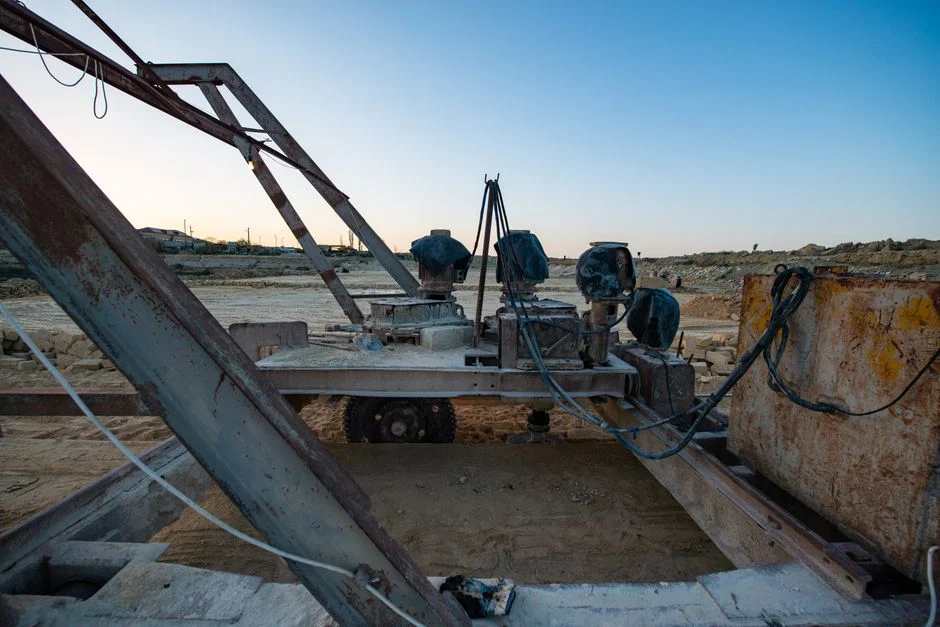
Equipment selection should begin with representative wastewater characterization, not a generic capacity table. One averaged sample can conceal batch discharges, washdown events, stormwater contributions, and changes in chemistry. The buyer should require TSS, particle-size distribution, settleability, solids density where available, oils and greases, pH, alkalinity, temperature, total metals, dissolved metals, and grab samples taken across representative operating conditions.
Chemical jar testing should establish the pH adjustment, coagulant, flocculant, flotation-conditioning dose, and settling assumptions used to compare candidates. The test must be repeated or challenged against the wastewater conditions that govern peak loading. The automatic chemical dosing system must then be integrated with flow, pH, level, and equipment controls rather than evaluated as an accessory.
| Design input | Required information | Why it controls selection |
|---|---|---|
| Hydraulic duty | Average and peak flow by source; batch-discharge profile; equalization volume and controls | Determines feed capacity, equalization, flow distribution, and peak-flow strategy. |
| Solids duty | TSS, particle-size distribution, settleability, density where available, and peak mass loading | Determines whether flotation or gravity separation can handle the contaminant fraction. |
| Chemistry | pH range, alkalinity, temperature, total and dissolved metals, oils and greases | Defines chemical demand, conditioning effectiveness, material selection, and downstream treatment. |
| Hydraulic loading reference | Source-reported DAF range of 2–6 gpm/ft² | This is a source-reported reference, not an automatic selection; wastewater-specific testing and equipment design govern. |
| Flow-control condition | Source-reported requirement to keep influent within 80%–110% of nominal design flow through equalization and flow controls | Variable mining streams can exceed the separator’s operating basis unless peaks are buffered and controlled. |
| Air-to-solids reference | Source-reported range of 0.01–0.05 ml of air per mg of solids | The final value must follow wastewater-specific testing and the selected DAF design. |
| Equipment configuration | Clarwater FPAC, FPBC, and FPHF configuration distinctions | These indicate flow-and-solids configuration differences, not universal site-sizing guarantees. |
Variable mining streams must be assessed against peak mass loading and expected sludge production, not average hydraulic flow alone. A unit may handle the water volume while still being undersized for flotation duty or sludge withdrawal. The rotary mechanical bar screen can be evaluated where gross solids need removal before the separator, but the selected pretreatment must reflect the actual solids inventory rather than a generic protection claim.
For clarification, request the effective settling area, design surface-overflow basis, distribution arrangement, sludge collection method, and recycle arrangement. For DAF, request the flotation surface area, recycle configuration, pressure and air system, skimmer capacity, and expected floated-solids rate. The bid should demonstrate that the selected configuration matches the measured peak-flow and mass-loading basis.
Compare operating, materials, and sludge-handling consequences
DAF and clarification create different operating and downstream-handling obligations, so the lower separator price does not necessarily produce the lower treatment-train cost. One source reports DAF energy use of 0.5–1.5 kWh/m³ of treated water for air compression and recycle pumping. Clarifiers avoid that recycle system, but the complete installation may require additional civil work, flocculation, sludge recirculation, withdrawal equipment, and careful hydraulic integration.
Materials must be selected against actual chemistry and temperature. Clearwater states that its standard DAF clarifiers use 304SS, with 316SS, polypropylene, and other materials available on request, in its April 27, 2026 publication. That is a manufacturer statement about available configurations, not evidence that any listed material will be suitable for Edgar Springs wastewater. The buyer should require a corrosion rationale tied to the characterized stream.
| Comparison item | DAF route | Clarification route | Buyer check |
|---|---|---|---|
| Primary mechanism | Microbubble attachment and surface skimming | Gravity settling; inclined plates improve effective settling area | Require the supplier to state the separation principle and target fraction. |
| Utilities | Air compression and recycle pumping; source-reported use of 0.5–1.5 kWh/m³ | Lower recycle demand, but verify drives, pumping, and sludge withdrawal | Compare connected loads and operating assumptions. |
| Civil and installation | Compare a modular industrial DAF system against site installation requirements | A high-efficiency lamella clarifier still requires the proposed civil, distribution, and withdrawal scope | Request a complete installed-cost breakdown rather than equipment-only pricing. |
| Equipment-price evidence | One source reports $80,000–$350,000; another reports $150,000 to over $1.5 million | One source reports $50,000–$200,000 for conventional circular clarifiers | Treat the conflicting ranges as source-reported screening information, not Edgar Springs quotations. |
| Project-cost evidence | One source reports clarifier civil construction costing 30%–50% more than modular DAF | The same claim concerns the civil construction difference, not every installed project | Validate foundations, basins, access, utilities, and installation with local bids. |
| Sludge route | Floatation sludge is skimmed for collection and dewatering | Bottom sludge is withdrawn; lamella systems may include recirculation | Compare moisture, volume, storage, collection, and dewatering with the complete train. |
Sludge can change the economic result. Require expected moisture content, sludge volume, storage time, collection method, disposal frequency, and compatibility with the selected plate-and-frame filter press or other dewatering route. Do not accept generic TSS, oil, or metal removal percentages as guarantees. A defensible comparison uses the same wastewater, chemical dose, flow, temperature, test method, sampling point, and acceptance criterion for both proposals.
Use a bid-ready evaluation and acceptance checklist
A defensible RFQ compares complete treatment trains against measured plant conditions, not product names or isolated purchase prices. Ask every bidder to identify the separation mechanism, tank or settling area, solids-handling arrangement, recycle system, material selection, controls, utilities, maintenance requirements, installation inputs, and service scope. The model must be tied to the wastewater characterization, hydraulic profile, and peak mass-loading basis.
DAF and gravity clarification should be screened against the same wastewater, chemical-conditioning assumptions, hydraulic profile, and performance criteria. If only one process was considered, require the bidder to explain the screening logic and document why the alternative was excluded on technical grounds rather than product preference.
| RFQ package | Required content | Reason for inclusion |
|---|---|---|
| Wastewater design basis | Stream-by-stream flow, representative characterization, peak mass loading, and equalization basis | Prevents model selection from average flow or one averaged sample. |
| Process comparison | DAF and clarification screened on the same wastewater and criteria | Prevents a preselected equipment category from masquerading as an engineering comparison. |
| Equipment and controls | Surface area or settling area, recycle, sludge withdrawal, chemical dosing, pH, level, alarms, and data logging | Makes the operating boundary and control scope explicit. |
| Materials and utilities | Material rationale, connected loads, air demand, water and drainage requirements | Connects equipment selection to site chemistry and utilities. |
| Sludge route | Moisture, volume, storage, dewatering, disposal frequency, and equipment compatibility | Exposes consequences hidden outside the separator quotation. |
| Commercial comparison | Chemical, sludge, utility, labor, maintenance, pretreatment, controls, and disposal costs separated | Distinguishes purchase price from total project and life-cycle cost. |
| Performance evidence | Comparable references, site-specific test plan, test methods, sampling points, and acceptance criteria | Rejects generic removal claims and unverified statements that equipment “meets all limits.” |
Reject bids selected from average flow alone, generic removal percentages without test conditions, or purchase price presented as total cost. Require a site-specific test plan and acceptance criteria tied to the actual wastewater and applicable permit or sewer requirements. This framework is consistent with the 2026 factory-selection framework for mining and metals wastewater.
Frequently Asked Questions
Is DAF or a clarifier cheaper for mining and metals wastewater in Edgar Springs?
Neither technology has a defensible site-specific price until the wastewater, flow, solids loading, civil work, chemicals, controls, utilities, and sludge route are defined. One source reports DAF equipment at $80,000–$350,000 and conventional circular clarifiers at $50,000–$200,000, while another source gives a broader DAF range of $150,000 to over $1.5 million. A further source reports clarifier civil construction costing 30%–50% more than modular DAF, but that is not an Edgar Springs estimate. Request an installed-price schedule with separate assumptions for equipment, pretreatment, civil work, chemical systems, utilities, sludge handling, installation, and disposal.
Can DAF and clarification be used together?
Yes, when wastewater testing identifies genuinely distinct fractions: heavy, readily settleable solids for clarification and oily, buoyant, or conditioned solids for flotation. A combined train should not be assumed necessary for every mixed stream. First evaluate source segregation and pretreatment, then demonstrate each unit’s purpose through characterization and jar testing. The complete configuration should be priced with its intermediate pumping, controls, and sludge route.
How should a DAF be sized for variable mining wastewater?
Use the source-reported 2–6 gpm/ft² loading range as a screening reference, not as a standalone guarantee. Keep influent within the source-reported 80%–110% of nominal design flow through equalization and flow controls, and check peak mass loading and peak sludge production. Chemical-conditioning requirements must come from wastewater-specific jar testing. The final sizing should also state how batch discharges, washdown, stormwater, recycle flow, skimming capacity, and equalization are handled.
How should a supplier be evaluated for an Edgar Springs treatment train?
Require comparable mining or metals references and defined test methods, but do not accept them as guarantees. The bid must state the separation mechanism, duty basis, materials, controls, utilities, maintenance, installation boundaries, service scope, and sludge-handling route. A supplier should also provide a site-specific test plan with sampling points and acceptance criteria tied to the actual wastewater and applicable requirements. Request comparable references through the mining and metals DAF-versus-clarifier guide.
Can a clarifier alone meet metal limits?
Not on the assumption that it can. A clarifier removes metals associated with solids that settle; it does not remove dissolved metals. Colloidal metal-bearing solids may also escape if they do not settle. The design must distinguish total from dissolved metals and identify the required downstream chemistry and separation steps. Depending on the measured result, that could include pH adjustment and precipitation, coagulation, flotation, filtration, or another polishing process before discharge or reuse.