Determine Which Discharge Rules Actually Apply
Mining and metals plants near Bryants Store meet pretreatment limits by operating under the receiving POTW’s sewer-use ordinance and pretreatment program under Clean Water Act §307(b) and 40 CFR Part 403. Ore mining and metal finishing may also trigger categorical standards, including 40 CFR Part 437 or Part 433, while separate surface-water discharges require NPDES authorization. A compliant train typically combines equalization, PLC-controlled pH adjustment, hydroxide precipitation, coagulation and flocculation, DAF or lamella clarification, multimedia filtration, and sludge dewatering. The controlling limits are the POTW’s local limits—not federal categorical limits alone—so the receiving POTW’s current ordinance, sampling requirements, and discharge characteristics must be confirmed before equipment sizing.
The permit path must be resolved before drawing a process flow or requesting equipment prices. A sewer discharge is controlled through the local pretreatment program: the POTW administers local limits, monitoring requirements, and enforcement under Clean Water Act §307(b) and 40 CFR Part 403. By contrast, the US EPA’s Industrial Wastewater page states that point-source discharges from mining operations, including discharges from associated impoundments, require NPDES authorization.
A mine can therefore carry both authorizations. A process line discharging through a manhole to a POTW remains subject to pretreatment requirements, while a separate surface-water or stormwater outfall may require an NPDES permit. This regional pretreatment guide explains the dual-regime logic, while the fabricated-metals treatment reference shows why a POTW’s local limits must drive final equipment selection.
| Discharge path | Controlling framework | Design consequence |
|---|---|---|
| Process wastewater enters the POTW sewer | Clean Water Act §307(b), 40 CFR Part 403, POTW sewer-use ordinance and industrial-user permit | Meet the POTW’s applicable local and categorical limits before discharge. |
| Separate surface-water or stormwater outfall | Clean Water Act §402 NPDES authorization | Apply the permit conditions to that outfall separately. |
| Mine has both sewer and surface-water outfalls | Both frameworks may apply | Maintain separate permit maps, sampling points, and compliance records. |
Before quotation, obtain the current POTW sewer-use ordinance, industrial-user permit, applicable categorical standard, discharge monitoring reports, and 12 months of influent and operating data. Do not assume that a generic citation to 40 CFR Part 437, Part 440, or Part 433 resolves the classification. The actual process, subcategory, pollutants, and local limits must be verified. EPA notes that mining discharges can include associated-impoundment releases; that requirement does not convert a sewer discharge into an NPDES discharge.
Build the Treatment Train Around the Binding Limit
The receiving POTW’s current ordinance, not a generic federal limit, should set the equipment design target. HydropureWater’s 2026 pretreatment research identifies typical 2026 local screening values of zinc at 0.3–1.0 mg/L monthly average and copper at 0.3–0.5 mg/L monthly average; these are not substitutes for the specific Bryants Store-area ordinance.
- Equalize the flow. HydropureWater recommends an equalization basin providing 8–24 hours of average daily flow to damp batch discharges from shift changes, dump-leach cycles, and mill clean-outs. The same research states that a 4-hour basin can pass upstream spikes directly into clarification.
- Correct pH under closed-loop control. Use lime or sodium hydroxide through a PLC-controlled chemical dosing skid. HydropureWater’s research gives 6.5–9.0 as the target pH range and calls for two staged reactors when influent pH changes exceed 2 pH units.
- Precipitate dissolved metals. Adjust pH for metal hydroxide precipitation, then add coagulant and polymer aid to form settleable flocs.
- Clarify and filter. Remove the flocs in DAF or lamella clarification, then polish residual solids in multimedia filtration before the sewer manhole.
Jar testing must establish the parameter-specific operating window rather than fixing dosage from vendor literature alone. HydropureWater’s research reports that properly controlled precipitation systems routinely achieve 85–95% total metals removal, as cited by Fluence in 2024-11. That performance supports precipitation as the base process, but it does not demonstrate compliance without the site chemistry and final POTW sampling point.
| Process stage | Design input | Bid-ready information required |
|---|---|---|
| Equalization | Average daily flow, batch discharges, peak 2-hour flow | 12-month flow record and operating inventory |
| pH adjustment | Influent pH, flow, alkalinity and reagent demand | Raw and treated titration data |
| Metal hydroxide precipitation | Dissolved metals, target pH and residual | Jar-test protocol and parameter-specific results |
| Coagulation/flocculation | Solids, colloids, oil and grease | Mixing, residence-time and polymer-dose basis |
| Clarification and filtration | Peak flow, floc density, oil content and footprint | Pilot results, hydraulic loading and backwash criteria |
Sulfide polishing is a special response to stringent residual-metal targets, not a default replacement for hydroxide precipitation. HydropureWater’s research reports sulfide residuals of 0.01–0.05 mg/L for copper, zinc, cadmium, and nickel, with reagent cost 2–4 times higher than hydroxide treatment. It also requires sealed reactors and scrubbed vents for hydrogen sulfide control. Decide whether polishing applies only after comparing the binding residual limit, metal inventory, and reagent demand.
Choose DAF or Lamella for the Clarification Duty
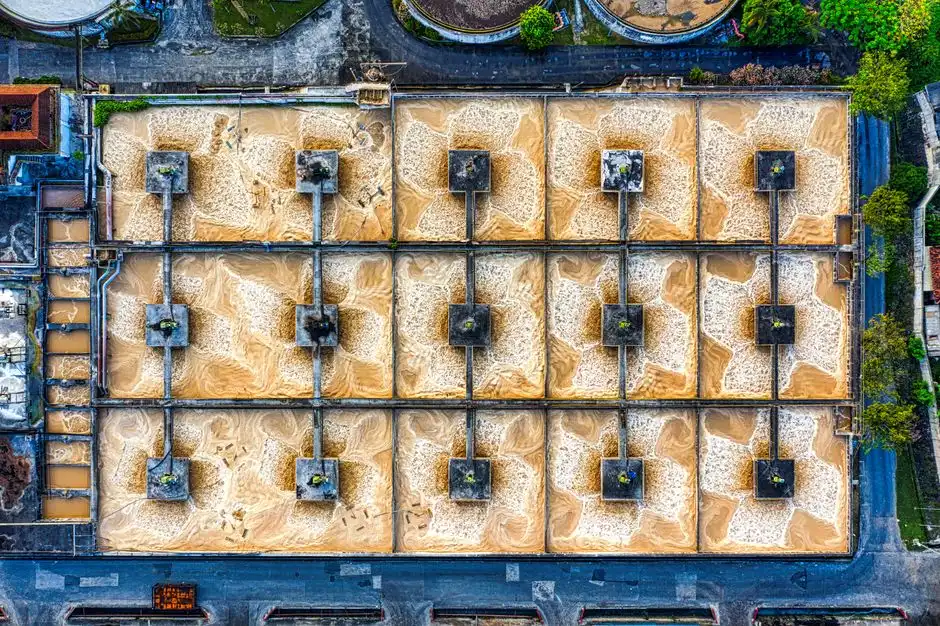
DAF is the stronger starting point when wastewater contains oil, grease, or fine colloidal metals; lamella becomes more competitive when the stream is dominated by metal-hydroxide sludge, flow is high, and footprint is constrained. HydropureWater’s research lists DAF hydraulic loading of 5–25 m/h, TSS removal of 90–98%, and oil and grease removal of 85–95% in mining and metal-finishing service. It lists lamella surface loading of 20–40 m/h.
| Selection condition | Preferred route | Reason |
|---|---|---|
| Oil, grease or fine colloidal metals are present | DAF | Microbubbles recover floatable material and aid separation of low-density flocs. |
| Metal-hydroxide sludge dominates | Lamella | Its dense blanket handles heavy flocs at the cited surface-loading range. |
| High flow with constrained footprint | Lamella or parallel DAF | The research says parallel DAF trains or lamella may be more economical above 100 m³/h. |
| Free oil or colloidal fines remain important | DAF | The research states lamella is less effective for these constituents. |
HydropureWater’s DAF catalog covers 4–300 m³/h across 13 models. The research states that packaged skids are common below 10 m³/h, while parallel DAF trains or lamella may be more economical above 100 m³/h. These are procurement screening points, not substitutes for a site flow and footprint study. The DAF selection guide for FOG and TSS provides the appropriate detailed comparison for a DAF system for mining and metals wastewater.
HydropureWater’s research gives 0.5–3 mg/L as a polymer-aid screening range and reports that suitable polymer dosing can support lamella operation at 20–40 m/h hydraulic loading. Require jar and pilot testing before fixing a loading rate, because settling behavior changes with precipitate chemistry, mixing, temperature, and oil content.
Size the clarification system around the peak 2-hour flow identified by HydropureWater’s research, with 20–30% turndown capacity—not average flow alone. That requirement should control both civil construction and the number of treatment trains.
Polish, Disinfect, and Manage the Resulting Sludge
Multimedia filtration is the final physical safety barrier before the sewer discharge point. HydropureWater’s research gives a filtration rate of 1–2 m/h and reports residual TSS below 10 mg/L. Size the media vessel around the backwash cycle rather than average flow, and trigger backwash from differential pressure so a clarifier upset does not pass directly to the sewer.
| Residual stream | Treatment decision | Required evidence or control |
|---|---|---|
| Final treated water | Multimedia filtration; disinfection only if the POTW requires it | Filtration rate, backwash capacity, differential-pressure control and POTW microbial limits |
| Clarifier or DAF sludge | Thicken and dewater without returning it to the process line | Sludge characterization and destination acceptance |
| Filter-press filtrate | Return to plant headworks only after hydraulic and chemistry review | Peak-flow check, recycle chemistry and upset-response plan |
Disinfection is conditional, not universal. HydropureWater’s research identifies chlorine dioxide at 1–5 mg/L for applicable microbial limits and identifies UV as a non-chemical alternative. The equipment basis should be the POTW ordinance and the specific microbial risk; adding an oxidizer without a requirement creates unnecessary operating complexity.
Clarifier and DAF sludge is a regulated waste, not a side stream that can be diluted into treated water. HydropureWater’s research reports a plate-and-frame filter-press endpoint of 25–35% dry solids. The resulting cake still requires a disposal plan identifying an authorized Subtitle D landfill or another permitted route. Metal recovery may be possible, but its feasibility depends on site-specific rules and economics. A filter press guide for metal finishing sludge supports dewatering design, while a plate-frame filter press must be selected from actual sludge volume and solids data.
Turn the Permit into a Commissioning and Procurement Plan
The permit becomes bid-ready only when each applicable limit is translated into a measurable acceptance criterion. HydropureWater’s research directs buyers to distinguish daily-maximum, monthly-average, instantaneous, and mass-based requirements where the governing document applies. Sampling frequency, bypass restrictions, monitoring locations, and enforcement triggers must come from the POTW pretreatment program; they cannot be assumed from a generic treatment guide.
- Establish the compliance envelope. Obtain the current POTW ordinance, industrial-user permit, categorical standard, NPDES permit for separate surface-water outfalls, recent discharge monitoring reports, and 12 months of influent and operating data.
- Develop the process design. Complete source characterization, jar testing, and site-specific mass balances before sizing pH adjustment, clarification, filtration, or sludge equipment.
- Set performance guarantees. Translate permit conditions into final-effluent sampling points, analytical methods, acceptance tolerances, bypass alarms, and corrective-action duties.
- Verify the installed system. Conduct FAT and SAT, then reconcile each unit’s hydraulic and solids mass balance and sample the final sewer discharge against the POTW limits.
| Bid package | Minimum supplier response |
|---|---|
| Process basis | Design flow, chemistry envelope, permit limits, mass balance, safety factors and operating assumptions stated in writing. |
| Equipment | Documented sizing calculations, material selection, control narratives, utilities, alarm setpoints and manufacturer operating envelopes. |
| Commissioning | FAT/SAT protocol, chemical-system calibration, controlled flow test, sampling plan and mass-balance reconciliation. |
| Support | Documented chemistry competence, relevant mining or metal-finishing references, commissioning support and critical-spares availability. |
Control performance matters because a short excursion can consume the operating margin. HydropureWater’s research gives a ±0.2 pH-control benchmark and identifies civil penalties of up to $25,000 per day per violation under Clean Water Act §309. These values explain why excursion control matters; the applicable penalty and enforcement outcome must still be confirmed with the controlling authority.
For the DAF, chemical dosing, and sludge packages, require one integrated operating envelope rather than disconnected guarantees. FAT should verify tank capacity, metering, interlocks, alarms, and control logic. SAT should establish stable hydraulics and chemistry at the agreed test flow, followed by final discharge sampling. Any performance claim should identify its test conditions, analytical method, sampling point, duration, and acceptance limit.
Frequently Asked Questions
Does an NPDES permit authorize discharge to a municipal sewer?
No. NPDES covers point-source discharges to waters of the United States. Sewer discharge is controlled through the POTW pretreatment program under Clean Water Act §307(b) and 40 CFR Part 403, including the POTW’s sewer-use ordinance. Separate surface-water outfalls may still require NPDES authorization.
Why use metal hydroxide precipitation before sulfide polishing?
HydropureWater’s research identifies hydroxide precipitation as the usual base process because the chemistry is established and the reagent cost is lower. Sulfide polishing becomes relevant when the binding residual target requires the reported 0.01–0.05 mg/L sulfide residuals. Buyers should request a reagent-demand and mass-balance comparison, including the 2–4 times higher sulfide reagent cost and sealed hydrogen-sulfide controls identified in the research.
Should clarification be selected by flow rate alone?
No. The decision must consider oil, colloids, sludge character, peak 2-hour flow, and available footprint. The research supports DAF for oil, grease, and fine colloidal metals, and lamella for metal-hydroxide sludge at high flow or constrained space. Jar and pilot testing should confirm the loading rate before purchase.
What should be requested before accepting a treatment-train quotation?
Request the current POTW sewer-use ordinance, industrial-user permit, applicable categorical standard, recent discharge monitoring reports, 12 months of influent and operating data, and site-specific jar-test results. Require the quotation to state flow basis, chemistry assumptions, permit compliance targets, control philosophy, FAT/SAT criteria, commissioning support, and critical-spares availability. These inputs allow suppliers to price a defined compliance train rather than an open-ended package.
Related Equipment
- DAF system for mining and metals wastewater — specifications, capacity range, and technical data