Start With the Wastewater, Not the Equipment Name
Ridgway fabricated-metals factories should choose DAF when oil, FOG, paint-related residues, or conditioned light solids are recurring targets; choose a lamella clarifier when dense metal fines and other solids settle reliably and the priority is compact gravity separation. DAF uses 30–50 micron microbubbles to lift conditioned contaminants, while lamella clarification uses flocculation, sludge recirculation, and inclined plates. The correct 2026 choice depends on representative wastewater testing, peak and batch flows, chemical-conditioning results, footprint, sludge handling, and written local permit requirements—not a generic removal-rate claim.
Separate cutting, stamping, welding, finishing, painting, washdown, cleanup, and batch-discharge streams before comparing equipment. Their hydraulic and contaminant loads may differ sharply. A dilute washwater stream can dominate flow without carrying the same concentration of oil or solids as a concentrated process dump, while a paint stream can introduce pH, solids, and floatability problems that one clean sample will not reveal.
Collect representative data for TSS, FOG, oil and grease, pH, settleable solids, turbidity, COD/BOD where relevant, and dissolved and particulate metals. Record average flow, peak flow, cleanup and batch-discharge duration, batch frequency, current chemical use, and the downstream sludge-disposal route. The industrial pretreatment characterization and compliance guide provides useful context for separating characterization from equipment selection.
DeZURIK’s industrial-water ebook states that characterization should represent anticipated flow and water-quality scenarios. It also refers to seasonal data over 5–10 years as a general water-chemistry design example for demineralized-water systems; that is not a fabricated-metals sampling mandate. For a fabrication plant, the defensible basis is a sampling plan that covers normal production, cleanup, upset, and batch conditions.
| Stream | Data to establish | Procurement consequence |
|---|---|---|
| Cutting, stamping, or welding | Flow, TSS, oil and grease, particle size, settleable solids | Distinguish dense metal fines from floatable oil-bearing solids. |
| Finishing or washdown | Average and peak flow, FOG, turbidity, pH | Do not let dilute hydraulic flow distort chemical or vessel sizing. |
| Painting and cleanup | pH, solids, floatability, batch duration and frequency | Test before assigning a flotation or gravity-separation duty. |
| Batch discharges | Volume, concentration, discharge timing, downstream route | Include equalization and batch-control requirements in the RFQ. |
Which Contaminants Float and Which Ones Settle?
DAF is the stronger starting point when cutting oil, coolant, rinse-water oil, FOG, or conditioned light solids are recurring targets, provided jar or pilot testing demonstrates reliable bubble attachment. Lamella clarification is the stronger starting point when metal fines, grinding residues, and other solids are predominantly dense and settleable. Measure particle size, settleable solids, TSS, and actual settling behavior rather than inferring performance from the name of the process.
Paint wastewater should not be treated as automatically floatable. Its pH, solids content, emulsification, chemical conditioning, and attachment behavior can change the result. A paint stream can justify DAF, lamella clarification, or a hybrid train only after representative samples have been tested. The broader fabricated-metals wastewater comparison provides the relevant process distinction: flotation recovers surface material, while clarification depends on effective settling.
For a mixed stream containing oil and heavy solids, evaluate a DAF stage ahead of downstream solids separation only when tests show a net reduction in combined sludge-handling and disposal burden. Float recovery can lower the solids load entering a downstream separator, but it also adds recovered float to the disposal stream. The economic case must include both effects.
Neither DAF nor a lamella clarifier should be credited with universal dissolved-metals removal. Analyze dissolved and particulate fractions separately, then identify which treatment objectives are established by written permit or receiving-authority requirements. The supplied research does not establish a common removal rate for the same fabricated-metals wastewater, so a direct efficiency ranking would not be defensible.
| Observed wastewater behavior | Initial direction | Required proof |
|---|---|---|
| Oil, FOG, or light solids recede and float after conditioning | DAF | Jar or pilot flotation, chemical program, and recovered-float quantity |
| Metal fines settle reliably | Lamella clarification | Particle size, settling observations, TSS, and sludge withdrawal |
| Oil and heavy solids are both significant | DAF plus solids separation may warrant evaluation | Measured change in total sludge handling and disposal burden |
| Dissolved metals are a controlling target | Neither is automatically sufficient | Separate dissolved-metal treatment review and confirmed permit basis |
How DAF and Lamella Clarification Work
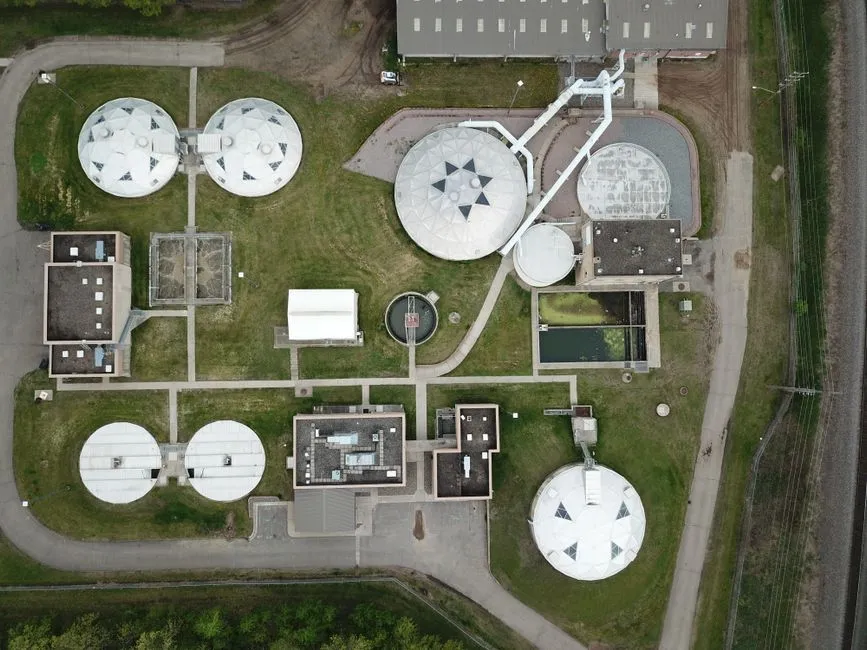
DAF and lamella clarification are complete process trains rather than passive tanks. DAF uses clean water for startup and a recycle pump to pressurize and saturate water with air. Releasing that water produces microbubbles that attach to conditioned contaminants; a skimmer removes the floated material, while heavier settled solids leave through a bottom collection zone. Lamella clarification combines flocculation, sludge recirculation, inclined-plate separation, and hopper withdrawal.
Clearwater Industries, dated April 27, 2026, identifies 30–50 micron microbubbles for its DAF systems. It also states that DAF should be paired with coagulation and flocculation so that contaminants become larger and more readily contacted by bubbles. Serpentine flocculation tubes and chemical mix tanks are alternative arrangements, and the selected arrangement must match the tested chemical program and required contact time.
DAF depends on bubble attachment, so conditioning is integral to performance rather than an accessory. The automatic chemical dosing system should be specified around the demonstrated reagent program, mixing requirements, controls, and maintenance access. Lamella plates increase effective separation area, but they do not eliminate conditioning, recirculation, sludge collection, access, or utilities.
Both technologies need a traceable process sequence: pretreatment, equalization where required, solids separation, sludge withdrawal, and downstream disposal. Oil removal may be needed before either separator when free oil would interfere with sampling, conditioning, or solids handling. Equalization may be necessary to control batch discharges, while source separation can prevent concentrated cleanup dumps from being diluted into the main treatment flow.
The failure modes differ. In DAF, poor conditioning, insufficient recycle, bubble attachment problems, or unreliable skimming can reduce separation. In lamella clarification, unstable sludge recirculation, incorrect plate loading, restricted hopper withdrawal, or inadequate conditioning can undermine performance. Vendor specifications describe equipment capabilities; they do not replace site testing.
Compare the Complete Equipment Packages
The comparison must cover the plant-ready scope, not only the separator vessel. HydropureWater’s DAF range is 4–300 m³/h across 13 standard models. That is a catalog range, not a recommendation for a Ridgway plant. Clearwater Industries’ COMPACT DAF uses one skid for flows of 66 GPM or less and a modular two-skid design for larger flows; this vendor-specific breakpoint must not be generalized to every DAF system.
HydropureWater’s lamella specification lists 20–40 m/h surface loading. Treat this as a design parameter to evaluate against the confirmed hydraulic duty, not as a plant-specific sizing result. Construction materials also require separate review. Clearwater Industries lists 304SS as standard for its DAF units, with 316SS, polypropylene, and other materials available on request. Obtain the clarifier materials schedule independently rather than assuming the same specification.
For the DAF option, request an industrial DAF system for metalworking wastewater with chemical conditioning, recycle equipment, compressed-air requirements, controls, instrumentation, clean-water startup, skimmer, float withdrawal, and bottom-solids collection. For the lamella option, request a lamella clarifier for dense metalworking solids with flocculation, recirculation, inclined plates, hopper withdrawal, controls, and the associated service clearances.
| Procurement item | DAF scope to request | Lamella scope to request |
|---|---|---|
| Separation basis | Conditioned float and separate bottom-solids zone | Conditioned sludge, inclined plates, recirculation, and hopper withdrawal |
| Hydraulic references | HydropureWater models: 4–300 m³/h across 13 models | HydropureWater specification: 20–40 m/h surface loading |
| Vendor breakpoint | Clearwater COMPACT DAF: single skid at 66 GPM or less; two skid above that flow | Request the supplier’s own configuration breakpoint |
| Chemicals | pH adjustment, coagulation, flocculation, dosing, and mixing | pH adjustment, flocculation, dosing, mixing, and recirculation |
| Recovered solids | Skimmed float and heavier settled solids | Hopper sludge |
| Commercial items | Supply, controls, utilities, maintenance, startup, warranty, local service, exclusions | Same matched commercial and documentation scope |
Purchase price alone will not settle the decision because the supplied research contains no comparable DAF and lamella purchase prices. Request matched quotations and compare chemical use, utilities, footprint, maintenance, controls, sludge moisture, downstream handling, and disposal costs. HydropureWater advertises up to 30% lower chemical consumption for its lamella clarifier; identify this as a supplier claim and request site-specific evidence before using it in an ROI calculation.
Size the System From Peak and Batch Duties
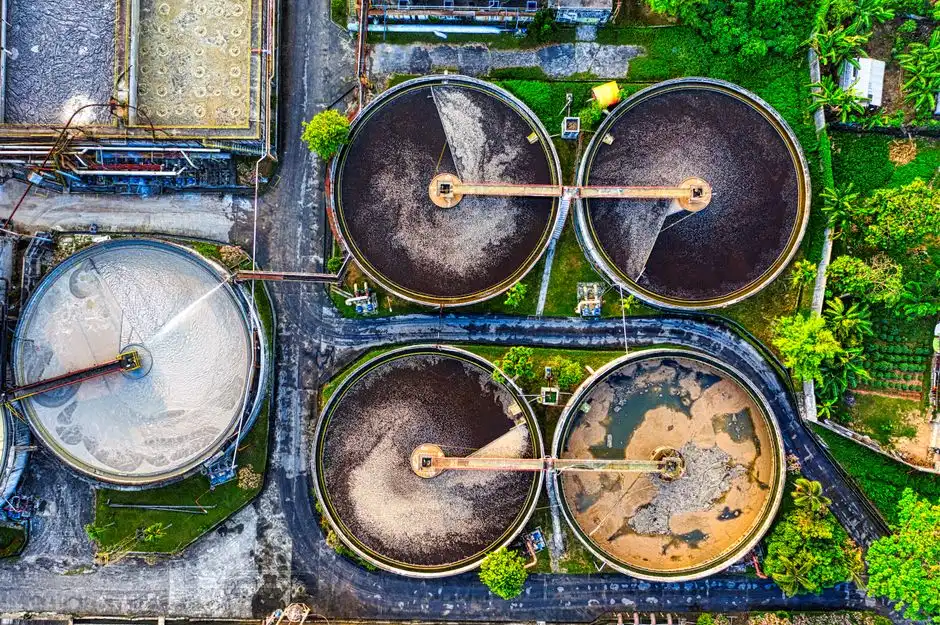
Size the separator from average, peak, cleanup, and batch flows together with TSS, FOG, and measured flotation or settling behavior. Average flow alone can understate chemical demand and tank size, while one clean sample can conceal the washdown or batch conditions that control the installation.
Ask each supplier to state how its configuration handles batch discharges, equalization, sludge withdrawal, and downstream cleanup. The package should also identify whether the stated duty assumes continuous operation, how accumulated float or settled solids affect the hydraulic duty, and which events trigger shutdown or diversion.
Request drawings, dimensions, duty point, utilities, controls and instrumentation, materials schedule, startup procedure, training, warranty terms, local service coverage, and performance criteria tied to representative wastewater. The DAF capacity guide for a new industrial plant illustrates why a defensible basis uses the confirmed flow and contaminant duty rather than a catalog range.
Use the same flow basis, treatment targets, chemical assumptions, test data, sludge-disposal route, utility definitions, and documentation requirements for both vendors. Any performance guarantee should be tied to the confirmed duty and representative wastewater. This prevents a supplier from meeting one interpretation of the duty while leaving the actual Ridgway operating condition unresolved.
Plan for Sludge Before Choosing a Separator
DAF produces a skimmed float and a separate zone for heavier settled solids; lamella clarification produces sludge withdrawn from hoppers, with recirculation integral to the process. The separator choice changes what enters the downstream solids-management route, so recovered-solids quantity and character belong in the initial comparison.
During pilot or jar testing, evaluate recovered-solids characteristics, moisture, chemical content, and compatibility with the available disposal method. A plate-and-frame filter press should be selected only after sludge properties and the disposal route are confirmed. The supplied research does not establish a universal dewatering choice for either separator.
Include industrial sludge dewatering, transport, and disposal in the same lifecycle comparison as the separator. If the float is difficult to dewater or increases disposal tonnage, that consequence can offset an attractive separation claim. If lamella sludge is more compatible with the plant’s route, that may affect the economic comparison.
Require each bid to identify expected sludge streams, withdrawal method, operating sequence, maintenance access, downstream-handling assumptions, and exclusions. This prevents a DAF bid from omitting float disposal or a lamella bid from treating recirculation and hopper cleaning as minor accessories. The filter press selection for mineral-processing sludge provides related context for making dewatering decisions from measured solids properties rather than a generic equipment selection.
Build a Stage-Gated Selection and Procurement Plan
A defensible 2026 selection proceeds through five gates: characterize the wastewater, establish the controlling requirement, test the alternatives, solicit matched scopes, and approve the configuration supported by measured results. Each gate has a specific deliverable and prevents catalog specifications from setting the design basis by default.
- Characterize the streams. Sample normal production, cleanup, upset, and batch conditions, separating dilute washwater from concentrated dumps.
- Define the obligation. Identify the controlling pollutant and obtain written receiving-authority requirements.
- Test separation behavior. Use jar tests or pilot work to establish chemical doses, floatability or settleability, recovered sludge, and viable alternatives.
- Issue matched RFQs. Give DAF and lamella suppliers the same duty, materials, controls, utilities, sludge route, startup, warranty, and performance requirements.
- Compare lifecycle consequences. Select only after measured results support the configuration and costs include chemicals, utilities, maintenance, and sludge handling.
| Gate | Required evidence | Decision permitted |
|---|---|---|
| 1. Characterization | Representative analytical and flow data by stream | Identify candidate treatment objectives and unknowns |
| 2. Requirement | Written receiving-authority requirements | Set treatment targets and compliance basis |
| 3. Testing | Jar or pilot results, chemical program, sludge observations | Confirm DAF, lamella, or hybrid feasibility |
| 4. Matched RFQ | Common duty, documentation, utilities, controls, startup, warranty, and sludge scope | Compare complete packages |
| 5. Approval | Lifecycle inputs and verified test basis | Select the supported configuration |
Obtain written confirmation from the relevant sewer authority or other receiving permitting authority before assigning treatment-performance allowances. No Ridgway-specific limits were supplied in the research. For mixed streams, compare the standalone alternatives with a possible DAF-plus-solids-separator train and select the arrangement that produces the best verified sludge and operating outcome. The stage-gated DAF-or-clarifier framework for Butler, Pennsylvania shows the same procurement logic without implying that mining wastewater and fabricated-metals wastewater have identical duties.
Frequently Asked Questions
Which option costs less for a Ridgway fabrication plant?
The supplied research contains no comparable DAF and lamella purchase prices, so neither option can be called cheaper from the available evidence. Request matched quotations with the same process scope, controls, utilities, startup, warranty, and downstream sludge handling. Compare the bids using chemical demand, energy, maintenance, footprint, recovered-sludge moisture, and disposal cost; use the DAF-or-clarifier cost comparison framework for chemical wastewater as a reference for building matched scopes.
Are 4–300 m³/h for DAF and 20–40 m/h for lamella enough to size the system?
No. HydropureWater’s 4–300 m³/h DAF catalog range covers 13 standard models, while its lamella specification lists 20–40 m/h surface loading. Both are vendor design parameters rather than a plant-specific answer. Size from representative average, peak, cleanup, and batch flows, then apply the measured TSS, FOG, flotation or settling behavior, confirmed treatment target, and equipment configuration.
What should a supplier provide before the equipment is selected?
Require application-test basis, drawings, dimensions, duty point, utility demand, controls and instrumentation, materials schedule, chemical and sludge scope, startup procedure, training, warranty terms, local service coverage, and performance criteria tied to representative wastewater. Require the supplier to state exclusions, operating sequence, batch handling, maintenance access, and remedies if agreed performance conditions are not met.
Why are local permit confirmation and representative testing needed before final design?
Representative testing establishes whether the contaminants float, settle, or require a hybrid treatment train and identifies the chemical program and recovered-slids consequences. Written confirmation from the receiving authority establishes the actual treatment obligation and prevents generic catalog performance claims from being mistaken for a compliant basis of design. Both are required before finalizing the equipment duty or performance guarantee.