Why BMW Germany Plant Data Is Not Public — And How to Estimate Anyway
No public data specifies the exact DAF capacity for BMW’s new German auto plant, so a defensible RFQ requires a transparent engineering estimate rather than a copied nameplate flow. This article develops that estimate from an assumed production rate, automotive wastewater flow benchmarks, peak-flow logic, and four coupled DAF sizing variables. It applies the same measured-flow and wastewater-characterization framework used in the Volkswagen Germany EV plant DAF capacity methodology.
The estimate is conditional, not a plant specification. The starting assumptions used here are 1,200 vehicles per production day and 2.5–4.0 m³ of wastewater per vehicle. The flow allocation shown below is an engineering benchmark for planning—not a VDA or VDI publication—so the buyer must replace it with measured streams or confirmed design data before issuing a final equipment enquiry.
| Planning stream | Benchmark wastewater volume | Data status |
|---|---|---|
| Paint-shop wastewater | 1.2–1.8 m³/vehicle | Assumption to confirm against the actual plant process |
| Phosphate rinse and electrocoat wastewater | 0.6–1.0 m³/vehicle | Assumption to confirm against rinse-reuse and dump schedules |
| Assembly and leak-test wastewater | 0.4–0.7 m³/vehicle | Assumption to confirm against area drainage |
| Domestic wastewater and cooling blowdown | 0.3–0.5 m³/vehicle | Assumption to confirm against building services |
| Total | 2.5–4.0 m³/vehicle | Planning range, not public BMW data |
Rotoeco’s December 2022 update says it delivered Roterra rainwater tanks to BMW’s new Debrecen factory in Hungary, but it does not identify an EkoFloat DAF installation or provide a wastewater design flow. The Debrecen DAF reference therefore confirms the relevance of flotation at a BMW automotive site, not the required capacity for the German plant. For sizing, the RFQ should request production schedules, area-by-area water balances, runoff coefficients, tank-dump frequencies, and a 15-minute flow record.
Four-Variable Sizing Method: The Engineering Backbone
The 2026 DAF engineering guide identifies four coupled variables: hydraulic loading rate, air-to-solids ratio, retention time, and recycle ratio. Treating them as independent specifications can produce a tank that passes clean-water throughput while failing to clarify the actual automotive wastewater.
Hydraulic loading establishes the flotation area, the air-to-solids ratio links solids loading to recycle-pump and compressor duties, retention time controls the available separation period, and recycle ratio affects bubble generation and floc attachment. The guide warns that poor floc chemistry can force operators to increase coagulant dose, reduce the A/S target, and lower recycle pressure; removal then collapses at the contact zone. Ecologix’s 2 ft/s minimum cross-flow velocity, cited in the guide’s 2026 design-note reference, provides a further check against solids settling.
| Sizing variable | Guide value | Engineering function | Buyer’s required input |
|---|---|---|---|
| Hydraulic loading rate | 3–5 gpm/ft² | Sets required flotation surface area | Peak flow and selected loading rate |
| Air-to-solids ratio | 0.005–0.060 lb air/lb TSS | Links solids loading to air and recycle capacity | TSS concentration and hourly mass load |
| Retention time | 10–30 minutes | Sets available separation time | Process characteristics and selected configuration |
| Recycle ratio | 20–50% | Controls saturated recycle flow and bubble availability | Air saturation, pressure, and selected A/S ratio |
| Cross-flow velocity | 2 ft/s minimum | Checks that flow maintains the float layer | Tank geometry and hydraulic profile |
The air-to-solids ratio calculation is the missing step in many automotive RFQs. For a design flow Q in m³/h and TSS concentration C in mg/L, the TSS mass load is Q × C × 1,000 in kg/h. Multiplying that load by the selected A/S ratio in kg air/kg TSS gives the required air mass rate; recycle flow, air saturation, and the selected saturation pressure then determine recycle-pump and compressor capacity. A supplier should show this calculation because the A/S ratio cannot be selected credibly from flow alone.
Krofta’s technical literature, reviewed for this analysis, identifies circular Supracell units as approximately 3-minute-retention configurations and rectangular Multifloat units as 20–30-minute configurations. The 2026 DAF engineering specifications and sizing guide supplies the four-variable framework used here. Geometry, recycle system, and installed utilities must therefore be selected together rather than after the nominal flow is fixed.
Worked Example: 1,200-Vehicle/Day Plant Arithmetic
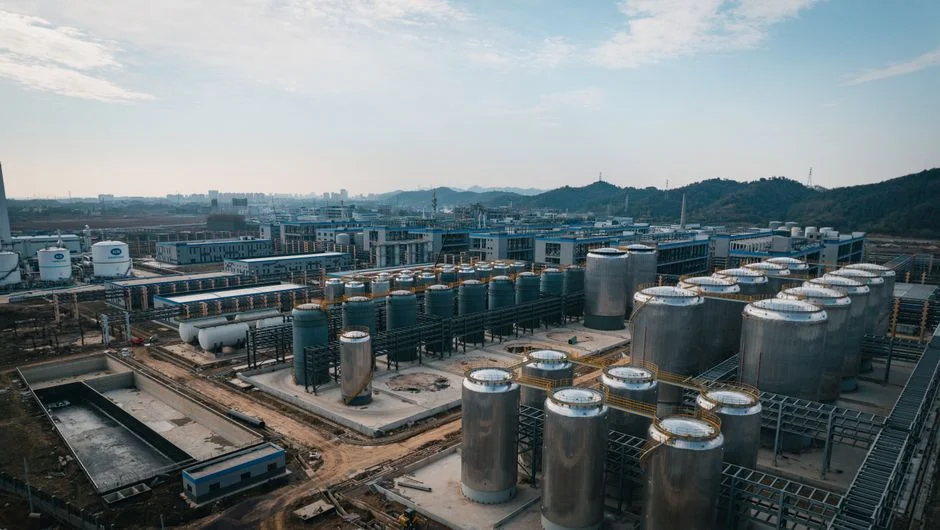
Using the midpoint benchmark of 3.25 m³/vehicle gives a planning-average wastewater flow of 162.5 m³/h for a 1,200-vehicle/day plant. Applying a 1.5 paint-shop wastewater peak factor produces a 244 m³/h design flow. These are transparent calculation assumptions, not published BMW operating data.
- Average flow: 1,200 vehicles/day × 3.25 m³/vehicle = 3,900 m³/day; divided by 24 hours gives 162.5 m³/h.
- Design flow: 162.5 m³/h × 1.5 = 244 m³/h. The factor reserves response capacity for batch discharges from paint, electrocoat-rinse, and phosphate-rinse operations.
- Flotation area: 244 m³/h converts to approximately 1,074 gpm. At 4 gpm/ft², the required surface area is approximately 268 ft².
- Retention volume: 244 m³/h × 20 minutes ÷ 60 gives approximately 81 m³. Whether this volume sits in the flotation tank or a reaction/flocculation stage depends on the selected DAF configuration.
- Solids and air check: At an assumed 300 mg/L TSS, the design-flow solids load is 73.2 kg/h. An illustrative A/S ratio of 0.02 gives 1.464 kg/h air. A 30% recycle implies 73.2 m³/h of saturated recycle before saturation and pressure effects are considered; the supplier must convert that duty into actual air and pump requirements.
| Calculation step | Result | Basis |
|---|---|---|
| Daily wastewater | 3,900 m³/day | 1,200 vehicles/day × 3.25 m³/vehicle |
| Average flow | 162.5 m³/h | 3,900 m³/day ÷ 24 h |
| Peak design flow | 244 m³/h | 162.5 m³/h × 1.5 |
| Flow at selected loading rate | Approximately 1,074 gpm | 244 m³/h converted to US gpm |
| Required flotation area | Approximately 268 ft² | 1,074 gpm ÷ 4 gpm/ft² |
| Retention volume at 20 minutes | Approximately 81 m³ | 244 m³/h × 20/60 |
| TSS load at 300 mg/L | 73.2 kg/h | 244 m³/h × 300 mg/L |
| Air requirement at A/S 0.02 | 1.464 kg/h | 73.2 kg TSS/h × 0.02 |
The 1.5 factor is the main assumption requiring challenge. Paint-shop wastewater peak factor should be developed from the operating schedule: each tank dump, rinse discharge, and stormwater event should be placed on an hourly timeline and added to continuous process flow. Equalization storage may reduce the DAF peak if it is hydraulically and operationally adequate; it does not justify deleting the raw peak before checking storage turnover.
If production increases to 2,000 vehicles/day while the benchmark and peak factor remain unchanged, the calculated design flow becomes 400 m³/h. The 2026 sizing guide states that parallel trains of standard catalogue units are preferred above 300 m³/h when the wastewater is sufficiently characterized to permit hydraulic balancing.
Mapping to HydropureWater DAF Model Brackets
The 244 m³/h worked design falls inside the upper end of the standard 4–300 m³/h DAF range, so the relevant selection is the models 11–13 bracket rather than the mid-class models 4–8 units. The guide states that systems above 150 m³/h are typically skid-packaged for site assembly, while the complete HydropureWater DAF range covers 4–300 m³/h in 13 standard models.
| Selection case | Calculated or stated flow | Engineering implication |
|---|---|---|
| Mid-class catalogue bracket | 20–80 m³/h, models 4–8 | The guide notes that 200 gpm converts to approximately 45 m³/h |
| BMW worked case | 244 m³/h | Select from the upper models 11–13 bracket; confirm area, retention, recycle, and air duties |
| Standard catalogue maximum | 300 m³/h | A single standard model remains the reference envelope |
| Expanded production case | 400 m³/h | Use parallel standard units or a custom design, subject to hydraulic balancing |
One pump supplier’s November 2024 demonstration states that its compact pump handles up to 20 m³/h and that high-capacity models can handle up to 500 m³/h with a single pump. That demonstrates pump-level feasibility, but it does not establish that a complete DAF at 500 m³/h meets automotive effluent, retention, hydraulic-loading, and redundancy requirements.
For parallel DAF train hydraulic balancing, the inlet manifold must divide flow evenly. Otherwise, one train can overload while the other remains underloaded, as the 2026 guide warns. The RFQ should therefore require each train’s design flow, active surface area, recycle rate, manifold losses, control sequence, and duty/standby philosophy. Above 300 m³/h, a custom rectangular arrangement may reduce distribution risk, but it must be compared against two independently metered trains.
Chemical Dosing and Sludge Handling — The Hidden Capacity Consumers
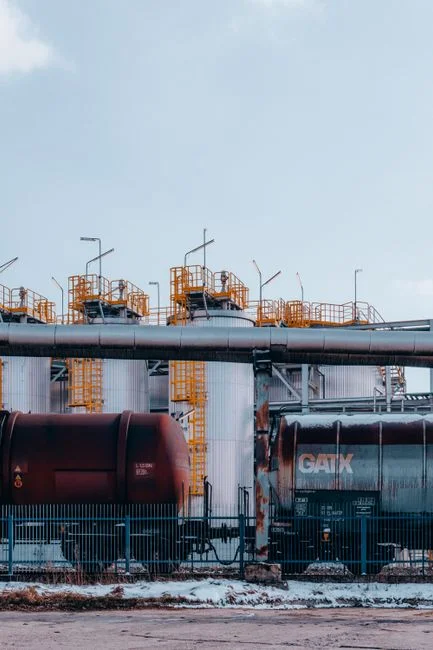
DAF hydraulic capacity does not define the complete treatment package: chemical conditioning, float removal, sludge transfer, and dewatering also determine civil scope and operating cost. Krofta’s technical literature states that many stable colloids do not attach effectively to bubbles unless a coagulant neutralizes surface charge and a flocculant forms larger, cohesive flocs.
For an RFQ, request measured TSS, FOG, phosphate, COD, pH, temperature, and oil-and-gras emulsion data for each relevant stream. These are inputs to jar testing; they cannot be replaced by generic automotive assumptions. Krofta identifies ferric chloride, aluminium sulfate, and polyaluminium chloride as coagulants and polyacrylamide as a flocculant example. The treatment train should be based on that testing rather than a fixed chemical recipe.
Krofta reports that its Air Dissolving Tube achieves the same or better air saturation at 2–3 bar and an 8–12% recycle rate than conventional systems using 4–6 bar and 20–50% recycle. That comparison explains why recycle demand must be calculated for the actual air system, not copied from a generic DAF specification.
Float-sludge volume and solids must also be measured during pilot or design sampling; the supplied research does not support a fixed percentage of influent flow or a universal sludge concentration. The resulting sludge characteristics determine the required sludge dewatering filter press area, which the sizing guide identifies as spanning 1–500 m². An PLC-controlled coagulant/flocculant dosing skid should be sized from the measured flow and dose envelope rather than tank volume alone.
Compliance Context: German AbwV and BMW Internal Standards
German discharge compliance is a constraint to be verified with the plant’s approving authority, not a performance assumption that can be inferred from DAF capacity. The supplied research does not contain an automotive-specific AbwV limit schedule, BMW internal reuse specification, or permit for the proposed German plant. Values such as COD, BOD₅, TSS, FOG, AOX, and heavy-metal limits should therefore be obtained directly from the applicable permit and BMW’s internal standards.
Krofta reports typical DAF removal efficiencies of 80–95% for industrial wastewater TSS, 80–99% for FOG, and clarified-water TSS commonly below 20 mg/L with proper conditioning and depending on feed concentration. These are process-performance ranges, not proof of compliance at a German site.
Request the permit, indirect-discharge conditions, reuse criteria, and sampling plan with the RFQ. If clarified water must serve as cooling-tower makeup or another reuse stream, the supplier should identify the required polishing step. A ultrafiltration system may be relevant, but the technology selection depends on the reuse specification and residual-water quality.
Frequently Asked Questions
What budget should be reserved for a DAF system near 250 m³/h?
No defensible 2026 price can be calculated from the supplied research. Ask each supplier for a budgetary price covering the DAF, recycle system, air system, controls, chemical skid, float handling, installation boundary, and civil-works assumptions; request separate equipment, civil, installation, and commissioning costs.
How should a supplier be selected for capacity, delivery, and compliance?
Require a guaranteed design flow, selected hydraulic loading rate, retention, A/S calculation, recycle duty, performance guarantee, and parallel-train flow-balance method. Also request the confirmed delivery schedule and evidence that the offered system can meet the applicable German permit and BMW internal discharge or reuse criteria.
Can a rental DAF reduce commissioning risk?
Yes. Krofta’s technical literature describes containerized or skid-mounted rental DAFs for pilots, temporary bypasses, and commissioning. Use the rental period to collect site flow and wastewater data, optimize chemical dosing, and verify effluent performance before final equipment selection.
Should DAF be used instead of clarification for automotive wastewater?
DAF is generally better suited to light oils, FOG, and colloidal solids that are slow to settle, as explained in the DAF versus clarifier comparison for automotive wastewater. The final choice should follow stream-by-stream characterization, because metal-bearing or high-density solids may require different pretreatment and sludge handling.