Define compliance at the Seymour sewer connection
Food and beverage plants near Seymour meet pretreatment requirements by characterizing each production and cleaning stream, identifying applicable categorical and local limits, and providing enough treatment to comply at the end-of-pipe discharge point. A plant-specific train may combine screening, FOG removal, pH adjustment, biological treatment, clarification, and sludge dewatering. Seymour’s sewer code also prohibits disruptive slug loads, incompatible materials, excessive temperature, and wastewater outside pH 5.0–10.0. Final compliance must be demonstrated through permit-specific sampling, operating records, and corrective-action documentation—not assumed from treatment-equipment performance alone.
The enforceable endpoint is the industrial user’s connection to the POTW collection system. EPA’s pretreatment guidance states that POTWs impose local limits at the end-of-pipe discharge from an industrial user, which is the point of connection to the POTW collection system (EPA, “Pretreatment Standards and Requirements—Local Limits”). Local limits can be numeric or narrative and address pollutants specific to the POTW, its sludge, and receiving waters.
Seymour Code §50.085 applies its general discharge prohibitions to every POTW user, whether or not categorical, state, or other local pretreatment requirements apply. Section §50.086 incorporates the categorical standards in 40 CFR Chapter I, Subchapter N, Parts 405–471. If categorical wastewater is mixed with wastewater not regulated by the same standard, §50.086 requires an alternate limit using the combined wastestream formula at 40 CFR 403.6(e). Section §50.092 requires compliance with categorical standards, local limits, and §50.085 within the most stringent applicable EPA, state, or Superintendent deadline.
| Compliance element | Seymour application | Plant evidence required |
|---|---|---|
| Discharge endpoint | End-of-pipe at the industrial user’s connection to the POTW collection system | Approved sampling point and permit |
| General prohibitions | §50.085 applies to all POTW users | Facility-wide risk assessment and operating controls |
| Categorical standards | Applicable 40 CFR Part 405–471 requirements | Process identification, analytical results, and compliance calculations |
| Mixed wastestreams | Combined wastestream formula under §50.086 and 40 CFR 403.6(e), when applicable | Flow and pollutant data for each contributing stream |
| Local limits and permit | Most stringent applicable requirement and deadline under §50.092 | Current permit, monitoring schedule, and reports |
Use a six-step sequence: obtain the permit and local limits; map every discharge source; characterize pollutants and flows; design pretreatment against identified risks; sample at the authorized point; and retain monitoring and operating records. The broader pretreatment compliance workflow for industrial plants provides a useful cross-industry framework, but Seymour’s code and the plant’s permit control the final requirement.
Match each food plant stream to its pretreatment risk
Dairy, meat, beverage, bakery, confectionery, fruit, grain, and ingredient-handling operations require separate stream inventories because their pollutants and discharge practices differ. Equipment should follow the measured wastewater profile, not a generic food-processing label. ALAR Corp’s food and beverage wastewater guidance identifies high organic matter, suspended solids, FOG, sugars, starches, proteins, cleaning chemicals, and pH variation as sector-specific risks, while Seymour Code §50.085 restricts unauthorized discharges of unpolluted wastewater, condensate, noncontact cooling water, and other listed streams.
Build the inventory by source, discharge route, operating condition, and responsible operator. Include product washdown, floor washdown, process drains, cooling or noncontact water, clean-in-place wastewater, and hauled waste. Seymour Code §50.085 does not authorize unpolluted wastewater or other listed streams unless specifically authorized by the Superintendent. Segregating those streams may eliminate unnecessary treatment load or prevent an unauthorized discharge.
Map the dominant risk before selecting equipment:
- Dairy and meat processing: Protein-rich wastewater can increase BOD, while FOG can interfere with biological treatment or sewer operation, according to ALAR Corp’s food and beverage wastewater guidance.
- Beverage, bakery, and confectionery: Readily degradable sugars and starches can raise BOD rapidly and destabilize downstream biological treatment.
- Fruit, grain, and ingredient handling: Pulp, seeds, grains, fibers, and other solids can obstruct equipment and require clarification.
- CIP and sanitation: Detergents, disinfectants, and pH swings can alter downstream biological conditions.
Request representative laboratory data before fixing capacity or treatment targets. The minimum request should cover pH, BOD or COD, TSS, FOG, temperature, and flow, plus every pollutant listed in the plant’s categorical standard, local limit, or monitoring permit. Sampling should represent normal production, cleaning, and peak discharge periods rather than one shift of convenience data.
| Plant stream | Potential pretreatment risk | Information to obtain before sizing |
|---|---|---|
| Dairy or meat process water | Protein-driven oxygen demand, FOG, foaming, odor | Flow profile, BOD or COD, TSS, FOG, pH, temperature |
| Beverage, bakery, or confectionery water | High readily degradable organic load | Peak and average flow, BOD or COD, pH, production-cycle data |
| Fruit or grain handling | Pulp, seeds, grains, fibers, abrasion-resistant solids | TSS, solids character, maximum solids event, disposal route |
| CIP and sanitation | Detergents, disinfectants, pH swings | Chemical inventory, concentration, batch volume, discharge practice |
| Noncontact cooling or unpolluted water | Unauthorized or unnecessary POTW discharge | Source temperature, pollutant status, authorization status |
For biological-process selection, use the characterization to evaluate MBR versus conventional activated sludge for food and beverage wastewater. The technical choice follows organic loading, solids separation requirements, operating resources, and permit conditions; an MBR is not justified merely because the waste is food-derived.
Build a treatment train that protects the POTW
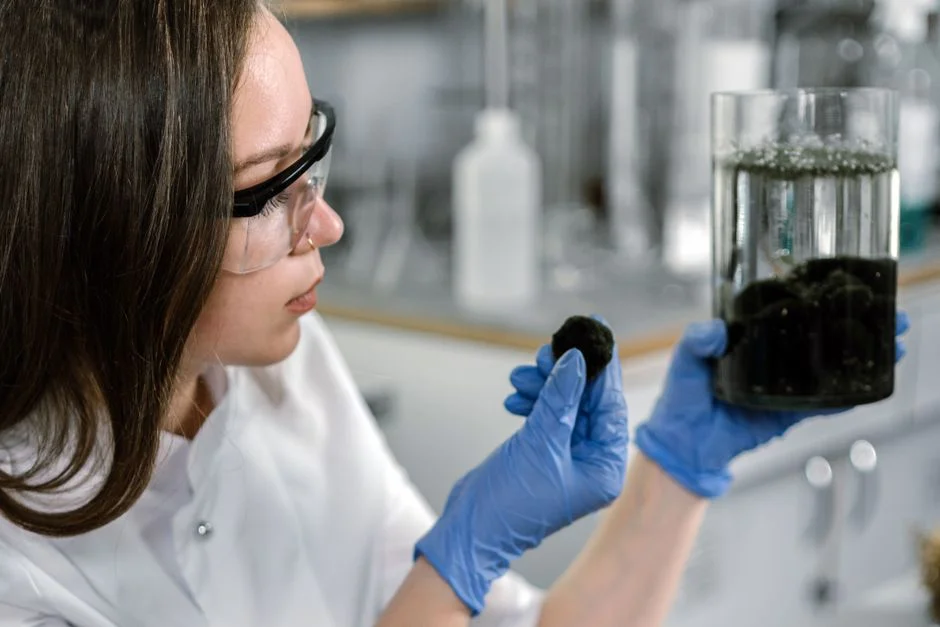
A defensible treatment train removes each contaminant before it can obstruct the sewer or disrupt the next treatment stage. Start with source control and mechanical screening, then match separation, chemical, biological, clarification, and sludge-handling steps to the characterized pollutants. ALAR Corp describes food and beverage treatment as a staged system because fats, sugars, proteins, solids, and cleaning chemicals require different removal mechanisms.
- Control and screen the source. Keep packaging, fruit pulp, grains, fibers, and other obstructive material out of the wastewater system. This reduces blockage risk and unnecessary downstream load.
- Remove FOG and floatable solids where required. Use DAF or an equivalent separation process when characterization shows FOG, oil and grease, or floatable solids that can interfere with biological treatment. Seymour Code §50.085 prohibits petroleum oil, nonbiodegradable cutting oil, and mineral-oil products in amounts that interfere or pass through.
- Control pH and chemical conditions. Use automatic dosing for pH adjustment, coagulation, or flocculation when the wastewater profile requires it. Seymour’s general prohibition sets pH below 5.0 and above 10.0 as unacceptable; the industrial user’s permit may be more stringent.
- Reduce biodegradable organics. Provide biological treatment where BOD and biodegradable organics must be reduced before discharge. Sugar-, starch-, and protein-rich streams can create rapid oxygen demand, so hydraulic and organic loading must be checked against characterized plant data.
- Clarify and handle residual solids. Clarification follows biological treatment or chemical precipitation. ALAR Corp identifies sludge volume reduction as a distinct treatment stage that reduces the volume sent for disposal.
| Process condition | Primary equipment question | Compliance output |
|---|---|---|
| Measured FOG or floatable-solids load | Is an industrial DAF system for FOG and suspended solids appropriate? | Separated float and clarified wastewater routed for further treatment or disposal |
| pH swing, coagulant, or flocculant need | Can an automatic chemical dosing and pH control system meter and sequence the required chemicals? | Stable operating conditions with chemical-use records |
| High BOD or readily degradable organics | Which biological process can meet the permit under the characterized loading envelope? | BOD reduction and stable solids separation |
| Residual sludge requiring disposal | Can plate-and-frame filtration meet the cake-handling objective? | Reduced sludge volume and a documented disposal route |
Do not use dilution as treatment. Seymour Code §50.086 prohibits using increased process water or other dilution to substitute for adequate treatment unless expressly authorized; the Superintendent may impose mass limits where dilution occurs. Where regulated and unregulated wastestreams are mixed, evaluate the combined wastestream formula at 40 CFR 403.6(e) instead of sizing each stream in isolation.
Control slug loads and changing production conditions
Seymour Code §50.085 prohibits a slug load that, in one extraordinary discharge episode, has sufficient volume or strength to cause POTW interference. That means a compliant average result does not erase the risk from a concentrated tank drainage, cleaning cycle, changeover, failed production run, or chemical dump. A plant needs a written slug control plan tied to actual discharge practices, not only an automatic pH or flow alarm.
Seymour Code §50.090 requires the Superintendent to evaluate at least once every two years whether each significant industrial user needs an accidental-discharge or slug-control plan. At minimum, the plan must describe nonroutine batch discharges, stored chemicals, immediate notification procedures, and measures to prevent adverse impacts. The plan should therefore identify:
- Cleaning cycles, product changeovers, tank drainings, equipment failures, and concentrated CIP or chemical dumps;
- Maximum expected volume and concentration for each nonroutine event;
- Equalization, diversion, or temporary storage provisions;
- Immediate notification contacts and decision authority; and
- Inspection, reset, and return-to-service requirements after an event.
Where necessary, Seymour Code §50.094 authorizes peak-flow restrictions, designated discharge points, relocation or consolidation of discharges, and separation of sewage from industrial wastestreams. These measures can be incorporated into treatment-train design, but they do not replace source characterization or permit-specific monitoring.
Equipment controls should distinguish an ordinary treatment excursion from a slug event. A high-flow alarm may divert wastewater to equalization; a pH alarm may stop chemical addition; a high-temperature event may require isolation. The written response should specify who can authorize discharge, what stream is held, when the Superintendent must be notified, and what evidence must be retained. For practical response planning, compare the approach described in the chemical-plant pretreatment guide for 2026 compliance, then apply it to the plant’s actual production events.
Verify performance with permit-based sampling and records
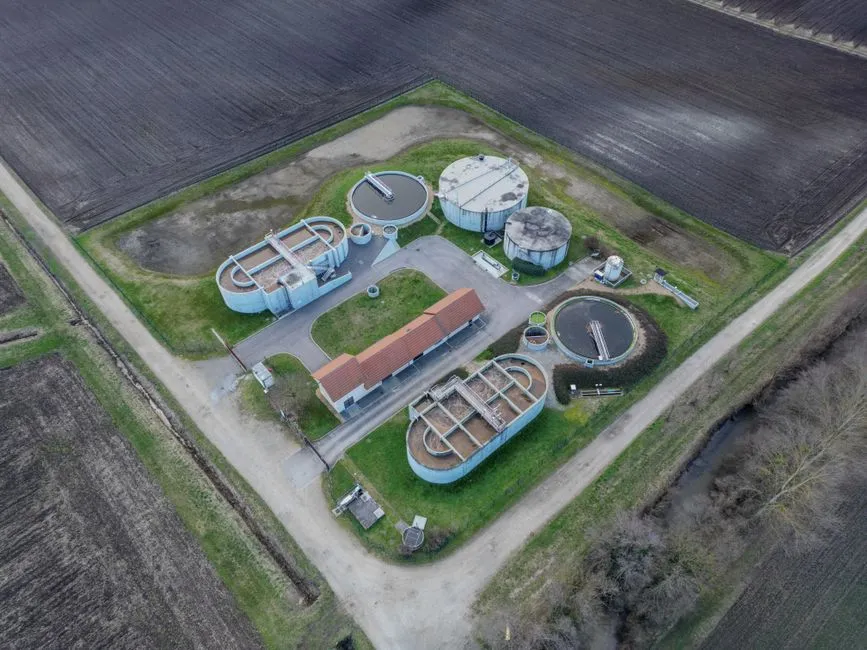
Treatment performance becomes defensible only when measurements are collected at the location, frequency, and averaging basis specified in the industrial user’s permit and applicable POTW guidance. EPA identifies the industrial user’s end-of-pipe discharge point as the location where POTWs impose local limits. Confirm the authorized sampling point, parameters, frequency, averaging period, analytical methods, and reporting requirements before operating the monitoring program.
Include pH because Seymour Code §50.085 identifies wastewater below pH 5.0 or above 10.0 as prohibited. Include temperature because the same section prohibits wastewater above 120°F (35°C) when it would interfere with treatment and, in all cases, prohibits wastewater exceeding 40°C (104°F) at introduction into the POTW. Track BOD, TSS, FOG, nutrients, flow, and any pollutant listed in the applicable categorical standard, local limit, or permit.
| Evidence category | Records to retain | Use in an audit |
|---|---|---|
| Analytical | Influent and effluent results, sampling dates and times, analytical methods, chain of custody | Demonstrate results at the authorized point against permit requirements |
| Operating | Flow, pH, temperature, chemical dose, air or biological-process conditions, equipment status | Connect treatment operation to observed effluent quality |
| Calibration and maintenance | Instrument calibration, calibration checks, maintenance, and corrective work | Show that monitoring and control systems were functioning |
| Chemical use | Chemical type, inventory, consumption, preparation, and dosing changes | Explain pH control and treatment chemistry |
| Exceptions | Bypasses, alarms, slug events, exceedances, notifications, investigations, and corrective action | Establish the response to a failed process or permit condition |
Use a written exceedance protocol: stop or reroute the affected stream where safe, notify the Superintendent as required, diagnose the failed step, restore verified operation, and document the corrective action. Do not resume discharge merely because a temporary reading has returned to normal. The 2026 mining pretreatment compliance guide illustrates the broader need to connect permit conditions, sampling, operating records, and corrective action.
Choose pretreatment equipment by decision criteria
Choose equipment by measured wastewater duty and compliance risk, not by headline treatment capacity or a generic food-industry description. The request for quotation should identify the plant’s permit limits, characterized peak and average flows, available footprint, utilities, waste routes, operating staff, and required operating envelope. ALAR Corp identifies pilot testing as an available method for validating food and beverage treatment performance before full-scale installation.
| Equipment decision | Required inputs | Selection check |
|---|---|---|
| DAF for FOG and floatable solids | Flow range, FOG and solids characterization, removal duty, recovered-solids handling | Can the unit handle the plant’s flow and loading envelope and discharge a manageable float? |
| Automatic chemical dosing | Chemical compatibility, target pH, dose range, metering accuracy, containment, control sequence | Does the system meter and log chemicals without creating a safety or overfeed risk? |
| Plate-and-frame filtration | Sludge characteristics, required dryness, batch or continuous operation, cake disposal | Can operators handle the cake and disposal route safely and reliably? |
| Biological treatment | Flow and organic loading, soluble and suspended fractions, nutrient needs, treatment objectives | Does the process provide required BOD reduction while protecting downstream separation? |
| Full treatment train | All stream data, permit conditions, utilities, footprint, controls, maintenance capability | Do the combined units meet permit limits at the end-of-pipe discharge point? |
HydropureWater DAF systems cover 4–300 m³/h across 13 standard models, according to the supplied product research. That range is a supplier offering, not evidence that any model fits a particular plant. Match the proposed unit to characterized peak and average flows and the required operating envelope for production, cleaning, and slug-control conditions.
For FOG or floatable-solids separation, compare the process implications in the DAF versus clarifier selection guide. The comparison should include removal duty, recovered solids, controls, footprint, utilities, and operator requirements—not merely tank dimensions or nominal flow.
Frequently Asked Questions
What determines the cost of a food plant pretreatment system?
Request a process-specific estimate that separates equipment, installation, chemical consumption, sludge handling, controls, monitoring, maintenance, and waste disposal. The estimate should state which costs depend on characterized flow and pollutant loading and which are excluded. No reliable price can be assigned until the permit, source inventory, pilot or bench data, and waste routes are known.
How should a food and beverage plant size pretreatment equipment?
Size the train from characterized peak and average flows plus the operating envelope for production, cleaning, and slug-control conditions. Verify that each stage has capacity for the relevant mass loading—not just flow—and that the full train meets permit limits at the end-of-pipe discharge point. Where mixed regulated and unregulated streams are involved, apply the combined wastestream formula at 40 CFR 403.6(e), as required by Seymour Code §50.086.
What should a pretreatment supplier demonstrate before selection?
Ask how the proposed train addresses the plant’s actual permit limits, Seymour’s applicable discharge prohibitions, and the characterized production and cleaning streams. Require a process description, performance basis, controls, utilities, waste-handling plan, maintenance assumptions, and proposed pilot approach. A supplier should not substitute generic food-industry capacity claims for a plant-specific duty review.
When is DAF justified for a food plant?
DAF is justified when representative wastewater data show an FOG or floatable-solids load that creates a treatment or interference risk and the resulting float can be handled safely. It is not justified simply because the facility processes food. Compare DAF with clarification and other separation options using measured duty, recovered solids, footprint, utilities, and operating controls, as discussed in the DAF versus clarifier comparison.
Related Equipment
- industrial DAF system for FOG and suspended solids — specifications, capacity range, and technical data