What "Pretreatment" Means for a Martinez-Area Chemical Plant in 2026
Pretreatment, under 40 CFR Part 403, is the set of pollutant discharge limits and procedural requirements EPA applies to every nondomestic industrial user (IU) that sends wastewater to a publicly owned treatment works (POTW). These standards apply whether or not the receiving POTW runs an approved pretreatment program and whether or not the IU has been issued a control mechanism or permit, a point EPA makes explicit in its pretreatment program guidance (per EPA, 2026). The statutory authority sits in Clean Water Act §307(b), which directs EPA to establish pretreatment standards for pollutants that pass through or interfere with POTW operations, and §402(n), which authorizes POTW pretreatment programs as part of the NPDES framework (per EPA, 2026).
The two legal triggers every chemical plant engineer in the Martinez corridor must internalize are pass-through and interference. Pass-through is defined at 40 CFR 403.3(p) as "a discharge that exits the POTW into waters of the United States in quantities or concentrations that, alone or in conjunction with a discharge or discharges from other sources, is a cause of a violation of any requirement of the POTW's NPDES permit" (per EPA, 2026). Interference is defined at 40 CFR 403.3(k) as a discharge that, alone or with other sources, both (1) inhibits or disrupts the POTW, its treatment processes, or its sludge processes, use, or disposal, and (2) therefore is a cause of an NPDES permit violation or a violation of sewage sludge use or disposal requirements (per EPA, 2026). Either trigger puts the IU in violation regardless of whether a numeric limit was exceeded.
The receiving POTW for most Martinez- and Pacheco-area chemical and refinery-adjacent sites is a Contra Costa County sanitary district, with portions of the corridor flowing to the East Bay Municipal Utility District Special District #1. The Control Authority in either case is the POTW itself, and it issues the control mechanism, whether a permit or equivalent control document, that formalizes the local limits, monitoring frequencies, and reporting cadence applied to the IU (per EPA, 2026).
The Three-Layer Limit Stack: Federal, Categorical, and Local
Three layers of limits can govern a single discharge, and the most stringent applicable one controls. Understanding the stack is what prevents a plant from engineering to the wrong number (per EPA, 2026).
Layer 1 — General and specific prohibitions (40 CFR 403.5(a) and 403.5(b)) ban any discharge that causes pass-through or interference, plus a list of specific prohibited pollutants (certain ignitable, corrosive, or toxic gases) that are banned regardless of numeric concentration (per EPA, 2026). This floor applies to every IU.
Layer 2 — Categorical pretreatment standards are numeric limits EPA issues for specific industry categories under 40 CFR Parts 405–471. For Martinez's industrial mix, the relevant subparts are: 40 CFR Part 414 (organic chemicals, plastics, and synthetic fibers), 40 CFR Part 415 (inorganic chemicals), Part 417 (soap and detergent manufacturing), 40 CFR Part 419 (petroleum refining), and 40 CFR Part 433 (metal finishing). Confirm current values in 40 CFR rather than relying on memory; EPA revises subparts on a multi-year cycle. Martinez plants running petroleum-adjacent processes may also trigger Part 419 even if their primary SIC code falls under 414 or 415, which is one of the most common stacking errors in the corridor.
Layer 3 — Local limits are site-specific numeric limits developed by the POTW's Control Authority and published in the approved pretreatment program. Bay Area POTWs commonly tighten the federal floor when hydraulic or biological capacity is constrained, which is why a well-engineered plant will see the local number control even where the categorical subpart seems permissive (per EPA, 2026). The controlling rule: the most stringent applicable layer controls.
| Layer | Scope | Authority | Enforceability |
|---|---|---|---|
| 1 — General & specific prohibitions | Bans any discharge causing pass-through or interference; lists specific prohibited pollutants | 40 CFR 403.5(a)–(b) | Qualitative; enforceable on any IU |
| 2 — Categorical standards | Numeric limits for specific industry categories (414, 415, 419, 433, etc.) | 40 CFR Parts 405–471 | Numeric; federal floor for any categorical IU |
| 3 — Local limits | Site-specific numeric limits; often more stringent than federal floor | POTW's approved pretreatment program | Numeric; binding when tighter than the categorical standard |
Is Your Plant a Significant Industrial User (SIU)?
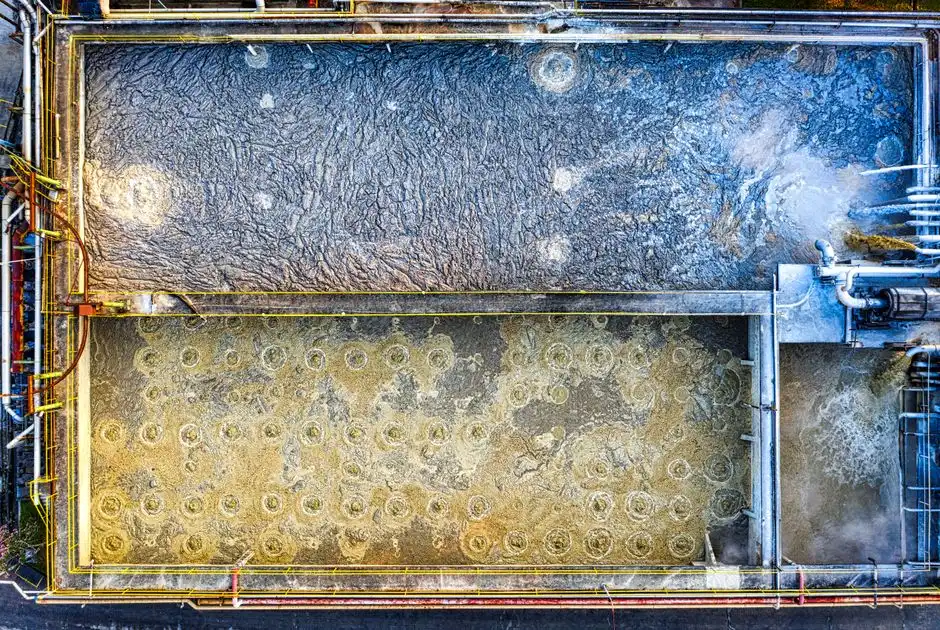
An Industrial User is any nondomestic discharger to a POTW. A Significant Industrial User (SIU), defined at 40 CFR 403.3(v), is the subset held to a heavier monitoring and reporting bar. The definition covers three triggers (per EPA, 2026):
- Any IU subject to categorical pretreatment standards under 40 CFR Parts 405–471.
- Any other IU that discharges an average of 25,000 gpd or more of process wastewater.
- Any IU that contributes a process waste stream making up 5% or more of the POTW's average dry-weather hydraulic or organic capacity.
Martinez chemical plants almost always meet trigger (1) because they fall under Part 414, 415, 419, or an adjacent subpart (per EPA, 2026). That status brings specific obligations: a baseline monitoring report (BMR) at the point of categorical standard promulgation or new-discharge startup, 90-day compliance reports on a defined schedule, written control mechanisms from the POTW, and routine POTW inspections and sampling under 40 CFR 403.12. For batch operators, a slug load control plan is also typically required under 40 CFR 403.8(f) to prevent discharge surges that could trip pass-through or interference at the receiving plant.
The Martinez Pollutant Signature: What Your Influent Looks Like
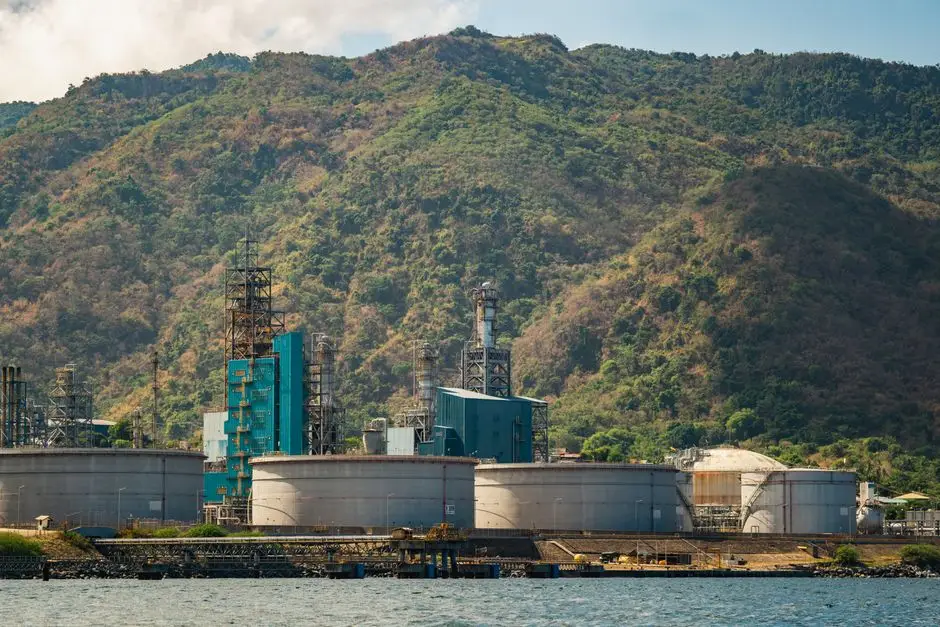
The Martinez industrial corridor mix is dominated by petroleum refining (Part 419), organic and inorganic chemicals (414, 415), specialty chemicals, and metal-finishing tenants of larger chemical sites (433). The influent profile that lands at the headworks reflects that mix: high TDS and sulfate from refinery-adjacent process water, hydrocarbon carryover from desalter effluent and compressor condensate, ammonia spikes from organic synthesis campaigns, dissolved metals from finishing operations, and aggressive pH swings from batch acid/caustic use.
Each controlling pollutant maps to a specific unit operation. High TDS and sulfate from refinery-adjacent streams typically fall under Part 419 and are best handled with ion exchange or RO polishing after the primary train. Hydrocarbon carryover points to a DAF under Part 419 or 414. Ammonia from organic synthesis is treated by biological nitrification under 414. Dissolved metals (Cd, Cr, Cu, Ni, Pb, Zn) are addressed by chemical precipitation followed by a lamella clarifier under 414/415/433. Legacy operations in the corridor may still generate hexavalent chromium, which triggers Part 433 metal-finishing categorical standards and typically requires chromium reduction ahead of precipitation (per EPA, 2026).
For the workhorse train, the HydropureWater DAF system is proven in petrochemical and metalworking service at 4–300 m³/h, with 13 standard models and micro-bubble FOG/TSS removal. Dissolved metals are handled by chemical precipitation plus a HydropureWater high-efficiency sedimentation tank (lamella clarifier) at 20–40 m/h surface loading with up to 30% lower chemical consumption than conventional clarifiers. pH correction is driven by a HydropureWater automatic chemical dosing system tied to a PLC and inline pH probe. Plants considering reuse-quality discharge or tight local BOD/COD/TSS limits should evaluate the MBR spec at <1 μm filtration and approximately 60% smaller footprint than conventional activated sludge (HydropureWater product data, 2026).
The Six-Operation Treatment Train (and How to Right-Size It)

Six unit operations, in roughly this order, handle the vast majority of chemical plant wastewater streams that go to a POTW. Not every plant needs all six; the right subset is a function of the controlling pollutant.
Equalization and PLC-controlled dosing are the lowest-cost insurance against compliance excursions. Continuous operations typically need 4–8 hours of retention; batch operations need hours to days. Under-sizing equalization is the most common root cause of failed compliance events at chemical plants (per EPA, 2026). A 40 CFR 403.8(f) slug load control plan sets the equalization size and the flow/pH monitoring envelope.
pH correction is delivered by a HydropureWater automatic chemical dosing system targeting the local pH limit, typically 6–9. This is a 40 CFR 403.5(b) specific-prohibitions driver and a routine local-limit check.
Dissolved air flotation (DAF) handles oils, FOG, and TSS under Part 419 and 414 pollutant loads. The HydropureWater DAF system covers 4–300 m³/h across 13 standard models with micro-bubble technology and automatic skimming.
Chemical precipitation + lamella clarifier removes dissolved metals (Cd, Cr, Cu, Ni, Pb, Zn) under Part 414/415/433. The HydropureWater high-efficiency sedimentation tank runs at 20–40 m/h surface loading and reduces chemical consumption by up to 30% compared with conventional clarifiers.
Biological polishing (activated sludge or MBR) reduces COD/BOD against the local limit. The HydropureWater MBR membrane bioreactor at 10–2,000 m³/day delivers <1 μm filtration, approximately 60% smaller footprint than CAS, and reuse-quality effluent suitable for non-contact reuse.
Multimedia/carbon filtration polishes residual organics, color, or trace contaminants. The HydropureWater multi-media filter produces low-SDI water suitable for RO membrane protection if reuse is the next step.
| Operation | Controls | Typical Sizing Anchor | Regulatory Driver |
|---|---|---|---|
| Equalization + PLC dosing | Flow, pH, temperature, concentration swings | 4–8 h continuous; hours to days batch | 40 CFR 403.5(a); 40 CFR 403.8(f) slug plan |
| pH correction | pH | Target 6–9 (local limit) | 40 CFR 403.5(b); local limit |
| DAF | Oils, FOG, TSS | 4–300 m³/h (13 models) | 40 CFR 403.5(a); Part 419 / 414 |
| Chemical precipitation + lamella | Cd, Cr, Cu, Ni, Pb, Zn | 20–40 m/h surface loading; ~30% lower chemical use | Part 414 / 415 / 433; local limit |
| Biological polishing (CAS or MBR) | COD, BOD | 10–2,000 m³/day (MBR); <1 μm filtration | Categorical standard; local BOD/COD limit |
| Multimedia / carbon filtration | Residual organics, color, trace contaminants | Low-SDI effluent; RO pretreatment | Local limit; reuse targets |
Choosing Equipment: The Four Decision Axes for a Martinez Plant
Four decision axes determine which combination of unit operations to build. Walking through them in order produces a defensible equipment train (per EPA, 2026).
Axis 1 — Controlling pollutant. Identify the parameter most likely to exceed the most stringent applicable limit. Oils and TSS point to a DAF; dissolved metals point to chemical precipitation plus a lamella clarifier; high COD/BOD points to biological polishing; pH swings point to equalization plus PLC-controlled dosing. Most Martinez-area plants hit two or three of these simultaneously, which is why the full train is the common case.
Axis 2 — SIU status and applicable standard. If the plant is an SIU under a categorical standard, the federal number is the floor and the local limit is often the binding constraint. If the plant is non-categorical, the design still has to prevent pass-through and interference under 40 CFR 403.5(a), which is qualitative but no less enforceable.
Axis 3 — Flow pattern. Batch operations with long cycle times or shared collection systems need equalization sized for hours to days; continuous operations can usually get away with 4–8 hours of retention. The cost penalty for over-sizing equalization is small compared with the cost of a pass-through excursion.
Axis 4 — Water reuse. If the plant is moving toward reuse, the MBR-plus-RO path becomes a stronger candidate than discharge-only activated sludge because it produces reuse-quality water and avoids the cost of buying in fresh water for non-contact applications. Pure discharge-to-sewer operations can stay on conventional activated sludge or a simpler aerobic basin.
For Martinez specifically, layer in limited footprint near tank farms, California seismic code for new basins, saltwater-influenced effluent from some Bay-side sources, and tighter local limits on TDS and sulfate at the receiving POTW. Equipment choices that ignore the seismic and footprint constraints will fail at the permit-review stage regardless of how well they treat the water (HydropureWater field data, 2026).
Compliance and Self-Monitoring: What the POTW Will Ask For
The baseline monitoring report (BMR) establishes the pollutant envelope the rest of the compliance program measures against, set at categorical standard promulgation or new-discharge startup (per EPA, 2026). 90-day compliance reports follow the 40 CFR 403.12 self-monitoring framework, with defined sampling points, parameters, frequencies, and chain of custody. For batch operators, the slug load control plan under 40 CFR 403.8(f) documents equalization capacity, flow and pH monitoring, and written operating procedures for batch releases.
Routine POTW inspections are part of the SIU obligation, not an exception. Design the plant with safe, accessible sampling ports and a documented sampling plan the Control Authority can audit on short notice. Cross-check heavy-metals monitoring instrumentation against the 2026 buyer's guide for online heavy metals analyzers to make sure the analyzer choice matches the categorical subpart and local limit cadence. Always verify site-specific design values against current permits, influent testing, and the final equipment proposal; do not rely on national averages (per EPA, 2026).
Frequently Asked Questions
Which 40 CFR subpart typically controls a Martinez chemical plant discharging to a Contra Costa County sanitary district?
It depends on SIC code and process mix, but most Martinez plants hit one or more of 40 CFR Part 414 (organic chemicals), Part 415 (inorganic chemicals), Part 419 (petroleum refining), or Part 433 (metal finishing); petroleum-adjacent operations can trigger Part 419 even when their primary SIC falls under 414 or 415. Always confirm current numeric values directly in 40 CFR rather than relying on prior memory (per EPA, 2026).
At what flow rate does an industrial user automatically become a Significant Industrial User (SIU)?
Under 40 CFR 403.3(v), a non-categorical IU becomes an SIU when it discharges an average of 25,000 gpd or more of process wastewater, or when its process waste stream makes up 5% or more of the receiving POTW's average dry-weather hydraulic or organic capacity; categorical IUs under Parts 405–471 are SIUs regardless of flow (per EPA, 2026).
What is a slug load control plan, and which rule requires it?
A slug load control plan is a written program that prevents non-routine pollutant releases or hydraulic surges from causing pass-through or interference at the POTW. It is required for SIUs under 40 CFR 403.8(f) and typically combines equalization capacity, flow and pH monitoring, and documented operating procedures for batch releases (per EPA, 2026).
What is the typical flow range for a dissolved air flotation (DAF) unit on a Martinez chemical plant?
For the workhorse chemical and refinery-adjacent service in this corridor, DAF units are commonly sized between 4 and 300 m³/h; the HydropureWater DAF system covers that range across 13 standard models with micro-bubble FOG and TSS removal. Final sizing should be driven by jar testing on the actual waste stream and the local limit on oil/grease and TSS (HydropureWater product data, 2026).