Why Online Heavy Metals Monitoring Is Now a Compliance Requirement
Continuous online heavy metals monitoring is now driven by three independent regulatory regimes that converge on the same technical demand: a sub-ppb or low-ppb measurement at the discharge, every few minutes, with an audit-grade data trail. The EU Industrial Emissions Directive 2010/75/EU defines BAT-AEL ranges for the priority metal panel — Hg, Cd, Pb, Ni, Cr, Cu, Zn — with typical wastewater ELVs of 0.05 mg/L Cd, 0.5 mg/L Cu, 0.5 mg/L Ni, 0.2–0.5 mg/L Pb, and 0.05–0.1 mg/L Hg at the final discharge (per EU IED 2010/75/EU, 2024 BREF update). US EPA NPDES multi-sector permits for metal finishing (40 CFR 433) and ore mining (40 CFR 440) effectively require continuous monitoring for sites discharging above 38 m³/day, because the alternative — daily or weekly grabs — leaves a documented compliance gap when process upsets occur. China GB 25466-2010 and GB 21900-2008 set 1.5 mg/L total Cr, 0.5 mg/L Cr(VI), and 1.0 mg/L Ni for electroplating discharges; field audits consistently show that 24-hour composite grabs miss 15+ excursion events per year on a typical plating line (HydropureWater field data, 2025).
The financial exposure of those missed events is what justifies the analyzer. Published data from the Gaza BLPP reuse study reported Pb max 3.8 mg/L, Cu 0.8 mg/L, and Zn 3.2 mg/L in the irrigation reuse stream — an order of magnitude above the FAO allowable limit (Alfarra et al., 2014). At those concentrations, a single non-compliance event in a regulated jurisdiction typically costs $10,000–$50,000 in fines, plus the indirect cost of a consent order or shutdown order. Manual ICP lab analysis at $45–$80 per sample, run twice a week on a 4-metal panel, costs $18,720–$33,280/yr and still leaves 95% of the operating hours unmonitored. An online analyzer at a similar annual cost closes that gap and provides the data needed to defend the permit during an inspection.
How Online Heavy Metals Analyzers Work: Four Detection Principles
Four detection principles dominate the industrial wastewater market, and the right choice is set by the metal panel, the matrix, and the target detection limit rather than by brand preference. Anodic stripping voltammetry (ASV) preconcentrates dissolved metal ions onto a mercury- or bismuth-film working electrode at a fixed negative potential, then strips them by a positive-going scan; peak current is proportional to concentration. ASV delivers detection limits of 0.1–10 ppb for Cu, Pb, Cd, Zn, and Ni, with a 3–8 minute cycle per metal, and tolerates the high dissolved-solids matrices typical of electroplating rinses (Metrohm and AppliTek application notes, 2025). Online ICP-OES atomizes a side-stream in an argon plasma at 6,000–10,000 K and measures element-specific emission lines; detection limits sit at 0.5–5 ppb with simultaneous multi-element coverage of up to 30 metals per scan, but argon consumption of 8–12 L/min is a structural OPEX driver (SPECTRO, Thermo iCAP technical literature, 2025).
Colorimetric/photometric analyzers add a reagent specific to the target metal (1,5-diphenylcarbazide for Cr(VI), ferrozine for Fe, eriochrome for Al) and measure absorbance at a fixed wavelength; detection limits are typically 5–50 ppb, CAPEX is the lowest of the four classes, and reagent OPEX dominates lifetime cost. X-ray fluorescence (XRF) excites atoms in a liquid or solid sample and measures characteristic fluorescence; detection limits of 50–500 ppb make it useful for total-metals trending in sludge or concentrated rinse water, but rarely suitable for low-ppb compliance work at final discharge. The market split follows matrix complexity: ASV units account for an estimated 60–70% of electroplating installations because the matrix is high-ionic-strength but well-defined, while ICP-OES holds an estimated 70% share of semiconductor and mining installations where the metal panel is broader and concentrations are lower (HydropureWater market observation, 2025). For a deeper look at one priority metal in this panel, see the online copper monitoring sensor buyer's guide.
| Principle | Detection limit | Metals per cycle | Cycle time | Best-fit matrix |
|---|---|---|---|---|
| ASV | 0.1–10 ppb | 1–6 | 3–8 min/metal | Electroplating, printed-circuit rinse |
| Online ICP-OES | 0.5–5 ppb | up to 30 | 60–90 sec full scan | Semiconductor, mining, mixed influent |
| Colorimetric | 5–50 ppb | 1 | 1–2 min | Cr(VI), Fe, Mn single-point compliance |
| XRF | 50–500 ppb | multi-element total | 30–300 sec | Sludge, concentrated rinse, total metals trending |
Spec Sheet: What a Real Online Heavy Metals Analyzer Delivers
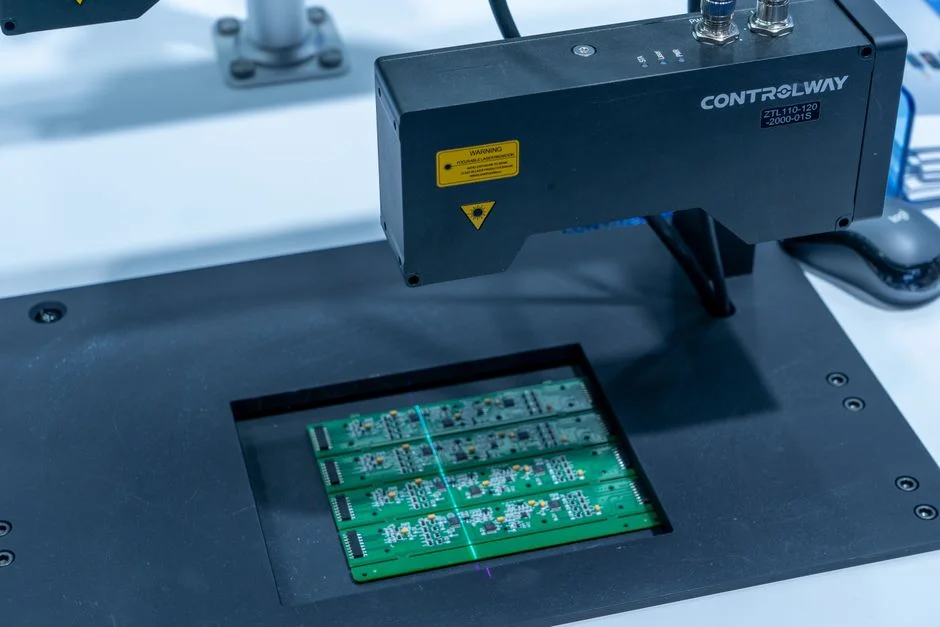
A spec sheet for a 2026 multi-metal ASV panel typically quotes a measurement range of 0.1 ppb to 10 mg/L across Cu, Pb, Cd, Cr(VI), Ni, Zn, As, and Hg, with auto-range handling both influent spikes of 5–10 mg/L during dump rinses and polished effluent below 5 ppb. Cycle time is 3–8 minutes for a 6-metal ASV panel, 1–2 minutes for a single-metal colorimetric channel, and 60–90 seconds for a full ICP-OES scan. Sample conditioning is the part that decides whether the analyzer will run reliably: a side-stream panel with a 50 µm self-cleaning Y-strainer, heat exchanger to 25°C ± 2°C, pressure regulator at 0.2–2 bar, and constant-head overflow delivering 10–50 mL/min to the analyzer cell. Without that conditioning, total suspended solids above 100 mg/L will foul the working electrode inside 48 hours and force weekly maintenance.
Outputs are 4–20 mA per metal channel plus Modbus TCP, PROFIBUS, or Ethernet/IP to the plant SCADA, with two programmable alarm relays per channel for Hi and Hi-Hi setpoints tied to permit limits. Maintenance windows are predictable: mercury-film electrodes on ASV units last 8–12 months, reagent cartridges on colorimetric units last 30–90 days, and ICP torch/nek runs 2,000–4,000 hours; mean time between calibration is typically 24–72 hours with auto-standard dosing. Mechanical specification is IP65 minimum, ambient 5–45°C, and ATEX/IECEx Zone 2 is available for flammable-vapor sites common in solvent-bearing electroplating lines. The spec below is the minimum a process engineer should require on any 2026 RFQ.
| Parameter | ASV multi-metal | Online ICP-OES | Colorimetric single-metal |
|---|---|---|---|
| Range | 0.1 ppb – 10 mg/L | 0.5 ppb – 100 mg/L | 5 ppb – 5 mg/L |
| Cycle time | 3–8 min/metal | 60–90 sec full scan | 1–2 min |
| Sample conditioning | 50 µm, 25°C, 0.2–2 bar | 50 µm, 25°C, 0.5–3 bar | 50 µm, 25°C, 0.2–2 bar |
| Outputs | 4–20 mA, Modbus TCP, PROFIBUS | Modbus TCP, Ethernet/IP, OPC UA | 4–20 mA, Modbus RTU |
| Consumable interval | Electrode 8–12 mo | Torch 2,000–4,000 h; Ar 8–12 L/min | Reagent 30–90 d |
| MTBC (auto-cal) | 24–72 h | 24–48 h | 24–72 h |
| Enclosure | IP65, ATEX Zone 2 optional | IP54, ventilated cabinet | IP65, ATEX Zone 2 optional |
Comparing the Top Online Heavy Metals Analyzers in 2026
The 2026 buyer is choosing between four instrument classes, not between brands, and the right class is set by influent concentration, metal count, and matrix complexity. ASV units from suppliers such as Metrohm, AppliTek, and Trace Analytics cover a typical 6-metal panel (Cu, Pb, Cd, Zn, Ni, Cr(VI)) with CAPEX of $28,000–$48,000 installed and OPEX of $4,200–$6,800/yr, with a 2–3 week lead time. Online ICP-OES from suppliers such as SPECTRO, Thermo Fisher iCAP, and Agilent covers up to 30 metals with CAPEX of $85,000–$180,000 and OPEX of $9,500–$22,000/yr, where argon and consumables dominate. Colorimetric systems from Hach, AppliTek, and Endress+Hauser deliver CAPEX of $12,000–$25,000 per channel and are most often deployed for a single regulatory point such as Cr(VI) at 0.5 mg/L. Online XRF, with CAPEX of $60,000–$110,000, occupies a niche in metal-finishing rinse water where total Cr/Cu/Zn trending matters more than sub-ppb dissolved compliance.
The decision heuristic that fits the most 2026 RFQs is straightforward: if the influent to the analyzer is above 100 µg/L and the panel is six priority metals or fewer, ASV is the most cost-effective fit. If the influent is below 10 µg/L, the panel exceeds ten metals, or the speciation is unknown, ICP-OES is the only class with the sensitivity and coverage required. If the regulatory driver is a single Cr(VI), Fe, or Mn limit, a colorimetric channel at one-quarter the CAPEX is sufficient. This decision logic is the same logic that drives the broader electroplating effluent treatment plant process design train, where analyzer selection is sequenced after equalization, precipitation, and filtration.
| Class | Detection limit | Metals | CAPEX (USD) | OPEX (USD/yr) | Best-fit industry |
|---|---|---|---|---|---|
| ASV multi-metal | 0.1–10 ppb | 1–6 | 28,000–48,000 | 4,200–6,800 | Electroplating, PCB, surface finishing |
| Online ICP-OES | 0.5–5 ppb | up to 30 | 85,000–180,000 | 9,500–22,000 | Semiconductor, mining, mixed influent |
| Colorimetric | 5–50 ppb | 1 per channel | 12,000–25,000 | 1,800–3,400 | Cr(VI), Fe, Mn regulatory point |
| XRF online | 50–500 ppb | multi total | 60,000–110,000 | 5,000–9,000 | Sludge, rinse trending |
Integrating the Analyzer with Your Wastewater Treatment Plant
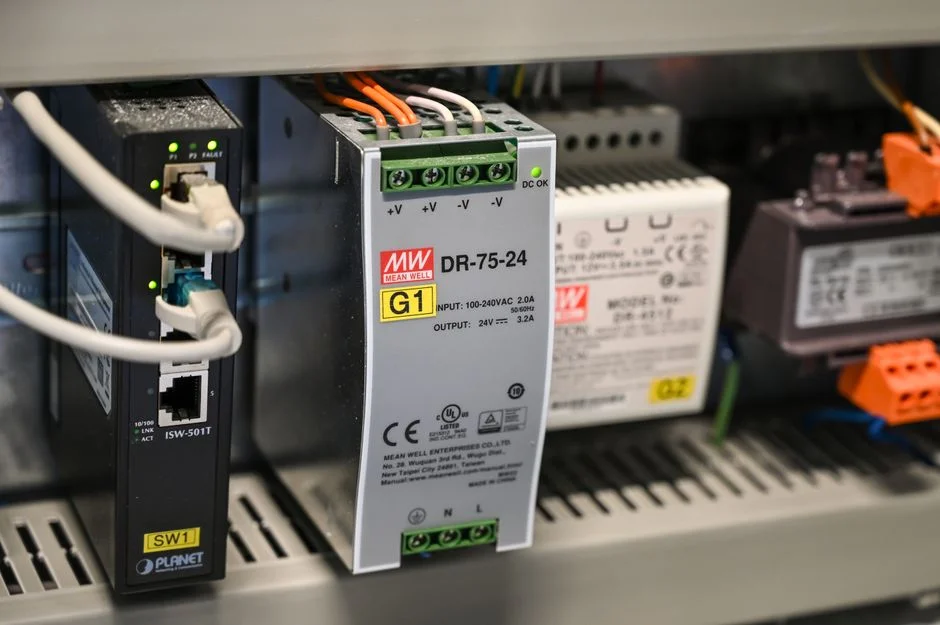
Three measurement points give both process control and compliance proof: post-equalization, post-precipitation clarifier, and final discharge. The post-equalization signal drives the PLC-controlled coagulant and precipitant dosing pumps through a 4–20 mA loop; published electroplating case studies report Cr(VI) excursions dropping from 15 events per year on grab-based control to fewer than 1 event per year on closed-loop ASV control (HydropureWater field data, 2025). The post-precipitation signal confirms that the chemical stage is actually removing metal before the polishing step, and the final-discharge signal is the compliance record sent to the regulator. For higher-TSS streams above 500 mg/L, the side-stream loop needs a self-cleaning Y-strainer, a 50 µm cartridge, and a peristaltic feed pump delivering 10–50 mL/min to the analyzer; without DAF pre-treatment to reduce TSS into the analyzer's side-stream loop, the working electrode will foul within days rather than months.
Closed-loop integration is the value driver that turns the analyzer from a compliance cost into a process asset. The analyzer 4–20 mA signal feeds a PLC that adjusts the PLC-driven coagulant and precipitant dosing controlled by the analyzer 4–20 mA signal, typically cutting NaOH or Na₂S consumption by 10–25% because dosing tracks demand instead of a fixed setpoint. Data management for regulated sites follows 21 CFR Part 11-style audit trails: every calibration, every alarm, every channel reading is time-stamped, encrypted, and archived; Modbus TCP carries the data to the plant historian and automated daily compliance reports are emailed to EHS at shift handover. For plants that need visibility from off-site, the analyzer is the same sensor that feeds the remote SCADA monitoring of wastewater treatment plants dashboard.
CAPEX, OPEX, and ROI: Building the 2026 Business Case
For a typical electroplating site, a turnkey three-instrument package — one ASV multi-metal panel at the post-precipitation point, one colorimetric Cr(VI) channel at the final discharge, and one ASV Hg/As panel for the most stringent BAT-AEL metals — lands at $90,000–$140,000 installed in 2026. OPEX for that package runs $8,000–$14,000/yr, dominated by electrode replacement, reagents, and service contracts at 12–18% of CAPEX. Replaced lab spend alone ($45–$80 per sample × 2 samples/week × 4 metals × 52 weeks = $18,720–$33,280/yr) covers OPEX with a surplus. Adding avoided non-compliance events at $10,000–$50,000 per event, the typical payback window is 18–30 months, and on sites with documented excursion history it can drop below 12 months. When heavy metals monitoring is part of a water reuse or ZLD project, pair the analyzer with RO polishing when heavy metals monitoring is part of a water reuse or ZLD project so the analyzer verifies the RO permeate against the reuse spec.
| Class | CAPEX 2026 (USD) | OPEX 2026 (USD/yr) | Typical payback |
|---|---|---|---|
| ASV multi-metal panel | 28,000–48,000 | 4,200–6,800 | 12–24 months |
| Online ICP-OES | 85,000–180,000 | 9,500–22,000 | 24–36 months |
| Colorimetric single channel | 12,000–25,000 | 1,800–3,400 | 6–12 months |
| 3-instrument turnkey (typical plating site) | 90,000–140,000 | 8,000–14,000 | 18–30 months |
Frequently Asked Questions
What detection limit do I need for EU IED 2010/75/EU compliance on copper? The EU IED BAT-AEL sets a Cu ELV of 0.5 mg/L at final discharge, so an analyzer with a detection limit of 0.1–10 ppb (ASV) or 0.5–5 ppb (ICP-OES) provides more than 1,000× headroom below the regulatory limit and resolves process upsets before they reach the permit line.
Can a single online analyzer measure all eight priority metals (Hg, Cd, Pb, Ni, Cr, Cu, Zn, As)? Yes, but it requires either an ICP-OES full scan (up to 30 metals, 60–90 sec cycle) or a combination of an ASV multi-metal panel for Cu/Pb/Cd/Zn/Ni plus a dedicated colorimetric Cr(VI) channel and a separate ASV or AFS channel for Hg and As.
What sample conditioning is required before an online heavy metals analyzer? Standard conditioning is a 50 µm self-cleaning strainer, temperature stabilization to 25°C ± 2°C, pressure regulation to 0.2–2 bar, and a constant-head overflow delivering 10–50 mL/min; high-TSS streams above 500 mg/L need DAF or lamella pre-treatment first.
How does an online analyzer replace grab sampling for permit reporting? Continuous analyzers output 4–20 mA, Modbus TCP, and PROFIBUS signals that the plant historian time-stamps and archives; most regulators accept 24-hour rolling averages from validated online data in place of 24-hour composite grabs, per EU IED Article 48 and equivalent US EPA guidance.
What is the typical payback for an online heavy metals analyzer at an electroplating site? A 3-instrument turnkey package at $90,000–$140,000 paid back against $18,720–$33,280/yr of replaced manual ICP lab spend plus avoided fines of $10,000–$50,000 per excursion event typically returns the investment in 18–30 months.