What Changes the DAF-versus-Clarifier Decision in 2026
No equipment type is automatically best for mining and metals wastewater in Morristown, United States; the choice in 2026 depends on the wastewater’s dominant solids behavior and operating envelope. Choose dissolved air flotation (DAF) when the target material is flotation-responsive, such as fine, low-density, oily, or buoyant solids; favor a clarifier when the solids are predominantly settleable and suitable for gravity separation. The final selection must integrate flow variation, chemical conditioning, equalization, sludge handling, and permit requirements—not capacity alone. EPA’s January 1975 suspended-solids manual treats sedimentation, straining, granular-media filtration, coagulation, and flocculation as distinct design considerations and says its typical values must be tempered with judgment based on the specific application.
DAF separates particles by attaching microbubbles to them and carrying the particles to the surface for skimming. A clarifier separates solids through gravity settling in a designed zone, with performance governed by settling behavior, hydraulic residence, inlet distribution, and sludge withdrawal. These are not interchangeable descriptions of one treatment objective.
EPA’s Process Design Manual for Suspended Solids Removal, published by the U.S. Environmental Protection Agency in January 1975, organizes physical separation into gravity separation, physical straining, and granular-media filtration. DAF and clarifiers therefore address different parts of a treatment train. Neither is a substitute for screening, equalization, chemical conditioning, flocculation, or downstream solids dewatering where those steps are required.
The purchased unit should be evaluated as part of the complete process: wastewater equalization; pH correction and chemical dosing; flocculation; solids separation; float or sludge withdrawal; recirculation where applicable; and dewatering. Use the general mining-wastewater DAF and clarifier comparison as a process reference, and check current 2026 mining and metals pretreatment requirements separately.
The Morristown boundary is straightforward: the supplied research does not establish a current local discharge limit. Do not invent one or treat a generic equipment specification as a permit standard. Obtain the applicable permit, sewer-acceptance conditions, monitoring requirements, and approved wastewater characterization for the specific site.
How Each Unit Removes Solids
DAF is a flotation process: microbubbles attach to suspended particles, the resulting float rises, and surface material is skimmed. That mechanism is most relevant to material that can be made buoyant or attached to bubbles, including oil, grease, low-density solids, and some fine or colloidal material after suitable conditioning. Successful separation still depends on bubble generation, saturation, recycle flow, and effective particle attachment.
A conventional clarifier relies on gravity separation. Solids must settle through the designed zone, while inlet arrangement, residence time, flow distribution, weir configuration, and sludge withdrawal affect capture. A lamella clarifier adds inclined plates to create a compact settling arrangement. It remains a gravity-separation device; the plates improve the available separation geometry but do not convert the process into flotation.
The high-efficiency lamella clarifier described by the supplier combines sludge recirculation, flocculation, and inclined-plate separation. That combination is materially different from an industrial DAF system for metals wastewater, where the separation mechanism is bubble attachment followed by surface skimming.
EPA’s January 1975 manual explains that wastewater solids occur across soluble, colloidal, supracolloidal, and settleable fractions. Particle size, specific gravity, and strength or shear resistance affect separation. Coagulation and flocculation can alter those characteristics so that separation becomes more effective. This is why a plant should not assume that “suspended solids” is a sufficient design parameter. A single waste stream may contain material that settles readily, material that responds to flotation, and dissolved constituents that neither device removes.
That manual is a foundational process reference, not evidence of current site performance. Its January 1975 date and municipal orientation require careful application to mining and metals projects. Use its principles to frame testing and process selection, then verify current design criteria, permit conditions, and manufacturer information.
Compare the Two Systems Against Plant Conditions
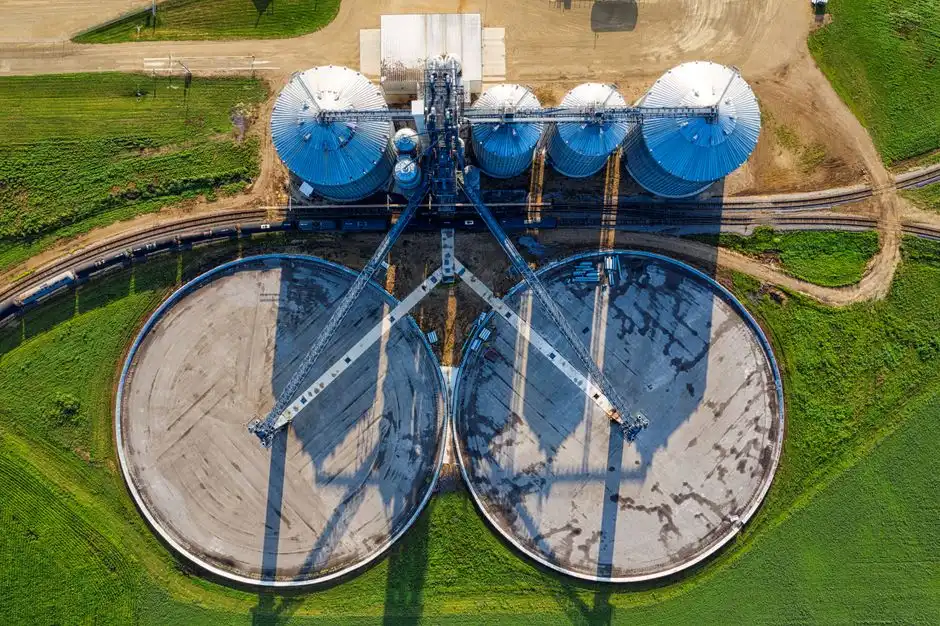
The practical distinction is the separation mechanism, not the vendor label: DAF captures flotation-responsive material, while a clarifier captures material that can be separated by gravity. Several procurement criteria remain unresolved until the actual wastewater and pilot results are available.
| Criterion | Dissolved air flotation | Clarifier | Evidence needed before selection |
|---|---|---|---|
| Separation mechanism | Micro-bubble attachment and surface skimming | Gravity settling and sludge withdrawal | Representative solids characterization |
| Target material | Flotation-responsive, oily, buoyant, or conditioned fine solids | Predominantly settleable solids | Particle size, density, oil and grease, and settling/flotation tests |
| Chemical demand | Conditioning may be needed to improve attachment or floc formation | Conditioning may improve settling and capture | Jar tests and pilot chemical consumption |
| Hydraulic sensitivity | Depends on recycle, saturation, bubble attachment, and skimming | Depends on settling, distribution, and sludge collection | Flow-duration profile and hydraulic pilot |
| Solids concentration | Float characteristics must be established | Underflow concentration and thickening must be established | Representative solids loading and pilot results |
| Maintenance | Includes air system, recycle system, skimmer, and controls | Includes collection or scraping, distribution, sludge handling, and controls | Vendor O&M documents and maintainable-parts list |
| Downstream sludge | Produces float for collection | Produces settled sludge for collection | Yield, thickening behavior, dewatering test, and disposal route |
The supplier’s DAF catalog lists 4–300 m³/h across 13 standard models. This is a vendor-provided catalog-capacity reference, not a selected design flow. A buyer must define the required treatment flow, operating envelope, and configuration before selecting a model. An industrial DAF system for metals wastewater should be compared on those project-specific inputs.
The lamella-clarifier catalog gives surface-loading rates of 20–40 m/h. These are also vendor-provided references. Require the supplier to define the applicable loading basis, relate it to the selected configuration and sludge characteristics, and show the margin against the plant’s flow and solids profile.
Chemical comparison needs discipline. The lamella-clarifier catalog states up to 30% lower chemical consumption, but the supplied research does not establish a universal chemical-cost advantage for either route. A DAF system may require coagulant or flocculant to improve attachment, while clarifier performance may depend on conditioning. Require site-specific dosage and cost data, and use a PLC-controlled chemical dosing system as part of the evaluated system rather than treating chemical addition as a minor accessory.
Solids handling can change the economics. Determine the float or underflow yield, thickening tendency, and compatibility with the next step. If dewatering is required, evaluate an industrial sludge filter press using representative conditioned solids; do not assume that either separation unit produces a directly disposable cake.
Match the Equipment to the Wastewater
DAF becomes the leading candidate when the plant objective centers on oily, low-density, buoyant, or flotation-responsive material. A clarifier becomes the leading candidate when the solids are predominantly settleable, the flow and composition are relatively stable, and gravity separation can meet the required capture and concentration objectives.
The examples below are engineering hypotheses for screening, not guarantees. The supplied research does not contain application-specific performance data for each listed industry.
| Plant condition | Leading screening candidate | Reason to investigate | Critical confirmation |
|---|---|---|---|
| Metal finishing with oily or buoyant material | DAF | Surface flotation can target skimmable float | Oil and grease characterization, bubble-attachment test, skimming behavior |
| Machining with settleable metal fines and stable flow | Clarifier | Predominantly gravity-settleable solids may favor gravity separation | Size distribution, density, settling velocity, flow variation |
| Mineral processing with mixed fine and settleable solids | DAF or pilot-tested clarifier | Different fractions may favor different mechanisms | Fraction-by-fraction settleability and flotation response |
| Aggregate washing with variable suspended solids | Clarifier subject to pilot confirmation | Commonly associated with settling, but hydraulic variation may control performance | Peak and batch flows, solids loading, sludge withdrawal |
| Foundry wastewater with oily and dense fractions | DAF or clarifier after characterization | A mixed stream may contain both floatable and settleable solids | Separate oil, metallic fines, density, and temperature effects |
| Mining-service water with variable episodic discharges | Selected only after pilot testing | Hydraulic and composition changes may dominate mechanism choice | Flow-duration record, settling/flotation tests, equalization assessment |
Neither selection establishes full compliance. Dissolved metals, acidity or alkalinity, toxicity, and other regulated or accepted parameters may require additional treatment. Equipment selection answers how to remove the targeted solids; permit compliance requires demonstrating that the complete treatment train satisfies the applicable requirements.
Connect the separator to the rest of the train. Solids recirculation can support a solids-contact or lamella arrangement. Automatic chemical dosing is needed where pH adjustment or conditioning is required. Plate-and-frame filtration may be needed for separated solids, but its suitability depends on sludge rheology, conditioning, cake handling, and disposal economics.
Size, Pilot, and Specify the Project Properly
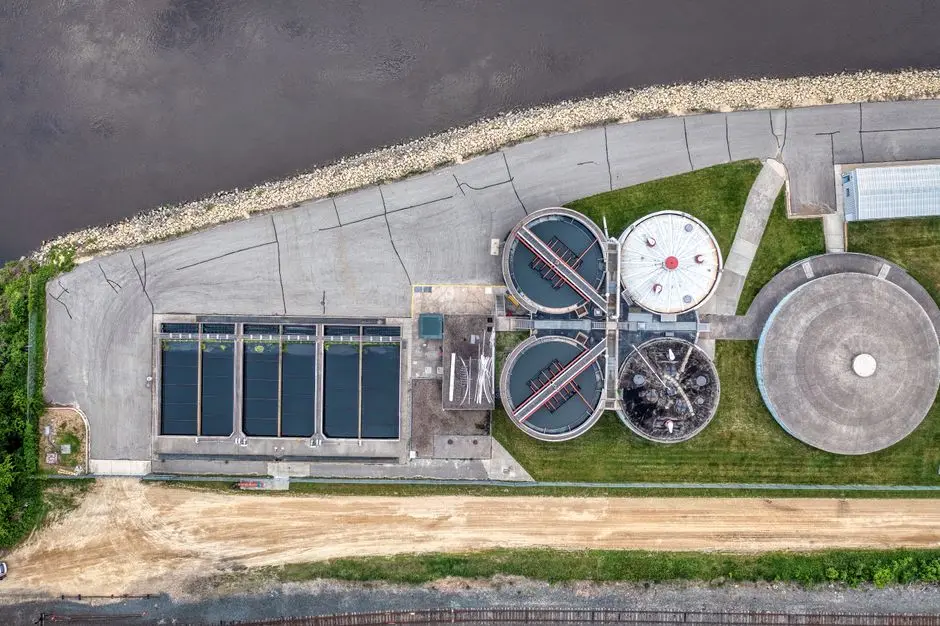
Size from a flow-duration profile and representative wastewater data, not from an average flow or a catalog capacity. EPA’s January 1975 manual identifies flow variation, performance under variable flow, flow equalization, chemical treatment, flocculation, solids-contact processes, gravity separation, and flotation as separate design considerations.
- Document startup, shutdown, production peaks, stormwater, cleaning, and batch-discharge flows.
- Characterize settleable and non-settleable fractions, particle size, density or flotation behavior, oil and grease where relevant, pH, temperature, metals, and variation across production cycles.
- Run representative pilot trials of DAF and clarifier performance under expected chemical dosing, hydraulic loading, and solids concentration.
- Confirm float or settled-sludge yield, thickening behavior, and downstream dewatering requirements.
- Issue bids against a common design basis and performance-test method.
EPA states in its January 1975 manual that typical design values are guides that should be tempered with sound engineering judgment based on complete analysis of the specific application. A pilot study should therefore test the real wastewater, representative production variability, and the intended conditioning regime. Obtain DAF configuration details, lamella clarifier loading details, and chemical-system requirements using the same project inputs.
| Bid item | Information the buyer should require | Why it matters |
|---|---|---|
| Design basis | Design flow, flow-duration profile, solids loading, operating envelope, and equalization assumptions | Prevents comparison of equipment offered against different duties |
| Loading and performance | Loading basis, expected results, pilot data, and acceptance test method | Makes the performance claim measurable |
| Chemical consumption | Proposed chemicals, dose range, expected consumption, and operating control method | Allows lifecycle comparison |
| Utilities | Air, recycle, power, water, drainage, and installation requirements | Exposes site constraints often omitted from equipment prices |
| Sludge handling | Float or underflow yield, solids concentration, withdrawal method, and dewatering assumptions | Connects separation to disposal cost and operability |
| Materials and controls | Wetted materials, corrosion basis, control philosophy, alarms, maintainable parts, and service access | Defines operating risk and maintainability |
| Acceptance | Commissioning protocol, site acceptance criteria, test method, and remedy for nonconformance | Defines responsibility when results differ from the proposal |
Use the EPA January 1975 suspended-solids manual only as a historical screening reference, and verify current engineering standards, local permit conditions, and manufacturer design criteria before purchase. EPA’s October 1974 sludge manual provides system-level context for conditioning, flotation thickening, and dewatering, but it does not establish current mine-water sizing.
Choose, Procure, and Verify
The decision sequence is: identify the dominant contaminant and solids behavior; quantify flow variation; identify the compatible separation mechanism; evaluate sludge handling; confirm permit requirements; then size from pilot or validated design data.
If the dominant material is flotation-responsive, test DAF first. If it is predominantly gravity-settleable, test a clarifier first. If both fractions are material, pilot both mechanisms or test a treatment train that addresses them separately. A deeper process review is available in the general mining-wastewater DAF and clarifier comparison, while mining plant wastewater characterization and sewer compliance provides a separate framework for pretreatment questions.
The supplied research contains no defensible 2026 installed-cost, operating-cost, or lead-time range for Morristown. Request itemized quotations that include equipment, tankage, controls, utilities, installation, civil work, commissioning, chemical systems, sludge handling, and exclusions. Generic web estimates are not comparable bids.
Evaluate suppliers on representative wastewater data, relevant application references, defined guarantees, pilot evidence where available, controls, materials, maintainable parts, local service capability, installation drawings, commissioning protocol, and the performance-test method. A reference is not a substitute for site data; a catalog range is not a design capacity; and an efficiency claim without a defined test condition is not a guarantee.
Close the technical evaluation with a clear rule: DAF is the stronger starting candidate for flotation-responsive contaminants, while a clarifier is the stronger starting candidate for predominantly gravity-settleable solids. The complete wastewater profile, pilot results, sludge route, and permit basis decide the final purchase.
Frequently Asked Questions
How much does DAF cost compared with a clarifier for mining and metals wastewater in Morristown?
No supplied source provides a universal DAF-versus-clarifier price, installed cost, or operating-cost range for Morristown. Request itemized quotations using one common design basis: design flow, flow-duration profile, solids loading, chemical consumption, utility requirements, controls, civil work, sludge handling, commissioning, and site acceptance testing. Compare lifecycle inputs rather than equipment price alone. A 2026 mining and metals pretreatment requirements review should also be completed before treating any quoted system as compliant.
How should a buyer size a DAF or lamella clarifier?
Catalog capacity is not design capacity. Provide the flow-duration profile, solids concentration and characterization, operating envelope, chemical regimen, and downstream sludge data. The supplier’s DAF catalog reference is 4–300 m³/h across 13 models, while the lamella catalog states 20–40 m/h surface-loading rates; both are vendor-provided references, not project selections. Require the selected configuration, loading basis, sludge yield, utilities, and performance-test method in the bid.
Which supplier qualifications matter most for a mining wastewater separator?
Require representative wastewater data, a clearly defined guarantee, pilot evidence where available, and understandable operating and maintenance requirements. Also review materials, controls, maintainable parts, local service capability, installation drawings, commissioning procedures, and acceptance-test methods. For a clarifier with recirculation and flocculation, verify how those functions affect chemical demand and sludge handling rather than comparing only tank dimensions.
Does choosing DAF or a clarifier establish regulatory compliance?
No. Equipment selection and permit compliance are separate checks. Neither separator alone establishes that the full wastewater stream meets applicable requirements, especially for dissolved metals, pH, toxicity, or sewer-acceptance conditions. The supplied research provides no Morristown-specific current limit. Obtain the governing permit and use current project-specific requirements, as discussed in 2026 pretreatment-limit guidance, without transferring another location’s limits to Morristown.