What Changes for Bengaluru Factories in 2026
Bengaluru manufacturers treating high-COD trade effluent in 2026 typically use a staged train: equalize and characterize the wastewater, remove oil, grease and suspended solids, reduce biodegradable COD biologically, and apply advanced oxidation or electrocoagulation when residual COD or colour remains problematic. DAF is particularly relevant for oil-bearing industrial streams, while biological treatment requires a suitable waste and balanced nutrients. Electrocoagulation is also a promising option: an MDPI study evaluated it for mineral-processing wastewater with initial COD of 424.29 mg/L. The final train should be selected from measured influent data, reuse targets and Bengaluru’s water-scarcity economics.
For a factory, the practical decision has two linked parts: reduce the pollutant load sent to the receiving environment, and determine whether the treated effluent can replace purchased water for defined process or non-potable duties. A high COD value alone does not identify the right equipment. Oil, suspended solids, pH variation, nutrients, inhibitory chemicals and the production schedule determine which unit operations can be integrated reliably.
WELL Labs reports that Bengaluru tanker-water prices rose from Rs. 60–90/kL to as high as Rs. 200/kL, while treated wastewater was being sold for Rs. 10–80/kL depending on quality. These are market observations rather than guaranteed factory savings, but they establish why an onsite reuse calculation belongs in the project brief. The relevant comparison is not the full treatment cost in isolation; it is treatment, distribution, monitoring and the value of displaced purchased water for a specific reuse.
The scale of reuse activity is substantial but does not establish industrial product quality. An Outlook Business Instagram post reported that Bengaluru was pumping around 850 MLD of treated wastewater to neighbouring areas and helping fill approximately 274 lakes. WELL Labs also modelled that around one-quarter of demand in the Hebbal Nagawara watershed could be met by reclaimed wastewater from decentralised STPs. These findings support investigating reuse, but factory effluent still needs its own treatment validation and site-specific approval.
Build the Treatment Train from the Wastewater Characteristics
Source segregation determines how much treatment complexity the factory creates. Isolate high-strength cleaning waters, oily drains, toxic process streams and sanitary flows where practical. Combining them may increase the COD, solids or chemical burden that every downstream unit must handle. The objective is not simply to dilute a concentrated stream before treatment; it is to identify separate flows with distinct physical, biological and reuse requirements.
Require representative sampling across production, cleaning and shutdown periods. The influent dataset should include COD, BOD, pH, suspended solids, oil and grease, temperature, nutrients, conductivity and process-specific contaminants. For a Bengaluru industrial ETP, these measurements should be tied to production records and sampling dates so that peak and batch conditions remain visible rather than being hidden by a monthly average.
Equalization follows characterization because it is intended to damp flow and concentration peaks before the biological or oxidation stage. Its volume must be calculated from measured hourly flow and the required retention behaviour; an assumed average flow can leave the treatment train exposed to batch discharges. Screening protects downstream equipment, while controlled chemical dosing supports pH adjustment and coagulation or flocculation where required.
- Control or segregate problematic source streams.
- Screen and equalize the combined wastewater.
- Remove suspended solids, oil and grease through physical or chemical pretreatment.
- Reduce biodegradable COD biologically where the waste is suitable.
- Apply polishing or advanced oxidation where residual quality requires it.
- Disinfect where the reuse or receiving route requires it.
- Dewater captured sludge and assess the final effluent for reuse.
Pretreatment protects downstream biology from shock loads, suspended solids, oil and grease, pH extremes and inhibitory chemicals. A rotary mechanical bar screen addresses gross material at the inlet, while an automatic chemical dosing system provides controlled conditioning. Where flotation is required, an industrial DAF system can remove floating and settleable material before biological treatment.
| Decision point | Evidence required | Treatment consequence |
|---|---|---|
| Source segregation | Stream-by-stream flow and contaminant profile | Reduces the load entering the common ETP |
| Equalization | Hourly flow, batch discharges and concentration variation | Controls hydraulic and concentration peaks |
| Physical or chemical pretreatment | Suspended solids, oil and grease, pH and settling or flotation behaviour | Protects downstream biological or membrane stages |
| Biological COD reduction | Biodegradability, BOD, nutrients, toxicity, pH and temperature | Determines whether biological treatment is technically suitable |
| Polishing and reuse | Residual COD, process-specific contaminants and receiving requirements | Defines the need for advanced oxidation, disinfection and reuse verification |
Choose DAF When Floating Material Would Spoil Biological Treatment
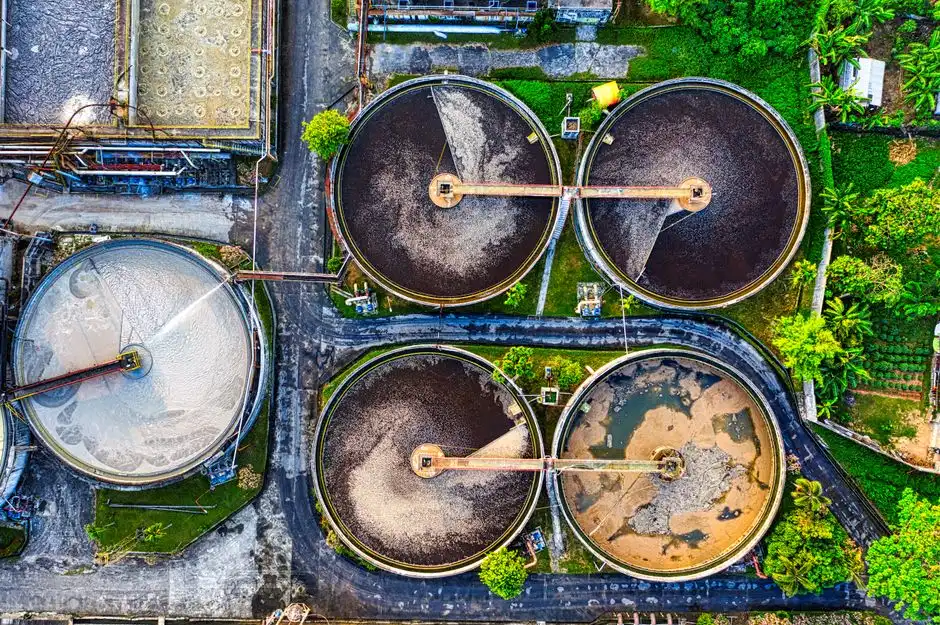
Dissolved air flotation belongs in the train when oil, grease, suspended solids or floatable material would interfere with biological treatment or downstream equipment. It can be relevant to food processing, pulp and paper, textile, metalworking and petrochemical applications, as well as municipal pretreatment. It is not a universal stand-alone treatment for high COD: dissolved biodegradable matter may remain after the floatable fraction has been removed.
The supplied HydropureWater product information states that its DAF systems use micro-bubble technology with automatic skimming for suspended solids, FOG, oil and grease and colloidal matter. Capacity options span 4–300 m³/h across 13 standard models. These figures describe equipment configurations, not guaranteed removal performance for a particular factory effluent.
DAF performance depends on wastewater characteristics, coagulant or pH conditioning, solids loading and oil characteristics. Jar testing or pilot testing should therefore precede a performance guarantee. The test should establish flotation performance, recovered sludge quality and the conditioning-chemical demand under representative operating conditions.
Use an automatic chemical dosing system where coagulant, flocculant or pH adjustment must be controlled consistently. Specify how residual chemicals will be detected and controlled before the stream enters biological treatment. This is especially important where poor dosing can carry excess chemicals into the biological reactor or disrupt downstream reuse quality.
The separated DAF sludge is part of the process, not an incidental waste. Route it to a verified dewatering method; for the broader selection context, see the guide to filter press selection for industrial sludge. The industrial DAF system should be quoted with sludge withdrawal, conditioning and dewatering interfaces rather than as an isolated flotation vessel.
| DAF selection question | Required finding | Procurement consequence |
|---|---|---|
| What material must float? | Oil, grease, solids or colloid characteristics | Define flotation and skimming scope |
| Is chemical conditioning required? | Coagulant, flocculant and pH-response data | Include dosing equipment and controls |
| How much sludge is generated? | Representative solids-loading data | Size thickening and dewatering |
| What follows flotation? | Downstream water-quality requirement | Confirm biological compatibility or polishing need |
Reduce the Biodegradable COD Load Biologically
Biological treatment is justified where the wastewater contains sufficient biodegradable organics and can be made compatible with the biological process. It is not justified merely because the stream has high COD. Soluble, non-biodegradable material may require physical removal, adsorption or oxidation, while toxic or inhibitory compounds can damage the biological population.
Obtain design and peak flow, average and peak COD and BOD, suspended solids after pretreatment, pH, nutrients, temperature, toxicity indicators and the required hydraulic retention. These inputs support both process selection and equipment sizing. A DAF-only or oxidation-only train may leave biodegradable COD unresolved; conversely, biological treatment can be impaired by excessive solids, oil, pH shocks or inhibitory process chemicals.
Equalization must deliver the compatibility that the biological process requires. DAF or another solids-removal stage may be necessary before aeration and biological reaction, while pH and nutrient balance must be controlled within the selected process’s operating envelope. The designer should explain how batch discharges, cleaning operations and shutdown flows will pass through the train without causing sustained upset.
For reuse applications, an integrated MBR wastewater treatment system is a compact biological option. The supplied product information identifies submerged PVDF membrane filtration below 1 μm and available capacities from 10 to 2,000 m³/day. These are equipment specifications; they do not establish that MBR can treat every industrial stream or that its outlet is suitable for a particular reuse.
MBR does not replace source control, equalization or removal of membrane-fouling substances. Oil, grease, suspended solids, pH excursions and incompatible process chemicals must be managed upstream. A filter press can handle separated solids from the wider treatment train, but it cannot compensate for an unstable biological inlet.
| Biological design input | Why it matters |
|---|---|
| Average and peak flow | Defines hydraulic loading and equalization need |
| COD and BOD profile | Separates biodegradable load from residual recalcitrant COD |
| Post-pretreatment suspended solids | Limits solids loading and fouling risk |
| pH, nutrients and temperature | Establishes biological compatibility |
| Toxicity indicators and process chemicals | Identifies substances that may inhibit treatment |
| Required hydraulic retention | Supports reactor selection and sizing |
Use Electrocoagulation or Oxidation for the Final COD Barrier
Electrocoagulation should be evaluated as a site-specific treatment and reuse option, not copied as a universal high-COD solution. The central MDPI study, “Electrocoagulation: A Promising Method to Treat and Reuse Mineral Processing Wastewater with High COD,” evaluated wastewater with an initial COD of 424.29 mg/L from a Pb/Zn sulfide mineral flotation plant. That scope is specific; it does not establish performance for Bengaluru factory effluent.
The study treated anode materials, current density, initial pH and additives as important parameters. For a factory, these variables must be established through effluent characterization and testing because the electricity demand and electrode consumption cannot be inferred from COD alone. The relevant wastewater properties, target removal and resulting water quality must be established with the actual stream.
Electrocoagulation can be attractive where treatment and reuse are both objectives, but the cited research does not prove a universal removal percentage or confirm performance for every industrial application. A pilot should measure COD response, sludge generation, electrode condition, electrical loading and the effect of changing influent characteristics before the equipment is fixed.
Advanced oxidation is more commonly positioned as a polishing or recalcitrant-COD option after biological treatment. Whether it is justified depends on the target water quality, residual contaminant profile, energy demand and chemical demand. The oxidation objective must be specific: lower residual COD, improve colour, destroy a particular compound or support a defined reuse are not interchangeable objectives.
| Specialized process | Best-supported role | Evidence still required |
|---|---|---|
| Electrocoagulation | Evaluate for a defined COD and reuse objective | Actual effluent response, electrical loading, electrode consumption and sludge generation |
| Advanced oxidation | Polish residual recalcitrant COD or selected contaminants | Residual contaminant profile, oxidant or energy demand, by-products and pilot performance |
| Combination | Biological bulk removal followed by targeted polishing | Whole-train mass balance and reuse-quality verification |
Ask for a vendor performance test using the customer’s wastewater, then fix electrode area, electrical loading or oxidant dose only after the test establishes the operating envelope. The broader high-COD trade-waste treatment process can provide additional context, but the final design remains specific to Bengaluru’s effluent and receiving route.
Design Sludge Handling, Automation and Reuse for Reliable Operation
A treatment train is incomplete if solids capture, sludge handling and control systems are omitted from the quotation. HydropureWater plate and frame filter presses cover filtration areas from 1 m² to 500 m² with manual, hydraulic or fully automatic PLC-controlled operation. The correct configuration depends on sludge characteristics, batch frequency, cake-moisture target and available labour.
Automation and maintenance are material to plant reliability. WELL Labs reports actual apartment treatment of 340 MLD against 640 MLD of decentralised treatment capacity and attributes many malfunctions to inadequate operation and maintenance. Although this municipal-scale evidence is not a factory-performance claim, it demonstrates the operational consequence of installing capacity without maintaining it.
Specify automatic controls for flow, pH, dosing, differential pressure, backwash and critical alarms. Confirm whether remote monitoring and local manual operation are required, and define the response to an alarm, chemical interruption, high differential pressure or influent outside the agreed envelope. Include storage, utilities, power requirements, operator access and maintenance procedures in the project scope.
Reuse should be assessed against the factory’s water balance and quality needs. Identify the intended applications, required flow, seasonal variability and recipients of the treated water. Do not assume that compliant discharge is automatically suitable for reuse, or that reuse is automatically permitted. Obtain the applicable consent, discharge and reuse requirements for the specific installation and receiving route.
WELL Labs observes that nearly 75% of sewage-treatment cost can be attributed to the piped sewer network and that transport can cost nearly three times as much as treatment. This supports evaluating onsite treatment where operationally suitable, while the wastewater quality, maintenance capability and regulatory pathway still govern the business case. Equipment links include a plate and frame filter press for dewatering and a high-efficiency sedimentation tank where solids settling is included in the design.
| Procurement package | Minimum information to request | Operational decision supported |
|---|---|---|
| Solids capture | Suspended-solids and sludge-generation data | Selection of clarification, flotation or filtration |
| Sludge dewatering | Sludge properties, batch frequency and cake target | Filter-press area, controls and operating mode |
| Automation | Instrument list, alarms, utilities and access requirements | Reliable unattended or attended operation |
| Reuse | Water balance, application, quality needs and receiving route | Disinfection, monitoring and permissions |
| Maintenance | Consumables, service scope and operator requirements | Long-term performance and operating cost |
A Practical Equipment Selection Framework
Require every supplier to state the same design basis: flow regime, COD and BOD range, suspended-solids loading, oil and grease, pH, treatment objective and required outlet quality. Without that basis, quotations are not technically comparable. A biological system’s volumetric loading cannot be compared directly with a DAF system’s hydraulic capacity or an oxidation system’s removal percentage.
Ask whether pretreatment, chemical storage, dosing, aeration, controls, sludge handling, instrumentation, utilities, commissioning, training and maintenance support are included. Exclusions often emerge later as change orders, particularly where chemical demand, sludge dewatering and reuse verification were not defined during quotation.
Request a performance test using the customer’s wastewater and define the response if the influent exceeds the agreed envelope. The test protocol should identify sampling points, operating conditions, acceptance criteria and how reagent or power consumption will be recorded. Also state whether the guaranteed result covers equipment performance only or the broader treatment objective.
Separate equipment guarantees from the wider objective of safe reuse. Reuse also depends on verified water quality, distribution arrangements, user controls and regulatory permission. A treatment supplier should not imply that a single outlet specification authorizes every proposed reuse.
| Supplier document | Question it must answer | Acceptable evidence |
|---|---|---|
| Design basis | What wastewater and duty was the price calculated for? | Measured influent envelope, flow regime and outlet target |
| Process guarantee | Which parameter is guaranteed and under what conditions? | Defined test method, acceptance criterion and deviation protocol |
| Scope schedule | Which civil, mechanical, electrical and control items are included? | Explicit exclusions, utilities and interface list |
| Sludge and chemical balance | What consumables and waste streams will operation create? | Expected generation rates and handling method |
| Reuse plan | Who verifies quality and authorizes use? | Monitoring plan, receiving requirement and approval pathway |
Frequently Asked Questions
How much does a high-COD industrial ETP cost in Bengaluru?
A reliable price requires a process-specific quotation. Pretreatment, chemical conditioning, biological capacity, oxidation, sludge handling, automation and the required reuse quality materially affect scope. Request a quotation based on measured peak flow, COD/BOD, suspended solids, oil and grease, pH and outlet targets; do not compare a price that excludes sludge handling or reuse verification with a complete turnkey offer.
How do you size an ETP for high-COD factory effluent?
Size the train from peak and batch-discharge flow, average and peak COD/BOD, suspended-solids loading, pH, nutrients, toxicity indicators, temperature and the intended reuse quality. Equalization volume must follow measured hourly flow and retention requirements. The equipment supplier should state which parameters were included in its sizing calculation and how performance changes outside the agreed influent envelope.
When should a factory use DAF instead of relying only on biological treatment?
Include DAF when oil, grease, floating solids or colloidal material would interfere with biological treatment, equipment or reuse quality. Confirm the decision through representative wastewater testing and jar or pilot work. DAF is a pretreatment and solids-removal step; it does not by itself establish that the remaining biodegradable COD has been treated.
What should buyers verify before using treated factory effluent for reuse?
Define the intended application, required water quality, distribution route and monitoring responsibility. The responsible engineer must check current Bengaluru and Karnataka requirements with the relevant authority, including the applicable consent, discharge and reuse conditions. Reuse quality must be demonstrated from the installed treatment train rather than inferred from a laboratory bottle or one-off sample.
Related Equipment
- industrial DAF system — specifications, capacity range, and technical data