Choose the Unit by the Wastewater Fraction
For most Butler mining and metals plants with mixed wastewater, choose a gravity clarifier as the primary unit and a DAF system as the downstream polisher. A clarifier or high-rate lamella clarifier handles dense mineral fines, tailings, and metallurgical sludge; DAF then removes conditioned colloidal matter, oils, flotation reagents, and light-density precipitates. DAF alone is usually inappropriate for raw streams dominated by heavy silt or clay because those particles do not float well. Chemical doses must come from jar testing, not a default value, and the final equipment choice should reflect seasonal flow, sludge handling, reuse requirements, and the site’s current permit.
The selection begins with the dominant fraction, not the equipment category. Dense, rapidly settling solids generally belong in a clarifier. Conditioned colloids, oils, flotation reagents, and low-specific-gravity precipitates generally require DAF. A combined stream can defeat either unit used alone: the clarifier can discharge colloidal and buoyant material, while DAF can be overwhelmed by raw silt and clay that it cannot lift.
Fluence’s mining-waste application note documents DAF for heavy-metal and oil-waste removal and for process-water recycling, but it identifies high levels of heavier non-floating particles, including silt and clay, as unsuitable for DAF (Fluence, “What Is Dissolved Air Flotation?”). This mechanism boundary supports a practical Butler rule: characterize the fraction first, then specify a primary separator and any polishing step.
| Dominant stream fraction | Primary selection | Reason |
|---|---|---|
| Dense mineral fines, tailings, metallurgical sludge | Clarifier or high-rate lamella clarifier | Gravity settling captures rapidly settling solids. |
| Conditioned colloids, oils, flotation reagents, light precipitates | DAF | Micro-bubbles attach to floc and lift it to the surface. |
| Both mineral solids and buoyant or reagent-rich material | Clarifier followed by DAF | Each unit addresses a different contaminant fraction. |
| Raw silt and clay-dominated flow | Assess upstream solids removal before DAF | Heavy non-floating particles can overload flotation. |
The mining wastewater DAF-versus-clarifier guide provides a broader selection framework, but the Butler decision should still be tied to measured flow, solids, particle size, chemistry, and reuse criteria.
How a Clarifier and DAF Remove Different Contaminants
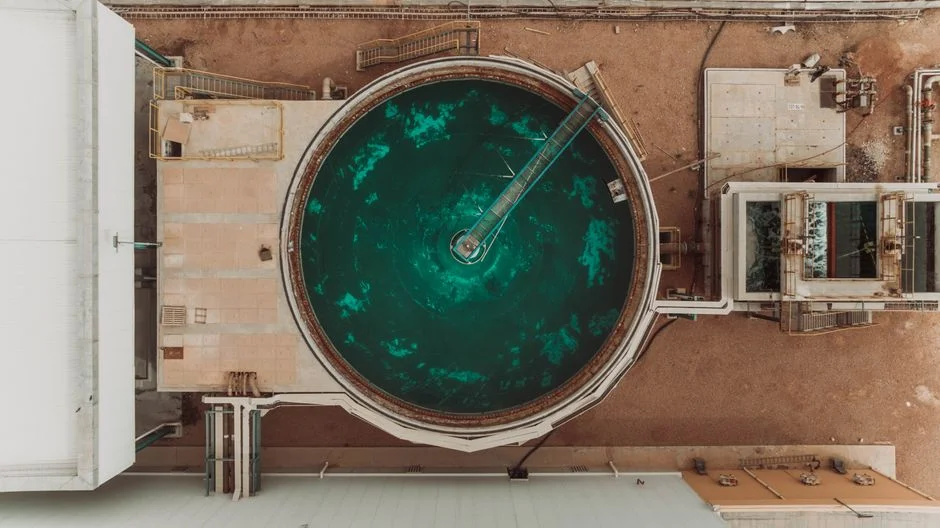
A conventional clarifier separates solids by gravity within the surface-overflow-rate limit imposed by tank geometry; bottom sludge is withdrawn while clarified water overflows a peripheral or peripheral-and-imperforate launder. Its performance depends on particle settleability, hydraulic loading, and sludge withdrawal—not on chemical-conditioning intensity.
A high-rate lamella clarifier for bulk mineral solids adds effective settling area through inclined plates, reducing the footprint required for gravity separation. The plates do not change the mechanism. Dense fines and metallurgical sludge settle; colloidal material, oils, surfactants, and dissolved metals can pass through and require downstream treatment.
DAF uses micro-bubbles measuring 30–50 micrometres that attach to flocculated particles, float the aggregate to the surface, and are removed by a skimmer (Clearwater Industries, “Dissolved Air Flotation for Industrial Wastewater Treatment”). Coagulant, pH adjustment, and polymer flocculant are normally used to make the particles sufficiently floatable. The industrial DAF system for mining and metals wastewater therefore represents a chemical and hydraulic treatment step, not simply a sedimentation tank with air added.
Startup also matters. Clearwater Industries specifies filling the unit with clean water because the recirculation loop draws clarified effluent, pressurizes it with air, and returns the saturated stream to the tank. Dirty water at startup can delay clarified discharge and may affect the recirculation pump and air-saturation system.
Removal is also not the same as stabilization. DAF can capture conditioned metal precipitates, but residual dissolved metals may require precipitation, pH control, adsorption, or another polishing process. Likewise, clarified or floated water for process-water recycling still typically needs downstream filtration or membrane treatment. The high-rate lamella clarifier for bulk mineral solids should therefore be specified as the upstream solids-removal step when a combined mining stream also contains buoyant or colloidal material.
Match Equipment to the Plant Stream
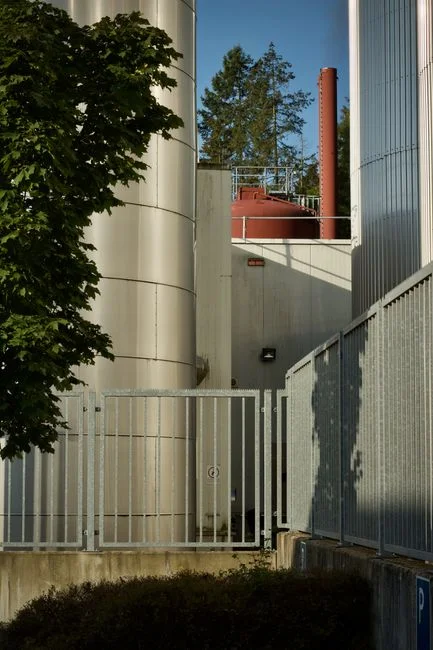
Tailings overflow or mill discharge dominated by dense mineral fines normally calls for a conventional clarifier or high-rate lamella clarifier as the bulk-solids separator. The design question is whether the solids can settle within the proposed surface overflow rate and whether the underflow can be withdrawn consistently enough for downstream sludge handling.
Metal-finishing rinse, vehicle-wash, and equipment-maintenance streams containing oils and grease are different: DAF after equalization and appropriate chemical conditioning is the more relevant mechanism. The RFQ should still define oil concentration, emulsification, temperature, pH, flow variability, and the required solids and oil-removal targets rather than treating the stream as a generic “oil-water” application.
For a combined stream containing mineral solids plus oily or reagent-rich fractions, specify a clarifier followed by DAF. This arrangement removes the dense load before flotation and gives DAF a more manageable feed containing the colloidal and buoyant fraction. A PLC-controlled chemical dosing skid may then be required to maintain the dose established by jar testing.
Colloidal material and light-density precipitates remaining after clarification generally need DAF with site-specific pH control, coagulant, and flocculant dosing. For a raw stream dominated by silt and clay, do not assume flotation will lift the load; first assess upstream clarification or another solids-removal step, consistent with Fluence’s documented mechanism boundary.
| Plant condition | Recommended equipment train | Key design issue |
|---|---|---|
| Tailings overflow or mill discharge with dense fines | Conventional or high-rate lamella clarifier | Surface overflow rate, solids inventory, and underflow withdrawal. |
| Maintenance rinse water with oils and grease | Equalization, conditioning, and DAF | Oil fraction, emulsification, pH, and sludge characteristics. |
| Mixed mineral, oily, and reagent-rich stream | Clarifier followed by DAF | Clarified flow and residual contaminant load passed to flotation. |
| Colloidal or light precipitate after clarification | DAF with chemical conditioning | Jar-tested dose, mixing, pH, and capture efficiency. |
| Raw silt- or clay-dominated stream | Assess clarification or solids removal first | Raw non-floating load may overload DAF. |
HydropureWater’s lamella clarifier catalog lists surface loading rates of 20–40 m/h. Treat this as catalog information, not a design value: the final rate must be verified against the actual stream, settling behavior, and supplier proposal. The automatic chemical dosing system should be tied to the jar-tested recipe and plant control philosophy.
Size the System from Measured Data
Size the system from seasonal measured data rather than average daily flow. A buyer should provide flow records across production changes, TSS, particle-size distribution, pH, temperature, and dissolved heavy-metal concentrations such as copper, lead, and zinc. These inputs establish both the hydraulic duty and the fraction that each unit must remove.
For the clarifier, request the proposed surface-overflow-rate basis, effective settling-area calculation, solids inventory, sludge-withdrawal arrangement, and expected underflow consistency. For DAF, request hydraulic loading, recycle ratio, air-to-solids basis, and whether chemical conditioning is included. Also require the supplier to identify how sludge inventory, recycle, and startup conditions affect performance.
Clearwater’s separator configurations provide selection context rather than a substitute for application engineering. The FPAC is a low-built cross-flow separator for small-to-medium flows with very high contaminant loads; FPBC is a high-profile lamella design for low-to-medium loads with very low overflow rates; FPHF combines cross-flow and counter-current flow for large flows with medium-to-large loads (Clearwater Industries, “Dissolved Air Flotation Systems for Wastewater Treatment,” 2026-04-27).
| Equipment item | Information required for sizing | Supplier output to request |
|---|---|---|
| Plant flow and wastewater characterization | Seasonal flow, TSS, particle size, pH, temperature, copper, lead, zinc | Documented design basis and worst-case operating scenario. |
| Clarifier | Surface overflow rate, settling area, solids inventory, withdrawal arrangement | Sizing calculation and expected underflow consistency. |
| DAF | Hydraulic loading, recycle ratio, air-to-solids basis, conditioning scope | Separator selection and flotation calculation. |
| Chemical system | Jar-test recipe, pH window, mixing requirements | Dosing equipment schedule and control strategy. |
| Sludge and reuse train | Solids volume, chemistry, target dryness, reuse quality | Coordinated downstream equipment scope. |
HydropureWater’s DAF catalog lists 4–300 m³/h across 13 models. Use that range as an initial screen only. The data-driven DAF capacity calculation explains the application data needed to move from catalog capacity to a defensible specification.
Set Chemical Conditioning by Jar Testing
Coagulation and flocculation make particles more floatable and are integral to DAF performance, not optional accessories. The required coagulant, pH adjustment, and flocculant must be established for the plant’s actual water because the same wastewater can change with production, rainfall, reagent carryover, and source-area contributions.
Clearwater Industries describes flocculation tubes that provide a 15–45 second flash mix, with dosing points for coagulant, pH adjustment, and polymer flocculant. Impeller mix tanks can provide longer contact when the chemistry requires it. The selected mixing arrangement and duration should follow jar-test results rather than a standard contact time applied without supporting data.
A study by Elder at Utah State University recorded an optimum dose of 30 mg/L aluminum sulfate for algae and phosphorus removal in lagoon effluent (Elder, 2011, Utah State University). That result demonstrates the importance of empirical dose selection; it is not a mining or metals default dose and should not be transferred to a Butler wastewater stream.
For the RFQ, require jar testing to establish the chemical identity and dose, mixing time, pH range, solids capture, and sludge behavior under seasonal conditions. Testing should compare relevant operating conditions rather than one nominal sample. When stable dose control is required, include a PLC-controlled skid with the automatic chemical dosing system, pump sizing, instrument requirements, and control interfaces.
Jar-test results should also feed the DAF vendor’s air-to-solids and recycle calculations. A dose that creates poor floc, excessive chemical use, unstable sludge, or unfavorable downstream filtration will affect the whole treatment train even if bench solids capture appears acceptable.
Compare Capital, Footprint, Sludge, and Reuse Consequences
Industrial-grade DAF capital cost is indicatively $150,000 to over $1.5 million, according to the supplied HydropureWater research. Flow rate, materials of construction, conditioning, controls, and project scope drive the final quotation; the research provides no site-specific 2026 price for a Butler plant. Request a budget based on the measured duty rather than use the range as a procurement estimate.
Mining applications may require 316L stainless steel or specialized coatings for acidic or abrasive mineral slurries. Do not select materials without corrosion and abrasion data for the actual stream, including reagent chemistry, temperature, chloride exposure, and solids abrasiveness.
Lamella clarification compresses the area required for gravity settling, while DAF can provide a compact flotation package with chemical conditioning and controls. Neither footprint advantage is universal: the final comparison must include equalization, chemical rooms, sludge withdrawal, access, utilities, and any downstream reuse treatment.
The residual streams also differ. A clarifier generally produces underflow that may require thickening or dewatering. Clearwater Industries reports that properly conditioned DAF produces floated sludge thick enough to require little or no further dewatering. That can reduce sludge-handling cost, but the actual result must be confirmed from site tests and the supplier’s sludge characteristic.
For process-water recycling, include filtration or membrane treatment in the RFQ because clarified or floated water still typically requires final solids removal. The ultrafiltration system for final solids removal is a downstream option, while the plate-and-frame filter press for mineral sludge dewatering addresses the solids line. Final selection requires sludge solids, volume, chemistry, and target dryness.
| Consequence | Clarifier-centered train | DAF-centered train |
|---|---|---|
| Capital | Requires site-specific pricing for tank, civil work, and sludge handling. | Indicative industrial range supplied: $150,000 to over $1.5 million. |
| Footprint | Lamella plates reduce gravity-settling area; conventional units use more civil space. | Compact flotation package, with conditioning and controls included in scope. |
| Sludge | Underflow generally requires thickening or dewatering. | Conditioned floated sludge may require little or no further dewatering. |
| Reuse | Colloidal, oily, and dissolved loads may remain. | Polishes conditioned floc, but final filtration or membrane treatment may still be needed. |
| Materials | Specify for acidic or abrasive mineral slurry conditions. | Specify 316L stainless steel or specialized coatings where justified by site data. |
Build a Supplier-Ready RFQ and Qualification Plan
A defensible RFQ treats the treatment train as one coordinated system. Ask vendors to quote the primary separator, chemical-conditioning skid, sludge-dewatering step, controls, and downstream reuse polish where applicable. Separate prices may obscure the effect of sludge characteristics, reuse requirements, and downstream filtration on the installed cost.
Provide comparable seasonal influent data, jar-test results, proposed sizing calculations, materials of construction, control philosophy, and a performance guarantee tied to the stated duty. Specify the duty carefully: flow, TSS, contaminant fractions, pH, temperature, dissolved metals, operating schedule, and reuse or discharge targets.
Qualify suppliers using documented experience with metal-bearing effluents, relevant pilot data, commissioning support, automated dosing capability, and ISO 9001 certification. Pilot evidence should be tied to comparable wastewater chemistry rather than offered only as a general project list.
Permit compliance remains a site-specific issue. The supplied research identifies the EPA Effluent Guidelines for the Ore Mining and Dressing Point Source Category as a relevant reference, but the final design and operating values must be checked against the plant’s current permit, sewer-pretreatment requirements, and authority direction. See the discussion of mining and metals wastewater pretreatment limits.
| RFQ package | Required submission | Qualification check |
|---|---|---|
| Design basis | Seasonal influent data, analytical results, jar tests, reuse or discharge targets | Supplier calculations use the stated duty without omitted seasonal cases. |
| Equipment train | Separator, conditioning, sludge handling, controls, and reuse polish | Interfaces and responsibility for each stream are defined. |
| Materials and controls | Corrosion basis, abrasion basis, PLC philosophy, alarms, instrumentation | Materials and automation match site conditions. |
| Performance and compliance | Guarantees tied to duty, permit references, commissioning plan | Guarantee is measurable and compliance responsibility is explicit. |
| Operational readiness | Startup utilities, clean water, air, power, training, maintenance access | Contingencies are included in the proposal. |
Include a contingency review for startup clean-water availability, compressed air, electrical service, controls integration, operator training, maintenance access, and the temporary waste loads that may occur during commissioning.
Frequently Asked Questions
What is the indicative cost of DAF or a clarifier for mining and metals wastewater in Butler, Pennsylvania, in 2026?
The supplied research gives an indicative industrial DAF range of $150,000 to over $1.5 million, but it does not provide a site-specific 2026 quotation or a comparable clarifier price. Request a budget tied to measured flow, TSS, contaminant-fraction profile, materials of construction, chemical conditioning, sludge handling, controls, and reuse treatment. Ask for capital and major operating-cost items to be shown separately so the comparison reflects the whole train rather than the separator tank alone.
Which data should a buyer provide before sizing a DAF or clarifier?
Provide seasonal flow, TSS, particle-size distribution, pH, temperature, copper, lead, zinc, and any other constituents that affect precipitation or flotation. Include jar-test results covering chemical dose, mixing time, pH range, solids capture, and sludge behavior. For the clarifier, also obtain the proposed surface-overflow-rate basis, solids inventory, withdrawal arrangement, and expected underflow consistency. For DAF, request hydraulic loading, recycle ratio, air-to-solids basis, and whether conditioning is included.
Can a clarifier alone meet a mining and metals wastewater reuse requirement?
Not routinely when the stream contains colloidal solids, oils, surfactants, residual flotation reagents, or dissolved metals. A lamella clarifier removes settleable material; it does not make colloidal or dissolved loads settle. A combined train can use clarification for dense fines and DAF for conditioned floc, followed by filtration or membrane treatment where reuse requires further solids removal. The required reuse quality and final unit must be defined from current site data and permit conditions.
How should suppliers be qualified for a Butler mining wastewater DAF or clarifier project?
Require documented experience with metal-bearing effluents, comparable pilot data, seasonal sizing calculations, commissioning support, automated dosing capability, and ISO 9001 certification. Ask each supplier to identify how its proposal addresses the current permit, pretreatment requirements, startup utilities, controls integration, operator training, and maintenance access. Equipment capability alone does not establish permit compliance; verify final operating values and performance guarantees against site-specific conditions before award.