What Singapore Means by Domestic Sewage Treatment
Domestic sewage treatment in Singapore generally follows three distinct routes: biological treatment for wastewater stabilization, advanced treatment for water reuse, and source control that protects both processes. Singapore’s national NEWater route adds microfiltration/ultrafiltration, reverse osmosis and ultraviolet disinfection to treated municipal wastewater. For smaller sites without direct sewer access, a compact package plant can combine anoxic/aerobic contact oxidation, sedimentation and disinfection in one unit. The correct choice depends on design flow, effluent objectives, land availability, discharge route and reuse requirements.
Domestic sewage treatment means the collection and treatment of wastewater arising from domestic activities. The terminology requires care: the US EPA’s Singapore reuse summaries also use domestic wastewater, treated wastewater effluent and treated sewage when referring to treated municipal wastewater (EPA, 2023). That wider regulatory use should not collapse the engineering distinction between a local biological treatment plant and Singapore’s centralized NEWater production system.
The treatment sequence should be read by function:
- Preliminary and primary removal: screening and solids removal protect downstream biological and membrane processes.
- Biological stabilization: an A/O biological process reduces biodegradable organic matter and can support nutrient removal where properly designed.
- Disinfection: reduces viable pathogens before discharge or reuse.
- Advanced reuse treatment: microfiltration/ultrafiltration, reverse osmosis and ultraviolet disinfection produce Singapore’s NEWater. The US EPA identifies these as the three stages of the NEWater process (EPA, 2023).
- Potable-grade reuse: in the national indirect route, NEWater enters a reservoir, mixes with raw water and then receives further treatment at a conventional drinking-water plant (PUB, 2022, as cited by EPA, 2023).
Singapore’s strategic context makes this distinction important. PUB’s “4 National Taps” comprise imported water, captured stormwater, NEWater and seawater desalination; the EPA reports an estimated national water demand of 2 million m³/day and NEWater factory supply capacity of 760,000 m³/day, almost 40% of demand (WHO, 2017a, as cited by EPA, 2023). The figures describe the national water system, not the output required from an on-site plant.
For site-scale decisions, the engineering focus is therefore the required effluent function, not the label attached to the equipment. Review how underground sewage treatment systems work alongside the intended discharge or reuse route.
How Singapore’s Treatment Routes Fit Together
Singapore’s reuse framework begins with source control, upstream treatment and continuous monitoring because membrane performance and water quality depend on the wastewater entering the advanced-treatment train. The EPA states that source control, primary treatment and secondary treatment minimize membrane fouling and safeguard NEWater quality (EPA, 2023).
- Collect the wastewater from domestic occupancies or a connected development.
- Apply source control and preliminary treatment, including screening and assessment of potentially contaminating discharges.
- Complete biological treatment to reduce biodegradable pollutants.
- Separate solids by sedimentation or membrane filtration.
- Disinfect the separated effluent.
- Discharge directly or send it to further treatment where the reuse specification requires additional barriers and controls.
The qualitative process map below distinguishes the basic biological route from the advanced national reuse route:
| Stage | Primary function | Selection issue |
|---|---|---|
| Source control and screening | Exclude or remove disruptive solids and contaminants | What trade waste, chemicals or solids can enter the network? |
| A/O biological treatment | Reduce biodegradable organic matter and support nutrient management | Does the influent loading and effluent objective suit the selected biology? |
| Sedimentation or membrane separation | Separate solids from treated liquid | Is solids handling and recovery included in the design basis? |
| Disinfection | Reduce pathogen risk | What monitoring, contact control and validation are required? |
| Microfiltration/ultrafiltration, reverse osmosis and UV | Produce advanced treated water under the NEWater framework | Is centralized advanced reuse necessary, and can the required audit regime be supported? |
Source-control monitoring is especially relevant where a domestic treatment system receives mixed or industrial discharges. Singapore uses online sensors for volatile organic compounds in wastewater networks as an early-warning system for illegal discharges of industrial chemicals, spent oils or solvents (WHO, 2017a, as cited by EPA, 2023). A decentralized plant cannot assume that source separation is perfect; its influent characterization and pretreatment scope must reflect the actual site.
NEWater is not simply a more compact biological package plant. It is a specific advanced-treatment and quality-control system, audited annually by local and international multidisciplinary experts (EPA, 2023). Most NEWater is supplied through a separate distribution system for industrial and cooling uses. A smaller percentage is added to reservoirs, where it mixes with raw water before further conventional drinking-water treatment; the percentage varies and increases during dry seasons to support water security (PUB, 2022, as cited by EPA, 2023).
This upstream logic is also relevant when comparing an MBR membrane bioreactor system with advanced reuse treatment. The MBR combines biological treatment and membrane separation; NEWater begins downstream of treated municipal wastewater and adds a separate three-stage advanced-treatment train.
Package Plants, MBR and Advanced Reuse Compared
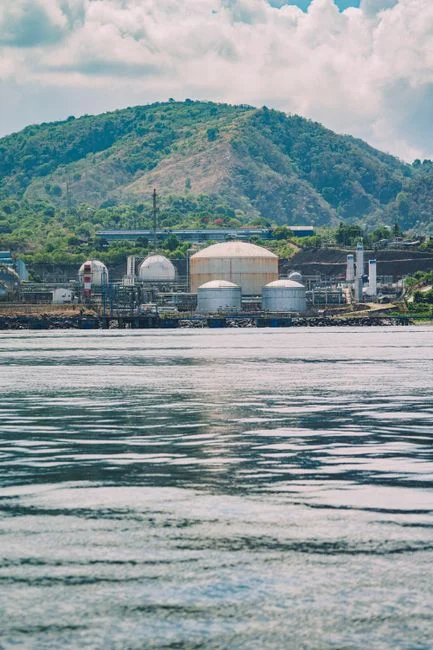
The WSZ package plant, MBR and NEWater-style advanced treatment perform different duties and should not be compared only by headline capacity or footprint. The correct comparison is the complete train required to deliver the specified effluent.
| Option | Configuration and verified product data | Best-fit project function | Key qualification |
|---|---|---|---|
| Underground WSZ package plant | Anoxic/aerobic A/O contact oxidation, sedimentation and disinfection in one buried, fully automated unit. Capacity: 1–80 m³/h. It may also be trailer-mounted (HydropureWater verified product catalog). | Site-scale biological stabilization where direct sewer access is absent and a compact footprint is required | Confirm hydraulic loading, effluent specification, sludge removal and local approvals against project data. |
| MBR membrane bioreactor | Activated-sludge treatment with submerged PVDF membrane filtration below 1 μm. Capacity: 10–2,000 m³/day; reported footprint is 60% smaller than conventional systems (HydropureWater verified product catalog). | Compact separation or reuse-oriented polishing within a project’s biological treatment train | The reported footprint reduction is a product claim, not a project guarantee; verify membrane configuration and operating envelope. |
| NEWater-style advanced treatment | Microfiltration/ultrafiltration, reverse osmosis and UV disinfection applied to treated municipal wastewater (EPA, 2023). | Centralized advanced reuse production for industrial supply or indirect potable reuse | It requires upstream source control, advanced monitoring and a centralized quality-management regime. |
The underground WSZ package sewage treatment plant is a credible option where the objective is biological stabilization in a constrained site. Its integrated configuration keeps anoxic and aerobic treatment, settling and disinfection within one package. The 1–80 m³/h catalog range is a selection boundary, not proof that a proposed unit has sufficient capacity for the site’s measured peaks.
The MBR is relevant where compact solids separation is important or where the downstream reuse objective requires a stronger biological-treatment barrier than conventional sedimentation can provide. It also introduces membrane-fouling control, cleaning, integrity checks and replacement planning. The submerged membrane bioreactor maintenance protocol should inform the O&M review.
NEWater belongs at the advanced-reuse end of the decision, not the basic-stabilization end. Its advanced train can be investigated through the supplied ultrafiltration system reference, but an on-site biological unit cannot be called a NEWater facility unless it independently satisfies the required process, water-quality controls and audit arrangements.
For procurement, require each bidder to state which components deliver each contractual effluent parameter. A catalog statement of capacity, filtration performance or footprint does not establish Singapore discharge compliance for a specific site. The acceptance specification must identify the receiving authority or client, applicable permits, test methods, operating conditions and consequences of non-compliance.
How to Size the Right Domestic Sewage Treatment System
Sizing must begin with the project’s verified flow and influent data, not the equipment catalogue’s maximum capacity. A defensible design converts measured operating conditions into hydraulic and process duty, then checks that duty against the required discharge or reuse specification.
- Establish the flow dataset. Record average daily flow, peak hourly flow, peak daily factor, current occupancy and planned expansion. Identify the data period and whether the peaks reflect actual occupancy.
- Characterize the influent. Test COD, BOD, suspended solids, nitrogen, phosphorus, fats, oils and grease, pH and salinity. Identify industrial trade waste and episodic discharges rather than treating domestic loading as the only load.
- Fix the receiving route. Direct sewer discharge, controlled effluent discharge, irrigation, process reuse and advanced reuse each impose different treatment objectives.
- Calculate hydraulic and process duty. Evaluate equalization, peak-flow behavior, biological loading, solids separation, disinfection and sludge generation.
- Check site and operational constraints. Include available footprint, burial or access requirements, odor controls, power supply, standby arrangements, waste-removal access and operator capability.
- Verify the selected configuration. Compare the calculation with the WSZ range of 1–80 m³/h and MBR range of 10–2,000 m³/day (HydropureWater verified product catalog). These are product boundaries, not substitutes for project calculations.
| Design input | Evidence required | Decision affected |
|---|---|---|
| Flow and occupancy | Measured or verified daily and hourly demand, including expansion | Reactor capacity, equalization and pumping |
| Influent quality | Representative sampling and laboratory characterization | Biological process, pretreatment and effluent guarantees |
| Discharge or reuse route | Authority or client specification and receiving-system constraints | Disinfection, polishing and monitoring scope |
| Site constraints | Survey, excavation access, power, standby power and maintenance route | Package layout, footprint and O&M access |
| Residuals | Sludge quantity, destination and removal assumptions | Completeness of the treatment scope and operating cost |
Ask for hydraulic and process calculations rather than a unit recommendation alone. The calculation should expose the selected flow basis, biological loading, membrane or media design, equalization duty, peak handling, standby-power arrangements and sludge-management assumptions. Review compact sewage treatment unit cost considerations before accepting a price, because scope exclusions can shift major costs between equipment, civil work and disposal.
Singapore-specific verification should cover the site’s source-control exposure, receiving authority or client requirements, local submission obligations and the consequences of abnormal industrial or chemical inputs. A system should not be selected from generic performance curves if the proposed influent or discharge route differs from those used to establish them.
Reuse Quality, Monitoring and O&M Requirements
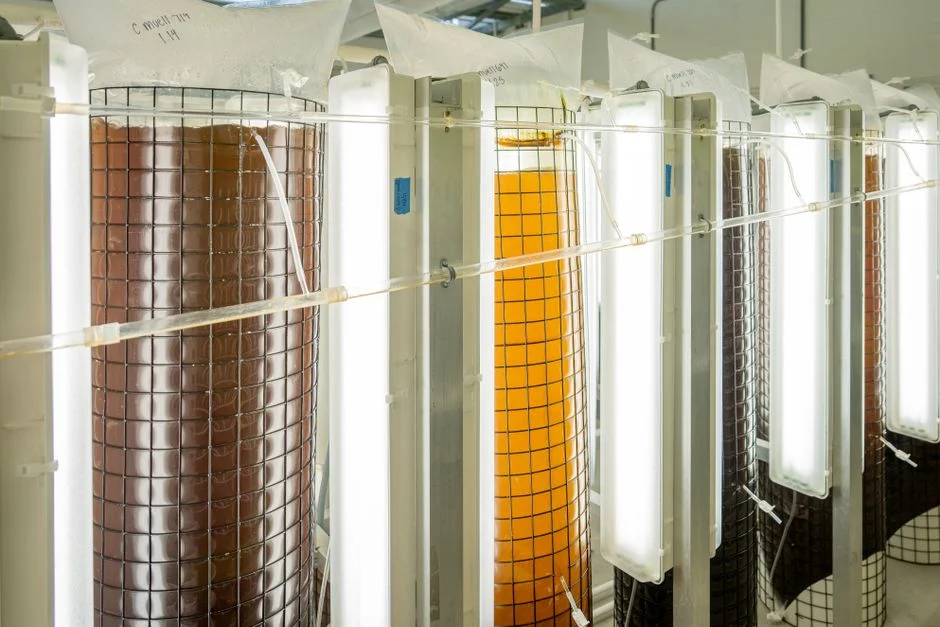
Singapore’s NEWater is tested for about 300 parameters at frequencies ranging from weekly to annually, according to PUB personal communication dated 16 November 2023 and cited by the US EPA. The regime also covers pharmaceutical and personal-care products, endocrine-disrupting compounds, industrial solvents and waterborne pathogens (EPA, 2023).
Before distribution or reservoir addition, NEWater is stored with a minimum nine-hour retention time so there is time to respond to contamination or disruptive events, while the water is continuously monitored online (WHO, 2017a, as cited by EPA, 2023). These controls illustrate why advanced reuse is not equivalent to discharge compliance: the treatment objective includes source protection, traceability, monitoring, storage and event response.
A decentralized plant will not reproduce the national NEWater regime automatically. Its monitoring scope should nevertheless be proportional to risk and reuse function. Required items include:
- remote alarms for high-level, pump failure, aeration fault and other critical events;
- runtime and cycle records for aeration and pumps;
- membrane condition, cleaning and integrity checks, or equivalent media inspection;
- sludge-removal records and access to the handling route;
- odor-control performance checks;
- safe access for routine sampling, maintenance and equipment withdrawal;
- defined calibration, laboratory support, alarm escalation and performance-reporting responsibilities.
The supplier should state the test method, sampling point, parameter, acceptance criterion and reporting frequency for each guaranteed result. It should also identify which party performs calibration, how invalid readings trigger investigation, when corrective action is required and how the contracted operating period is audited.
The underground package configuration can serve as an example of integrated biological treatment, sedimentation and disinfection, but its catalogue data does not establish NEWater certification. A reuse-oriented proposal must separately demonstrate the additional treatment barriers and quality controls required for the intended end use.
A Practical Supplier Evaluation Checklist
A defensible supplier selection compares the complete treatment duty and contractual obligations, not only the advertised peak flow. The quotation should state what the supplier will guarantee under the buyer’s actual influent and site conditions.
- Request the guaranteed design flow, treatment-process description, operating duty cycle and performance envelope based on verified project data.
- Check whether the guarantee covers effluent quality, reuse quality, odor, noise, footprint, energy demand, equipment availability or only a narrow availability clause.
- Review Singapore-relevant references, commissioning records, control-system documentation, spare-parts support and operator training.
- Confirm whether source-control equipment, pretreatment, disinfection and sludge handling are included or excluded.
- Define permits, authority submissions, test protocols, acceptance criteria and handover responsibilities.
- Require an operating manual covering normal start-up, shutdown, peak loading, upset conditions, alarm response, maintenance intervals and emergency access.
- Compare alternatives using the same flow basis, effluent specification, scope and testing protocol.
Ask separately where pretreatment responsibility begins. A screen can address gross solids, while mechanical bar-screen equipment should be evaluated against the actual collection system. Chemical dosing may be necessary for nutrient control, pH management or reuse preparation, so the completeness of an automatic chemical dosing package must be checked against the process calculation rather than added by assumption.
Commercial closeout should preserve the same technical basis used for selection. Freeze the influent assumptions, hydraulic duty, test methods, acceptance samples, operating conditions and exclusion list. Otherwise, a supplier may offer a valid unit while the project as scoped remains underdefined.
Frequently Asked Questions
Can an on-site sewage treatment plant produce NEWater?
Not merely by treating domestic sewage. NEWater is a specific advanced-treatment and quality-control system built around microfiltration/ultrafiltration, reverse osmosis and UV disinfection, with upstream source control and extensive monitoring (EPA, 2023). A supplier must demonstrate the complete treatment train, quality controls and applicable local requirements before describing the output as NEWater.
How should a buyer choose between a package plant and an MBR?
Compare them against the same verified flow, footprint, reuse objective, O&M capability and effluent specification. Choose a package plant where integrated biological stabilization is sufficient; consider an MBR where compact solids separation or a stronger separation barrier is required. Neither can be selected from headline capacity alone, and the final decision requires project-specific process verification.
What information is needed for system sizing and quotation?
Request average and peak flow, occupancy and expansion data; COD, BOD, suspended solids, nutrients, fats, oils and grease, pH, salinity and trade-waste information; the discharge or reuse route; site, power and maintenance constraints; and applicable authority or client specifications. Ask for these compact sewage treatment unit cost considerations to be addressed in the same pricing structure so exclusions are visible.
What cost categories should dominate lifecycle-cost comparison?
Request separate prices for aeration, pumping, membrane or media replacement, chemicals, sludge handling, energy and monitoring, together with the assumed usage and replacement intervals. No supported quotation was provided, so the buyer should request a transparent operating-cost breakdown rather than compare an equipment price alone.
Can a manufacturer copy a published product range into Singapore without further verification?
No. The published range identifies available equipment, but the project still requires influent characterization, source-control assessment, process calculation, discharge-route confirmation and local compliance review. This is especially important for reuse applications, where monitoring, source protection and auditable quality control extend beyond the biological treatment unit itself.