What Domestic Sewage Treatment Means for Siem Reap Sites
Domestic sewage treatment in Siem Reap usually means a decentralized treatment plant for a hotel, residence, factory, hospital or other site that cannot rely fully on municipal sewer connections. The Cities Development Initiative for Asia (CDIA) estimated that only 9% of Siem Reap city’s fecal waste was collected and properly treated, while most sewage was discharged directly into rivers and canals. For an on-site system, the practical choice is a buried WSZ A/O package for smaller flows where footprint and simple operation dominate, or an MBR system where higher treatment performance, expansion or water reuse is required. The final design must reflect measured flow and influent, flood and infiltration conditions, applicable Cambodian discharge limits, sludge handling and site-specific permit requirements.
Domestic sewage is wastewater generated by occupied premises, including sanitary fixtures, kitchens, laundry, staff accommodation and wastewater from hospital or factory facilities. It must be treated and disposed of lawfully at the site or conveyed through a confirmed sewer connection. It is not automatically interchangeable with industrial wastewater containing solvents, dyes, metals, concentrated chemicals or other factory-specific pollutants; those streams may require separate pretreatment and sector-specific discharge conditions.
CDIA worked with the Siem Reap Department of Public Works and Transport during a project preparation study conducted from May 2018 to May 2019. The work covered East and West trunk sewers, pumping stations and wastewater treatment plant improvement. It was a citywide infrastructure intervention, not a statement that every private site had a sewer connection available in 2026.
The local evidence still explains why site planning is necessary. CDIA reported that most domestic sewage was discharged directly into rivers and canals, causing pollution and hygiene concerns, particularly during flooding. Buyers should therefore assess both treatment performance and the route for final effluent, rather than assuming that a nearby drain or canal is an authorized receiving point. The Cambodia decentralized sewage treatment options provide additional context for facilities outside established sewer areas.
Siem Reap’s Collection Gap and the Case for On-Site Treatment
CDIA’s 2018–2019 project preparation findings put Siem Reap’s historical sanitation gap at 75% access to improved sanitation, 19% of the population practising open defecation and only 9% of fecal waste collected and properly treated. These figures establish the local infrastructure context; they do not constitute a live 2026 service-capacity guarantee or describe the sewer condition at an individual property.
Incomplete sewerage, direct discharge and flooding combine into a site-level risk. CDIA identified drain overflow as a major pathway for fecal exposure during the wet season and described flood water as a principal route through which fecal contamination reaches children, residents and tourists. A hotel, residence or factory should not assume that a building connection is hydraulically secure simply because a sewer route appears on a plan. The receiving authority must confirm whether a connection is available, where it discharges and whether the route remains usable during flooding.
Flooding and infiltration can also distort the flow entering an on-site plant. Wet-weather entry through leaking laterals, poorly sealed pipework or floodwater can increase hydraulic loading, dilute influent concentrations and overwhelm downstream biological treatment. Equalization should therefore be considered as part of the treatment train, not added only after commissioning problems appear.
CDIA identified an expected downstream financing pipeline of US$24.5 million in World Bank loans for the wastewater project. That investment indicates the importance of citywide infrastructure improvement, but it does not determine the process, capacity or delivery terms for a private treatment plant. The procurement should proceed from current site evidence rather than from the loan pipeline.
Before ordering equipment, request written confirmation from the Siem Reap Department of Public Works and Transport or the authority responsible for the proposed discharge point. Ask specifically about sewer availability, discharge routes, flood conditions, permit ownership and sampling requirements. Hospitality projects can also use the Cambodia hotel wastewater treatment guide to identify operational questions that differ from a residence or factory.
Choose a Treatment Train by Flow and Operating Requirement
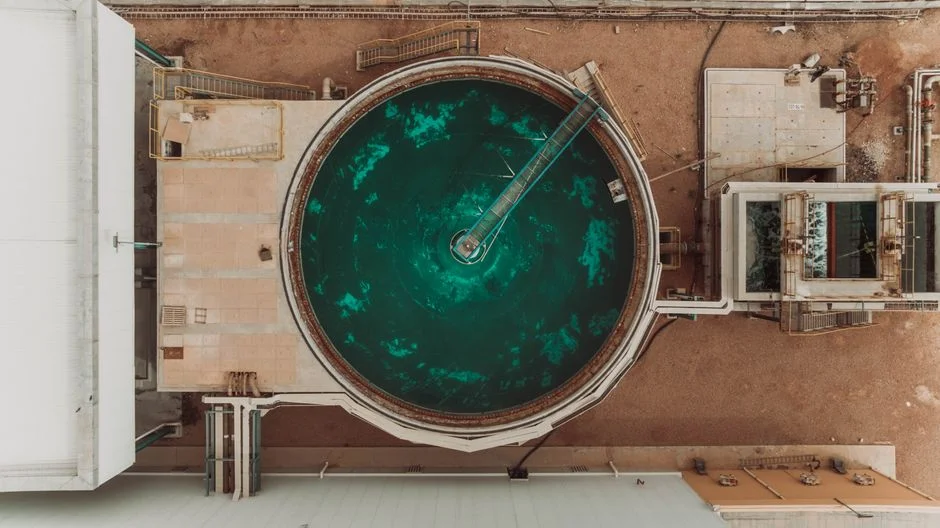
The WSZ series covers 1–80 m³/h and combines anoxic/aerobic contact oxidation, sedimentation and disinfection in one buried, automated package. The verified product catalog states that no operator is required, making WSZ appropriate for smaller decentralized applications where a compact installation and straightforward operation are the priorities.
The integrated MBR wastewater treatment system covers 10–2,000 m³/day and its catalog states a 60% smaller footprint than conventional systems. It is the stronger starting point when the site has a tighter footprint, requires staged expansion, or needs higher-quality effluent for water reuse. An MBR also introduces membrane cleaning, replacement and more demanding controls, so the operating plan must be priced and assigned.
DF-series flat-sheet modules provide modular MBR building blocks. The verified specifications identify 0.1 μm PVDF elements, configurations of 80–225 m² and output of 32–135 m³/day per module. These figures allow a supplier to state how the proposed modules meet the measured design flow and future expansion stages.
Supporting equipment depends on the waste stream. The verified DAF range of 4–300 m³/h is suitable where kitchen, food-processing or laundry wastewater carries significant oil, grease or floatable solids. Chlorine dioxide provides an on-site generated disinfectant, while UV is appropriate where residual-free disinfection is preferred for reuse. A rotary mechanical bar screen can remove rags, plastics and fibrous material before pumps or biological treatment, and a plate-frame filter press can dewater sludge before authorized off-site disposal.
A defensible process train is:
- Screen and remove gross solids before pumping.
- Provide flow equalization and grit removal.
- Apply biological treatment for organic load and, where required, nutrient removal.
- Use clarification or membrane separation to achieve the selected effluent quality.
- Disinfect the final effluent.
- Thicken, dewater, store and dispose of sludge under an approved arrangement.
This is an indicative sequence, not a universal specification. The actual process depends on flow, wastewater characteristics, land availability, reuse objectives and operator capability.
| Process option | Verified capacity or configuration | Best fit | Principal buyer check |
|---|---|---|---|
| WSZ A/O package | 1–80 m³/h; anoxic/aerobic contact oxidation, sedimentation and disinfection | Smaller decentralized sites seeking a buried, automated package | Confirm measured flow, buried installation conditions, maintenance access and effluent route |
| Integrated MBR | 10–2,000 m³/day; catalog states 60% smaller footprint than conventional systems | Tighter sites, expansion projects or reuse applications | Require membrane guarantees, cleaning method, replacement assumptions and operator competency |
| DF-series flat-sheet module | 0.1 μm PVDF; 80–225 m²; 32–135 m³/day per module | Modular MBR capacity expansion | Ask how each module contributes to the guaranteed design flow |
| DAF pretreatment | 4–300 m³/h | Wastewater with oil, grease or floatable solids | Base the duty on sampled wastewater characteristics, not kitchen equipment count alone |
Design Domestic Sewage Plants for Real Site Conditions
Sewage treatment plant sizing should be based on a flow survey covering dry-weather and wet-weather operating periods, not room count or occupancy alone. The buyer needs average flow, peak flow, duration of peaks and the anticipated effect of infiltration or floodwater entering the collection system. A short flow survey may conceal seasonal loading, while a single high meter reading can distort both biological capacity and equalization volume.
Test the influent for BOD₅, COD, TSS, oil and grease, pH and other parameters relevant to the property. A hotel’s kitchen and laundry flows, a factory’s process streams and a hospital’s clinical wastewater cannot be represented by one domestic-sewage profile. Industrial or healthcare characteristics may require additional pretreatment before the selected biological process.
HydropureWater’s 2026 Siem Reap engineering guidance recommends an equalization basin providing at least eight hours of average daily flow for its design case. It also describes wet-season hydraulic increases of 30–80% for the Siem Reap design basis. These are design guidance rather than measurements for every site, so the final equalization and treatment capacities must be reconciled with current flow data and the applicable engineering basis.
The mechanical and instrumentation scope should identify solids removal, grit removal, pumping, aeration, controls, disinfection and sludge dewatering. Require the supplier to define duty and standby arrangements, access for maintenance, electrical supply requirements, control logic and the condition of each item after a power interruption. An sedimentation tank can form part of the solids-separation stage, but its performance and inclusion must be explicit in the quotation.
For each proposal, ask the supplier to identify the assumed flow equalization volume, peak-flow control method, membrane or aerator redundancy, sludge-removal route and commissioning tests. The design package should also show how the system remains accessible where groundwater, flood levels or burial depth could complicate maintenance.
Do not promise regulatory compliance before checking current permits, the receiving route, final effluent limits and site-specific engineering. Equipment selection establishes a treatment train; it does not authorize discharge or prove that the completed system will meet every applicable condition.
Meet Cambodian Discharge and Reuse Requirements
Sub-Decree No. 27 ANRK.BK sets the supplied water-body discharge limits shown below. These values provide a technical screening point for equipment selection, but the buyer must confirm whether they apply to the proposed route and whether stricter sector-specific conditions prevail.
| Parameter | Supplied Sub-Decree No. 27 ANRK.BK limit |
|---|---|
| BOD₅ | ≤ 50 mg/L |
| TSS | ≤ 50 mg/L |
| COD | ≤ 100 mg/L |
| Fecal coliform | ≤ 400 MPN/100 mL |
| pH | 6–9 |
| Oil and grease | ≤ 5 mg/L |
The supplied industrial compliance guide also identifies sector-specific additions under MoE Prakas 337, including tighter limits for food-processing and textile facilities. A domestic-only hotel or residence still needs confirmation of the rules applicable to its discharge point, while a factory must also assess whether its waste is domestic sewage or contains regulated industrial pollutants. The Siem Reap industrial wastewater compliance guide provides the broader screening context.
Discharge and reuse are different design objectives. The supplied guidance associates MBR with near-reuse effluent, while irrigation, toilet flushing or RO-feed reuse may require further polishing and site-specific validation. Ask the supplier to state the intended reuse classification and the effluent quality it guarantees for that use; do not infer suitability from the phrase “reuse ready.”
For final disinfection, the supplied guidance favors chlorine dioxide where a generated disinfectant is required. Its effectiveness must be assessed against the available chlorine residual, pH, contact time and downstream requirements. A chlorine dioxide generator should therefore be specified around dosing and contact-control requirements. Where residual-free effluent is required for reuse, the same guidance identifies UV as the appropriate option; a UV sterilizer for water treatment should be matched to the final design flow and required dose.
Require permit verification and commissioning sampling. The contract should define who samples, which laboratory is used, which parameter set applies, how exceedances are corrected and when final acceptance occurs. It should also document sludge handling, because treating the liquid does not authorize uncontrolled sludge discharge.
Budget, Supplier Evaluation and Delivery to Siem Reap
HydropureWater’s 2026 field estimates provide installed planning bands of US$8,000–18,000 per m³/day for packaged A/O and US$12,000–28,000 per m³/day for MBR. The corresponding operating-cost estimates are US$0.18–0.35 per m³ treated for A/O and US$0.30–0.55 per m³ for MBR. These are planning bands, not quotations; the buyer must require a project-specific offer with a stated scope.
The operating comparison should state whether each price includes electricity, chemicals, routine labour, sludge transport and disposal, membrane replacement, aerator replacement, spare parts and operator training. Membrane replacement is particularly important in an MBR budget because it is a scheduled lifecycle cost rather than an unexpected repair. For A/O, require the maintenance and replacement assumptions for aerators, pumps and chemical dosing equipment.
The supplied cost bands exclude sea freight, customs clearance, overland delivery, site works, taxes and other project-specific items. A factory, residence, hotel or hospital should therefore request separate prices for equipment, civil works, installation, commissioning, utilities, sludge removal and warranty support. The underground WSZ package sewage treatment plant and the integrated MBR wastewater treatment system should be compared on equivalent scope, not on equipment price alone.
HydropureWater’s 2026 logistics guidance allows 8–12 weeks for sea freight, 2–4 weeks for customs clearance at Sihanoukville Autonomous Port and roughly one additional week for overland transfer to Siem Reap. These allowances should be built into the programme, with customs pre-clearance, documentary responsibilities and site readiness identified as contractual milestones.
| Procurement item | 2026 planning basis | Information to require before comparison |
|---|---|---|
| Packaged A/O installed cost | US$8,000–18,000 per m³/day; operating cost US$0.18–0.35 per m³ treated | Civil works, utilities, chemicals, labour, sludge disposal and exclusions |
| MBR installed cost | US$12,000–28,000 per m³/day; operating cost US$0.30–0.55 per m³ treated | Membrane cycle, cleaning, replacement, controls and operator requirements |
| Sea freight | 8–12 weeks | Shipping point, container data, incoterm and route |
| Customs clearance | 2–4 weeks at Sihanoukville Autonomous Port | Importer, pre-clearance status, duties and required documents |
| Overland transfer | Roughly one week to Siem Reap | Origin, unloading, permits, access and final route |
Send every supplier the same design-basis package. It should include measured flow, influent results, required treatment objectives, site constraints, power availability, installation method, discharge route and commissioning requirements. For MBR proposals, request membrane material, replacement-cycle assumptions, cleaning procedures and membrane warranties. For A/O proposals, request aerator, pump and dosing maintenance provisions.
The quotation comparison should also cover process guarantees, duty and standby equipment, P&ID and general arrangement drawings, control narratives, FAT or commissioning evidence, commissioning tests, spare parts, local service support, warranty terms and delivered cost. The Cambodia decentralized sewage treatment options support the decentralized context, while the Cambodia hotel wastewater treatment guide is more useful when developing hospitality-specific operational requirements.
Frequently Asked Questions
What does domestic sewage treatment in Siem Reap cost?
HydropureWater’s 2026 field estimates indicate installed planning bands of US$8,000–18,000 per m³/day for packaged A/O and US$12,000–28,000 per m³/day for MBR. These are not quotations and exclude freight, customs, overland delivery, site works, taxes and project-specific items. Request a delivered and installed price with a clear exclusion list, plus separate operating-cost estimates for energy, chemicals, labour, sludge disposal and membrane replacement where applicable.
How should I size a sewage treatment plant for a hotel or residence in Siem Reap?
Do not select capacity from occupancy alone. Commission a dry-weather and wet-weather flow survey, test the influent for BOD₅, COD, TSS, oil and grease, pH and relevant facility-specific parameters, and establish the peak and flood conditions. Apply the confirmed design flow to the treatment and equalization calculations; HydropureWater’s 2026 Siem Reap guidance identifies an eight-hour average-flow equalization basis and a 30–80% wet-season hydraulic increase for its design case, both of which require project-specific verification.
Which supplier should I select for an on-site wastewater treatment plant?
Compare suppliers using identical technical and commercial scopes. Require the design flow and influent basis, process guarantees, duty and standby arrangements, membrane materials for MBR, aerator and pump provisions for A/O, P&ID and general arrangement drawings, controls narrative, commissioning tests, spare parts, warranty, local service support and delivered cost. A lower equipment price is not comparable if one offer excludes installation, civil works or long-term membrane support.
Can an on-site plant discharge into a drain or canal in Siem Reap?
Do not assume permission from proximity alone. Confirm the current discharge route, permit conditions and applicable limits with the relevant Cambodian authority before ordering. Use Sub-Decree No. 27 ANRK.BK as an initial technical screen, while checking for stricter sector rules where relevant, and include permit verification and commissioning sampling in the equipment contract.