What treatment system does a Cambodian hotel or resort actually need?
Hotel and resort wastewater treatment in Cambodia should be selected around three decisions: the lawful discharge route, the required treatment performance, and whether reclaimed water can replace potable water. Sewer availability, wastewater composition and reuse potential matter more than a generic technology label. Phnom Penh’s planned 282,000 m³/d expansion falls within the 2031–2040 window, according to GGGI (2025-03), so a property outside a confirmed sewer catchment should plan for on-site treatment rather than assume a near-term municipal connection. The Law on Wastewater Systems was adopted in December 2024, and the country has a national target to treat 50% of wastewater by 2030, as reported by Mekong Eye (2025-08). Use this framework to characterize the wastewater, match the treatment train to site conditions, size from verified flows and confirm the permit basis before ordering equipment.
This approach applies beyond the capital. A Siem Reap resort, coastal hotel in Sihanoukville or eco-sensitive property should first establish whether sewer access is legally available and hydraulically usable. If it is not, the treatment plant must provide a complete route from collection through final treatment, disinfection and sludge handling. If a force main is possible, compare its construction, connection and tariff implications with an on-site Cambodia wastewater treatment planning review. The 2026 Phnom Penh hotel wastewater design illustrates why occupancy alone is not a sufficient design basis.
How to characterize wastewater from rooms, kitchens, laundry and pools
Hotel wastewater cannot be sized safely as one blended stream because each source imposes different biological, chemical and pretreatment demands. Prepare a source-by-source sampling plan covering guest accommodation, kitchens and banqueting, in-house laundry, pool systems, staff accommodation and service areas. The hotel and resort wastewater treatment guide provides the following planning profiles, which should be verified against Cambodian site data before final design.
| Source | Planning characteristics from the 2026 source | Design implication |
|---|---|---|
| Guest rooms | BOD 250–400 mg/L; TSS 200–300 mg/L; NH₃-N 20–40 mg/L | Establish the biological oxygen and solids loading after other streams are separated. |
| Kitchen and banqueting | FOG 100–300 mg/L; COD up to 1,500 mg/L; temperature 35–45 °C | Evaluate grease and solids pretreatment before biological treatment. |
| Laundry | TSS 200–500 mg/L; pH 9–11 | Account for suspended solids, alkaline chemicals and the operating effect on equalization. |
| Pool systems | High TDS; residual chlorine 1–3 mg/L; low BOD | Evaluate separately; do not automatically route through the sewage biological train. |
The source’s initial flow assumptions are 180–220 L per guest-night for a three- to four-star hotel and 250–350 L per guest-night for an upscale resort with pools, spa and laundry facilities. Those figures are preliminary design inputs, not a substitute for measured flow. Require flow monitoring over representative operating periods, source-specific grab samples and laboratory analysis covering the pollutants that affect the selected process.
Pool drain-down deserves a separate decision because its high dissolved-solids content, low BOD and residual chlorine may make it unsuitable for the biological stage without assessment. Kitchen wastewater should be prevented from carrying excessive oil, grease and food solids into pumps, membranes or biological tanks. Request actual operating and occupancy records, not only peak-season estimates, so the design reflects occupied rooms, restaurants, laundry cycles and water-using amenities.
Compare packaged A/O, MBR and DAF-assisted treatment
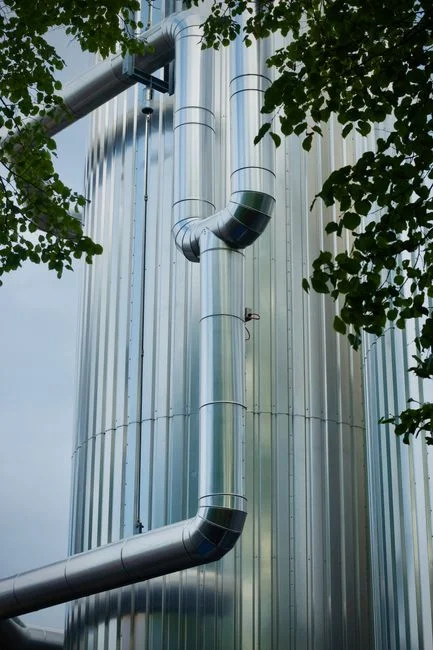
No treatment architecture is universally suitable: packaged A/O suits straightforward sewage treatment and constrained sites, MBR suits compact biological treatment and reuse-oriented effluent, and DAF becomes relevant when kitchen FOG materially affects downstream treatment. Match the route to the verified influent, discharge destination, footprint and operating capability rather than selecting on effluent claims alone.
| Architecture | Applicable site condition | Relevant supplied capability | Buyer check |
|---|---|---|---|
| Underground packaged A/O | Conventional sewage with limited pretreatment complexity and a constrained footprint. | The underground packaged sewage treatment plant combines anoxic/aerobic contact oxidation, sedimentation and disinfection; it handles 1–80 m³/h and can be installed below grade. | Confirm hydraulic peak, process loading, access and final-effluent requirements. |
| Integrated MBR | Compact biological treatment, restricted land or a potential near-reuse application. | The integrated MBR wastewater treatment system covers 10–2,000 m³/day, uses submerged PVDF membranes with filtration below 1 μm, and is stated to have a 60% smaller footprint than conventional systems. | Require the supplier to substantiate the footprint comparison and guarantee operating points. |
| DAF-assisted MBR | Kitchen-heavy property with material FOG, suspended solids or colloidal matter. | The DAF system for hotel kitchen FOG covers 4–300 m³/h across 13 models and is intended to remove suspended solids, FOG, oil and grease and colloidal matter before biological treatment. | Request the design flow, hydraulic loading, chemical dose and performance guarantee. |
For a kitchen-heavy resort, the 2026 reference train is rotary bar screen, equalization, DAF, MBR, chlorine dioxide and sludge dewatering. Simpler packaged arrangements may remain appropriate when the tested influent and reuse objectives permit them. The source also describes a DF Series flat-sheet alternative at 32–135 m³/day per module, with 80–225 m² configurations and stated energy consumption 10–20 times lower than external cross-flow systems. Require the supplier to provide the comparison basis, including system boundary, duty point and membrane configuration, before accepting that claim.
Size the plant using average flow, peak flow and equalization
Resort wastewater sizing should begin with occupied rooms or guest-nights, measured non-guest flows, average daily flow, peak factor and a project-engineer-selected design reserve. The 2026 source applies a 2.5× peak factor for the morning shower and breakfast turnover window. Equalization should damp that peak before it reaches downstream biology rather than allowing alternating starvation and overload.
| Sizing parameter | 2026 planning value | Application |
|---|---|---|
| Three- to four-star hotel flow | 180–220 L per guest-night | Initial accommodation-flow basis. |
| Upscale resort flow | 250–350 L per guest-night | Includes the source allowance for pools, spa and laundry. |
| Peak factor | 2.5× | Morning shower and breakfast turnover window. |
| Equalization | 8–12 hours of average flow | Buffering the diurnal peak and protecting biological treatment. |
| MBR flux | 15–22 LMH | Preliminary operating discussion across 0.1–0.4 μm PVDF modules. |
| MBS biological settings | MLSS 8,000–12,000 mg/L; SRT 20–30 days; HRT 6–8 hours | Supplier basis to reconcile with measured influent and site temperatures. |
The supplied footprint reference is 60–80 m² for a 100 m³/d packaged plant, including sludge storage, making land availability a material selection criterion for urban and resort sites. These values support preliminary comparison only. The DF MBR module details should be reconciled with the complete treatment train rather than treated as an independent capacity guarantee.
- Calculate accommodation flow from the selected guest-night basis.
- Add separately measured kitchen, laundry, pool, staff and service flows.
- Derive average daily flow and apply the peak factor.
- Provide 8–12 hours of average-flow equalization for hydraulic review.
- Check the selected process against measured loads and the preliminary MBR operating points.
- Validate the final design with current permit limits and a site-specific hydraulic design.
Every calculated result remains preliminary until measured flow, influent testing, the discharge permit and site hydraulics have been reviewed.
What will a hotel wastewater treatment plant cost in 2026?
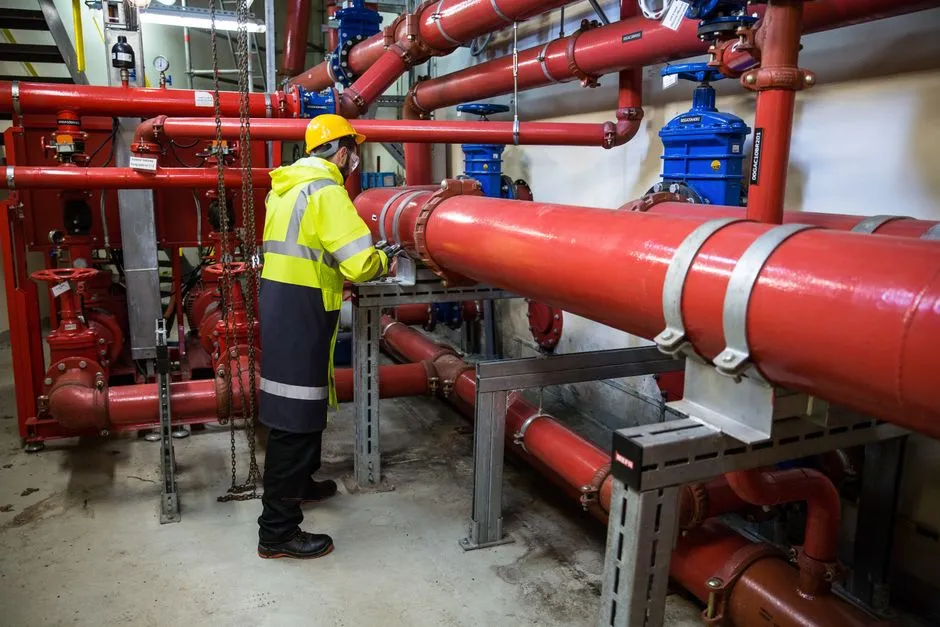
HydropureWater’s 2026 field-data estimate for a packaged MBR project in Cambodia is USD 25,000–60,000 per 100 m³/day of capacity, including civil works and installation. This is a project estimate for a defined MBR scope, not a universal package-plant price. A separate Cambodia location-hub screening benchmark of USD 500–1,500/m³/day applies to package plants and must be reconciled before comparison.
| Cost or performance item | Supplied value and scope | Procurement treatment |
|---|---|---|
| Packaged MBR capital estimate | USD 25,000–60,000 per 100 m³/day; 50–200 m³/d project range; civil works and installation included (HydropureWater field data, 2026). | Require an installed quotation with a defined capacity and scope schedule. |
| Location-hub package-plant benchmark | USD 500–1,500/m³/day (HydropureWater Cambodia location hub, 2026). | Use only for screening because its scope basis differs from the MBR estimate. |
| Membrane aeration | 0.4–0.6 kWh/m³ (HydropureWater, 2026). | Confirm aerator power, load and tariff assumptions. |
| Total operating cost | USD 0.35–0.55/m³ treated (HydropureWater, 2026). | Obtain the included utilities, chemicals, labour and sludge-disposal assumptions. |
| Reuse offset | 25–35 m³/d from a 100 m³/d MBR for landscape irrigation and cooling-tower makeup (HydropureWater, 2026). | Confirm demand, seasonal suitability and applicable public-health requirements. |
| Simple reuse payback | 3–5 years at stated Phnom Penh water tariffs of USD 1.00–1.50/m³ (HydropureWater, 2026). | Rebuild the calculation using the property’s tariff and bankable reuse volume. |
Do not merge the location hub’s stated COD removal of at least 90% or its modular 20–500 m³/h train claim into the MBR cost benchmark until it is clear that both describe the same plant scope and duty. Request written exclusions for equipment, civil works, installation, electrical supply, commissioning, training, chemicals, membrane replacement, sludge handling and utilities. The turnkey contractor buyer’s guide provides a useful contracting framework, while sludge handling should be priced explicitly rather than treated as incidental.
Build a compliance and operations plan before signing the order
A treatment proposal should convert performance claims into measurable acceptance criteria. The 2026 source lists hotel discharge targets of BOD₅ below 30 mg/L, COD below 50 mg/L, TSS below 50 mg/L and pH 6.0–9.0. Treat these as verification targets, not a substitute for the property’s current Ministry of Environment permit, because the source also reports that draft JICA technical standards were not yet gazetted.
| Compliance or process control | Source value | Required evidence |
|---|---|---|
| Effluent targets | BOD₅ <30 mg/L; COD <50 mg/L; TSS <50 mg/L; pH 6.0–9.0 | Current permit, test method, sampling point and acceptance procedure. |
| Chlorine dioxide | 2–5 mg/L dose; 0.2–0.5 mg/L residual in reuse loops | Installation configuration, dose control and residual monitoring. |
| DAF operation | 5–10 m³/m²/h hydraulic loading; 30–50 mg/L polymer; 0.03–0.06 air-to-solids ratio | Supplier design basis and site-specific performance test. |
| Enforcement context | 1.37 million m³ of illegal factory discharges identified during January–June 2025 inspections (Phnom Penh Post, cited in Mekong Eye, 2025-08). | Permit conditions, laboratory submissions, reporting and non-compliance procedures. |
Define monitoring for screens, pumps, DAF, membrane condition, aeration, disinfectant residual and sludge handling. The rotary mechanical bar screen, chlorine dioxide generation and sludge dewatering equipment should each be included in the operating philosophy rather than sold as disconnected items. Require commissioning records, operator training, membrane-cleaning instructions, emergency bypass planning, spare-parts availability and a defined chain for permit or laboratory submissions. The chlorine dioxide generator must be matched to the verified residual requirement, and the plate-and-frame filter press must match the expected sludge quantity and cake-disposal route.
Questions to ask wastewater treatment suppliers in Cambodia
A useful RFQ makes the supplier expose its assumptions before commercial terms harden. Require the design basis, calculations, guarantees and exclusions in writing.
- State the design flow in m³/day, the assumed guest-night flow, average and peak-flow calculation, equalization volume, and whether quoted capacity is an average or peak rating.
- Provide a guaranteed effluent schedule, compliance basis, test methods, sampling protocol, warranty conditions and exclusions. Replace any “zero-risk” statement with measurable acceptance criteria.
- Submit a source-separated flow diagram showing where kitchen FOG, laundry chemicals, pool water, residual chlorine and high-TDS drain-down enter or leave the treatment train.
- Provide membrane flux, MLSS, SRT and HRT assumptions, membrane warranty, expected cleaning frequency, replacement-price schedule and aerator power data.
- List CAPEX and OPEX exclusions, delivered and installed pricing in Cambodia, commissioning dates, operator training, remote support and local spare-parts availability.
Also ask who performs installation, electrical work, commissioning, laboratory sampling, operator training and permit correspondence. The automatic chemical dosing system should be specified around measured chemical demand, not included as an undefined accessory. Screening claims should also be checked against the criteria in the 2025 mechanical bar-screen selection guide.
Frequently Asked Questions
How much does hotel and resort wastewater treatment in Cambodia cost in 2026?
For a packaged MBR project, the supplied 2026 estimate is USD 25,000–60,000 per 100 m³/day, including civil works and installation, for a project in the 50–200 m³/d range (HydropureWater field data, 2026). The associated operating budget is USD 0.35–0.55/m³ treated. Request an installed quotation with an equipment, civil, electrical, commissioning, chemicals, membrane replacement, sludge-handling and utilities exclusions schedule before using these figures for a property budget.
How should I size a resort wastewater treatment plant?
Begin with 250–350 L per guest-night for an upscale resort with pools, spa and laundry, as a preliminary planning basis from the 2026 source. Add measured non-guest flows, calculate average daily flow and apply the source’s 2.5× peak factor. Provide 8–12 hours of average-flow equalization, then validate the result using measured flow, influent analysis, the current permit and site-specific hydraulics.
Should I choose MBR, packaged A/O or DAF-assisted treatment?
Choose packaged A/O where conventional sewage treatment, limited pretreatment complexity and a buried footprint dominate the decision. Use MBR where compact biological treatment and potential reuse quality justify the additional process requirements. Add DAF where tested kitchen FOG or colloidal loading requires removal before biology. Technology selection should follow wastewater composition, site constraints and the confirmed discharge or reuse specification—not a general claim that one route is superior.
What must be checked for a Ministry of Environment wastewater permit?
Confirm the property’s current permit, approved discharge route, sampling requirements and monitoring obligations with the relevant authority. The source’s verification targets—BOD₅ below 30 mg/L, COD below 50 mg/L, TSS below 50 mg/L and pH 6.0–9.0—must not be treated as site-specific approval. Use measured influent and effluent data, current permit conditions and documented sampling in the final compliance basis.
Related Equipment
- underground packaged sewage treatment plant — specifications, capacity range, and technical data