Why Phnom Penh Hotels Face a 2026 Compliance Cliff
Cambodia's first national sewage law — the Law on Wastewater Systems, adopted in December 2024 — imposes fines and prison sentences on non-compliant discharges, and the country has set a binding target to treat 50% of its wastewater by 2030 (Mekong Eye, 2025-08). On Koh Pich, the reclaimed commercial district where five-star hotels host ASEAN summits, black, foul-smelling canal water still snakes from hotel outfalls into the Mekong within meters of the riverbank, a daily sight for the Khmer Muslim fishing families who live there. The national baseline behind that scene is stark: Cambodia scored 0/100 on the 2024 Environmental Performance Index for wastewater treated to at least a primary standard, ranking 148th of 180 countries, and a 2019 Parliamentary Institute of Cambodia study cited by the Asian Development Bank estimated that only 9% of the country's wastewater is properly treated.
For a hotel or resort in Phnom Penh, the practical reality is that municipal sewer connection is not a near-term option. Until late 2023 the capital had no public sewage plant at all, and the 14 plants now under construction nationwide will not cover the central business district or Koh Pich within this decade. Phnom Penh's planned 282,000 m³/d capacity expansion sits in the 2031–2040 window (GGGI, 2025-03). Until that capacity is commissioned, every hotel not on a confirmed catchment must treat on-site — and the Ministry of Environment's January–June 2025 inspection campaign, which uncovered 1.37 million m³ of illegal factory discharges, signals that enforcement is no longer theoretical (Phnom Penh Post, cited in Mekong Eye, 2025-08).
What Flows Out of a Phnom Penh Resort
Packaged plants sized on a single "L per guest-night" number will underperform because a Phnom Penh resort mixes four sub-streams with distinct pollutant profiles. Quantifying each one is the only way to produce a defensible influent specification.
| Sub-stream | Typical source in a Phnom Penh resort | Key parameters |
|---|---|---|
| Guest-room sewage | Toilets, showers, hand basins across rooms | BOD 250–400 mg/L; TSS 200–300 mg/L; NH₃-N 20–40 mg/L |
| Kitchen and F&B | Restaurants, banqueting, in-room dining (heavy palm oil, fish-based sauces) | FOG 100–300 mg/L; temperature 35–45 °C; COD up to 1,500 mg/L |
| Laundry | In-house linen and uniform wash | TSS 200–500 mg/L; pH 9–11 from detergents; high temperature |
| Pool and spa backwash | Filter backwash, pool drain-downs | High TDS; residual chlorine 1–3 mg/L; low BOD |
A mid-size property such as the Plantation Urban Resort & Spa — two outdoor pools, multiple restaurants, an in-house spa, and full on-site laundry — generates all four streams simultaneously (theplantation.asia). Design numbers for a 3–4 star hotel run 180–220 L per guest-night; upscale resorts with pools, spa, and laundry push to 250–350 L/guest-night. A 2.5× peak factor must be applied for the morning shower and breakfast turnover window, and the tropical climate keeps influent at 28–32 °C year-round, which accelerates biological kinetics and septicization if the equalization stage is undersized.
The 2026 Packaged Treatment Train for Phnom Penh Hotels
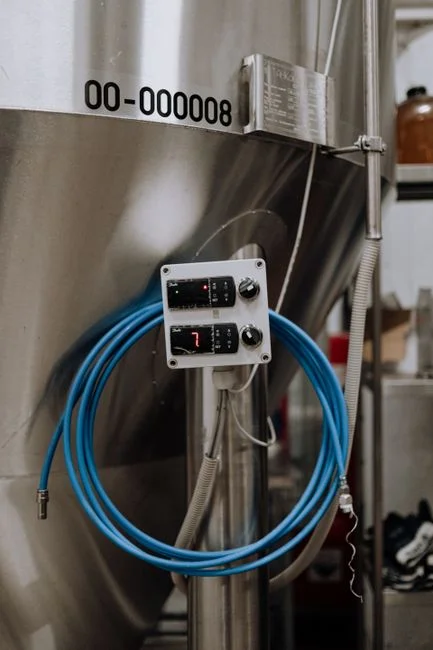
The defensible train for a 100–300-key Phnom Penh property in 2026 is a six-step packaged system. This configuration aligns with JICA-funded projects in Cambodia, including the 5,000 m³/d Choeung Ek plant completed in late 2023 (Mekong Eye, 2025-08), which serves as a model for the agency drafting Cambodia's 2026 national technical standards.
Step 1 — Rotary mechanical bar screen. A 3–5 mm aperture rotary mechanical bar screen removes rags, plastics, and hair before they reach the biological stage. Plastic-clogged pumps are a routine failure mode in Cambodian plants, and the screen is the primary protection against this.
Step 2 — Flow equalization. A buffer tank sized at 8–12 hours of average flow dampens the 2.5× diurnal peak from morning showers, breakfast service, and the laundry cycle. Without equalization, downstream biology is alternately starved and overloaded.
Step 3 — DAF for FOG and colloidal TSS. A DAF unit is required for any Phnom Penh hotel with a working kitchen. FOG loads from Cambodian kitchens — heavy palm oil, fish sauce, coconut cream — routinely hit 150+ mg/L, and FOG reaching the membrane tank will foul it within weeks.
Step 4 — MBR membrane bioreactor. The MBR membrane bioreactor is the core of the train: anoxic + aerobic zones followed by a submerged PVDF membrane at 0.1–0.4 μm. MBR delivers a roughly 60% smaller footprint than conventional activated sludge, which is critical on tight Phnom Penh urban plots, and produces near-reuse effluent on a single pass. Commissioning protocol for this stage is detailed in our MBR installation and commissioning 2026 guide.
Step 5 — ClO₂ disinfection. A ClO₂ generator replaces sodium hypochlorite. Cambodia's high-temperature water forms fewer DBPs with ClO₂, and ClO₂ remains biocidal across the 6–9 pH band typical of hotel effluent, where free chlorine loses efficacy.
Step 6 — Sludge dewatering. A small plate-and-frame filter press handles the waste activated sludge volume. The resulting cake can be co-disposed with hotel solid waste, avoiding liquid sludge haulage.
Design Parameters and Effluent Targets
EU Directive 91/271/EEC serves as the safe default for effluent design and WHO guidelines apply for any reuse tie-in, as Cambodia's draft JICA technical standards are not yet gazetted. The following table provides the specifications for a drawing set.
| Parameter | Influent target | Effluent target (2026 compliance) | Train step responsible |
|---|---|---|---|
| BOD | 250–400 mg/L | ≤ 20 mg/L | MBR |
| COD | 500–800 mg/L | ≤ 90 mg/L | MBR |
| TSS | 200–400 mg/L | ≤ 10 mg/L | DAF + MBR |
| FOG | 100–200 mg/L | ≤ 5 mg/L | DAF |
| NH₃-N | 20–40 mg/L | ≤ 5 mg/L | MBR (nitrification) |
| Fecal coliform | 10⁶–10⁷ CFU/100 mL | ≤ 200 CFU/100 mL | ClO₂ |
| pH | 6.5–8.5 | 6.5–8.5 | Equalization + MBR |
MBR design operating points: flux 15–22 LMH across 0.1–0.4 μm PVDF modules; MLSS 8,000–12,000 mg/L; SRT 20–30 days; HRT 6–8 hours. DAF hydraulic loading 5–10 m³/m²/h with 30–50 mg/L polymer dose and an air-to-solids ratio of 0.03–0.06. ClO₂ dose 2–5 mg/L as a tertiary polish, with a residual of 0.2–0.5 mg/L held in reuse loops. A 100 m³/d packaged plant fits inside 60–80 m² including sludge storage — feasible in a basement or service yard of a typical 100-key Phnom Penh hotel. The same logic applies to residential and mixed-use developments, as covered in our Cambodia residential wastewater treatment 2026 guide.
CAPEX, OPEX, and the Water-Reuse Payback
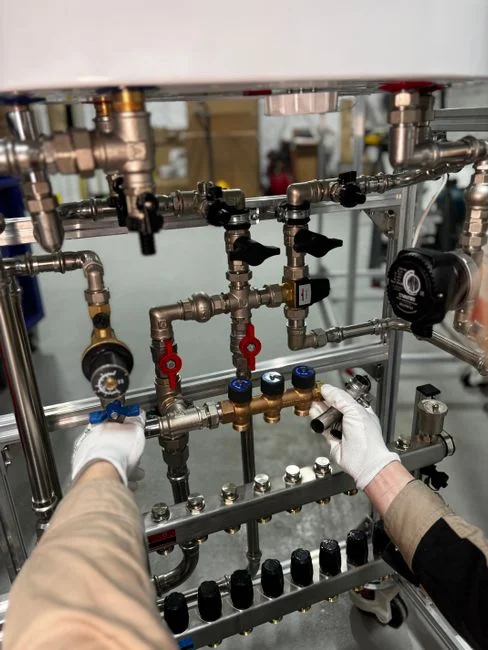
For a 50–200 m³/d packaged MBR plant in Cambodia, CAPEX runs USD 25,000–60,000 per 100 m³/d of capacity including civil works and installation (HydropureWater field data, 2026). OPEX is dominated by membrane aeration at 0.4–0.6 kWh/m³ and ClO₂ chemical cost; a realistic operating budget is USD 0.35–0.55 per m³ treated.
The financial case is driven by reuse. A 100 m³/d MBR typically offsets 25–35 m³/d of municipal water through landscape irrigation and cooling-tower makeup. At Phnom Penh commercial water tariffs of roughly USD 1.00–1.50/m³, the avoided water purchase compresses simple payback to 3–5 years, before any green-tourism or ESG marketing value is counted. A single non-compliance event under the December 2024 Law can trigger administrative fines and potential criminal exposure (Mekong Eye, 2025-08), so the MBR acts as compliance insurance. For a regional comparison of the same logic applied to Australian properties, see our Brisbane hotel wastewater treatment 2026 guide.
2026 Compliance Checklist for a Phnom Penh Hotel
Before signing a procurement order, a project manager should confirm the following:
- Verify the site is not on a confirmed municipal sewer catchment before sizing on-site treatment — most of Phnom Penh is not (Mekong Eye, 2025-08).
- Hold a pre-submission meeting with the Provincial Department of Tourism and the Ministry of Environment, as sub-decrees under the 2024 Law are still being drafted in 2026.
- Specify effluent quality to EU 91/271/EEC as the safe default until Cambodia's national technical standards are gazetted.
- Plan for a 12-month operating data log covering flow, BOD, TSS, FOG, and ClO₂ residual, ready for inspector review.
- Build in reuse tie-ins for landscape irrigation and cooling-tower makeup to convert the plant from a cost center into a water-saving asset.
Frequently Asked Questions
Does my Phnom Penh hotel legally need a wastewater treatment plant in 2026?
Yes. The Law on Wastewater Systems adopted in December 2024 requires treatment plants in urban areas and imposes fines and prison sentences for non-compliance, and Cambodia's national target is 50% of wastewater treated by 2030 (Mekong Eye, 2025-08). With most of Phnom Penh not on municipal sewer and the 282,000 m³/d expansion not arriving until 2031–2040, on-site treatment is the only compliant option.
What flow rate should I size for a 100-key resort?
Use 180–220 L per guest-night for a 3–4
Frequently Asked Questions
Does a hotel in Phnom Penh need a wastewater treatment plant in 2026?
Yes, under the Law on Environmental Protection and Natural Resource Management and the subsequent Sub-Decree on Water Pollution Control, all commercial facilities in Phnom Penh are legally required to treat wastewater before discharge into the public sewage system or natural water bodies. Hotels must ensure effluent meets the Ministry of Environment (MoE) standards to avoid heavy fines or suspension of operations.
What is the best wastewater treatment system for a resort in Cambodia?
For resorts in Cambodia, the Membrane Bioreactor (MBR) system is generally considered the most effective technology. MBR systems combine conventional biological treatment with membrane filtration, allowing for a high-quality effluent that is low in suspended solids and pathogens, which is critical for compliance in ecologically sensitive areas.
How much does it cost to install a packaged sewage plant for a 100-room hotel in Phnom Penh?
The installation of a packaged Wastewater Treatment Plant (WWTP) for a 100-room hotel typically ranges from $80,000 to $150,000 USD, depending on the daily flow capacity, which is generally estimated at 200 to 250 liters per guest per day. This cost includes civil works, mechanical equipment, and electrical installation, though operational expenses for electricity and sludge removal should be budgeted separately at approximately $0.15 to $0.30 per cubic meter treated.
Can treated hotel wastewater be reused for irrigation in Cambodia?
Yes, treated wastewater can be reused for landscape irrigation in Cambodia, provided it meets the Ministry of Environment’s standards for secondary or tertiary treated water. It is highly recommended to implement a dual-piping system to separate treated greywater from potable water lines, ensuring that the water quality remains consistent with the MoE guidelines for non-potable reuse to prevent public health risks.
What are Cambodia's 2024 wastewater law discharge limits for hotels?
Current discharge standards for hotels in Cambodia, as regulated by the Ministry of Environment, require effluent to maintain a Biochemical Oxygen Demand (BOD5) of less than 30 mg/L, Chemical Oxygen Demand (COD) below 50 mg/L, and Total Suspended Solids (TSS) under 50 mg/L. Additionally, pH levels must be maintained between 6.0 and 9.0, and Total Nitrogen and Phosphorus levels are increasingly monitored to prevent eutrophication in local waterways.