
Why a Phnom Penh housing project needs its own packaged STP in 2026
Phnom Penh still has no municipal sewage treatment plant, and the JICA 2016 master plan's first 5,000 m³/d stage is small against a forecast ~300,000 m³/d demand, so developers must treat on site. The drainage network was built in the early 1960s and "approximately 10%" of the city's effluent flows directly into the Mekong without any treatment, per Sovann et al. as reported in the PCSWMM study of south Phnom Penh (Sovann et al., via S1).
JICA's December 2016 proposal calls for a 282,000 m³/d central plant in four stages at about $450 million, with stage one only 5,000 m³/d and construction not recommended to begin before 2023; JICA project adviser Nishikawa Masashi describes that first stage as "very small with the size of this city" (S3, JICA briefing). The 19.7% statistic tells the rest of the story: of Phnom Penh's 92.9% of households with a toilet, only 19.7% have a septic tank — the rest discharge to drainage with no downstream treatment (S3, citing Cambodia's census agency). JICA therefore pairs the central plant with Johkasou decentralized units for a secondary zone covering about half the central population, and stand-alone septic tanks for the outer districts (S3). Because no Cambodian rule requires developers to install septic systems in new housing, the burden of providing defensible treatment falls on the project itself. The 2026 path is a packaged plant, not a tie-in to a network that does not yet exist. For broader technology and policy context across the country, the Cambodia residential wastewater engineering guide covers the same regulatory frame from a national perspective.
The 2026 effluent targets a packaged STP must hit in Cambodia
Sub-Decree No. 27 ANRK.BK is the binding instrument under the Ministry of Environment, and the design envelope the equipment must hit is a permit-defensible number set, not a vendor brochure. For residential and hotel projects, the limits typically applied by MoE in 2024–2025 permitting are BOD ≤30 mg/L, COD ≤120 mg/L, TSS ≤50 mg/L, TN ≤20 mg/L, and fecal coliform ≤200 CFU/100 mL for surface discharge (S4, MoE 2024–2025 practice). Reuse-targeted projects — landscape irrigation, toilet flushing, cooling-tower makeup — should design tighter, to roughly BOD ≤10 mg/L and TN ≤10 mg/L, and request a project-specific MoE letter because exact 2026 numerical limits are not published in one consolidated table and local interpretation varies by province (S4). For sites near Tonle Sap, the Mekong, or coastal Sihanoukville, the WHO 2006 Guidelines for Safe Use of Wastewater in Aquaculture remain the conservative fallback where MoE has not set a numerical limit for a specific parameter, with ASEAN marine water-quality criteria as a secondary benchmark for coastal discharge (S4). Because Cambodia does not yet require septic systems in new housing, self-imposing a defensible standard today avoids forced retrofits when MoE eventually tightens the rule. Treat 2026 design as the future retrofit baseline (S3, S4).
| Parameter | Typical MoE residential limit (surface discharge) | Reuse design target | Source |
|---|---|---|---|
| BOD | ≤30 mg/L | ≤10 mg/L | Sub-Decree 27 ANRK.BK framework; MoE 2024–2025 |
| COD | ≤120 mg/L | — | Sub-Decree 27 ANRK.BK framework |
| TSS | ≤50 mg/L | — | Sub-Decree 27 ANRK.BK framework |
| Total nitrogen | ≤20 mg/L | ≤10 mg/L | Sub-Decree 27 ANRK.BK framework |
| Fecal coliform | ≤200 CFU/100 mL | Non-detect (post-disinfection) | MoE 2024–2025; WHO 2006 for reuse |
Sizing the packaged STP for a typical Phnom Penh borey
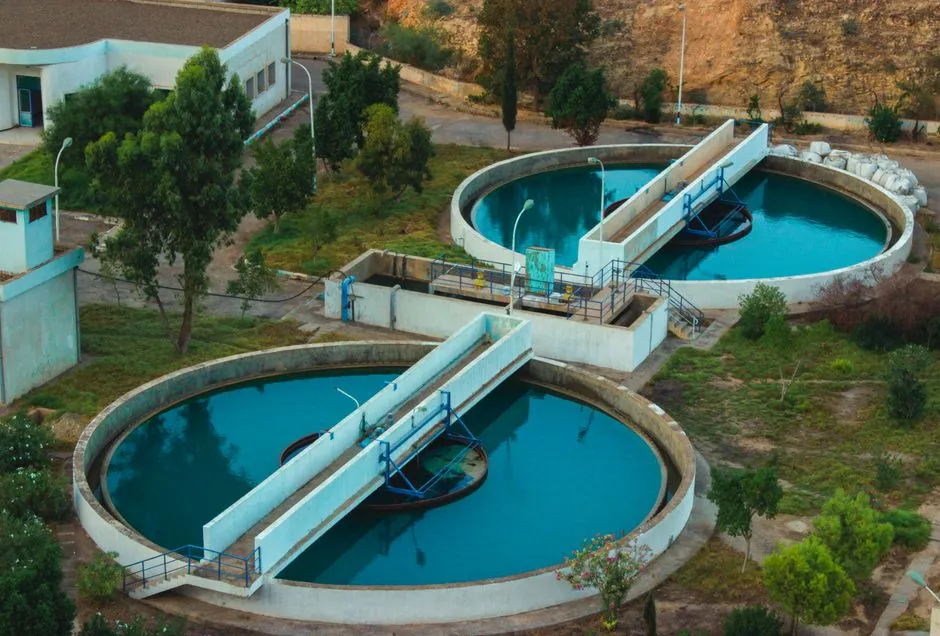
The number a developer needs is a working flow, not a vendor spec sheet. Without site sampling, the design envelope for a residential project is BOD 200–300, COD 400–600, TSS 200–400, NH3-N 20–40 mg/L, fecal coliform 10⁶–10⁷ CFU/100 mL, and per-capita flow of 150–200 L/person·day for residential, 250–350 L/person·day for hotels — refine with on-site sampling during commissioning (S4, typical engineering starting values). A worked example for a 200-home borey at 200 L/person·day and 4.5 persons per home yields roughly 180 m³/day, well inside the operating window of a single WSZ underground A/O package plant at 1–80 m³/h (S4). For the A/O contact-oxidation train, design HRT 6–10 hours, MLSS 3,000–5,000 mg/L, with expected effluent around BOD ≤20, COD ≤60, SS ≤20 mg/L — comfortably under the Sub-Decree 27 ANRK.BK BOD ≤30 mg/L surface-discharge limit (S4). When the project is a satellite-city master plan following the ING Holdings model, the sizing logic shifts to a hybrid: lot-level Johkasou plus a central package plant plus a retention/reuse pond tied to landscaping irrigation, the same configuration ING has built into the 2,572-hectare ING City south of Phnom Penh (S3, ING City self-contained utility model).
Comparing the four packaged options that fit a Phnom Penh housing project
The procurement shortlist narrows to four trains, and the variable that picks one is the dwelling count, the footprint budget, and whether reuse-grade effluent is in scope. Under 20 homes on peri-urban land, a septic tank plus soak pit — sized per the per-home environmental load methodology in ASTM E2717-18 — is the lowest CAPEX option and is compliant with MoE practice when designed against Sub-Decree 27 ANRK.BK (S4). For 20–500 homes, two workable paths exist: Johkasou decentralized A/O units at household scale, which match the JICA recommendation for a secondary zone, or a single buried WSZ underground A/O package plant at the development boundary that concentrates O&M under one contract (S3, S4). At 500+ homes, or for any project with an irrigation, toilet-flush, or cooling-tower reuse requirement, step up to an MBR membrane bioreactor system with 0.1 µm PVDF submerged membranes, HRT 4–6 hours, ~60% smaller footprint than conventional activated sludge at the 10–2,000 m³/day band, and effluent SS ≤1 mg/L (S4). A satellite-city master plan runs a hybrid — lot-level Johkasou, central WSZ or MBR, and a reuse/retention pond (S3). For coastal, lake-adjacent, or reuse-distribution sites, add a chlorine dioxide generator sized 50–20,000 g/h, because ClO₂ holds residual longer than chlorine in hot tropical distribution and avoids the THM formation seen with high-organic effluents (S4).
| Dwelling count / project type | Recommended train | Footprint and O&M notes | Effluent class |
|---|---|---|---|
| Single villa or <20-home cluster | Septic tank + soak pit (ASTM E2717-18) | Lowest CAPEX, no aeration power, soil disposal | Soil disposal (no surface-discharge compliance) |
| 20–500 home borey | Johkasou decentralized OR single WSZ A/O package plant | One O&M contract option; landscaping preserved above tank | Surface discharge (BOD ≤20 mg/L) |
| 500+ homes, mid-rise, hotel, or any reuse requirement | MBR with 0.1 µm PVDF membranes | ~60% smaller footprint than CAS; HRT 4–6 h | Reuse-grade (irrigation, toilet flush, cooling) |
| Satellite-city master plan (e.g., ING City model) | Hybrid: lot-level Johkasou + central WSZ or MBR + reuse/retention pond | Two-site redundancy, independent of municipal network | Surface + reuse |
| Coastal, lake-adjacent, or reuse-distribution site (any size) | Add ClO₂ generator to whichever train is selected | ClO₂ sized 50–20,000 g/h; holds residual in hot distribution | Pathogen-controlled for reuse or sensitive receiving water |
Phnom Penh-specific site constraints that decide the equipment shortlist
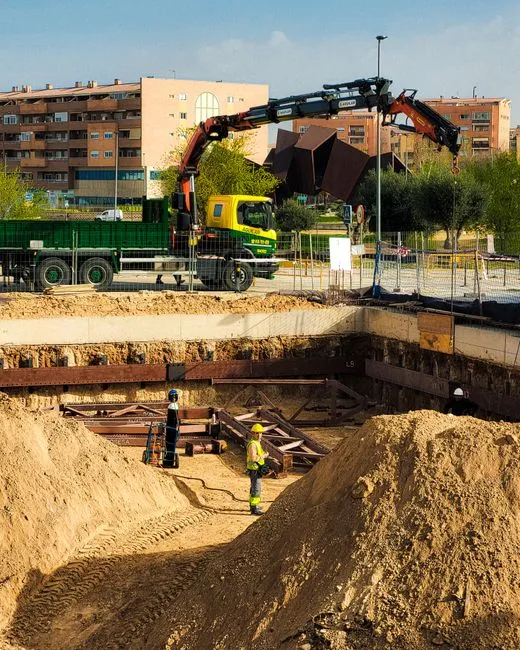
Three Phnom Penh-only constraints — monsoon flooding, wetland loss, and grid stability — should be written into the equipment spec, because they are the difference between a plant that runs and a plant that does not. Monsoon flooding is the first: roughly $100 million of drainage work since the 1990s has cut serious flooding in Phnom Penh from more than two hours to 20–60 minutes in most improved areas, but new sites on low-elevation outer districts still pond (S3, JICA adviser). Specify fully buried (WSZ design) or raised on a plinth above the 100-year flood line — not half-buried, which is the most common failure mode. Wetland loss is the second: a 2015 STT study of 25 Phnom Penh lakes found 15 had been filled in and another 8 partially filled — a 60% loss of natural wastewater buffering — so the site must build in retention volume of 6–12 hours of peak wet-weather flow, because the natural buffering lake is no longer downstream (S3, S4). Power is the third: outside Phnom Penh and Sihanoukville, grid stability is unreliable; specify PLC with auto-restart after power loss and either an on-site genset or solar buffering sized to cover the aeration blower load for at least a 4-hour outage (S4). The aeration blower is the load that matters most — without it, the A/O train fails. Pair this with an automatic chemical dosing system sized to the disinfection train, because hand-dosing does not survive a multi-day outage.
Order-of-magnitude CAPEX shape for a Phnom Penh housing STP
For an in-house budget conversation, the defensible cost references are city-scale, not housing-project, and the housing-scale decision is driven by train selection, not by city-plant CAPEX. Sovann et al. estimate a city-scale activated-sludge plant treating 58,500 m³/d in Phnom Penh at about $49.1 million in construction cost and $0.82 million in annual O&M, with electric consumption on the order of 15,912 kWh/d — useful only as a city-scale reference (S1, Sovann et al. PCSWMM study). JICA's 2016 proposal sized the first 5,000 m³/d stage of the central plant at roughly $50 million; the full 282,000 m³/d plant is $450 million in four stages (S3, JICA briefing). For housing-scale decisions, the practical question is which decentralized train (septic-plus-soak-pit, Johkasou, WSZ A/O, MBR) fits the dwelling count and footprint budget; the city-plant CAPEX is not a per-home benchmark. Cross-check the equipment vendor's TCO breakdown at the proposal stage, and reference a comparable ASEAN methodology such as the Chittagong housing STP selection guide for an order-of-magnitude TCO shape against a regional peer.
Frequently Asked Questions
What order-of-magnitude CAPEX should a Phnom Penh housing developer plan for a packaged STP?
The research does not quote a per-home or per-m³/day housing-scale vendor price. As reference points, the JICA 2016 stage-1 estimate is roughly $50 million for 5,000 m³/d, and the Sovann et al. PCSWMM study estimates a 58,500 m³/d activated-sludge plant at about $49.1 million construction and $0.82 million annual O&M (S1, S3). For an in-house budget, request a TCO breakdown from shortlisted vendors at the proposal stage rather than extrapolating from the city-scale number, and ask the vendor to break out the per-m³/day packaged-plant CAPEX and OPEX for the project's design flow.
Which supplier selection criteria protect a Phnom Penh project from forced retrofit?
Require evidence that the proposed train can meet Sub-Decree 27 ANRK.BK typical limits — BOD ≤30, COD ≤120, TSS ≤50, TN ≤20 mg/L, fecal coliform ≤200 CFU/100 mL — and ask the vendor for a project-specific MoE letter before signing (S4, MoE 2024–2025 practice). Also confirm the unit is either fully buried or plinth-raised above the 100-year flood line, and that the PLC auto-restarts after a power loss of at least four hours (S3, S4). These three checks are the minimum specification of a defensible supplier for Phnom Penh 2026 permitting.
Does a Phnom Penh developer have to install a septic system or STP by law?
No. There is no requirement that developers include septic systems when planning new housing or commercial projects, and many do not (S3). However, because the JICA central plant is not expected to be operational at scale within the 2026 planning horizon, the practical burden of providing defensible treatment falls on the project. Self-imposing a defensible standard today avoids forced retrofits when MoE eventually tightens the rule (S3, S4).
What influent values should the design be sized to without on-site sampling?
Without site-specific sampling, design to the standard domestic sewage envelope of BOD 200–300 mg/L, COD 400–600 mg/L, TSS 200–400 mg/L, NH3-N 20–40 mg/L, fecal coliform 10⁶–10⁷ CFU/100 mL, and per-capita flow of 150–200 L/person·day for residential, 250–350 L/person·day for hotels (S4, typical engineering starting values). Refine with on-site sampling during commissioning, because the starting values are conservative envelopes, not measured site data.
Related Equipment
- MBR membrane bioreactor system — specifications, capacity range, and technical data