Which contaminant fraction should decide the equipment?
Mining wastewater treatment begins with separating the dominant contaminant fraction rather than naming a preferred machine. Dense mineral fines, tailings residues and metallurgical sludge generally belong in a gravity clarifier; emulsified oil, residual flotation reagents, conditioned colloids and low-buoyancy precipitates are stronger DAF targets. Dissolved metals remain outside both mechanisms until treatment chemistry converts them into particles that can be settled or floated. For mixed streams, the defensible arrangement is usually bulk clarification followed by DAF polishing.
A clarifier separates by gravity. Particles with a specific gravity greater than water settle, sludge is withdrawn from the bottom, and clarified water overflows. Inclined lamella plates increase effective settling area within a smaller footprint, but they do not change the fundamental mechanism. A high-rate lamella clarifier for mineral fines therefore addresses the settleable bulk load, not emulsions or dissolved metals.
DAF is micro-bubble flotation. Part of the clarified stream is pressurized and saturated with air; after depressurization, bubbles attach to floc and carry it to a surface blanket removed by a skimmer. Clearwater Industries describes the bubbles as 30–50 microns, with attachment to oil droplets, flocculated particles and other floating or low-buoyancy impurities (Clearwater Industries, Dissolved Air Flotation for Industrial Wastewater Treatment, accessed 2026).
The boundary is equally important. Fluence states that DAF is not well suited to high levels of heavier non-floating particles such as silt and clay (Fluence, What Is Dissolved Air Flotation?, cited in HydropureWater’s 2026 mining-wastewater application note). Heavy particles must first be removed or separated from the flotation feed.
For metals, pH and oxidation conditions may create particulate hydroxides or other precipitates, but soluble species cannot be lifted directly by either a clarifier or an industrial mining wastewater DAF system. Identify whether the metal is dissolved, colloidal or particulate before assigning removal duty.
DAF versus clarifier: what each mechanism can remove
Clarifier selection is governed by particle settleability, surface overflow rate and sludge-withdrawal design; DAF selection is governed by the contaminant’s flotation behavior after conditioning and by the available air-to-solids relationship. The mechanisms should therefore be compared by function, not by generic contaminant labels.
| Decision factor | Clarifier | DAF |
|---|---|---|
| Primary mechanism | Gravity settling | Micro-bubble flotation |
| Best-fit material | Dense mineral fines, tailings and metallurgical sludge with specific gravity greater than water | Emulsified oils, flotation reagents, biological flocs, low-buoyancy precipitates and conditioned colloids |
| Critical operating input | Required surface overflow rate and verified settling behavior | Separation loading, recycle flow, air supply and chemical-conditioned floc behavior |
| Available catalog information | HydropureWater’s lamella clarifier catalog lists surface loading rates of 20–40 m/h; this is a product design range, not a guaranteed mining-stream rate (HydropureWater, 2026). | HydropureWater’s DAF catalog covers 4–300 m³/h across 13 standard models; application-specific sizing remains necessary (HydropureWater, 2026). |
| Main boundary | Colloidal, oily and dissolved fractions may pass through | High silt and clay loads are poorly suited to flotation (Fluence, cited in HydropureWater, 2026) |
| Sludge route | Underflow normally requires handling and dewatering | Floated blanket is skimmed; settled solids may also collect in a bottom compartment. Clearwater Industries states that well-conditioned sludge may need little or no further dewatering (Clearwater Industries, accessed 2026). |
| Startup condition | No equivalent clean-water priming requirement identified in the supplied research | Clean water must be available for pressurization and air-saturation startup (Clearwater Industries, accessed 2026) |
HydropureWater’s high-efficiency lamella sedimentation tank is relevant where footprint is constrained and mineral solids settle reliably. It is not a substitute for flotation when emulsions, colloids or light precipitates remain.
DAF handles the complementary fraction more effectively, but it also introduces a recycle loop, air-saturation equipment and chemical conditioning. Its startup sequence requires clean clarified water; filling an operating DAF with untreated wastewater can release non-clarified water and stress the recirculation and saturation systems (Clearwater Industries, accessed 2026).
For a combined treatment train, the clarifier reduces the dense-solids burden before DAF. DAF then captures the buoyant and conditioned carryover. Neither unit makes dissolved metals removable unless upstream chemistry has converted them into a particulate form.
Use a stream-by-stream decision framework
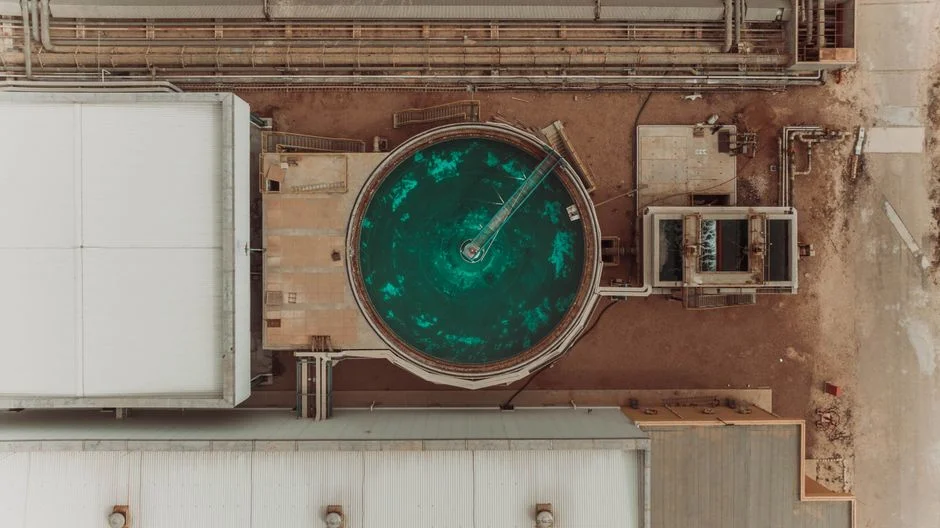
The preliminary selection becomes defensible when each wastewater source is evaluated separately. Tailings-thickener overflow, mill discharge, equipment runoff, vehicle-wash water and metal-finishing rinse water can have unrelated flow, solids and chemistry, so combining them into one average flow can conceal the fraction that determines equipment performance.
| Observed stream condition | Preliminary choice | Engineering check before procurement |
|---|---|---|
| Dense, rapidly settling mineral fines or tailings dominate | Conventional or lamella clarifier | Run settleability tests; establish required surface overflow rate, underflow solids target and sludge-withdrawal arrangement |
| Emulsified oil, reagent carryover, colloids or fine precipitates dominate after conditioning | DAF | Confirm pH and coagulation, flocculation, flotation loading, recycle system and clean-water availability |
| Both dense and buoyant or colloidal fractions are significant | Clarifier followed by DAF | Check whether upstream screens, equalization or solids removal are needed before flotation |
| Water must be reused | Treatment train including downstream solids separation as required | Include filtration or membrane polishing in the preliminary scope rather than treating DAF effluent as automatically reusable |
Use an ordered review:
- Split the sources. Measure flow and chemistry by production condition, including peak, minimum and seasonal flows.
- Characterize each fraction. Measure TSS, particle-size distribution, settleability, pH, oil and grease, and dissolved metals.
- Test the chemistry. Jar testing should establish pH adjustment, coagulant, flocculant and mixing requirements.
- Select the mechanism. Use bulk clarification for dense solids and DAF for buoyant or conditioned solids.
- Complete the train. Include sludge removal, dewatering and reuse filtration where required.
A PLC-controlled coagulant and flocculant dosing system can reproduce the conditions established in testing, but its feed rate, tank residence time and mixer arrangement remain site-specific.
Do not transfer chemical doses between industries. The Logan, Utah study reported an optimum aluminum-sulfate dose of 30 mg/L for algae and phosphorus removal in lagoon effluent (Elder, Utah State University, 2011). That result defines neither a mining dose nor a default for the site.
Build the treatment train before sizing the tank
An integrated treatment train should be designed before a clarifier or DAF capacity is fixed. The preliminary sequence is equalization and screening, solids or grit removal where needed, pH adjustment and coagulation, flocculation, bulk clarification, DAF polishing, further solids separation where required, and sludge dewatering.
Chemical conditioning may use flash-mixing flocculation tubes or impeller mix tanks. Clearwater Industries states that flocculation tubes provide 15–45 seconds of flash mixing, while mix tanks permit longer contact where the chemistry requires it; the appropriate time must be established through jar testing (Clearwater Industries, accessed 2026).
DAF startup must begin with clean water because the recirculation pump draws clarified effluent for pressurization and air saturation. Untreated wastewater should not be used to prime the loop because it can discharge non-clarified water and impose unnecessary load on the pump and saturation system (Clearwater Industries, accessed 2026).
| Train element | Design basis or procurement input |
|---|---|
| Equalization and screening | Source-by-source flow range, peak solids, grit and debris characteristics |
| Chemical conditioning | Jar-test results, pH control, coagulant and flocculant selection, mixing method and contact time |
| Clarifier | Particle settleability, required surface overflow rate, sludge target and withdrawal design |
| DAF | Influent solids after clarification, conditioned floc properties, air-to-solids relationship, recycle flow and clean-water availability |
| Reuse or discharge polishing | Target water quality and required filtration or membrane performance |
| Sludge handling | Clarifier underflow and DAF float characteristics, dewatering objective and disposal route |
HydropureWater’s ultrafiltration system lists 2,000–40,000 L/h capacity, 0.03-micron PVDF membranes and influent turbidity up to 300 ppm (HydropureWater, 2026). These are catalog parameters, not guarantees for mining effluent. Similar caution applies to the sludge filter press for mining wastewater solids: the catalog offers filtration areas from 1 m² to 500 m², but press size and cycle must follow actual sludge characteristics.
Price chemical consumption, aeration, pumping, sludge dewatering, controls and maintenance as one lifecycle scope. A thick floated sludge can reduce downstream handling, but that benefit must remain conditional until the conditioned waste is tested.
What data should enter the RFQ and pilot study?
A comparable RFQ requires the same characterization package and treatment objectives from every bidder. Asking only for peak daily flow and average TSS is not sufficient to select either mechanism because both hydraulic loading and contaminant behavior govern the result.
| RFQ package | Required information | Supplier response required |
|---|---|---|
| Hydraulics | Operating, peak, minimum and seasonal flows by source | Clarifier surface overflow rate and DAF separation-loading calculation |
| Solids | TSS, particle-size distribution, settleability, grit and sludge characteristics | Equipment dimensions, loading basis and sludge-withdrawal concept |
| Chemistry | pH, temperature, oil and grease, flotation-reagent carryover, colloids, copper, lead, zinc and other relevant metals | Conditioning chemistry, mixing arrangement and pH-control approach |
| Objectives | Current discharge or process-reuse target | Treatment train, final polishing and compliance basis |
| Verification | Bench-scale jar-test results; pilot data where chemistry or loading varies | Proposed test protocol, acceptance criteria and performance reporting |
Ask clarifier bidders to calculate the required surface overflow rate from measured settling behavior and to show how sludge withdrawal prevents accumulation. The supplied research does not establish a universal DAF loading value; DAF bids should therefore disclose the separation-loading basis, air-to-solids relationship, recycle rate and chemical-conditioning assumptions.
Jar testing is the minimum chemical-development step. Pilot testing is appropriate where solids loading varies, the floc is fragile, the chemistry is complex or the result must be demonstrated at representative flow.
Supplier documentation should include comparable metal-bearing applications, commissioning records, automated dosing support, corrosion-resistant construction selected for the actual water chemistry, and compliance with the destination country’s current permit. The mining and metals wastewater pretreatment requirements should be treated as a project-specific input rather than a substitute for the applicable permit.
How Balkan and United States projects differ
Regional procurement differs mainly in the compliance basis, permit authority and supporting documentation—not in the basic physics of clarification or flotation. The buyer should identify the jurisdiction before freezing the treatment specification.
| Project check | United States | Balkan jurisdiction |
|---|---|---|
| Regulatory basis | Confirm applicable federal, state and local discharge or sewer-prerequisite requirements, including 40 CFR Part 436 where applicable to ore mining and dressing. | Identify the country, receiving authority, discharge permit, sewer agreement and any water-abstraction conditions; no single Balkan limit should be assumed. |
| Bid compliance package | Require permit-specific design basis, applicable United States standards, commissioning evidence and operating documentation. | Require the identified country and authority’s requirements, local documentation and defined interfaces with the receiving utility or authority. |
| Materials and support | Specify corrosion-resistant construction for the analyzed chemistry, controls support, training and spare-parts availability. | Specify corrosion-resistant construction, local service capability, commissioning support and spares availability. |
| Commercial comparison | Normalize installed scope and lifecycle operating costs. | Normalize installed scope and lifecycle operating costs, including local implementation requirements. |
For acidic or abrasive slurries, material selection should follow the complete water chemistry, including temperature, chlorides, acidity and abrasiveness. A flow sheet alone is insufficient evidence for a coating or alloy decision.
Ask for comparable metal-bearing references, documented pilot data, ISO 9001 certification where claimed, commissioning support, operator training, spares and local service. Compare bids on total installed and lifecycle scope: chemicals, air and pumping energy, sludge dewatering, controls, maintenance, training and service.
The practical regional difference is documentary. A United States bid may need to demonstrate alignment with a defined federal and local framework; a Balkan bid depends on the selected country, permit and receiving authority. Neither permits a generic “compliant” statement.
Avoid the most costly selection errors
The most expensive errors occur when a supplier’s generic removal table is treated as a site-specific performance guarantee. The supplied research supports a clear sequence of exclusions.
- Do not select DAF for a high silt or clay load. Fluence identifies heavy, non-floating particles as poorly suited to DAF (Fluence, cited in HydropureWater, 2026).
- Do not rely on clarification alone for colloidal metals, emulsified oils or low-buoyancy precipitates. Those fractions may pass through a gravity unit.
- Do not copy another plant’s chemical dose. The 30 mg/L aluminum-sulfate optimum reported by Elder in 2011 applied specifically to algae and phosphorus removal in Logan, Utah.
- Do not omit reuse polishing. DAF effluent may still require filtration or membranes before reuse or discharge, as noted in the HydropureWater 2026 application note.
- Do not omit sludge handling. Clarifier underflow, DAF float and filter-press disposal must appear in the capital and operating-cost comparison.
- Do not compare unequated quotations. Normalize materials, conditioning, controls, sludge handling, utilities, commissioning, training and local service.
Unsupported 2026 unit prices, universal performance guarantees and cross-application chemical doses should be rejected during commercial review. The DAF versus clarifier for chemical wastewater comparison can provide a useful second check, but the mining stream still governs the selection.
Frequently Asked Questions
What is a reliable 2026 budget for DAF versus a clarifier?
The supplied research does not establish a dependable 2026 unit price for either equipment type. Request a budgetary quotation tied to source-by-source flow, TSS, contaminant fractions, chemical conditioning, materials, controls, sludge dewatering, utilities, commissioning and local service. Compare total installed scope rather than tank price alone.
How should DAF and clarifier capacity be sized?
Size a clarifier around measured settleability, required surface overflow rate and sludge-withdrawal design. Size DAF around post-clarification solids loading, chemical-conditioned floc behavior, flotation loading, air-to-solids relationship and recycle-system demand. Do not assign a universal DAF loading value from a generic catalog.
What should a supplier demonstrate before selection?
Ask for comparable metal-bearing effluent references, pilot data where available, materials documentation matched to the water chemistry, ISO 9001 certification if claimed, commissioning support, automated dosing capability, operator training and local spare-parts service. Verify each claim against documents rather than accepting it as a specification line.
How do permit and reuse targets affect the final equipment train?
Permit and reuse targets determine whether clarification alone is sufficient and whether filtration or membrane polishing is required. A clarifier can carry colloidal or oily metals into the discharge stream, while DAF does not automatically make every effluent reusable. The DAF design for oil-bearing industrial wastewater illustrates why the mechanism must be matched to the actual contaminant and final target.
Can DAF be added after an existing clarifier?
Yes, but only after checking hydraulic capacity, clean-water availability, chemical conditioning, sludge removal and controls. Do not assume the existing clarifier can accept additional loading. For regional sizing and integration questions, including the context of DAF capacity for an industrial wastewater plant, use site-specific data rather than another plant’s nominal rate.