
Start With the Naypyidaw Sewer Connection Decision
Domestic sewage treatment in Naypyidaw should begin with a written connection-and-capacity check, not an equipment catalog. HydropureWater’s local planning basis states that the municipal plant has a capacity of 1,600 m³/day (423,000 US gpd), was built in 2006 for domestic sewage, and covers less than 10% of current industrial demand. If the authority will not confirm capacity and sign discharge acceptance conditions, the project should move to an onsite underground WSZ package sewage treatment plant, compact MBR wastewater treatment system, or nature-based decentralized treatment evaluation.
The reported coverage figure applies to industrial demand; it does not demonstrate spare residential or commercial capacity. A developer should therefore request a sewer-availability letter identifying the connection point and receiving works, written approval for the proposed flow allocation, and discharge acceptance conditions covering flow, wastewater characteristics, monitoring, sampling, and permitted receiving route.
The same approval package should establish who pays for the connecting sewer, pumping, road restoration, metering, pretreatment, and other capital works. It should also identify connection fees, recurring tariffs, minimum take-up requirements, and whether the utility will accept the project’s peak discharge during commissioning.
Do not classify a development as sewer-served because a municipal plant exists within the city. Without a signed acceptance agreement, downstream spare capacity and connection rights remain unverified. Treat the project as decentralized until the utility confirms the specific flow allocation and discharge route in writing. This decision should precede technical selection because it determines whether collection-network costs and tariffs belong in the project budget at all.
What Myanmar Research Says About Decentralized Sewage Treatment
The 2023 Yangon case study found that decentralized wastewater treatment ranked first under Weighted Sum Methods in three sustainability scenarios, covering environmental, social, economic, and technical assessments. This is Myanmar evidence, but it is evidence from Yangon rather than direct proof of performance or acceptance in Naypyidaw. It supports evaluating decentralized treatment; it does not replace a Naypyidaw feasibility study, land review, or permit determination.
The same study reported that Yangon’s centralized system served seven townships but handled only 7% of city wastewater. It also found that 80% of households used septic tanks, 10% of households in cities used DEWATS, and 3% used unimproved pit latrines. These figures show the importance of onsite and decentralized arrangements, but they describe Yangon’s service pattern and should not be transferred directly to a Naypyidaw development.
Academic research on small domestic sewage plants also identifies septic tanks and drainage wells as options where space is limited and no centralized sewer exists. The 2018 study by Kyriienko, Betin, and Kuznetsova describes gravity collection without electricity for those arrangements. Such systems still require site-specific evaluation of soil, groundwater, drainage capacity, maintenance access, and the legal disposal route.
Nature-based treatment has a similarly conditional case. The IntechOpen study “Application of Vermifiltration for Domestic Sewage Treatment” describes vermifiltration as combining filtration with earthworms, with potential for decentralized deployment and less specialized operating expertise. Climate, geology, vector control, odor, sludge handling, operator capability, and final-discharge requirements still require validation. The broader 2026 domestic sewage treatment equipment comparison can help frame technology choices, but its examples are not evidence of Naypyidaw operating conditions.
Build a Domestic Wastewater Design Basis
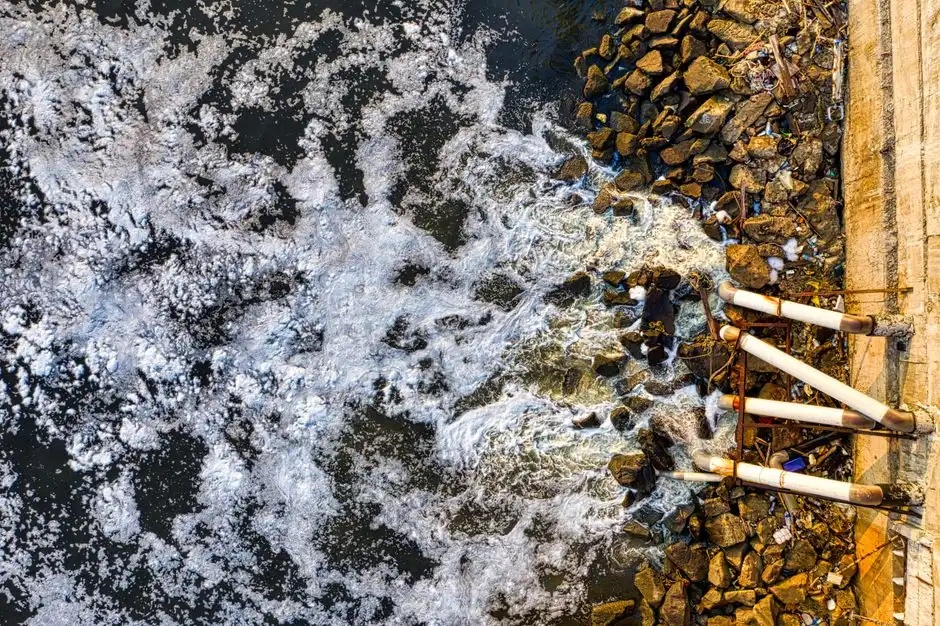
A defensible domestic sewage design flow comes from measured site demand and a defined process sequence, not from a catalog capacity. The normal sequence is domestic collection, headworks and flow equalization, biological treatment, solids separation, disinfection, and then reuse or permitted disposal. Each stage needs a duty basis, and any gap or bypass must be visible in the process diagram.
Request average daily flow, peak-hour flow, occupied population, operating hours, groundwater infiltration, and separate loads from kitchens, laundries, clinics, laboratories, or other non-domestic units. Sample at peak demand and characterize BOD, COD, TSS, ammonia, pH, total coliforms, and any project-specific contaminants. The mechanical bar screen for preliminary solids removal and automatic chemical dosing system should be evaluated only after those loads and treatment objectives are known.
- Define the receiving route: municipal discharge, surface-water discharge, irrigation or reuse, or land-based disposal.
- Confirm the applicable domestic effluent permit, sampling point, reporting frequency, and discharge restrictions with the relevant authority.
- Record site constraints: footprint, burial depth, flood level, soil permeability, access for maintenance, power quality, standby-power need, and the permitted sludge route.
- Define the solids plan, including generation, stabilization, dewatering, storage, and authorized disposal.
| Design input | Evidence required from the buyer or site | Why it changes the selection |
|---|---|---|
| Domestic sewage design flow | Measured average flow, peak-hour flow, operating profile, and contributing population | Sets hydraulic and biological capacity and equalization requirements |
| Wastewater characteristics | Peak-demand laboratory results for BOD, COD, TSS, ammonia, pH, and coliforms | Determines biological loading, pretreatment, disinfection, and reuse criteria |
| Receiving route | Approved discharge point and current domestic permit conditions | Sets the required treatment performance and monitoring route |
| Site and utilities | Survey, flood level, access, power supply, backup-power requirement, and sludge route | Determines installation method, footprint, operability, and lifecycle cost |
| Non-domestic loads | Kitchen, laundry, clinical, and disinfection wastewater characteristics | May require separate pretreatment rather than dilution into the sanitary stream |
Keep domestic requirements separate from industrial guidance. HydropureWater’s 2025 industrial guide cites Myanmar EPA draft industrial limits of TSS below 50 mg/L, BOD below 30 mg/L, and COD below 125 mg/L. Those are draft industrial values, not confirmed domestic limits, and must not be inserted into a domestic permit specification without authority confirmation.
Compare Package Plant, MBR and Nature-Based DEWATS
The WSZ package, MBR, and nature-based DEWATS solve different project constraints: integration and compactness, tighter solids separation and reuse potential, or decentralized operation with land-based treatment. The correct comparison starts with verified process scope, audited demand, receiving conditions, and the operator available after handover.
The verified WSZ architecture combines anoxic/aerobic A/O biological contact oxidation, sedimentation, and disinfection in one buried package. HydropureWater’s verified product catalog describes it as fully automated, with a capacity range of 1–80 m³/h, for residential communities, hotels, hospitals, factories, and rural sites. It suits sites seeking integrated domestic stages with limited above-ground footprint. “Fully automated” does not remove the need for local inspection, maintenance, and responsible sludge handling.
The verified MBR architecture combines activated sludge with submerged PVDF membranes and covers 10–2,000 m³/day in the catalog description. The product description states filtration below 1 μm and a footprint advantage of 60% against conventional systems. These are product-catalog claims, not guaranteed site outcomes. MBR is more appropriate where tighter solids separation, reuse potential, or land constraint justifies membrane operation, fouling control, qualified staffing, and replacement planning.
Nature-based DEWATS uses biological and soil-based processes. The IntechOpen vermifiltration study supports decentralization and reduced specialist-expertise requirements, but it does not remove site validation. DEWATS becomes more credible where land, climate, geology, local operating support, vector control, and the permitted disposal route are compatible with the selected process.
| Decision factor | WSZ package | MBR | Nature-based DEWATS |
|---|---|---|---|
| Verified source scope | Buried A/O contact oxidation, sedimentation and disinfection; 1–80 m³/h | Activated sludge with submerged PVDF membranes; 10–2,000 m³/day | Research-supported decentralized and vermifiltration options; site design required |
| Primary attraction | Integrated domestic stages in one buried package | Tighter solids separation, reuse potential and compact integration | Decentralized treatment with a lower-complexity operating model |
| Main constraints | Burial design, equalization, aeration, access covers and local operation | Flux control, aeration, cleaning, replacement and trained operation | Land, geology, climate, vectors, odor, solids and local support |
| Selection trigger | Domestic package with limited surface footprint is required | Land is tight or reuse quality must be demonstrated | Land-based treatment is feasible and operators can sustain it |
| Evidence caution | Performance must be demonstrated under project flow and load | Catalog claims do not replace acceptance testing | Yangon and vermifiltration findings do not establish Naypyidaw suitability |
The Yangon MBR housing-estate example was selected for lower O&M requirements, higher treatment efficiency, stability, limited land demand, and ease of integration. That is a case-specific rationale, not evidence that MBR is operator-free. Whatever route is selected, request a named local operator and a defined response plan for alarms.
Plan Capacity, Power, Sludge and Remote Operation
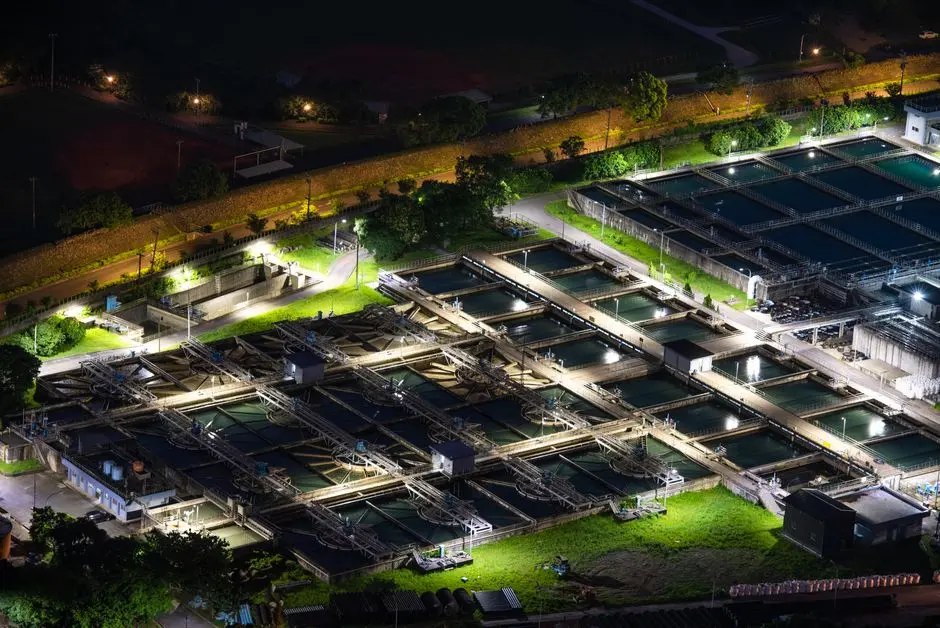
Equipment capacity must be based on audited peak flow and organic load, with an operating buffer justified through hydraulic, biological, and peak-shock checks. Do not insert a universal design factor where the project has not established one. The vendor should show how the selected duty accommodates the measured peak, equalization volume, process recovery, and the commissioning profile.
For the WSZ route, specify automatic controls, aeration, equalization, access covers, burial depth, landscaping loads, electrical requirements, and the manufacturer’s commissioning boundary. The buried package may reduce visible plant area, but excavation, lifting access, flood protection, and future maintenance access still require drawings.
For MBR, define flux limits, MLSS monitoring, aeration, backwash or cleaning, membrane replacement, spare-membrane holding, and operator competence. If reuse is the objective, settle the reuse specification, end-user quality requirements, validation protocol, and acceptance responsibility before adding membrane or disinfection stages.
Sludge is part of the process, not a disposal afterthought. HydropureWater’s industrial guide reports that a dewatering press can reduce disposal volume by about 70%; this is equipment-specific and must be confirmed for the selected project. A plate-and-frame filter press should be assessed against sludge characteristics, operating hours, operator access, cake handling, and the final disposal route.
Specify PLC alarms, remote status visibility, local backup power, spare-parts holding, and a preventive-maintenance schedule. Where disinfection is required, define the verification method and operating checks; a UV sterilizer cannot be accepted by appearance alone. Tie each alarm to a named response action and escalation contact.
Build the 2026 Budget and Procurement Plan
The available 2026 cost evidence is an industrial benchmark, not a domestic quotation. HydropureWater’s industrial guide reports DAF CAPEX of $20,000–$150,000 at 4–300 m³/h and small MBR packages starting near $50,000, with larger industrial MBR trains reaching $500,000. These figures are labeled industrial benchmarks; they must not be presented as prices for a domestic WSZ, hotel, hospital, or residential package.
The same guide cites import duties of 15–20% and lead times of 3–6 months based on 2024 planning data. Both inputs must be validated for the 2026 quotation, including customs classification, freight route, financing, exchange-rate exposure, and current delivery schedules.
| Bid item | Information required for a like-for-like comparison |
|---|---|
| Mechanical equipment | Process scope, selected duty, materials, controls, instruments, drawings and spare parts |
| Local civil works | Excavation, supports, access, roads, drainage, power building and landscaping reinstatement |
| Installation and commissioning | Installation supervision, testing, biological start-up, training, documentation and acceptance |
| Electrical and standby power | Supply works, transformer or generator changes, control panel, backup arrangement and energy demand |
| Operating commitments | First-year chemicals, consumables, membrane or media replacement, sludge handling and operator attendance |
| Performance acceptance | Agreed effluent parameters, peak-flow test, sampling protocol, training records, defect correction and warranty boundaries |
| Commercial conditions | Delivery date, installation sequence, permit support, payment milestones, exclusions, customs responsibility and local support |
For a residential development, compare lifecycle scenarios rather than accepting the lowest capital bid. Include energy, sludge hauling, chemical use, membrane or media replacement, operator attendance, emergency response, and civil-work risk. Ask each supplier to state what its price excludes.
Tie order placement to permit timing, customs clearance, site access, and civil readiness. Do not assume imported equipment can be commissioned alongside unfinished civil works. The Lamella clarifier cost guidance and filter-press efficiency guidance may help structure commercial questions, but neither establishes a Naypyidaw domestic-project price.
Implement Commissioning and Performance Monitoring
Commissioning should verify construction, equipment readiness, process stability, and permit performance as one sequence. Begin with construction inspection, pipe and tank integrity checks, equipment energization, and hydraulic testing. Proceed to biological start-up, disinfection verification, and performance sampling only after preceding stages pass.
Training is part of acceptance, not an informal handover. It should cover normal startup and shutdown, alarm response, sampling, sludge removal, routine cleaning, basic fault diagnosis, and spare-parts ordering. Record attendance, language, competency checks, and the operating manual issued to the site.
Monitor influent and effluent BOD, COD, TSS, pH, and disinfection indicators at the agreed frequency. Link laboratory records to operating logs, flow data, aeration, maintenance actions, and power interruptions. The sampling plan should identify the compliance point, method, container, preservation, laboratory, chain of custody, and responsible operator.
Define corrective-action triggers before startup: sustained flow imbalance, rising sludge blanket, abnormal aeration or membrane condition, failed disinfection, power interruptions, and effluent exceedances. A trigger should identify who investigates, what interim operating change is permitted, and when the authority or owner must be informed.
Recheck the current permit letter immediately before commissioning because draft requirements can change before final publication. HydropureWater’s guide explicitly advises confirming current permit conditions. For an underground WSZ package sewage treatment plant, acceptance should also confirm the buried installation, access arrangements, controls, and manufacturer commissioning boundary.
Frequently Asked Questions
What will domestic sewage treatment in Naypyidaw cost?
No verified domestic WSZ or MBR price was supplied, so a responsible budget must be obtained by quotation. The available benchmarks—DAF at $20,000–$150,000, small MBR packages near $50,000, and large industrial MBR trains reaching $500,000 in HydropureWater’s 2025 industrial guide—are not domestic prices. Ask each bidder for separate equipment, civil works, installation, power, commissioning, consumables, sludge handling, training, and lifecycle-cost figures. Also request confirmation of the 15–20% import-duty and 3–6 month lead-time planning inputs, which were based on 2024 data.
How should a supplier be selected for a Naypyidaw domestic treatment project?
Require documented flow range, complete process scope, duty and standby assumptions, control philosophy, acceptance tests, commissioning evidence, local support, training, warranty boundaries, and spare-parts availability. Verify that the supplier understands the permitted receiving route rather than treating a catalog package as complete compliance. Give weight to evidence from comparable wastewater loads and operating conditions, not only the lowest capital price.
What data is needed to size domestic sewage treatment?
Provide measured average and peak flows, wastewater characteristics, occupied population, operating profile, land, power, effluent target, and sludge route. Size from audited peak flow and load, then document equalization and operating reserve. A catalog capacity number is only a selection input; it cannot establish hydraulic, biological, reuse, or permit performance.
Can a WSZ, MBR, or DEWATS system meet the project’s effluent permit?
Possibly, but no technology can be approved from a generic description. First confirm the current domestic permit conditions and discharge route with the relevant authority, then provide the proposed process and performance data for review. HydropureWater’s cited 2025 values of TSS below 50 mg/L, BOD below 30 mg/L, and COD below 125 mg/L are draft industrial limits, not confirmed domestic requirements.
What should happen if no municipal sewer connection is available?
Move the project into a measured onsite evaluation of the underground WSZ package sewage treatment plant, compact MBR wastewater treatment system, or nature-based DEWATS. Compare the receiving route, treatment scope, land, power, sludge handling, operator availability, commissioning time, and whole-life cost. A nearby municipal plant does not create an accepted connection without written capacity allocation and discharge approval.