Lamella clarifier cost for industrial wastewater treatment
Buyers comparing lamella clarifier cost for industrial wastewater treatment are pricing tank steel, the plate pack, civil works, and chemical use, not the nameplate flow alone. A same-capacity inclined-plate unit often carries a capital premium of 15–25% over an open basin. Most plants we size recover that premium in 18–24 months when concrete, land, and coagulant all drop together.
Five lines move the installed price. Plate area, and polypropylene (PP) versus stainless steel (SS304 or SS316), set the equipment line. Concrete, excavation, and an indoor fit-up set the civil line. Coagulant, polymer, and sludge haul set the operating line, while power stays smaller unless the alternative is dissolved air flotation (DAF) with compressors.
How a short settling path shrinks the tank
An inclined-plate settler multiplies area inside a compact tank with parallel plates angled at 45–60°. Solids cross a short gap, hit a plate, and slide into a sludge hopper. Clarified water rises between the plates and is collected at the top. Removal on this duty is 85–95% TSS, in a fraction of an open-basin footprint.
In a standard clarifier a particle must fall the entire depth of the tank. Here the particle only has to cross the plate gap, typically 50–100 mm, before it hits an inclined surface. That principle, known as the Hazen theory, lets a smaller tank match the theoretical settling area of a large open basin. On metal-hydroxide jobs we see the gap, not the water depth, decide whether the hopper keeps up.
Operating bounds on this design basis are a hydraulic retention time of 1.5–3 hours and channel velocities kept below 3 mm/s so sludge is not scoured. The usual incline is 55°. A mineral processing plant can settle dense metal hydroxides on that short path, where an open tank would be prohibitively large. Ghangrekar’s sedimentation notes set the same plates at 45° to 60°, with nominal spacing of 50 mm and inclined length of 1 to 2 m.
Reyes et al. (arXiv:2212.10394) call 45° to 60° typical, with gaps of a few centimetres, lengths near 2 m, and clogging risk below 40 mm on wastewater flocs. Pack drawings sit on the lamella clarifier anatomy page. Fine clay, not dense hydroxide, is what blows a loading assumption.
Why loading rate changes floor space
Surface loading on this design basis is quoted at 20–40 m/h and described as 2–4 times a conventional circular clarifier. Open tanks on the same page are limited to 1–2 m/h, so 2–4 times that band is not the same claim as 20–40 m/h. Floor space is still quoted 70–80% smaller. Plants we retrofit inside an existing building usually sit at the low end of 20–40 m/h once coagulation is honest.
According to Crittenden et al. (2012), footprint loading is 2.5–6.25 m/h for alum floc and 3.8–7.5 m/h for heavy floc, on tank footprint rather than projected plate area. Cold-region alum floc in that manual is limited to 150 m³/m²·d. Their open-basin example uses 2.2 m/h at 10°C with detention of 1.5 to 4 h. Keep the 1–2 m/h band beside that example.
Ghangrekar’s lamella section lists typical loading of 5 to 10 m/h, a surface-loading band of 10–25 m/h, and projected-area capacity of 1–3 m³/h per m². Plate loading is capped at 2.9 m/h to stay laminar, and rise rate is given as 0.8 to 4.88 m/h. One primary-tank example there uses 40 m³/m²·d at average flow. A 20–40 m/h quote is usable only when the seller names the area in the denominator.
Reyes et al. put unballasted projected-area guides at 0.6 m/h for light solids and 2.4 m/h for heavier solids, and 23–50 m/h only with microsand ballast. Footprint cuts they cite reach up to 76% versus a vertical tank, beside the 70–80% claim here. One phosphate case used 10% of a vertical settler’s footprint. Ballast is not the unballasted duty on this page.
Sludge return is a separate lever from the loading number. A high-efficiency lamella clarifier with sludge recirculation sends settled sludge back to the inlet flocculation chamber and builds denser floc. Field data on that duty show coagulant and polymer demand down by up to 30% versus no recirculation. Sludge often leaves at 2–4% solids by weight, so less volume goes on to dewatering and disposal.
The rectangular shell fits tight rooms, underground pits, or a fully assembled modular skid. Food and beverage expansions inside an existing building are the usual reason we see. Civil cost and install time fall only when the alternative estimate actually contained that concrete.
Design parameters matched to the wastewater
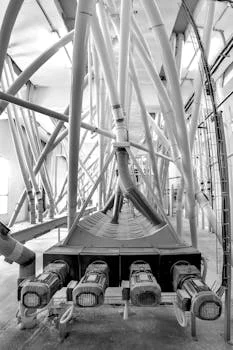
Plate performance follows the wastewater, not a catalog flow. Polypropylene offers corrosion resistance across a wide pH range. Stainless steel, SS304 or SS316, brings more strength for high solids or elevated temperature. Most acidic metal-finishing duties we see stay on polypropylene unless temperature forces steel.
Standard units on this sheet handle 10–500 m³/h. Consistent TSS removal of 85–95% still needs pH adjustment, coagulation, and a controlled overflow. Channel velocity must stay between 1–3 mm/s, because faster flow scours sludge off the plates. Diffuser walls or pipes have to spread that flow, or one local jet cuts capture across the pack.
According to Crittenden et al. (2012), maximum velocity inside a plate or tube settler is 0.15 m/min (2.5 mm/s), inside the 1–3 mm/s band and below 3 mm/s. When a pack blinds, the velocity we measure between plates is almost always above 3 mm/s. Hydraulic diameter in that manual is 50–80 mm. Alum solids in countercurrent flow stayed put until 60° from horizontal, while co-current flow could drop near 30°.
Ghangrekar allows plate pitch from 45° to 70° for self-cleaning, with a 50–70° consensus, and spacing of 50–80 mm once coarse solids are removed upstream. The table still lists a standard spacing of 50–100 mm and a typical 80 mm. Keep both ranges rather than silently picking the tighter one. Inspection ports and clean-in-place (CIP) access belong in the spec.
| Parameter | Standard Range | HydropureWater Typical Specification |
|---|---|---|
| Surface Loading Rate | 15–40 m/h | 20–40 m/h |
| Plate Material | PP, Stainless Steel | Corrosion-resistant PP |
| Plate Spacing | 50–100 mm | 80 mm |
| Inclination Angle | 45°–60° | 55° |
| TSS Removal Efficiency | 85–95% | 90%+ (with proper coagulation) |
| Standard Flow Capacity | 10–500 m³/h | 20–400 m³/h |
Crittenden et al. (2012) hold plate-pack detention at 15–25 min and tube detention at 6–10 min, both typically under 20 min. That short clock can match a rectangular tank held for a minimum of 2 h. Ghangrekar lists 60 to 120 min and, at 10–25 m/h, about 20 minutes or less, so the 1.5–3 hours figure here is tank time, not time inside the pack.
Horizontal, vertical, and modular layouts
Horizontal-flow units are the common shop choice. Water enters at one end, crosses the inclined plates, and leaves at the far end. Sludge falls by gravity into a bottom hopper. The layout stays simple enough for municipal primary treatment or a large industrial plant.
Countercurrent upflow is the pattern Crittenden et al. (2012) and Reyes et al. both call the one most plants actually run. Feed enters low, clear water rises, and sludge slides down. Above 60°, countercurrent captures the slower particles in Crittenden’s plate comparison. Below 60°, countercurrent, co-current, and cross-flow are close if inlet hydraulics are ignored.
Vertical-flow packs move water from bottom to top and often need pump-assisted sludge removal. Footprint shrinks again, which suits a packaged plant in a room that is already tight. We see these units fail first on a solids shock, not on the average flow, because hopper storage is small.
Modular skids place the settler, chemical pumps, and controls on one frame. On-site labor can drop by up to 40% on remote, temporary, or fast jobs. A mining crew can tie in pipe while a cast basin is still in rebar. That 40% is install hours, not a cut in the operating crew.
high-efficiency lamella clarifier roi 2025
High-efficiency lamella clarifier payback in 2025 still starts from a capital cost 15–25% higher than a conventional clarifier of the same capacity. The compact shell cuts civil works and concrete by over 50%. A 30% reduction in chemical use, plus denser sludge, lowers the spend that continues after startup. The 18–24 month return shows up only when that concrete sat in the alternative estimate.
Denser sludge shortens dewatering cycles and cuts polymer in a downstream sludge dewatering system. Energy use stays below dissolved air flotation, which needs air compressors and recirculation pumps. Chemical-system prices beside this duty are set out with 2025 industrial water treatment system costs.
Lower chemical use, less floor area, and less sludge handling are what return the premium within 18–24 months on a high-throughput plant. That payback is the practical test of lamella clarifier cost for industrial wastewater treatment, not a catalog unit price. Line-item equipment pricing sits in Lamella Clarifier Cost Price: 2026 B2B Buyer's Guide & ROI Analysis.
Footprint and efficiency against an open basin are tracked on a separate page as lamella clarifier cost. If the seller will not state footprint versus projected area, the 15–25% premium is not a number you can defend yet.
skid-mounted lamella clarifier for mining wastewater
A skid-mounted lamella clarifier for mining wastewater puts the settler, chemical feed, and controls on one frame where new concrete is scarce. Clay fines, not the average solids number on the data sheet, usually set the real loading. Most mining skids we size sit at the low end of the band once clays show up in the ore. Install time is counted in pipe days, not in months of concrete cure.
Reyes et al. (arXiv:2212.10394) treat steeply inclined settlers as a low-footprint polish on thickener overflow when clays hurt recycle water. They mention lower flocculant use but state no percent, so the up to 30% cut above stays a recirculation field figure. Ghangrekar’s notes cap a typical unit at 3000 mg/L solids and 10000 mg/L grease.
Those notes expect 90-99% removal of free oils and greases, 20-40% of emulsified oils with no chemical, and 50-99% once a chemical agent is added, with treated water around 1–2 NTU. Influent turbidity limits are a different question, covered under how high the turbidity a lamella clarifier can treat. Use 1–2 NTU only as that lecture’s treated-water remark. Screening still has to stop large debris before the pack.
A packaged High-Efficiency Sedimentation Tank (Lamella Clarifier) is the skid we spec when the mine will not pour a new basin. Very high or variable solids still need a primary settling stage or a flow equalization tank upstream. The plates are a polisher on that duty, not the shock absorber.
Who this duty fits
Metal finishing, chemical manufacturing, food and beverage, mining, and power generation fit when solids must come out in a small space. Stormwater, cooling tower blowdown, and reverse osmosis (RO) pretreatment are the other regular fits. Pay the 15–25% capital premium only when footprint, not the equipment tag, is the constraint.
Fibrous or sticky solids that mat on plates belong in another tank. Ghangrekar notes odour when solids sit on plates. Poor flocculation, a bad inlet, carbonate scale, or algae are the four losses Crittenden et al. (2012) name, and any one of them can erase the high-rate claim.
Next step is a check of design flow, influent TSS, temperature, and the area basis printed on the quote. Send those figures with the project inquiry so the plate count can be set against the footprint bands above and against the 20–40 m/h figure on this page. If the quote will not state the area basis, we do not compare it with an open-basin price.
Frequently Asked Questions
How does an inclined-plate settler differ from an open sedimentation tank?
The primary difference is the surface loading rate. Plate units on this page run at 20–40 m/h, while conventional tanks are limited to 1–2 m/h, so the same duty fits in less than a quarter of the footprint. Open tanks settle over a long distance. Plate units use shallow-depth settling and an inclined surface to guide solids to the hopper.
Can plate settlers treat high-solids industrial wastewater?
Yes. Upstream screening for large debris, plus sludge returned to the flocculator, makes mining, food processing, and metal finishing routine duties. Ghangrekar’s notes state a typical-unit ceiling of 3000 mg/L solids and 10000 mg/L grease. Very high or variable loads need a primary settling stage or a flow equalization tank upstream so the pack is not the shock absorber.
How often do inclined plates need cleaning?
With clean-in-place (CIP) systems, plates typically need a thorough cleaning once per year. Frequency can rise to semi-annually when TSS is extremely high or biological fouling is active. Fats, oils, and grease (FOG) need more frequent low-pressure spraying so the gap does not plug. Solids left on the plates also grow bacteria and odour, so the flush is an operating step.
Are compact plate units suitable for retrofit projects?
Yes. The compact plan suits a retrofit, and vertical-flow or modular skid shells fit existing buildings and overloaded plants. They can sit in the footprint of an old clarifier, doubling or tripling sedimentation capacity without expanding the concrete structure. That saving holds only when the old slab can carry the new load.
Which industries gain the most from inclined-plate clarification?
Metal finishing, chemical manufacturing, food and beverage, mining, and power generation gain the most where solids must come out in a limited space. Stormwater, cooling tower blowdown, and pretreatment before reverse osmosis are the other regular fits. A food plant expanding inside its own walls is the case we see most often. Spare land and fibrous solids can make an open basin the cheaper buy.
Further Reading
Explore these in-depth articles on related wastewater treatment topics:
- compare lamella clarifiers with DAF systems for oil and solids removal
- Understanding the role of coagulants and flocculants in optimizing lamella clarifier performance.
- A guide to integrating lamella clarifiers into a complete zero liquid discharge (ZLD) treatment train.