What Changes When You Build an Effluent Treatment Plant in Myanmar?
An effluent treatment plant in Myanmar should be selected around the factory’s actual wastewater flow and contaminants, the required discharge or reuse quality, and the applicable NEQEG/ECD consent conditions—not around a generic ETP package. The process commonly combines equalization, pH control, oil and solids removal, biological treatment, clarification, filtration, and disinfection. DAF suits oil-, grease-, and solids-heavy flows; MBR suits compact biological treatment with membrane-separated solids. Reuse may require UF or nanofiltration, supported by University of Twente research on polishing WWTP effluent. Buyers should request wastewater characterization, process guarantees, civil and equipment scopes, installation planning, chemicals, O&M assumptions, and lifecycle costs.
Three decisions must be connected before equipment is selected: what the wastewater contains, what quality must leave the plant, and what operating and site conditions can be controlled reliably. An industrial ETP differs from municipal or package sewage treatment because factory streams may contain process-specific contaminants, variable batch discharges, oils, pigments, salts, metals, or substances that inhibit biological treatment.
The Mandalay leather planning example shows why scale cannot be ignored. The Myanmar industrial wastewater treatment guide reports a planned flow of about 60,000 gallons/day (227 m³/day) from 23 leather factories, influent COD of 2,000–10,000 mg/L, and a stated NEQEG COD limit of 250 mg/L. The same source identifies DAF as suitable for the leather-sector stream, with stated TSS removal of 92–97%.
Those figures describe one planning case, not a universal package. The project brief must identify the applicable NEQEG/ECD requirements and obtain site-specific environmental consent rather than assuming one limit applies to every industry, factory, or outfall.
Set the Compliance and Effluent-Quality Target
The project’s compliance target must come from the approved discharge route and the consent attached to the specific outfall. The Myanmar industrial wastewater treatment guide states general sanitary limits under ECD of BOD 50 mg/L and TSS 50 mg/L. It also reports textile-specific figures under the 2015 NEQG framework: BOD 50 mg/L and COD 250 mg/L. These are sourced benchmarks, not a substitute for permit review.
Permit review should establish whether effluent enters a sewer, surface water, irrigation area, reuse system, or another receiving environment. It should also identify sampling points, monitoring parameters, compliance frequencies, operating controls, and any sector-specific requirements. For reuse, the receiving process and water application become part of the design basis rather than merely an aspiration for high-quality water.
| Objective | Sourced benchmark | Buyer action |
|---|---|---|
| General sanitary discharge | BOD 50 mg/L and TSS 50 mg/L under ECD, as stated by the HydropureWater Myanmar guide | Confirm whether these limits apply to the factory, outfall, and receiving environment |
| Textile discharge | BOD 50 mg/L and COD 250 mg/L under the 2015 NEQG framework, as reported by the same guide | Check sector applicability and current consent conditions |
| Industrial reuse | No blanket Myanmar reuse specification is established by the supplied research | Define the intended use, feed quality, recovery, pretreatment, and verification tests |
| Advanced reclamation | University of Twente research states that nanofiltration can polish WWTP effluent to EU WFD standards and produce effluent suitable for agricultural or direct/indirect potable-use objectives | Use as research evidence only; obtain separate project approval and site-specific validation |
For higher-grade reuse, a UF system for effluent polishing may form the pretreatment stage for an industrial RO reuse system. For micropollutant removal, Wageningen University and Research’s 2022 PhD thesis examined constructed wetlands for treating WWTP effluent; this supports site-specific evaluation where land, climate, hydraulic conditions, and residual-management requirements are suitable. It does not establish blanket regulatory approval in Myanmar.
Characterize the Wastewater Before Choosing Equipment
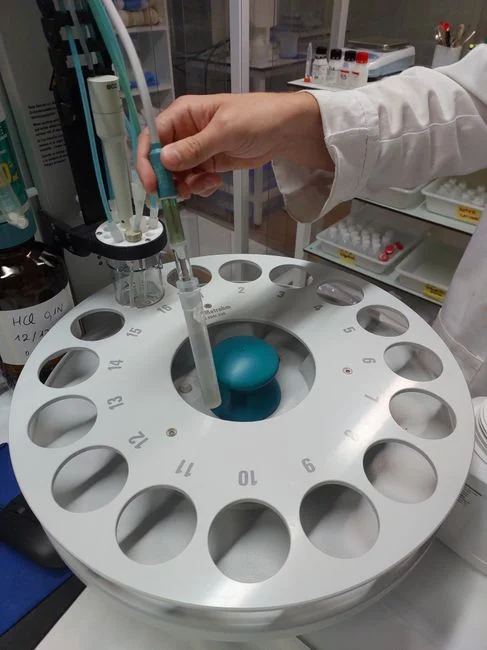
Representative wastewater data, rather than catalogue capacity, must determine the industrial wastewater process train. The supplier brief should request average and peak flow, batch and campaign discharge patterns, operating schedule, and anticipated production changes. Flow data should distinguish continuous production flow from concentrated or high-strength batch releases.
The analysis package should cover pH, COD, BOD, the COD/BOD ratio, TSS, oil and grease, FOG, color, nutrients, temperature, and salinity where relevant. Add sector-specific parameters such as chromium, sulfide, or pharmaceutical residues when they are credible process contaminants. Samples must represent relevant production conditions rather than a single average laboratory result.
Myanmar ETP guidance from Boiler Cooling Tower Chemicals identifies coagulants, flocculants, decolorizing agents, and pH regulators for industrial wastewater treatment. Their functions should be assigned explicitly: coagulants and flocculants support contaminant separation and sludge conditioning; decolorizing agents address color where relevant; and pH regulators maintain chemical balance and flowability. A PLC-controlled chemical dosing system should therefore be specified around verified dose ranges, not an assumed chemical consumption.
Hydraulic equalization and pH control come before DAF, biological treatment, membranes, or disinfection because variable loads can destabilize downstream stages. Equalization must cover the agreed batch-discharge profile and provide enough working volume for the selected control strategy. Tank mixing, aeration, return sludge, solids inventory, and chemical feed capacity should be checked against that profile.
The practical output is a design-basis report: verified flow and load ranges, representative samples, chemical requirements, operating schedule, proposed treatment objectives, and unresolved permit inputs. Equipment selection should wait until those items are signed off.
Build the Right Treatment Train
A coherent industrial wastewater process train normally follows this sequence: equalization and screening; pH adjustment; oil, FOG, and solids removal; biological treatment where biodegradable organics require it; clarification or membrane separation; filtration; disinfection; and advanced polishing when reuse demands it. Not every factory needs every stage. The selected sequence must follow contaminant load, treatment objective, site constraints, and discharge schedule.
For high oil, FOG, or colloidal loads, DAF is generally a pretreatment step before biological or polishing stages. The DAF system for industrial pretreatment published by HydropureWater covers 4–300 m³/h across 13 standard models. The Mandalay leather example in the Myanmar guide reports stated DAF TSS removal of 92–97%; final plant performance still depends on the complete train and influent variability.
MBR combines biological treatment with membrane solids separation and suits sites requiring compact treatment. HydropureWater reports an integrated MBR wastewater treatment system range of 10–2,000 m³/day with submerged PVDF filtration below 1 μm. These are product references, not project sizing. The Myanmar location content highlights DAF followed by MBR for petrochemical wastewater, while the comparison with MBR versus conventional activated sludge should be anchored to the actual wastewater and footprint constraints.
| Process condition | Indicative stage | Design evidence required |
|---|---|---|
| High oil, FOG, or colloidal solids | DAF pretreatment | Oil/FOG and solids ranges, settling behavior, required removal, chemical demand |
| Biodegradable organics and compact installation | MBR | Organic load, membrane area, flux, cleaning, recovery, redundancy, sludge characteristics |
| Reuse beyond clarification or biological treatment | UF, RO, or advanced membrane treatment | Intended reuse, feed-water analysis, recovery, concentrate disposal, validation requirements |
| Separated biological or chemical sludge | Sludge dewatering | Solids rate, cake moisture objective, chemical conditioning, disposal route |
| Microbial control required | Final disinfection | Microbial target, dose or intensity, contact conditions, monitoring |
A sludge dewatering filter press can reduce the volume of separated sludge, but its use does not complete the waste-management design. The selected cake classification, handling method, storage, transport, and final disposal or reuse route must be defined during design.
Disinfection belongs at the end of the train when the discharge or reuse objective requires microbial control. UV applies physical disinfection without routine chemical dosing. Where on-site chemical generation and broader industrial duties are appropriate, chlorine dioxide equipment may also be considered. UV treatment equipment should be assessed against the required microbial target, water matrix, flow, and maintenance access.
Size the Plant from Verified Design Inputs
Average flow supports mass-loading checks, while peak flow and the agreed batch-discharge profile drive hydraulic equipment checks. One design flow cannot represent both duties unless the discharge pattern has been demonstrated stable. The buyer should require peak factors, production schedules, and equalization storage time to be agreed in writing before equipment duty points are selected.
Check equalization, biological treatment, clarification, filtration, and membranes against the complete discharge profile. Use conservative selection rules: compare each equipment duty with actual flow and contaminant ranges, not only nominal average treated flow. If a batch can temporarily exceed upstream treatment capacity, specify how the flow is stored, released, or bypassed without compromising the consent conditions.
| Design input | Primary check | Information to request from bidder |
|---|---|---|
| Average flow and contaminant load | Organic and solids mass loading | Calculation basis, selected duty point, treatment-stage loading and expected performance |
| Peak flow and batch releases | Hydraulic capacity and equalization behavior | Peak-factor basis, storage time, mixing, release strategy and upset controls |
| Wastewater analysis | Contaminant-specific removal | Influent and treated-water assumptions, chemical demand and performance guarantee |
| Site conditions | Layout, utilities, access and installation feasibility | Footprint, power, drainage, odor control, maintenance access and logistics assumptions |
| Reuse requirement | Polishing and recovery performance | Membrane area, flux, cleaning, recovery, redundancy and replacement assumptions |
For MBR systems, the supplier should provide membrane area, design flux, cleaning method, recovery, redundancy, and replacement assumptions. HydropureWater’s published 10–2,000 m³/day capacity range can be used to screen whether the project falls within the proposed product envelope, but the selected configuration must be calculated from verified project data. Similar logic applies to DAF: the published 4–300 m³/h range across 13 models is a screening reference, followed by contaminant-specific selection or pilot work where justified.
Site inputs belong in the same brief. Specify available footprint, power supply, drainage, odor-control requirements, access for maintenance, and installation logistics. A high-efficiency sedimentation tank or an MBR membrane bioreactor module cannot be evaluated independently of plant layout, utilities, and operating access.
Compare Supplier Proposals Beyond the Purchase Price
Comparable quotations must state the same design basis. Require every bidder to identify design flow, wastewater characteristics, treatment objective, process stages, equipment model, duty point, performance guarantees, utilities, chemicals, civil-work assumptions, commissioning tests, and exclusions. Without these fields, a lower equipment price may simply omit tanks, pumping, controls, buildings, installation, or performance obligations.
Separate product scope from project scope. Tanks, pumps, blowers, aeration, controls, piping, buildings, site drainage, odor control, installation, training, commissioning, and sludge handling can materially change the requirement. Bidders should also describe membrane cleaning, chemical supply, critical spares, remote support, response times, and replacement-cycle assumptions.
| Cost element | Information required | Buyer check |
|---|---|---|
| Equipment | Model, quantity, capacity, duty point, controls and accessories | Confirm that the selected configuration matches the verified wastewater basis |
| Civil and installation | Tanks, buildings, piping, drainage, power, erection, interfaces and exclusions | Use the same site plan and boundary limits for every bidder |
| Chemicals and consumables | Dose assumptions, supplier, unit price basis and change mechanism | Test assumptions against representative wastewater data |
| Energy and operation | Connected load, operating strategy, labor, maintenance and sludge disposal | Compare three-year operating assumptions |
| Performance and warranty | Test protocol, guarantee conditions, correction remedy and exclusions | Link every guarantee to a defined sampling point and operating condition |
Reported benchmarks are context, not quotations. The Myanmar guide reports Yangon industrial wastewater CAPEX of $80K–$4.5M for one guide scope. A separate 2025 Myanmar wastewater cost guide reports K150M–K2B CAPEX and K5–K50/m³ OPEX. These scopes are not interchangeable and cannot be used as a site-specific budget without flow, wastewater analysis, target quality, civil works, and operating assumptions.
For dosing-system scope, the automatic dosing system design guide can support a separate check of tanks, metering equipment, controls, duty allocation, and chemical storage. The supplier’s three-year operating plan should identify energy, chemicals, consumables, sludge handling, operator labor, membrane cleaning or replacement, and scheduled maintenance.
Plan Installation, Commissioning, and Long-Term Operation
The delivery programme should be tied to factory operations and physical access before a supplier confirms it. Record shutdown windows, delivery routes, crane access, local erection constraints, storage space, and interfaces with existing drainage. These conditions affect both the civil design and the sequence of installation.
Commissioning should begin with baseline testing, installation and alignment checks, leak testing, control verification, interlock testing, and chemical-dosing calibration. Agree the performance demonstration in advance: representative influent and effluent sampling points, operating conditions, analytical methods, test duration, acceptance limits, and remedies for failed results.
Do not accept a compliance statement that is disconnected from operating data. The test protocol should demonstrate performance under representative production conditions and the agreed discharge profile. Where reuse is involved, verify the specified water quality at the point of use and define how membrane cleaning or replacement affects performance.
Operator handover should include the operating manual, training, emergency procedures, spare-parts list, preventive-maintenance schedule, control-system access, and remote-support expectations. A mechanical bar screen should be integrated with the incoming drainage design, while treatment valves, filter media, and other plant parts must be specified with suitable materials and accessible maintenance points.
Operational monitoring should cover sludge quantity and dewatering, chemical consumption, membrane condition, aeration performance, and energy use. Myanmar’s tropical operating environment and variable influent conditions should be considered in materials selection, odor control, biological stability, corrosion protection, and maintenance planning. A robust ETP is one that can be measured, adjusted, and maintained after handover.
Frequently Asked Questions
What will an effluent treatment plant in Myanmar cost?
The defensible budget is site-specific. The Myanmar industrial wastewater treatment guide reports Yangon industrial wastewater CAPEX of $80K–$4.5M, while a separate 2025 Myanmar guide reports K150M–K2B CAPEX and K5–K50/m³ OPEX. Because these scopes differ, request a quotation based on verified flow, wastewater analysis, discharge or reuse target, civil works, utilities, installation, commissioning, chemical use, and three-year O&M assumptions.
How should an industrial ETP supplier in Myanmar be selected?
Prioritize demonstrated process fit, defined performance guarantees, complete installation scope, local service capability, critical-spares availability, and transparent lifecycle costs. Ask each supplier to identify exclusions and to provide an operating-support plan. For DAF or MBR alternatives, compare the DAF system for industrial pretreatment and integrated MBR wastewater treatment system against the same wastewater and site data.
How should ETP sizing and costing handle average and peak flows?
Use average flow for mass-loading checks and peak flow for hydraulic checks, then model batch releases through the agreed equalization volume. The sizing and costing brief should state average flow, peak flow, production schedule, peak factors, storage time, contaminant ranges, and future changes. Require each bidder to identify the duty point behind its equipment price and any capacity or recovery assumption.
Which Myanmar wastewater discharge standards apply to the factory?
Do not substitute general guidance for the consent. The Myanmar guide reports general sanitary limits of BOD 50 mg/L and TSS 50 mg/L under ECD, and textile figures of BOD 50 mg/L and COD 250 mg/L under the 2015 NEQG framework. Confirm the current sector-specific conditions, receiving environment, sampling requirements, and any reuse parameters in the site’s NEQEG/ECD consent.
Should the factory choose DAF or MBR?
Choose DAF when the wastewater’s oil, FOG, or removable solids load makes upstream separation necessary. Choose MBR when biological treatment and membrane solids separation suit the organic load and a compact installation is valuable. Neither technology removes every contaminant automatically: test the wastewater, define the final reuse or discharge target, and verify the complete process train rather than selecting from equipment capacity alone.