What Makes Refractory Organic Wastewater Different?
Refractory organic wastewater is an organic fraction that resists conventional biological treatment; COD alone does not establish that condition. The gas-processing case examined by the Egyptian Journal of Chemistry had a flow of 3,100 m³/d, COD of 55,000 mg/L, BOD of 9,500 mg/L, TSS of 385 mg/L, and total phenols of 0.8 mg/L. Its BOD/COD ratio of 0.17 was interpreted as hazardous organics that are hardly biodegradable. This illustrates why a high-COD industrial wastewater treatment strategy must begin with biodegradability and compound-specific characterization rather than concentration alone.
Concentrated but biodegradable wastewater may respond adequately to biological treatment after suitable equalization and pretreatment. Refractory wastewater behaves differently: persistent compounds or colorants remain after biological treatment, and the pharmaceutical wastewater treatment process selection should therefore distinguish oxidation objectives from general COD reduction.
The pigment-wastewater study published in Water Science & Technology evaluated Fenton oxidation for non-biodegradable organics and color, both as pretreatment and as tertiary treatment after extended-aeration activated sludge. That distinction matters because Fenton may either improve the feed entering a biological system or polish an already biologically treated stream.
How the Fenton Reaction Destroys Refractory Organics
The primary Fenton reaction couples hydrogen peroxide with ferrous iron to produce hydroxyl radicals: H2O2 + Fe2+ → Fe3+ + OH− + •OH. These radicals attack refractory organics and chromophores, but the reaction chain also consumes iron and peroxide before every molecule of organic material is oxidized. Water & Wastewater’s technical article on Fenton applications identifies this as an advanced oxidation process whose practical performance depends on matrix conditions and residual handling.
Ferrous iron is therefore not an ideal catalyst in a simple stoichiometric sense. Ferric iron must return to the ferrous state, and that regeneration is slower than the primary reaction. The competing pathway Fe3+ + H2O2 → Fe2+ + HO2• + H+ therefore influences both iron consumption and reagent demand. In practice, some iron leaves the reaction in a solid form and becomes part of the treatment plant’s sludge stream.
Other reactions reduce useful radical yield. Two hydroxyl radicals can recombine to form hydrogen peroxide, while Fe2+ + •OH → Fe3+ + OH− allows iron itself to consume radicals at excess dosage. These mechanisms explain why a laboratory dose based only on COD or stoichiometry cannot be treated as a plant guarantee.
Partial oxidation also creates a toxicity question that COD cannot answer. Water & Wastewater warns that intermediates may have different toxicity from their parent compounds and can sometimes be more toxic. A defensible pilot therefore measures residual toxicity and relevant transformation products rather than treating COD removal as proof of detoxification.
Choose the Correct Position in the Treatment Train
The placement question is determined by which compounds must be oxidized and what the biological system can accept. The source titled “Where should Fenton go for the degradation of refractory compounds” frames the choice as whether oxidation should precede biological treatment or follow biological polishing. The answer depends on biodegradability, toxicity, residual peroxide, iron solids, and the final treatment objective.
| Placement | Primary objective | Required downstream considerations |
|---|---|---|
| Fenton pretreatment | Reduce persistent organic loading before activated sludge | Neutralization, iron-solids separation, residual-peroxide control, biological polishing |
| Fenton after biological treatment | Polish residual refractory organics and color | Neutralization, residual-peroxide control, iron-solids removal, discharge-quality verification |
| Alternative advanced oxidation route | Evaluate where iron management or in-situ catalyst regeneration is strategically important | Comparative pilot data for COD removal, energy or reagent use, byproducts, and downstream compatibility |
For pretreatment, the benefit is a more biodegradable or less toxic feed for activated sludge. Quenching residual peroxide is mandatory before biological contact because unreacted peroxide inhibits biomass. For tertiary polishing, the Water Science & Technology study specifically investigated Fenton after extended-aeration activated-sludge treatment for refractory organics and color in pigment wastewater.
Either placement requires a controlled downstream chain: neutralization, iron-solids settling or filtration, residual-peroxide management, and biological polishing where needed. Catalog solids and biological equipment can support this interface, including high-efficiency sedimentation equipment and an integrated MBR treatment system, while the acidic Fenton reactor remains project-specific equipment.
Electro-Fenton merits comparison where avoiding dissolved iron or regenerating catalyst in situ is valuable, but it is not automatically the better route. A 2026 Journal of Colloid and Interface Science study using a heterogeneous electro-Fenton process reported COD removal of 86.8±1.3% for actual pharmaceutical-factory wastewater and specific energy consumption of 3.7±0.2 to 6.7±0.1 kWh per kg COD. Those results provide a comparison point for an equivalent pilot, not a universal performance or cost claim.
Screen the Wastewater Before Sizing a Fenton System
A conventional Fenton design should not proceed until actual wastewater has passed a matrix-screening gate. The gate must establish whether the contaminants are sufficiently refractory to justify oxidation and whether acidity, reagent demand, toxicity, and iron residuals can be controlled.
| Characterization input | Design question | Decision enabled |
|---|---|---|
| COD; BOD or direct biodegradability | Is the load merely concentrated, or is a persistent fraction present? | Need for and placement of advanced oxidation |
| Target compounds and color | Which substances must be removed or detoxified? | Performance objective and analytical suite |
| pH and alkalinity | What acid is required, and how much reagent will the matrix consume? | Acid demand, pH-control capacity, and peroxide consumption |
| Chloride and bromide where relevant | Will reactive-species pathways and halogenated byproducts change? | Oxidation route and byproduct testing |
| Suspended solids and chelating organics | Will pollutants be shielded or will iron be complexed? | Solids pretreatment and iron dosage |
| Residual oxidants and toxicity | Will upstream oxidants or baseline toxicity confound treatment? | Control strategy and biological compatibility |
Water & Wastewater identifies bicarbonate and chloride as radical scavengers or species that alter reaction pathways, chelating organics as iron binders, and suspended solids as both pollutant shields and surfaces that can catalyze non-productive peroxide decomposition. Composite samples should therefore be tested across representative high-load and low-load conditions. An DAF machine may remove appropriate solids before oxidation, while the online color analyzer selection guide helps define monitoring only where color is a controlled objective.
Acid requirement and acid demand are separate. Water & Wastewater states that above roughly pH 4, iron precipitates and the reaction stops; it also recommends checking alkalinity before dosing because that check can reduce chemical consumption. If chloride or bromide is significant, the same source recommends analyzing for halogenated byproducts.
The decision gate is direct: do not advance a conventional Fenton design without pilot validation if radical scavenging is unmanaged, the residual treatment train cannot control peroxide or toxicity, or acidity and iron solids cannot be handled safely.
Set the Reactor, Reagent, and Operating Window

Reactor sizing follows validated contact time, feed flow, mixing, pH control, and treatment objective; the wastewater flow alone cannot select a universal reactor volume. The textile pilot reported by Water & Wastewater is a reference case: 10 m³/h, COD around 1,200 mg/L, pH adjusted to 3.0, approximately 3.0 mg H2O2 per mg COD, 60 mg/L Fe2+, and 60 minutes of contact produced roughly 65% COD removal and substantial decolorization. These values are not a default recipe for another matrix.
| Functional duty | Sizing or design basis | Verification |
|---|---|---|
| Acidic Fenton reactor | Validated flow, treatment objective, mixing, and contact time | COD or TOC removal, target-compound removal, decolorization where relevant |
| pH adjustment and hold | Influent alkalinity and acid demand from actual wastewater | pH profile through the reactor |
| Hydrogen-peroxide dosing | Pilot-specific peroxide consumption and safety requirements | Residual peroxide after contact or quenching |
| Ferrous-iron dosing | Pilot-validated Fe2+ dose and iron-balance requirement | Total and dissolved iron; iron-rich sludge volume |
| Neutralization | Acid and base demand from pilot liquor | Downstream pH, settling, and COD-sample integrity |
The same textile case also demonstrates why theoretical stoichiometry is insufficient. Measured peroxide demand exceeded stoichiometry by roughly 30% because of chloride and dye scavenging. Water & Wastewater therefore recommends a chemical-consumption contingency of several tens of percent and multiweek tracking rather than reliance on a single bench result. This is a cost-planning rule, not a guaranteed dose increase.
Equipment scope should separate the reactor, acid addition, ferrous-iron addition, hydrogen-peroxide addition, retention, mixing, and neutralization. A PLC-controlled chemical dosing skid can support controlled reagent addition, but suppliers still need to define metering capacity, compatibility, interlocks, and the project-specific reactor arrangement.
Accept performance through a set of linked indicators: COD or TOC removal, target-compound removal, color where relevant, detoxification, residual peroxide, and downstream biological stability. A single percentage cannot establish that the treatment train works.
Design the Residual and Iron-Solids Management
Neutralization, iron-solids separation, and peroxide control form one integrated residual-management system rather than three optional accessories. Water & Wastewater gives the sequence as neutralize, settle the iron solids, and quench residual peroxide, with quenching typically achieved through bisulfite dosing, catalase, or sufficient retention with iron present to consume residual peroxide. The selected mechanism must be validated with the actual effluent and included in the operator round sheet.
Residual peroxide has two direct consequences. It can inhibit downstream activated sludge, and it can distort COD analysis because hydrogen peroxide itself contributes chemical oxygen demand. An unquenched sample can therefore report a COD higher than the organic load actually present, making good oxidation appear ineffective. Conversely, accepting credit for oxidant demand without correcting the analytical method can misstate treatment performance.
Iron handling must be sized from pilot measurements, not a generic sludge factor. Required measurements include total iron, dissolved iron, settled solids volume after neutralization, and dewatering behavior. Neutralization converts dissolved iron into iron-rich solids, so reagent selection, iron dosage, and downstream solids capacity cannot be separated.
A plate and frame sludge filter press is an available dewatering option. The product catalogue reports filtration areas from 1 m² to 500 m², but pilot solids characterization is still required to select the actual configuration. A high-efficiency sedimentation tank can form the separation stage before dewatering. The equipment boundary is clear: auxiliary dosing, separation, and dewatering can support the train, while the Fenton reactor and its integrated controls remain project-specific scope.
Build a Pilot and Procurement Acceptance Protocol
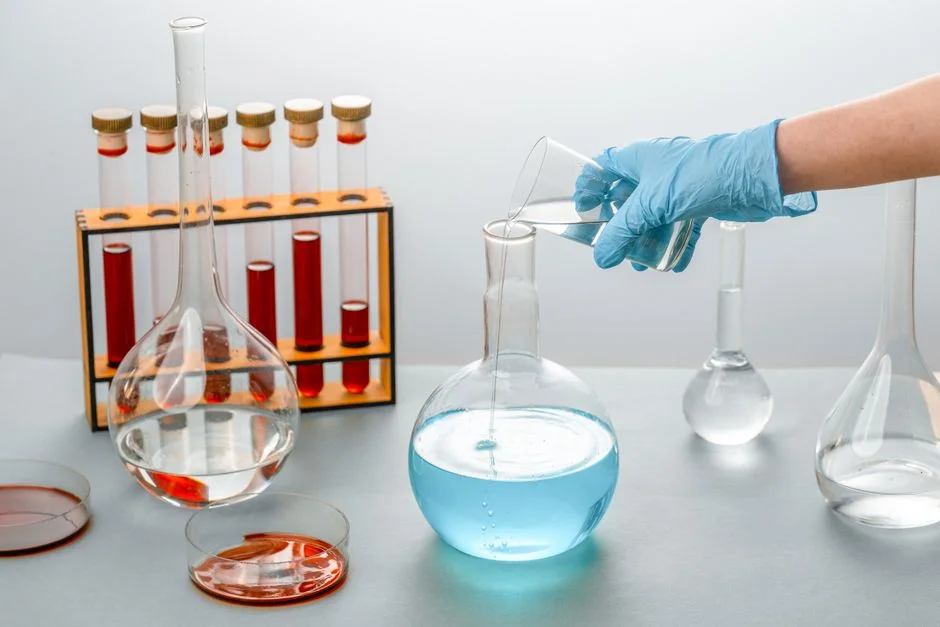
A procurement-ready pilot must reproduce the wastewater matrix and expose variability that a single jar test can miss. Water & Wastewater recommends representative high-load composite samples and an alkalinity-and-chloride challenge in the jar-test series. The pilot matrix should include COD, color where relevant, target organics, residual peroxide, total and dissolved iron, toxicity, and settled-sludge volume.
Use a multiweek campaign rather than treating one successful batch as proof of operability. The landfill-leachate case described by Water & Wastewater showed that reagent consumption rose during wet-season influent swings, while sludge-handling requirements—not chemical cost—dictated the final economics. Pilot records should therefore connect reagent use to influent conditions and downstream solids production.
Bidder packages should identify reactor material compatibility, the pH-control strategy, reagent interlocks, peroxide-residual control, downstream solids handling, and performance guarantees. The guarantee should cover the agreed treatment objective and the actual wastewater envelope, including relevant limits on peroxide carryover and iron solids.
The acceptance protocol must specify sample quenching before COD analysis. Water & Wastewater states that residual hydrogen peroxide contributes to measured COD; unless samples are quenched, the method can make a functioning Fenton stage appear to fail or incorrectly credit oxidant demand. Comparable pretreatment issues are discussed in guidance on industrial wastewater pretreatment limits and chemical-plant pretreatment requirements.
Do not release final equipment selection until the pilot demonstrates the agreed COD or TOC reduction, target-compound performance, toxicity outcome, residual-peroxide control, and a credible iron-sludge handling pathway. The chemical reaction is only one part of acceptance.
Frequently Asked Questions
How should I estimate the size of a Fenton oxidation system for refractory organic wastewater?
Begin with flow, but do not size the reactor from flow alone. Use pilot-derived contact time, mixing requirements, pH-hold demand, oxidation objective, and downstream biological or polishing needs. The textile case’s 10 m³/h flow and 60-minute contact time came from a specific wastewater and should be transferred only through validated performance data. Ask bidders for the reactor volume calculation, mixing duty, chemical-storage requirement, and operating envelope behind their proposal.
What are the main cost drivers when budgeting for a Fenton oxidation system?
Request an itemized operating-cost model covering hydrogen peroxide, ferrous iron, acid, base, mixing energy, operator labor, peroxide storage, iron-sludge handling, and downstream biological impacts. Do not request a price from flow alone; reagent consumption must come from the pilot, while iron-solids quantities must come from measured total and dissolved iron and settled volume. Water & Wastewater specifically identifies sludge handling—not chemical cost—as the dominant economic factor in one landfill-leachate pilot.
How should I select a supplier for a Fenton treatment train?
Require actual-wastewater test data, pilot reagent consumption, residual-peroxide controls, iron-solids measurements, safety provisions, and a complete treatment-train scope. Check whether the proposal clearly separates the project-specific Fenton reactor from auxiliary chemical dosing, solids separation, biological polishing, and iron-sludge dewatering. Also ask for the acceptance test and sample-quenching method so analytical interference is not used as a performance dispute.
When should electro-Fenton be compared with conventional Fenton?
Compare electro-Fenton when avoiding dissolved iron, minimizing iron sludge, or regenerating catalyst in situ has strategic value. The 2026 Journal of Colloid and Interface Science study reported 86.8±1.3% COD removal for actual pharmaceutical-factory wastewater and specific energy consumption of 3.7±0.2 to 6.7±0.1 kWh per kg COD. Use those results to frame an equivalent pilot, not as an assumed design guarantee; compare reagent logistics, electrical demand, catalyst behavior, and residual solids on the same wastewater.
What compliance risk occurs if Fenton effluent enters activated sludge without peroxide control?
Residual peroxide can inhibit biomass, and uncorrected peroxide can distort COD compliance measurements. The risk is therefore both operational and analytical. Require residual-peroxide testing, a validated quench or retention strategy, biological compatibility confirmation, and an explicit COD-sample quenching procedure before discharge or compliance testing. Further treatment-selection context is available in guidance comparing biological polishing options for industrial wastewater.