The Three-Layer Compliance Stack for a Taylorsville Chemical Plant
EPA's National Pretreatment Program operates on a three-layer structure, and a chemical plant discharging to sewer in the Taylorsville area must navigate all three. Layer 1 is federal: EPA sets categorical pretreatment standards for chemical manufacturing under 40 CFR Part 414 and the general framework in 40 CFR Part 403, including the operative definitions of "pass through" at 40 CFR 403.3(p) and "interference" at 40 CFR 403.3(k).
Layer 2 is state: Utah adopts pretreatment through UAC R317-8-8, which the Jordan Basin Improvement District (JBID) enforces inside its service area (jbidut.gov, 2026). Layer 3 is the local POTW: JBID is the approval authority that issues the industrial wastewater discharge permit, develops site-specific local limits under 40 CFR Part 403.5(c), and enforces them at the end-of-pipe connection to its collection system (EPA, "Pretreatment Standards and Requirements-Local Limits"). EPA's December 2024 program authorization attachment (Attachment 2-1) and the Summary of Categorical Standards attachment (Attachment 3-1) confirm that Utah's pretreatment program remains an authorized, active program into 2026 (EPA, "National Pretreatment Program").
The practical consequence for an engineer is straightforward. Federal categorical standards and the pass-through/interference definitions set the ceiling for what EPA treats as a violation. UAC R317-8-8 gives Utah the authority to delegate enforcement to a POTW, and JBID's permit and local limits set the floor—the numeric or narrative values the plant must hit at the end-of-pipe sampling point. Confusing the layers leads to two common mistakes: treating EPA categorical numbers as if they apply at the sewer manhole without checking JBID's stricter local limit, or treating JBID's permit as a stand-alone document without recognizing that a pass-through finding can still be brought federally under 40 CFR 403.3(p).
How JBID Sets and Enforces Local Limits on Chemical Dischargers
Local limits are site-specific numeric or narrative effluent discharge limits, including best management practices, that a POTW develops under 40 CFR Part 403.5(c) to protect the treatment plant, its sludge handling, and its receiving waters (EPA, "Pretreatment Standards and Requirements-Local Limits"). For a chemical plant tied to JBID, those limits are the actual numbers the discharge must meet. EPA's guidance covers how a POTW calculates maximum allowable loadings, identifies pollutants of concern, and runs annual reviews and periodic reevaluations, but the values themselves belong to JBID.
Enforcement occurs at the end-of-pipe, which is the point of connection from the chemical plant's discharge line into JBID's collection system. JBID's Industrial Pretreatment Department issues industrial wastewater discharge permits, requires dischargers to meet wastewater discharge limitations, and inspects facilities and samples wastewater to confirm compliance with permit requirements (jbidut.gov, "Pretreatment"). The permit is the operational contract between the plant and the POTW: it lists the parameters, the limits, the self-monitoring schedule, the reporting cadence, and the sampling point.
The direct contact path is the JBID Industrial Pretreatment Department at (385) 202-2777. When a parameter trends toward a limit, when a process change creates a new wastewater stream, or when a slug load is possible, that line is the right place to start—well before a sampling result shows a violation. The 40 CFR 403.3(p) pass-through definition and 40 CFR 403.3(k) interference definition are the legal hooks JBID uses when local limits are exceeded, because local limits developed and approved under 40 CFR Part 403.5(c) function as pretreatment standards enforceable by EPA as well as by the POTW (EPA, "Pretreatment Standards and Requirements-Local Limits").
Typical On-Site Pretreatment Train for a Chemical Plant
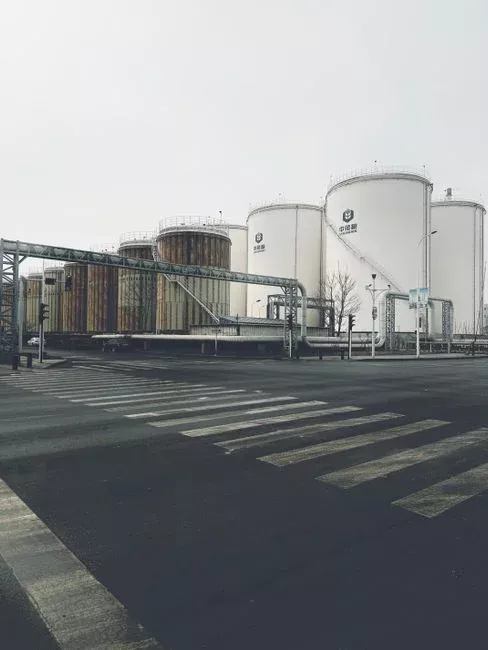
A chemical plant pretreatment train is built to neutralize the specific pollutants JBID regulates—pH excursions, oils and FOG, heavy metals, TSS, BOD/COD, and ammonia—in an order that protects each downstream unit. Equalization and pH adjustment come first to dampen shock loads and hold pH inside JBID's typical local limit range before downstream chemistry or biology is disturbed. Coagulation and flocculation follow, normally driven by a PLC-controlled chemical dosing system that ties reagent feed to flow and pH signals, converting dissolved and colloidal contaminants into settleable or floatable solids.
Primary solids–liquid separation is a choice between a DAF system for chemical plant wastewater pretreatment for oils, FOG, and low-density contaminants, or a lamella clarifier for chemical plant primary treatment where footprint is tight and sludge-recirculation flocculation is preferred. Where the wastewater carries biodegradable organics and JBID's local limits cap BOD/COD or ammonia, biological polishing—typically an MBR or a conventional activated-sludge basin—drops the organic load before tertiary steps. Tertiary filtration (multi-media or ultrafiltration) takes TSS and turbidity down to the level JBID's permit typically requires, and disinfection with UV or chlorine dioxide finishes the train before sewer discharge. Sludge from DAF, lamella, or biological steps is dewatered with a plate and frame filter press for chemical plant sludge to cut volume before off-site disposal—poorly managed sludge is itself a pass-through and interference risk under 40 CFR 403.3(k).
| Stage | Unit operation | Pollutants addressed | JBID permit link |
|---|---|---|---|
| 1 | Equalization + pH adjustment | pH excursions, flow/load shock | Holds pH inside local limit range; protects downstream units |
| 2 | Coagulation / flocculation (PLC chemical dosing) | Dissolved and colloidal metals, organics | Converts contaminants to settleable/floatable solids |
| 3 | DAF or lamella clarifier | Oils, FOG, TSS, metals-bearing floc | Primary separation before sewer discharge |
| 4 | Biological polishing (MBR / activated sludge) | BOD, COD, ammonia (where applicable) | Reduces organic load to JBID's local limit |
| 5 | Tertiary filtration + disinfection | Residual TSS, turbidity, pathogens | Final polish at the end-of-pipe sampling point |
| 6 | Sludge dewatering (plate and frame filter press) | Sludge volume, hauled-waste risk | Limits pass-through / interference from solids handling |
Meeting Local Limits in Practice: A Step-by-Step Compliance Flow
- Characterize. Map every wastewater stream in the plant, identify the pollutants of concern JBID regulates, and compare each to the limits in the existing industrial wastewater discharge permit. This is the baseline that drives every later decision.
- Treat. Design or retrofit the on-site train—equalization, pH adjustment, coagulation/flocculation, DAF or lamella, biological polishing where needed, tertiary filtration, disinfection, sludge dewatering—so discharge stays below JBID's local limits at the end-of-pipe sampling point. Put online instrumentation on pH, flow, and conductivity so the operator sees a trend before it becomes a violation.
- Sample and report. Run the self-monitoring schedule written into the JBID permit and submit reports on the cycle JBID specifies. Sampling and reporting are how the plant demonstrates compliance with the permit and with 40 CFR Part 403.
- Manage sludge. Dewater solids on-site so that hauled waste does not relaunch the compliance problem at a downstream POTW or landfill. The pass-through and interference definitions in 40 CFR 403.3(p) and 40 CFR 403.3(k) explicitly cover sludge processes, use, and disposal.
- Engage early. When a parameter is at risk, call the JBID Industrial Pretreatment Department at (385) 202-2777 before a violation occurs. Early notice is built into the program and is a better outcome than a self-monitoring result that arrives already over limit.
This flow applies across adjacent industries; the US food and beverage pretreatment compliance guide walks through it for FOG-heavy streams, the chemical plant pretreatment compliance near Newport piece covers a different POTW with a similar structure, and the mining and metals pretreatment sewer discharge guide applies the same logic to high-TDS, high-metals streams.
Frequently Asked Questions
What does a chemical plant pretreatment budget typically include?
Budget items consistently found across chemical plant pretreatment projects include: a treatability study to set design basis, the unit operations (equalization, pH adjustment, coagulation/flocculation, primary separation, biological polishing, tertiary filtration, disinfection, sludge dewatering), the PLC-controlled chemical dosing skid, online instrumentation for pH/flow/conductivity, installation and commissioning, and annual self-monitoring costs. A buyer should request a line-item quote tied to specific influent characterization and JBID permit limits rather than accepting a generic per-gallon number.
How do I choose a pretreatment equipment supplier near Taylorsville?
Use JBID's permit as the procurement specification. Ask any supplier to demonstrate, in writing, that their proposed train is sized for the plant's peak flow and will meet the local limits written into the JBID industrial wastewater discharge permit at the end-of-pipe sampling point. Confirm they can deliver a PLC-controlled chemical dosing system, the primary separation unit, and a plate and frame filter press for sludge dewatering as an integrated package, and ask for references at chemical plants rather than only municipal or food and beverage sites.
What is the biggest compliance risk for a chemical plant discharging to JBID?
The biggest risk is a pass-through or interference finding under 40 CFR 403.3(p) and 40 CFR 403.3(k), which is triggered when a discharge—alone or combined with other sources—causes a violation of JBID's NPDES permit or disrupts sludge handling (EPA, "Pretreatment Standards and Requirements-Local Limits"). Hitting the local limit on paper is not enough; the plant must also protect JBID's sludge processes and receiving waters, which is why the on-site train treats both the effluent and the sludge.
How long does it take to design, build, and commission a chemical plant pretreatment system?
Lead time depends on the influent characterization, the JBID permit limits, and whether the train is a new install or a retrofit around an operating plant. A buyer should request a project schedule from any shortlisted supplier that lists treatability study duration, equipment fabrication lead time, installation window tied to a planned shutdown, and commissioning plus the first round of JBID self-monitoring results. That schedule, not a generic delivery date, provides the realistic timeline for the project.