Which Rules Control a Discharge to the Independence Sewer?
Food and beverage plants near Independence, Missouri, meet pretreatment limits by controlling the wastewater they discharge to the City’s POTW sewer, using the most restrictive applicable requirement as the design target. The governing stack includes 40 CFR 403, applicable food-processing categorical standards in 40 CFR Parts 405–409, and the site-specific City permit. A treatment train may combine screening, equalization, DAF for FOG, biological treatment for BOD/COD, chemical precipitation for phosphorus, and final polishing where required. Independence identifies SIUs by categorical status or industrial wastewater flows of at least 25,000 gallons per day.
Start with the hierarchy because each layer answers a different question. The federal National Pretreatment Program in 40 CFR 403 establishes the program framework. Categorical standards set process-specific requirements applicable to the plant’s regulated production category. The City’s permit then establishes enforceable site-specific limits, monitoring conditions, and reporting duties for that discharge.
The City of Independence states that Municipal Services implements its Industrial Pretreatment Program with approval from the Missouri Department of Natural Resources and the U.S. EPA. The program regulates industrial and non-domestic sanitary-sewer discharges, including those that could interfere with the collection system, treatment process, receiving waters, or sludge handling.
| Regulatory layer | Food-processing scope | Design implication |
|---|---|---|
| 40 CFR 403 | National Pretreatment Program framework | Establishes the federal pretreatment framework administered through the local control authority. |
| 40 CFR Part 405 | Dairy products | Confirm the applicable dairy subpart and process-specific limits. |
| 40 CFR Part 406 | Grain mills | Determine whether grain processing is a categorical operation at the plant. |
| 40 CFR Part 407 | Canned and preserved fruits and vegetables | Identify the relevant production subpart and corresponding requirements. |
| 40 CFR Part 408 | Canned and preserved seafood | Determine the applicable seafood-processing category and limits. |
| 40 CFR Part 409 | Meat products | Establish whether rendering or another regulated meat operation applies. |
| City permit and sewer requirements | Site-specific discharge point and conditions | Use the most restrictive applicable requirement when defining performance criteria. |
Independence identifies an SIU as an industry subject to national categorical pretreatment standards or one discharging at least 25,000 gallons per day of industrial process wastewater. The City may also designate other industries as SIUs when they have a reasonable potential to cause adverse impacts on the wastewater treatment plant.
Before finalizing equipment, confirm the current permit, sewer-use requirements, discharge location, categorical subpart, local limits, monitoring schedule, and reporting method with Independence Municipal Services. Mechanical pretreatment may also require City approval; the rotary mechanical bar screen for preliminary solids removal is an equipment reference, not evidence of permit applicability.
Characterize the Wastewater Before Choosing Equipment?
Food-processing pretreatment cannot be sized reliably from average flow because batch production, cleaning-in-place (CIP), and concentrated process streams create the loads that determine equipment performance. The six recurring design variables identified in the HydropureWater commercial article are BOD/COD, TSS, FOG, total phosphorus, pH, and temperature. The same 2026 article reports raw dairy and meat wastewater at 1,000–10,000 mg/L BOD, FOG reaching several thousand mg/L in fryer, rendering, and stickwater streams, and total phosphorus of 10–100 mg/L as P in cereal, dairy, and meat wastewater. These are contextual characterization values, not universal plant limits or guaranteed equipment outputs.
The same commercial article describes a 1 mg/L total-phosphorus ceiling as common at POTW headworks, but that figure must not be treated as an Independence requirement until confirmed in the permit and local sewer rules. It also identifies excursions above 40 °C from CIP and cooking operations as a concern for downstream nitrification biology unless the wastewater is equalized.
| Design variable | Source context from the 2026 commercial article | Survey information required |
|---|---|---|
| BOD/COD | Raw dairy and meat wastewater reported at 1,000–10,000 mg/L BOD. | Representative raw BOD and COD for each production stream. |
| TSS | No universal plant range established. | Suspended-solids profile, including settleable and non-settleable fractions. |
| FOG | Fryer, rendering, and stickwater streams reported as reaching several thousand mg/L. | Free and emulsified oil, grease, and separated-skimmings production. |
| Total phosphorus | Cereal, dairy, and meat wastewater reported at 10–100 mg/L as P. | Total phosphorus, relevant phosphorus form, and treatment alkalinity. |
| pH | No universal plant range established. | Continuous or time-series pH during production, CIP, and dumping. |
| Temperature | CIP and cooking excursions above 40 °C identified as a biological concern without equalization. | Temperature range, duration, and cooling or equalization requirements. |
Complete a wastewater survey covering production flow, batch and CIP discharge timing, peak-to-average ratio, stream separation, raw BOD, raw FOG, phosphorus, pH, temperature, and slug-load potential. Separating product loss, washdown, and CIP streams is usually more useful than combining everything into one average concentration: a low-volume concentrated stream can control DAF chemical demand, while a short high-flow CIP event can control equalization and pumping requirements.
Use the City’s Commercial and Industrial Wastewater Survey as part of the local permitting process. The City also requires an Industrial Wastewater Permit Application for facilities subject to categorical or SIU regulation. Testing should represent actual production conditions rather than only a clean-water commissioning sample. Screening equipment should be evaluated in the context of production solids and fibrous debris, as illustrated by the rotary mechanical bar screen for industrial solids removal.
Build a Treatment Train Around the Permit?
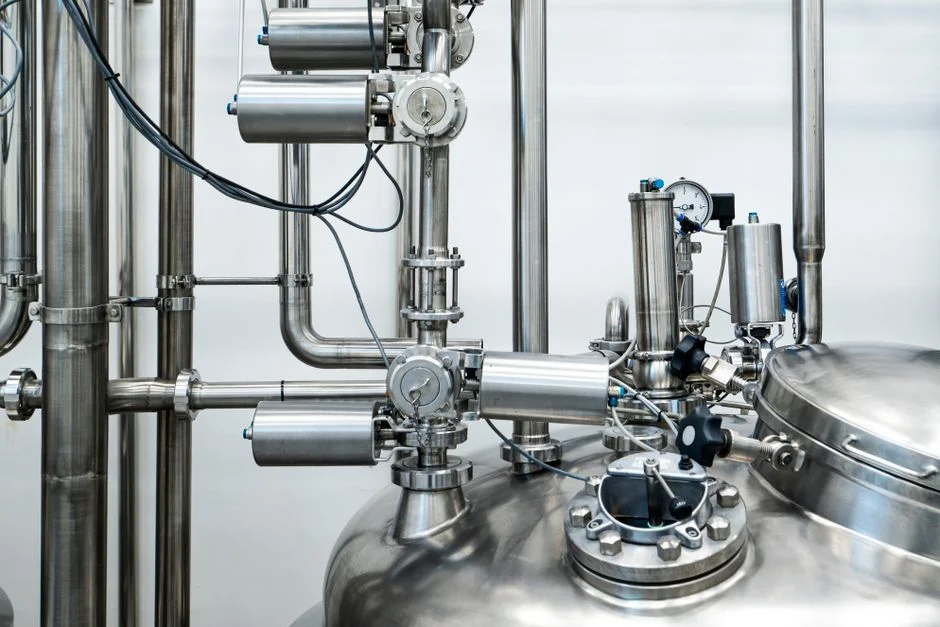
A defensible food-processing pretreatment train assigns each stage to a specific permit risk: screening → equalization → DAF → biological treatment → chemical precipitation → final polishing. The sequence comes from the HydropureWater commercial article published in 2026. It is a design framework, not a substitute for confirming the plant’s categorical subpart, local limits, and wastewater characteristics.
- Screening: Remove suspended solids, rags, plastics, and fibrous debris before pumps, equalization equipment, and downstream biological treatment. A screen is not a substitute for FOG removal or dissolved-solids treatment.
- Equalization: Dampen batch, washdown, and CIP peaks. The commercial article associates hydraulic overload during a multi-hour CIP cycle with an undersized equalization basin.
- DAF: Remove FOG, oil and grease, suspended solids, and colloidal material. FOG pass-through points to inadequate coagulant conditioning or hydraulic overload of the flotation cell, according to the same article.
- Biological treatment: Reduce soluble biodegradable organics. The article identifies pH excursions as a sign of inadequate equalization or failed pH trim, not as a biological-equipment problem by itself.
- Chemical precipitation: Add phosphorus removal where the permit requires it. The article reports 50–250 mg/L of alum or 30–150 mg/L of ferric chloride as context, not final doses; the actual dose requires jar testing and design.
- Final polishing: Address the permitted solids requirement or demonstrated process performance. Solids breakthrough at the phosphorus limit can indicate poor flocculation control.
| Stage | Primary compliance problem addressed | Failure indicator or design question |
|---|---|---|
| Screening | Rags, plastics, fibers, and coarse solids | Will the screen handle the production-solids inventory without blinding or creating a disposal bottleneck? |
| Equalization | Batch, CIP, pH, temperature, and flow peaks | Is sufficient active and emergency storage available for the verified peak event? |
| DAF | FOG, oil and grease, and floatable solids | Is conditioning adequate, and is the flotation system sized for the peak load? |
| Biological treatment | Biodegradable BOD and soluble organics | Can the biology tolerate the verified organic, pH, temperature, and toxicity profile? |
| Chemical precipitation | Total phosphorus | Has the dose been established by testing against representative mixed liquor? |
| Final polishing | Residual suspended solids | Is additional polishing required by the permit or demonstrated upstream performance? |
Map the industrial DAF system for FOG removal to the FOG and floatable-solids load, the PLC-controlled chemical dosing system to flow-proportional phosphorus and pH control, and the MBR membrane bioreactor for industrial pretreatment to the biological solids-separation requirement. Equipment selection should follow the permit and wastewater data—not the other way around.
Size DAF and Biological Treatment from Real Loads?
DAF and biological sizing must reflect the plant’s peak flow, batch and CIP timing, available equalization, raw pollutant loads, and required removal. The HydropureWater commercial article provides preliminary DAF inputs of 4–25 m/h surface loading, depending on influent FOG and TSS; an air-to-solids ratio of 0.005–0.02; and recycle of 20–40% of forward flow. These values are design context from a 2026 equipment article, not site-specific guarantees.
For biological treatment, the same article reports hydraulic retention time (HRT) of 8–24 hours for conventional activated sludge and 4–10 hours for MBR. It gives mixed-liquor suspended solids (MLSS) of 3,000–5,000 mg/L for conventional activated sludge and 8,000–12,000 mg/L for MBR. The reported dissolved-oxygen setpoint is 1.5–2.5 mg/L where nitrification is required. Final biological loading must be checked against permit limits and the results of wastewater testing.
| Design input | Conventional activated sludge | MBR |
|---|---|---|
| HRT context from the 2026 commercial article | 8–24 hours | 4–10 hours |
| MLSS context from the 2026 commercial article | 3,000–5,000 mg/L | 8,000–12,000 mg/L |
| Solids separation | Conventional settling; solids quality depends on clarification and sludge handling | Membrane solids separation |
| Footprint | Generally larger reactor-and-settling arrangement | Potentially more compact because membrane separation replaces conventional settling |
| Operational complexity | Requires aerobic-process control, settling control, and routine solids handling | Adds membrane operation, cleaning, integrity monitoring, and associated controls |
| Reuse potential | Depends on effluent quality and the reuse objective | Potentially better solids control where the reuse objective requires it |
The commercial article reports DAF performance context of 25–50 mg/L oil and grease and 50–100 mg/L TSS. Actual acceptance values require representative wastewater testing and a vendor design against the City permit. If solids polishing is needed after other treatment stages, the article discusses a high-efficiency sedimentation tank with a 20–40 m/h surface-loading context. That equipment should be evaluated only after the upstream process and permit limit are defined.
Choose conventional activated sludge when the required effluent quality, available footprint, and operating resources support it. Evaluate the MBR membrane bioreactor for industrial pretreatment when the permit, footprint constraint, or reuse objective requires membrane solids separation. MBR is an option to test against project conditions—not a universal pretreatment requirement.
Control Chemical Use and Residual Sludge?
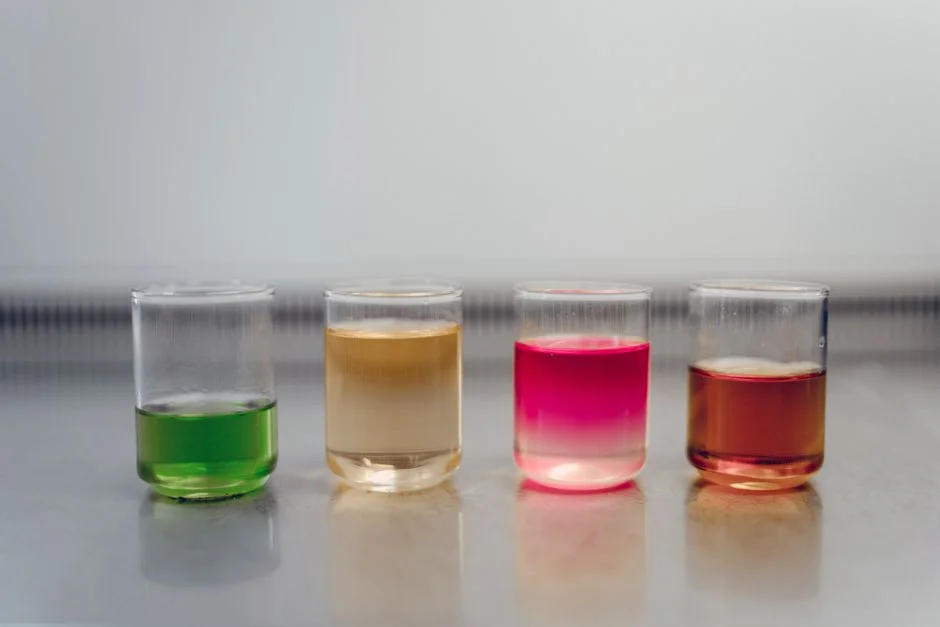
Phosphorus precipitation must be evaluated around the phosphorus form, mixed-liquor alkalinity, flow-proportional demand, and verified jar-test results. The HydropureWater commercial article reports 50–250 mg/L of alum or 30–150 mg/L of ferric chloride for typical food-and-beverage applications, but those are preliminary ranges. The same article claims that PLC-controlled dosing reduces chemical consumption by 10–20% versus manual feed; that is an equipment-source claim requiring project-specific verification, not a guaranteed saving.
A PLC-controlled chemical dosing system should be evaluated for coagulants, flocculants, pH adjusters, and specialty chemicals. The key procurement question is not simply whether the pump can deliver a dose; it is whether the control strategy responds to verified flow and water-quality signals without overfeeding during low-load periods.
DAF skimmings and biological waste activated sludge are unavoidable residuals that require a documented handling route. The 2026 commercial article reports plate-and-frame filtration areas of 1–500 m² and final cake dry matter of 22–28%. The appropriate configuration depends on actual sludge volume, conditioning behavior, transportability, and acceptance by the selected disposal route.
Evaluate the plate and frame filter press for sludge dewatering against hauloff, digestion, and disposal constraints. A lower-cost press is not automatically the lowest lifecycle-cost option if polymer consumption, wash-water demand, labor, cake storage, or rejected loads create additional costs. The residual-management route should therefore be included in the treatment-train comparison and permit proposal.
Prove Compliance with Monitoring and Reporting?
A pretreatment system is not compliant merely because it produces a passing sample; the permit requires defensible measurement, timely reporting, and operating records. The HydropureWater commercial article reports that most food-and-beverage categorical permits require 24-hour composite sampling for BOD, TSS, FOG, and total phosphorus at frequencies from monthly to quarterly. It also states that significant industrial users may require continuous pH and flow monitoring. Independence must confirm which requirements apply to the individual permit.
Build a compliance matrix before commissioning. It should assign every limit to a sample point, analytical method, monitoring frequency, responsible role, instrument, data owner, and reporting deadline. Sampling locations must represent the permitted discharge, and flow-paced or time-paced composite sampling must follow the issued permit rather than a generic industry assumption.
| Record | Purpose | Evidence retained |
|---|---|---|
| Compliance matrix | Connect each permit condition to an operating and reporting task. | Limit, method, frequency, location, role, instrument, and deadline. |
| Laboratory results | Demonstrate performance at the required compliance point. | Chain of custody, sample history, analytical report, and review. |
| Calibration and maintenance | Support the credibility of online and laboratory measurements. | Calibration records, maintenance history, and corrective actions. |
| Alarms and excursions | Show how process upsets were detected and controlled. | Timestamped alarms, operator response, notifications, and return-to-service records. |
| Bypass contingency | Demonstrate controls against an unauthorized or accidental discharge. | Capacity basis, high-level alarms, redundancy decisions, and response records. |
A passing sample and a complete compliance record are different tests. Operations should retain production and CIP events, instrument calibrations, alarms, bypass interlocks, chemical-use records, and excursion assessments that explain the submitted result. Promptly evaluate each excursion against the permit language and applicable Missouri and local notification requirements.
Do not transfer Connecticut’s RCSA Section 22a-430 reporting process or electronic-notification rules to Missouri. The oil and grease discharge-limit guide for industry is useful for understanding FOG risks, but the authoritative reporting method is the one stated by Independence and the issued permit.
Include bypass prevention in the operating plan. Verify equalization capacity against the design peak event, use high-level alarms and defined operator actions, make redundancy decisions explicit, and document the contingency response. These controls reduce both collection-system risk and the evidentiary weakness surrounding an accidental release.
A Permit-Readiness Checklist for Plant Owners?
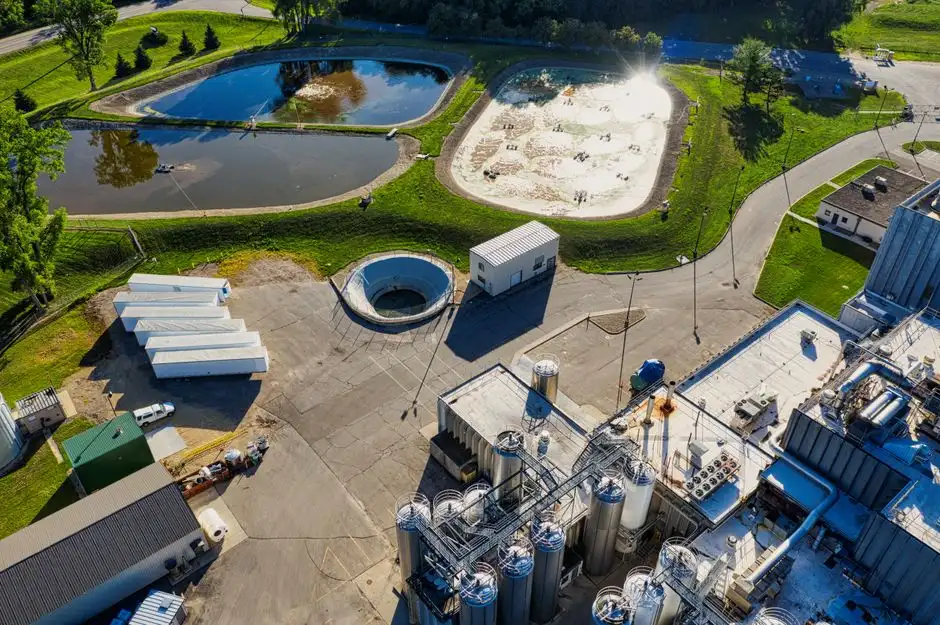
The first procurement step is to establish the controlling requirement, not choose a treatment process from a generic industry article. Obtain the current Independence permit and sewer requirements; complete the City-required Commercial and Industrial Wastewater Survey and Industrial Wastewater Permit Application where applicable. The City identifies these tools for regulating industrial and non-domestic discharges and for evaluating potential adverse impacts on its wastewater treatment plant.
- Resolve jurisdiction: Confirm permit applicability, SIU status, categorical category, discharge point, local limits, and reporting method with Independence Municipal Services.
- Characterize each stream: Separate production losses, washdown, and CIP discharges before combining them into the design flow.
- Define performance points: Translate final permit limits into guaranteed points, sampling locations, methods, and acceptance tests.
- Issue a performance-based RFP: Require bidders to address treatment, controls, startup, electrical work, residuals, and reporting interfaces.
- Clarify exclusions: Identify which elements are owned by the plant, the City, contractors, chemical suppliers, or haulers.
- Validate the proposal: Use the site-specific permit and representative wastewater testing to set acceptance criteria; do not turn contextual article ranges into guarantees.
The food and beverage pretreatment compliance guide can help structure the technical work, but the Independence permit controls the project. For an acquisition or inherited facility, the food-plant wastewater due-diligence checklist is also relevant: verify permit history, process changes, residual routes, sampling data, and outstanding compliance issues rather than assuming the installed equipment still fits current production.
Frequently Asked Questions
Does every food and beverage plant in Independence need an industrial wastewater permit?
No determination can be made from plant type alone. Independence states that categorical industries and significant industrial users must be permitted. It identifies SIUs as industries regulated by national categorical pretreatment standards or discharging at least 25,000 gallons per day of industrial process wastewater; it may also designate other industries with a reasonable potential to adversely affect the treatment plant. Ask Municipal Services to confirm applicability using the plant’s production category and wastewater flow, then verify the result in the written permit.
What pretreatment equipment is needed for a food plant with high FOG and BOD near Independence?
The usual sequence is screening, equalization, DAF, and biological treatment. Screening protects downstream equipment; equalization controls batch and CIP peaks; DAF addresses FOG and floatable solids; and activated sludge or MBR reduces biodegradable organics. Chemical precipitation and final polishing should be added only when the permit or process performance requires them. Final selection depends on the City’s limits and representative wastewater data, not on high FOG and BOD alone.
How should a supplier size a DAF system for food-processing wastewater?
Require the supplier to use forward flow, peak-to-average ratio, raw BOD, raw FOG, equalization performance, and the required removal efficiency. The HydropureWater 2026 commercial article gives preliminary DAF inputs of 4–25 m/h surface loading, an air-to-solids ratio of 0.005–0.02, and recycle of 20–40% of forward flow. Ask the bidder to state which assumptions apply to the plant’s actual batch and CIP load and which performance points are guaranteed after representative testing.
Is MBR necessary, or is conventional activated sludge enough?
Neither can be declared sufficient without the permit and wastewater characterization. The HydropureWater commercial article gives HRT of 8–24 hours and MLSS of 3,000–5,000 mg/L for conventional activated sludge, versus 4–10 hours and 8,000–12,000 mg/L for MBR. Compare footprint, membrane solids separation, reuse potential, operating complexity, maintenance, and residuals. MBR deserves evaluation when solids quality or reuse requirements justify it; it is not automatically the compliant choice.
What should a buyer request to reduce pretreatment compliance and lifecycle-cost risk?
Request guaranteed permit points, analytical methods, a sampling plan, controls integration, startup support, energy and chemical assumptions, and a complete residuals plan. Because the research provides no project-specific price or lifecycle-cost figure, ask bidders to price the same scope separately. Require clear treatment exclusions, electrical and civil-work boundaries, chemical consumption assumptions, sludge hauling or disposal acceptance, and the performance test needed before acceptance.