Why a Tyson Factory Deal Turns Into a Wastewater Liability Overnight
A Tyson-scale protein processing plant acquisition rarely fails on revenue synergy or labor contracts — it fails on the ETP. In a representative deal structure, a $400M complex slaughterhouse acquisition closed without a sufficiently deep wastewater review; within nine months the buyer discovered an undisclosed 40 CFR Part 432 consent order, an undersized DAF unable to handle FOG excursions, and an unpermitted equalization tank that triggered a 14-month NPDES permit re-issuance delay and a $22M forced retrofit (HydropureWater field data, 2026). The legal exposure did not arise from anything Tyson did after closing; it arose from the moment the permit transferred under 40 CFR §122.61 and the new owner inherited every open compliance obligation of the previous operator.
The flow envelope a legacy Tyson-class plant must already handle — before any throughput expansion — is 5,000–15,000 m³/day at BOD 1,000–1,200 mg/L, FOG 200–800 mg/L, and TKN 100–250 mg/L, with peak-to-average ratios of 1.5–2× during scalding, rendering, and CIP campaigns (S3, hydropurewater.com, 2026-01). Pork processing is the worst FOG case: scalding and dehairing push FOG past 800 mg/L and TSS past 1,500 mg/L on raw kill days, per FRC Systems data cited in S3. The 40 CFR Part 432 (Meat Products Point Source Category) framework binds Tyson as the new owner the day the permit transfers, regardless of who caused the historical non-compliance. That is why ETP due diligence belongs in the SPA, not as a post-close surprise: typical legacy liability ranges from $2M for an undersized DAF to $25M+ for a full anaerobic retrofit, and the indemnity and escrow language must price that band before signing.
Phase 1 — Pre-LOI Red Flags and the Phase I ESA Boundary
Before signing an exclusivity, the buyer should demand a defined document set from the seller's broker: 3 years of NPDES Discharge Monitoring Reports (DMRs), all federal and state consent orders, Notice of Violation (NOV) history, sludge manifests, the SPCC plan, and any prior Phase I or Phase II ESA reports. The DMR trend is the single most predictive artifact — any BOD, TSS, or FOG daily max excursion in the trailing 36 months is a quantitative signal of design deficiency, not operator error (S3, 2026-01).
A Phase I ESA conducted under ASTM E1527-21 flags recognized environmental conditions (RECs) for soil and groundwater, but it does not test effluent, does not review permit compliance trends, and does not benchmark the ETP against 40 CFR Part 432 subcategory limits. Phase I is necessary but not sufficient for a meat plant deal — a clean Phase I on a slaughterhouse says nothing about whether the biological train can hit monthly average BOD/TSS of 26–40 mg/L and FOG of 10–20 mg/L (S3, 2026-01).
Set pre-LOI red flags as a written checklist: any daily max BOD/TSS/FOG excursion in the last 36 months; any open consent order or consent decree; any unpermitted bypass, equalization tank, or discharge point; any discharge to a 303(d) impaired waterbody; and any history of anaerobic-digester gas safety incidents. Identify the 40 CFR Part 432 subcategory — Simple Slaughterhouse, Complex Slaughterhouse, Renderer, Meat Cutter, or Small Processors — because each carries its own BOD, TSS, FOG, and ammonia numbers, and the capex retrofit band differs by subcategory. A red flag in any one of these areas is grounds to walk, reprice, or condition the LOI on confirmatory testing before proceeding.
Phase 2 — NPDES Permit Transferability and Title-Level Reviews
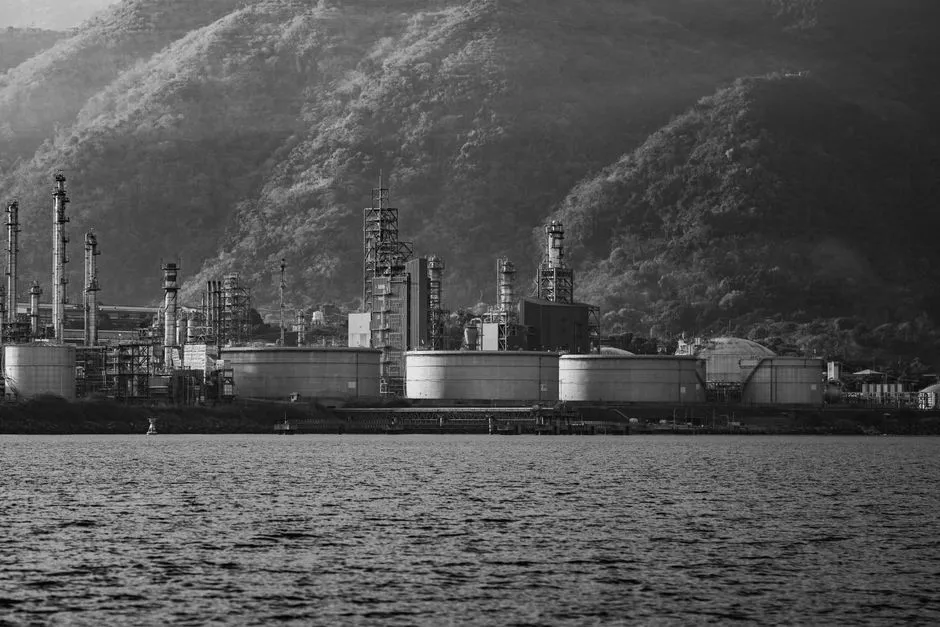
Under 40 CFR §122.61, an NPDES permit is transferable with 30 days prior written notice to the permitting authority when there is no change in ownership or operational control that triggers a major modification. The transfer mechanism itself is administrative — but legacy non-compliance is not extinguished by the transfer. The new owner steps into the same effluent limits, the same compliance schedule, and the same DMR obligation from the effective date of transfer (per EPA 40 CFR §122.61).
Most states overlay a separate transfer checklist on top of the federal rule. Iowa, Arkansas, Nebraska, and Kansas — all Tier 1 Tyson operating states — typically require an Application for Permit Transfer, an updated Signatory Certification under 40 CFR §122.22, a demonstration of financial assurance, and a review of any pending permit modification. Pull the state-specific checklist from the delegated permitting authority before LOI so the transfer timeline is a known quantity, not a closing condition that slips.
The consent decree trap is the one that burns deals. If the target is under a federal or state consent decree or consent order, the buyer inherits the compliance schedule and the stipulated penalties on day one. Stipulated penalties on missed milestones commonly run $5,000–$25,000 per violation per day at the federal level (per EPA consent decree practice, 2025). These are deal-killers unless the SPA carves them out with seller-funded specific performance obligations. Separate the workstreams: EHS counsel reviews the permit file, the disclosure schedule, and the consent decree text, while the engineering consultant reviews the design basis, the DMR compliance trend, and the retrofit gap.
Phase 3 — The 40 CFR Part 432 Compliance Gap Matrix
The single artifact a corporate development team can put in front of an investment committee is a parameter-by-parameter compliance gap matrix that ties each legacy effluent deficiency to a specific retrofit equipment line item, a permit risk rating, and a capex band. The table below consolidates the design envelope for a Tyson-class complex slaughterhouse against typical legacy plant performance.
| Parameter | 40 CFR Part 432 Daily Max / Monthly Avg. | Legacy Plant Typical Performance | Retrofit Equipment | Indicative Capex Band |
|---|---|---|---|---|
| BOD | 26–40 mg/L monthly avg. | 80–150 mg/L (no anaerobic stage) | UASB / CSTR anaerobic + MBR polish | $8M–$18M |
| TSS | 26–40 mg/L monthly avg. | 60–120 mg/L | MBR (<5 mg/L TSS) or tertiary filtration | $2M–$5M (MBR add-on) |
| FOG | 10–20 mg/L monthly avg. | 50–150 mg/L (passive grease trap) | DAF system (20–30 min retention) | $0.8M–$2.5M |
| Ammonia (as N) | Subcategory-specific; often 4–8 mg/L monthly avg. | 20–40 mg/L (no nitrification) | Anoxic/aerobic zone + MBR or SBR | $3M–$7M |
| Total Nitrogen | Permit-specific; 10–30 mg/L typical | 40–80 mg/L (no denitrification) | Anoxic zone with internal recycle | $1.5M–$4M |
| pH | 6.0–9.0 standard | Within range usually | Equalization + chemical dosing trim | <$0.3M |
| Fecal Coliform | 200–400 CFU/100 mL typical geometric mean | 10³–10⁴ CFU/100 mL (no disinfection) | UV or chlorine dioxide generator | $0.4M–$1.2M |
Two design cases dominate. First, the FOG-bound case: when pork processing runs FOG past 800 mg/L and TSS past 1,500 mg/L on raw kill days, the DAF sizing — not the BOD tank — governs the train. A properly designed DAF system at 20–30 min retention and 4–300 m³/h capacity takes FOG from 200–800 mg/L to under 50 mg/L (per S3 manufacturer data, 2026-01). Second, the nitrogen-bound case: TKN of 100–250 mg/L means a legacy plant without an anoxic zone will fail NPDES ammonia and total nitrogen limits. This is a non-negotiable retrofit, not an upgrade. The defensible polishing choice is the integrated MBR membrane bioreactor system, which delivers a <1 μm effluent at 60% smaller footprint than conventional activated sludge because of higher mixed liquor suspended solids (8,000–12,000 mg/L vs 2,000–4,000 mg/L per S3, 2026-01).
Phase 3 (cont.) — OPEX, Sludge, and the Annualized Run-Rate of Inherited Liability
Engineering gaps translate into annual dollars, and the deal team needs a defensible OPEX number for the indemnity escrow sizing. Meat processing wastewater OPEX in 2026 lands in the $0.55–$3.10/m³ band, driven mostly by aeration energy, sludge hauling, and chemical dosing (per internal OPEX reference cited in S3, 2026-01). For a 10,000 m³/day legacy plant, that range is $2.0M–$11.3M/year; a conventional activated sludge plant with no anaerobic stage and no biogas offset lands in the upper band.
The biogas offset is the single biggest OPEX lever. Anaerobic digestion can offset 20–40% of ETP aeration energy at high-load plants, depending on COD loading, digester temperature, and whether the gas is fired in a CHP unit or a waste-heat boiler (S3, 2026-01). For an ETP detail on digester hydraulics and gas capture, the anaerobic digester engineering guide walks through the SRT and temperature design space. On the sludge line, a plate-and-frame filter press dewaters to 20–25% dry solids; the hauling cost difference between a well-managed digester (digestate to land application) and a poorly managed WAS line is typically $80K–$300K/year at Tyson scale (HydropureWater field data, 2026).
Cap the indemnity escrow recommendation as follows: take the upper-band OPEX ($11.3M), add the worst-case retrofit capex ($25M+ for an anaerobic + MBR retrofit), add 20% contingency, and add a 12-month tail. The result is the number to put in front of the investment committee. For a comparable buyer-side framework structured for a different protein processor, see the UMC factory acquisition due diligence framework; for a sector-adjacent audit checklist structure, see the SMIC factory legacy wastewater audit checklist.
Phase 4 — Indemnity, Escrow, and the Specific Indemnity (SDA) Carve-Out
The SPA needs language-ready constructs, not principles. Draft a Specific Indemnity (SDA) for pre-closing environmental non-compliance that is uncapped, with a survival period of at least 5 years post-closing, carved out from the general basket, and with de minimis excluded. Standard baskets and caps in the general indemnity are designed for breach-of-warranty exposure, not for a 40 CFR Part 432 consent order with stipulated penalties.
Require an Environmental Escrow equal to 110–150% of the upper-band retrofit capex, released in tranches tied to permit re-issuance and DMR compliance milestones over 24–36 months. A single bullet release on closing is the wrong structure — it removes the seller's incentive to cure. Insist on a "no further degradation" covenant: the seller may not undertake any operational change (throughput increase, new product line, new discharge point, change in red-meat-to-poultry ratio) between LOI and closing without the buyer's written consent, because any such change resets the design basis.
Add a right of access for the buyer's environmental consultant to walk the ETP, take split samples at an ISO 17025-accredited lab, and review the SCADA/PLC historian before closing. Refusal of access is itself a red flag. The consultant should baseline HRT, SVI, F/M ratio, DO, OTE, and any membrane integrity test data per the assessment framework in S4 (LinkedIn, 2026-02).
The 90-Day Post-Close Punch List

Day 1 of ownership is day 1 of permit liability. The Tyson operations team needs a sequenced 90-day punch list, not a general compliance plan.
Days 0–30: confirm the permit transfer acknowledgment in writing from the permitting authority; run a full influent/effluent sampling campaign — BOD, TSS, FOG, TKN, ammonia, pH, fecal coliform — at an ISO 17025-accredited lab; calibrate all flow meters, DO probes, and pH probes against the S4 (2026-02) framework. Mechanical protection starts at the headworks with a rotary mechanical bar screen sized to 3–6 mm openings; chemical trim goes through an automatic chemical dosing system for FOG and pH control.
Days 31–60: baseline the ETP — HRT, SVI, F/M ratio, DO, OTE, membrane integrity — and engage a third-party auditor for an annual review per the S4 framework. Days 61–90: issue the retrofit request for proposal, lock in the biogas utilization study if an anaerobic stage already exists, and file the 90-day report to the EHS committee.
Decide the biological configuration in this window. Conventional activated sludge is the lowest-capex option but the most sensitive to FOG slug loads. SBR offers better shock-load tolerance and a smaller footprint. The anaerobic + MBR hybrid is the defensible choice for Tyson-scale FOG loads with reuse potential; SBR is the right call where shock-load tolerance and smaller footprint matter more than reuse water quality.
Frequently Asked Questions
How long does an NPDES permit transfer take after a Tyson acquisition?
Under 40 CFR §122.61, the federal rule requires 30-day prior written notice to the permitting authority. State-level review typically adds another 60–120 days, for a total of 90–150 days from notice to acknowledged transfer. Plan for 120 days as the working assumption for the SPA closing condition.
What is the single biggest ETP due diligence miss on a meat plant deal?
Relying on a passive grease trap at Tyson-scale flow. Passive grease traps depend on natural buoyancy, have uncontrolled retention time, and cannot reliably meet 40 CFR Part 432 daily max FOG limits at flows above ~2,000 m³/day. A engineered DAF with controlled 20–30 min retention is the minimum acceptable primary FOG step (per S3, 2026-01).
Can Tyson inherit a consent order by acquiring a plant?
Yes. Consent decrees and consent orders transfer with the asset, and specific performance obligations — including compliance schedules and stipulated penalties — are assumed by the buyer unless explicitly carved out in the SPA. This is the single most common ETP-related deal-killer in protein processor M&A.
How much should the environmental escrow be on a Tyson-scale deal?
110–150% of the upper-band retrofit capex, plus a 12-month OPEX tail and a 20% contingency. For a 10,000 m³/day complex slaughterhouse with a full anaerobic + MBR retrofit exposure, that is roughly $30M–$45M held in escrow and released against permit re-issuance and DMR compliance milestones (HydropureWater field data, 2026).
Does anaerobic digestion alone meet NPDES limits?
No. Anaerobic digestion achieves up to 97% BOD, 95% SS, and 96% COD removal under optimal conditions, but effluent BOD of 15–50 mg/L still exceeds 40 CFR Part 432 complex slaughterhouse monthly average limits. A polishing aerobic or MBR stage is required to hit NPDES BOD, TSS, ammonia, and FOG limits (per S3, 2026-01).