Which Rules Control Discharge to a Sewer?
Mining and metals plants near Smithdale meet sewer pretreatment limits by treating wastewater to the controlling local POTW requirements under Clean Water Act §307(b) and 40 CFR Part 403, using federal categorical standards as a floor. A typical train uses equalization, automatic pH correction, hydroxide precipitation with sulfide polishing when necessary, DAF or lamella clarification, and filtration or disinfection where required. Equipment is selected only after testing worst-case flows and loads; representative local zinc limits of 0.3–1.0 mg/L monthly average may be tighter than the cited Part 437 standard.
Sewer discharge and direct surface-water discharge are separate compliance pathways. Under Clean Water Act §402, NPDES governs direct discharges to surface waters. Under §307(b) and 40 CFR Part 403, the POTW controls indirect discharges through its sewer-use ordinance, pretreatment program, and permit. A mine may hold both authorizations for different discharge routes, but the NPDES permit does not determine the sewer discharge limit.
The HydropureWater 2026 mining pretreatment source identifies mining and metals operations as typical Categorical Industrial Users under 40 CFR Part 437 for Ore Mining and Dressing or Part 433 for Metal Finishing. The source conflict must remain explicit: another HydropureWater article cites Part 430 for ore mining and dressing, while the primary 2026 source cites Part 437. Confirm the applicable subcategory and current federal text with EPA and the receiving POTW before preparing the permit basis.
| Requirement pathway | Controlling authority | What the buyer must establish |
|---|---|---|
| Direct surface-water discharge | NPDES permit under Clean Water Act §402 | Outfall-specific limits, monitoring, and reporting |
| Indirect sewer discharge | POTW sewer-use ordinance and SIU permit under §307(b) and 40 CFR Part 403 | Local limits, monitoring, surcharge, slug control, and discharge authorization |
| Ore mining and dressing | 40 CFR Part 437, subject to subcategory verification | Categorical floor plus applicable local limits |
| Metal finishing | 40 CFR Part 433 | Categorical floor plus applicable local limits |
For metal-finishing operations, the 2026 source reports Part 433 limits of 3.38 mg/L daily maximum and 2.07 mg/L monthly average for copper, and 2.77 mg/L daily maximum and 1.71 mg/L monthly average for total chromium. Federal categorical limits establish minimum controls; the POTW’s written local limits and permit conditions are the enforceable site-specific design targets. The broader regulatory pathway is summarized in this US mining pretreatment compliance guide.
Confirm the Smithdale-Area POTW Limits Before Sizing Equipment
The receiving POTW’s written local limits, not a generic mining example, must control the Smithdale-area design. Obtain the current sewer-use ordinance, SIU discharge permit, local-limits worksheet, monitoring and sampling requirements, slug-load provisions, spill-control rules, and fee or surcharge schedule before requesting equipment quotations.
The 2026 HydropureWater source gives representative screening values of 0.3–1.0 mg/L monthly average for zinc and 0.3–0.5 mg/L monthly average for copper. It also reports a Part 437 zinc standard of 1.0 mg/L daily maximum and 0.5 mg/L monthly average. Those values are useful for initial budgetary screening, but the POTW requirement for the receiving system takes precedence wherever it is stricter.
| Parameter | Part 437 value reported by the 2026 source | Representative POTW range reported by the 2026 source | Procurement action |
|---|---|---|---|
| Zinc | 1.0 mg/L daily maximum; 0.5 mg/L monthly average | 0.3–1.0 mg/L monthly average | Request the written local zinc limit and averaging period |
| Copper | Part 433 values apply to metal finishing: 3.38 mg/L daily maximum; 2.07 mg/L monthly average | 0.3–0.5 mg/L monthly average | Confirm whether mining or finishing limits apply |
| Lead and ammonia | Federal treatment depends on category and subcategory | Potentially tighter local controls | Obtain the complete analyte list |
The same source characterizes local limits as especially tight for zinc, copper, lead, and ammonia. Do not reduce the design basis to a metals-only list. Request total suspended solids, pH, oil and grease, ammonia, toxicity, analytical methods, monitoring frequency, averaging periods, and prohibitions on diluted or slug discharges. The 2024 Multi-Sector General Permit, 2025 ore-mining BAT revisions, and POTW adoption of PFAS analytical suites are permit-cycle risks described by the 2026 source—not automatic Smithdale sewer limits. Confirm each document’s applicability before adding it to the basis of design.
Use the 2026 guide to mining and metals pretreatment limits as a document-request checklist, then reconcile every screening value against the receiving POTW’s written permit.
Characterize the Wastewater as a Collection of Variable Streams
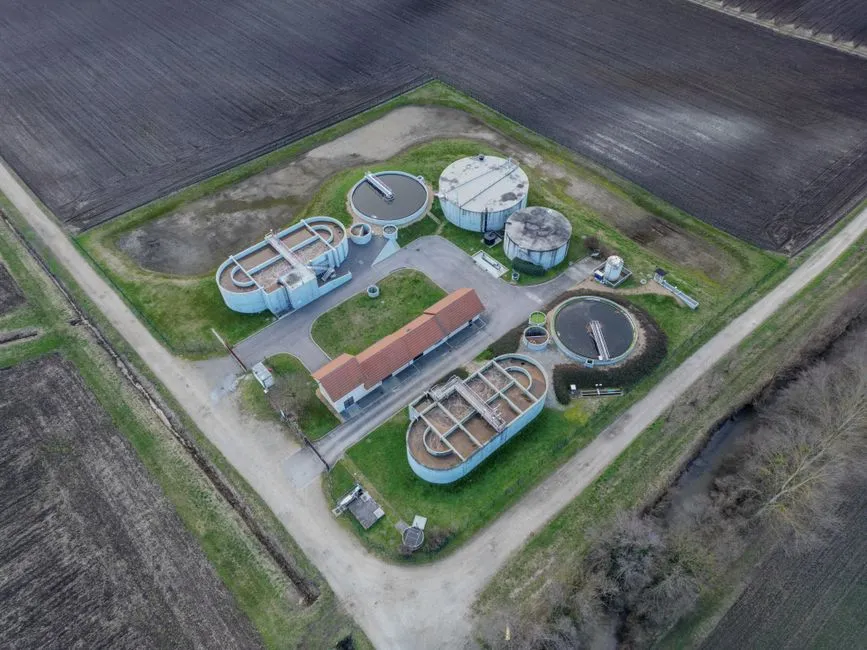
Mining wastewater cannot be represented reliably by one monthly average because pit dewatering, concentrator or mill wastewater, contact stormwater, acid mine drainage, metal-finishing rinsate, and wash water carry different pollutant loads. The 2026 HydropureWater source reports pH of 2–4 in raw acid mine drainage and spent process solutions, TSS in the hundreds to several thousand mg/L, dissolved Pb, Cu, Zn, Cd, Ni, and As, and potentially elevated sulfate and TDS.
Build the design cases by stream rather than by facility average. Characterize flow, pH, conductivity, TSS, dissolved and total metals, hardness, sulfate, TDS, oil and grease, and treatment-reagent residuals. Separate continuous flow from campaign, clean-out, shift-change, dump-leach, and storm-driven peaks. The [biological treatment comparison for mining wastewater](https://example.com) is not required for this step; representative wastewater testing is the controlling input.
The 2026 source recommends at least one 24-hour composite sampling program and online pH and conductivity monitoring at the headworks. For a defensible basis of design, collect additional samples across ore grades, mill campaigns, shift changes, dump-leach cycles, mill clean-outs, and storm events. Document flow at the same time so each analytical result can be converted to a mass loading.
Ask the POTW whether slug discharges are prohibited and obtain the peak two-hour flow, flow-duration profile, and required turndown basis. The 2026 source specifies a 20–30% turndown design basis. Equalization and controls must then be evaluated against the actual peak rather than an average that conceals batch releases.
Request worst-case data by ore grade, mill campaign, shift change, dump-leach cycle, mill clean-out, and storm event. That dataset determines whether one common treatment train is credible or whether segregated streams require different pH, solids, or organic-removal steps before they are combined.
Build the Pretreatment Train From the Permit Backward
Each treatment step should answer a specific permit or equipment-protection requirement. Start with equalization, then pH correction, precipitation, solids removal, conditional polishing, and sludge handling; add biological treatment only where the POTW permit or influent characteristics justify it.
| Unit operation | Design function | Selection criterion |
|---|---|---|
| Equalization | Damp batch and storm-driven peaks | 8–24 hours of average daily flow, per the 2026 source |
| Automatic pH correction | Establish a stable precipitation range | Commonly applicable pH range of 6.5–9.0; parameter-specific jar-test window |
| Hydroxide precipitation | Remove dissolved metals as insoluble hydroxides | Residual metals and sludge quantity after jar testing |
| Sulfide polishing | Lower residual metals where hydroxide cannot meet the permit | Local limit and demonstrated hydroxide performance |
| DAF or lamella | Remove precipitated solids, floatables, or colloids | Oil/colloid content, sludge type, hydraulic loading, and footprint |
| Filtration | Provide a residual-solids barrier | Permit need, clarifier upset risk, and backwash capacity |
| Disinfection | Control pathogens where required | POTW ordinance or collection-system condition |
| Sludge treatment | Recover manageable solids for characterization and disposal | Solids yield, dewatering acceptance test, and disposal route |
The 2026 source sizes equalization at 8–24 hours of average daily flow to damp shift changes, dump-leach cycles, and mill clean-outs; it warns that a four-hour basin can pass upstream spikes directly into the clarifier. Use automatic reagent dosing after equalization. The source reports ±0.2 pH control and states that this control band can distinguish compliance with a 0.3 mg/L zinc monthly average from an excursion.
Use lime or NaOH for primary hydroxide precipitation. Add sulfide polishing only when jar tests and the controlling local limit show that hydroxide cannot reliably achieve the required residual. Select DAF for oil, grease, or fine colloidal metals; select lamella for predominantly metal-hydroxide sludge at high flow or under footprint constraints. A PLC-controlled chemical dosing skid can centralize pH, reagent, and coagulant control, but its control logic must reflect the tested chemistry.
Add a multimedia filter when residual solids or clarifier-upset risk warrants it. The 2026 source reports a filtration rate of 1–2 m/h and residual TSS below 10 mg/L. Add UV or chlorine dioxide only when the POTW ordinance or collection-system conditions require disinfection. Include thickening, conditioning, and dewatering in the original scope rather than treating metals-bearing sludge as an ancillary issue.
Choose Precipitation Chemistry From Jar-Test Results
Hydroxide precipitation is the practical starting point because the chemistry is well understood and lime generally costs less per ton, but reagent price is only one decision variable. The 2026 HydropureWater source reports that lime produces 3–5 times more sludge than NaOH, a material difference when dewatering and disposal are included in the ownership analysis.
Use lime, Ca(OH)₂, or NaOH for primary precipitation. Reserve NaHS, FeS, or Na₂S for streams that must reach residual metals below 0.1 mg/L or for which hydroxide polishing cannot meet the controlling local limit. The 2026 source reports sulfide residuals of 0.01–0.05 mg/L for Cu, Zn, Cd, and Ni, compared with 0.5–2.0 mg/L for hydroxide.
| Decision | Hydroxide precipitation | Sulfide precipitation |
|---|---|---|
| Reported residual Cu, Zn, Cd, and Ni | 0.5–2.0 mg/L | 0.01–0.05 mg/L |
| Relative reagent cost | Lower-cost starting point | 2–4 times higher |
| Sludge consequence | Lime generally produces 3–5 times more sludge than NaOH | Additional reagent and H₂S-management requirements |
| Operating controls | pH-dependent hydroxide precipitation | Sealed reactors and scrubbed ventilation |
| Best use in this workflow | Primary removal stage | Conditional polishing stage |
Require parameter-specific jar testing. Test each target metal, the competing chemistry, reagent dose, pH window, settling behavior, residual metal, and sludge volume before fixing the operating pH or selecting a clarifier. Vendor literature is not a substitute for site-specific tests. The 2026 source identifies hydroxide as the default and reports 85–95% total-metals removal from properly controlled systems.
Control the selected chemistry through an automatic skid with proportional reagent feed, pH monitoring, and operator-adjustable setpoints. The same skid may handle coagulant aid, but its capacity and alarms should reflect both chemical streams and the worst-case pH excursion identified during testing.
Match Solids-Removal Equipment to the Wastewater
DAF and lamella clarification both remove precipitated solids, but they serve different wastewater profiles. Choose DAF where floatable oil, grease, or fine colloidal material drives the design; choose lamella where the dominant solids are metal-hydroxide flocs, flow is high, and footprint is constrained.
| Selection factor | DAF | Lamella clarification |
|---|---|---|
| Reported hydraulic or surface loading | 5–25 m/h | 20–40 m/h |
| Reported TSS removal | 90–98% | Not quantified in the supplied research |
| Reported oil and grease removal | 85–95% | Not quantified; described as less effective than DAF |
| Preferred solids type | Oil-coated, colloidal, or floatable material | Heavy-metal hydroxide flocs |
| Scale context reported by the 2026 source | 4–300 m³/h across 13 models; packaged skids common below 10 m³/h; multiple trains or lamella may be more economical above 100 m³/h | Approximately one-third the footprint of a conventional clarifier |
| Main operating consideration | Recycle, air saturation, float removal, and polymer control | Dense sludge blanket and higher surface loading |
Those reported DAF and lamella ranges come from the 2026 HydropureWater source and are screening values, not site guarantees. A dissolved air flotation system for mining wastewater should be checked against oil, colloid, recycle, and float-handling requirements. Lamella should be checked against settling velocity, sludge-blanket behavior, and withdrawal capacity.
Use the reported polymer coagulant-aid range of 0.5–3 mg/L as the starting point for jar and pilot testing, not as a guaranteed dose. Include recycle-flow limits and polymer availability in the operating comparison. A more complete process-flow review is available in this cavitation and air-flotation process guide.
Neither clarifier removes the need for downstream control. Performance depends on precipitation chemistry, hydraulic loading, pH control, and sludge handling. Retain filtration or monitoring where permit sensitivity, clarifier upset risk, or collection-system requirements justify it.
Manage Filtration, Disinfection, and Metals-Bearing Sludge
Filtration and disinfection are conditional safeguards, not automatic components of every sewer-pretreatment train. A multimedia filter is justified when the permit limit or clarifier operating risk requires a residual-solids barrier; disinfection is justified only when the POTW ordinance or collection-system conditions require it.
The 2026 source reports multimedia filtration at 1–2 m/h with residual TSS below 10 mg/L and backwash triggered by differential pressure. A multimedia filtration system should therefore be sized for its backwash cycle, waste stream, and treatment train rather than average flow alone. Confirm the required media configuration and acceptance criteria against site testing and the equipment proposal.
Where disinfection is required, the 2026 source gives chlorine dioxide dosing of 1–5 mg/L for the requested residual without the regulated trihalomethane formation associated with chlorine. A chlorine dioxide generation system still requires an engineered feed, contact, monitoring, and safety arrangement; the dose is not a substitute for the POTW’s written requirement.
Characterize metals-bearing sludge independently of the sewer permit. RCRA hazardous-waste status is determined separately and may depend on TCLP results. The supplied sources report conflicting filter-press outcomes: one reports 25–35% dry solids and another 30–45%. Buyers should require the final expected dry-solids range, an acceptance test, and confirmation that the cake satisfies the selected landfill or smelter requirements.
A plate-and-frame filter press can dewater the sludge, but the scope must also include sludge thickening, polymer conditioning, cake handling, and transport. Return filter-press filtrate to the headworks for retreatment unless the POTW and plant design explicitly approve another route. The broader [belt-filter-press process-flow guide](https://example.com) is relevant to a comparison of dewatering mechanisms, but it does not replace site acceptance testing.
Turn the Treatment Train Into a 2026 Compliance and Procurement Plan
Convert the permit into an auditable responsibility matrix before awarding equipment. Every limit should have a responsible unit operation, monitoring point, sampling method, frequency, alarm, corrective action, and record owner.
| Procurement package | Required buyer check | Acceptance basis |
|---|---|---|
| Permit basis | Current POTW ordinance, SIU permit, local-limits worksheet, and monitoring rules | Each numerical limit traced to a controlling document |
| Hydraulic basis | Peak two-hour flow, flow-duration profile, and 20–30% turndown | Supplier states any departure from the stated basis |
| Influent basis | Representative and worst-case stream characterization | Metals, TSS, pH, flow, and campaign data support equipment sizing |
| Performance demonstration | Process-scale trial or validated pilot | Metals removal and permit compliance verified under defined loading |
| Operating assumptions | Chemical consumption, sludge dry-solids yield, backwash waste, filter-press cycle time, energy, and maintenance | Values stated for the actual wastewater and duty |
| Permit renewal | Recheck before the next SIU renewal | 2024 MSGP, 2025 ore-mining BAT revisions, and PFAS monitoring changes resolved by date |
Specify the peak two-hour flow with 20–30% turndown capacity, as stated in the 2026 source, and require suppliers to disclose any different basis. Require representative wastewater testing and a process-scale trial or validated pilot before accepting guarantees for metals removal or local-limit compliance. Compare installed redundancy, controls, maintenance assumptions, and operator workload in addition to purchase price.
The 2026 source also warns that civil penalties under Clean Water Act §309 may reach $25,000 per day per violation. Upset detection, redundant monitoring, chemical storage, standby power, and recovery capacity therefore belong in the operating budget. Recheck requirements before SIU renewal because the source identifies the 2024 Multi-Sector General Permit and 2025 ore-mining BAT revisions as emerging permit-cycle risks.
Regional frameworks can support planning, but they cannot replace local verification. Compare the regional mining pretreatment compliance guide and 2026 mining sewer-limit guide for workflow discipline, then confirm every requirement with the Smithdale-area POTW.
Frequently Asked Questions
Can a mining or metals plant select treatment equipment using only the city name and generic Part 437 limits?
No. The receiving POTW’s written local limits, SIU permit, influent characterization, and peak-flow data define the design. Request the current sewer-use ordinance, local-limits worksheet, sampling and monitoring requirements, slug-control rules, and surcharge schedule before comparing treatment proposals.
When should a Smithdale-area plant choose DAF instead of lamella clarification?
Choose DAF when oil, grease, or fine colloidal contamination is central to the wastewater profile; the 2026 source reports DAF performance of 90–98% TSS removal and 85–95% oil and grease removal at 5–25 m/h hydraulic loading. Choose lamella when the stream predominantly contains heavy-metal hydroxide flocs, flow is high, and footprint is constrained; the source reports 20–40 m/h surface loading.
What should a 2026 equipment comparison include when the buyer is working to a fixed budget?
Compare total ownership cost, not purchase price alone. Request chemical consumption, sludge dewatering and disposal, energy, controls, redundancy, backwash handling, maintenance, and compliance risk. No supported project quotation is provided in the research, so require each bidder to price the same wastewater basis and state its exclusions.
When does sulfide polishing justify the additional operating complexity?
Use sulfide when jar tests show hydroxide cannot reliably meet the controlling local limit. The 2026 source reports residuals of 0.01–0.05 mg/L for Cu, Zn, Cd, and Ni versus 0.5–2.0 mg/L for hydroxide, but reagent cost is 2–4 times higher and sealed reactors with scrubbed ventilation are required. For supplier selection, require the reagent supply basis, H₂S controls, monitoring, and upset-response plan.
Related Equipment
- dissolved air flotation system for mining wastewater — specifications, capacity range, and technical data