Start with the receiving sewer authority's permit
Food and beverage plants near Salem meet sewer pretreatment limits by treating wastewater before it enters a POTW and proving compliance with the control authority’s industrial discharge permit. The usual sequence is screening and equalization, DAF or another solids/FOG-removal step, pH adjustment, and biological treatment when soluble BOD or COD requires it. Exact limits are local, not determined by a single national number. Hixson identifies indirect dischargers as subject to 40 CFR Part 403 and commonly cites 250 mg/L thresholds for both BOD and suspended solids, but those values must be checked against the enforceable Salem-area permit rather than treated as automatic local limits.
First identify whether wastewater enters a sewer authority or treatment district that discharges to a POTW, and then determine which body is the control authority. Obtain the industrial discharge permit before finalizing equipment. Oxmaint states that food manufacturers classified as Significant Industrial Users must obtain pretreatment permits, conduct self-monitoring and sampling, and submit periodic compliance reports under 40 CFR Part 403.
The permit may regulate BOD, TSS, fats, oils and grease, pH, and temperature, with nitrogen or phosphorus added where applicable. Ask the control authority for the exact sampling point, sample type, frequency, reporting schedule, surcharge formula, slug-discharge restrictions, upset and bypass notification procedures, and renewal requirements. Local requirements govern: Crystal Clean notes that sewer districts may impose limits that differ between nearby jurisdictions.
| Permit question | Evidence the plant should obtain | Design consequence |
|---|---|---|
| Which authority controls the discharge? | Named control authority, POTW, sewer district, and applicable ordinance or permit | Prevents equipment from being specified against generic limits |
| Which parameters and local limits apply? | BOD, TSS, FOG, pH, temperature, and any nutrient limits | Defines required treatment functions |
| How must compliance be demonstrated? | Sample location, frequency, composite or grab rules, chain-of-custody requirements, and reporting deadlines | Sets the monitoring and documentation scope |
| What financial and operational exposure applies? | Surcharge formula, slug controls, upset and bypass rules, renewal dates, and enforcement history | Adds surcharges and disruption risk to the procurement comparison |
Generic guidance can frame the evaluation, but it cannot replace the permit. The same distinction applies to treatment examples discussed in local pretreatment compliance planning and in high-COD trade-waste treatment.
Characterize production, sanitation, and cleanup wastewater
Food-processing wastewater must be characterized by operating condition because production, product loss, floor washing, equipment cleaning, and clean-in-place wastewater can have different flow, pH, temperature, solids, BOD, and COD profiles. Crystal Clean describes a plant that may discharge relatively little during production and then release a concentrated surge during sanitation; batching that release into an average daily flow can hide both hydraulic overload and contaminant loading.
Separate the streams before selecting equipment. Production wastewater may contain sugars, proteins, starches, acids, product losses, and washwater. Floor and equipment washing can carry soilable solids and sanitizers. Clean-in-place wastewater can introduce caustic, acid, heat, and cleaning chemicals in a short discharge period. Retained washwater and discarded product fractions also need a defined flow and load history.
Use the batch schedule and cleaning cycle to identify maximum daily and maximum hourly loading conditions for preliminary sizing. Hixson reports that food-processing effluent can be 10 to 100 times stronger than domestic wastewater in BOD5 and COD terms. The supplied sub-sector results are screening evidence, not design guarantees for a Salem plant.
| Source stream | Illustrative screening concentrations reported by Hixson | What the plant must verify |
|---|---|---|
| Brewery wastewater | Approximately 338 mg/L BOD5, 1,118 mg/L COD, and relatively low nitrogen | Product mix, production schedule, and cleaning discharge |
| Dairy wastewater | Around 170 mg/L BOD5, 1,007 mg/L COD, and 300 mg/L TSS | Milk-fat carryover, product loss, and washwater management |
| Poultry-slaughterhouse wastewater | Around 4,067 mg/L BOD5, 10,906 mg/L COD, and 10,793 mg/L TSS | Blood, solids, FOG, nutrients, and whether cleaning occurs separately |
Test the actual effluent across representative production and sanitation periods before final equipment selection. Establish the permit-required sampling program in parallel with preliminary characterization, because a sampling plan based on only average effluent can miss cleanup spikes. More detailed COD and BOD removal technologies for industrial wastewater should be evaluated only after those plant-specific data are available.
Build a pretreatment train that matches the pollutant
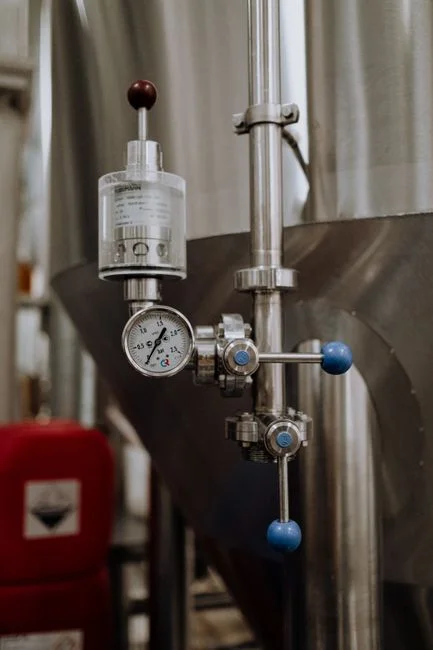
A pretreatment train should assign each permit parameter to a distinct process function: screening protects equipment, equalization buffers flow and concentration, DAF removes suspended solids and FOG, pH control limits acidity or alkalinity, and biological treatment reduces soluble organics. Hixson states that no single technology handles food-processing wastewater effectively; the appropriate sequence depends on effluent characteristics, discharge destination, and permit requirements.
Start with screening or mechanical removal to capture product pieces, grit, packaging debris, and fibrous solids before they reach pumps or downstream biological equipment. Add equalization to buffer production surges and concentrated CIP releases. Hixson explains that equalization stabilizes flow and strength and prevents shock loading of biological processes.
DAF is the primary option where suspended solids, fats, oils and grease, oil and grease, or colloidal material must be removed before sewer discharge. A food-processing DAF system must still be selected from the actual FOG and solids profile rather than flow alone. Hixson cites 74% suspended-solids removal and 99% oil-and-grease removal under optimized conditions. It also reports more recent poultry results of up to 99% TSS removal, 85% BOD5 reduction, and 98% phosphate removal with appropriate coagulant selection and operating parameters.
Use pH adjustment for acidic product and fruit-processing streams and alkaline CIP streams. Crystal Clean identifies equalization basins and active neutralization as the two common approaches. An automatic chemical dosing system should be evaluated against the measured chemical demand, mixing conditions, control response, and containment requirements.
Add biological treatment or MBR only when soluble organic loading or the required effluent quality justifies it. Hixson cites an MBR pilot at a beverage facility with effluent COD of 16.9 mg/L, TSS of 3.8 mg/L, and 92.6% COD removal. Those pilot results are a technology reference, not a guaranteed Salem outlet.
| Process function | Primary problem addressed | Required operating evidence |
|---|---|---|
| Screening or mechanical removal | Product pieces, grit, debris, fibrous solids | Screen condition, extracted solids, downstream protection |
| Equalization | Flow and strength surges, including CIP releases | Level control, retained volume, sampled constituent concentrations |
| DAF | Suspended solids, FOG, oil and grease, colloidal material | Skimming, solids removal, coagulant dose, recirculation and outlet quality |
| pH control | Acidic or alkaline discharge conditions | Probe response, chemical use, neutralization performance |
| Biological treatment or MBR | Soluble BOD and COD | Organic loading, aeration or membrane operation, nutrient removal where applicable |
Size the system for peak load and variable chemistry
A wastewater system should be sized from peak hydraulic and contaminant loads, not average daily flow. The plant must provide peak-hour flow, average flow, maximum daily load, production duration, clean-in-place frequency, cleanup-water volume, and the retained-waste fraction. These inputs establish whether equalization can absorb a sanitation release and whether downstream biological or flotation capacity can handle the resulting load.
Request measured or defensibly estimated BOD5, COD, TSS, FOG, pH, temperature, and relevant nutrient data across representative operating states. Define hydraulic and contaminant loading, transfer capacity, level-control requirements, standby or bypass strategy, odor control, sludge removal, and available installation footprint.
Do not select DAF only by flow. Confirm the flotation and skimming arrangement against measured FOG, solids, and waste variability. Compare proposals on guaranteed outlet performance, monitoring requirements, chemical and energy use, sludge handling, maintainability, and exposure to sewer surcharges or permit violations rather than purchase price alone. For solids-liquid separation of pretreatment sludge, evaluate a plate-and-frame filter press when the waste characteristics justify it; the available plate-and-frame filter press range is described by the supplier as 1–500 m² of filtration area, with manual, hydraulic, and PLC-controlled configurations.
| Procurement input | Reason it controls selection |
|---|---|
| Peak-hour and maximum daily flow | Defines equalization, pumping, and treatment capacity |
| Batch schedule and CIP discharge profile | Determines whether concentrated releases need segregation or additional storage |
| BOD5, COD, TSS, FOG, pH, temperature, and nutrient data | Links each permit parameter to a treatment function |
| Sludge volume, solids characteristics, and disposal route | Establishes the required solids handling method |
| Guaranteed outlet performance and contingency conditions | Makes competing proposals technically comparable |
Buyers can use the industrial sludge press equipment selection guide to examine filtration mechanics, but the final selection still needs site-specific solids testing and operating data.
Operate, sample, and document the pretreatment system
Defensible compliance depends on a traceable operating record, not merely evidence that equipment has been running. Oxmaint identifies BOD, TSS, FOG, pH, temperature, and potentially nitrogen and phosphorus as parameters that may require pretreatment-system documentation. Follow the permit’s sampling point, sample type, frequency, and parameter requirements, and maintain chain-of-custody documentation for each required sample.
Create scheduled checks for screens, equalization basins, DAF skimming, chemical dosing, pumps, instruments, and sludge removal. Record the work performed, operating condition, material removed, corrective action, and responsible person. Oxmaint’s maintenance examples include daily operational checks, weekly skimmer inspections, and monthly DAF chamber cleanouts; these are operational examples from that source, not Salem permit requirements.
Calibrate pH and other monitoring instruments on the established schedule. Investigate drifting readings before they become permit exceedances. Connect alarms or remote notifications to written operating procedures so an upset triggers an operator response before a prohibited discharge occurs.
When a result exceeds a limit, document notification, root-cause analysis, corrective work, verification sampling, and closure. Oxmaint describes that sequence as evidence needed for the control authority. Maintain links among the permit, sample record, calibration record, work order, corrective action, and verification result. The pretreatment compliance framework used in another local-market guide follows the same logic: sampling, equipment condition, and corrective action must form one auditable record.
Compare the main treatment options before approval
DAF, equalization, pH control, biological treatment, and MBR solve different compliance problems. Hixson identifies DAF as the most widely used primary treatment technology in food processing because it targets fats, oils and grease and suspended solids, while equalization controls variability and active pH control corrects chemical extremes. Neither equalization nor pH control removes soluble BOD or COD by itself.
Aerobic activated sludge and sequencing batch reactors address dissolved organics but require aeration and careful control of variable loads. Hixson describes MBR as activated sludge combined with membrane filtration and notes its suitability where low effluent solids, compact installation, tight limits, or reuse readiness is required. The cited beverage pilot produced COD of 16.9 mg/L and TSS of 3.8 mg/L.
The available integrated MBR system combines activated sludge treatment with submerged PVDF membrane filtration, with filtration stated below 1 μm and capacity offered from 10 to 2,000 m³/day. These are supplier specifications, not evidence that the system will meet a Salem permit. Further technical context is available in the supplied comparisons of MBR and conventional activated sludge and MBR versus activated sludge for wastewater treatment.
| Option | Best fit | Key limitation or decision check |
|---|---|---|
| DAF | Suspended-solids and FOG removal before biological treatment or sewer discharge | Performance depends on characterization, coagulant selection, and operating control |
| Equalization | Buffering production and CIP surges | Process-control function; it does not replace organic removal |
| Active pH control | Acidic product streams and alkaline CIP waste | Requires reliable probes, dosing control, and chemical management |
| Activated sludge or SBR | Soluble BOD and COD reduction | Aeration and load control are necessary |
| MBR | Low suspended solids, high-quality effluent, compact footprint, or reuse readiness | Higher capital and energy demands; outlet requirement must justify them |
Do not approve a proposal unless it identifies the applicable permit basis, design loads, expected outlet performance, monitoring plan, sludge-handling approach, and contingency for upset or bypass conditions.
Frequently Asked Questions
What equipment does a food and beverage plant near Salem need before discharging to a sewer?
It needs the functions required by its industrial discharge permit. A typical train may include screening, equalization, DAF for FOG and solids, pH adjustment, and biological treatment when soluble BOD or COD remains outside the enforceable limit. The plant should obtain the permit and characterize its wastewater before deciding whether biological treatment or MBR is necessary.
How should a plant size a DAF and equalization system for food-processing wastewater?
Provide peak-hour flow, average flow, maximum daily load, production duration, CIP frequency, cleanup-water volume, and representative BOD5, COD, TSS, FOG, and pH data. Use those inputs to determine whether equalization can buffer cleanup releases and whether the proposed DAF has adequate hydraulic and contaminant loading. A supplier commitment should identify the design case, expected outlet performance, and operating conditions.
When is an MBR or other biological treatment system needed instead of DAF alone?
DAF alone is appropriate when the permit obligation is principally solids and FOG removal and the remaining soluble organic load is acceptable. Biological treatment becomes necessary when the required effluent still needs BOD or COD reduction. MBR merits evaluation where low suspended solids, very low outlet concentrations, a compact footprint, or reuse readiness justifies the added complexity. The cited MBR beverage pilot reached COD of 16.9 mg/L and TSS of 3.8 mg/L, but that pilot is not a design guarantee.
How much does industrial pretreatment cost, and what drives the budget?
The supplied research does not provide a defensible plant-specific price. Request itemized quotations for civil work, screening, equalization, DAF, pH controls, biological equipment, electrical and controls, sludge handling, installation, commissioning, chemicals, energy, maintenance, monitoring, and permit-related engineering. Also request the authority’s surcharge formula so the buyer can assess the operating and compliance cost of each option rather than comparing purchase price alone.
What records should a plant keep to demonstrate compliance with 40 CFR Part 403 and local permit conditions?
Keep the permit and correspondence, sampling plan, chain-of-custody records, analytical results, calibration records, equipment operating logs, preventive-maintenance work orders, chemical and sludge records, and exceedance investigations. For every exceedance, retain notification evidence, root-cause analysis, corrective work, verification sampling, and closure. Oxmaint specifically identifies sampling, maintenance, calibration, and corrective-action records as necessary evidence for the control authority.