
What wastewater strategy should CATL use for a Texas gigafactory?
Wastewater from CATL’s proposed Texas gigafactory should be segregated by production chemistry, characterized, and treated as a chemical-recovery system before it is considered a discharge problem. Keep cathode coating wash water, anode wash water, electrolyte-salt flush, and general plant effluent separate. Recover NMP by vacuum distillation, remove fluoride and metals through controlled chemical treatment, treat residual organics with MBR, and add RO when reuse is required. The final route—direct discharge, POTW discharge, high reuse, or zero liquid discharge—must follow Texas permits, influent testing, discharge limits, and the expansion’s phased flow profile.
No supplied source confirms CATL’s final Texas wastewater process, permit, plant location, flow profile, or equipment selection. The train described here is an engineering basis for evaluation, not an operating description of CATL’s Texas facility. That distinction matters because the available evidence is divided: American Chemical Society reporting from 2026 describes CATL’s European expansion, HydropureWater’s 2026 CATL analysis presents a treatment concept, and the Texas permitting evidence comes from a Tesla analogue.
CATL’s manufacturing scale makes staged design essential. American Chemical Society reported a planned 100 GWh Hungary plant costing $7.5 billion and noted that approximately 40 European gigafactories were planned to start by 2035. The corresponding Hungarian gigafactory wastewater strategy provides useful process context, while the battery-manufacturing wastewater treatment concept should be validated through representative sampling and pilot work.
The decision sequence is straightforward: segregate streams, characterize variability, recover valuable material, remove regulated pollutants, qualify reuse water, and then select the discharge route after permit review. Doing those steps in reverse creates avoidable chemical-treatment loads, membrane fouling, and residual-management problems.
Separate the four wastewater streams before selecting equipment
Four independently collected wastewater streams prevent incompatible chemistries from forcing one treatment system to handle incompatible objectives. HydropureWater’s 2026 CATL analysis identifies cathode coating wash water carrying NMP and PVDF; anode coating wash water carrying CMC/SBR; electrolyte-salt flush containing fluoride and phosphate; and general plant effluent containing boiler blowdown, HVAC condensate, and domestic sewage.
| Collection stream | Principal characteristics | Collection and treatment boundary |
|---|---|---|
| Cathode coating wash water | NMP, PVDF binder residues, metals | Keep separate for solvent recovery and solids removal |
| Anode coating wash water | CMC/SBR binder in aqueous slurry | Keep separate for solids and organic-load control |
| Electrolyte-salt flush | Fluoride and phosphate | Keep separate for fluoride removal and metals control |
| General plant effluent | Boiler blowdown, HVAC condensate, domestic sewage | Collect separately and assess for biological treatment and reuse |
The supplied cathode-stream characterization is COD 5,000–25,000 mg/L, fluoride 50–500 mg/L, suspended solids 500–3,000 mg/L, and pH 2–4, according to HydropureWater’s 2026 CATL analysis. Those values explain why a generic industrial wastewater plant is a weak basis for selection: the cathode stream alone can exceed conventional equalization and biological-treatment expectations unless it is recovered and normalized first.
Premature commingling can destroy NMP recovery value and increase the fluoride and organic load before recovery or biological treatment. HydropureWater’s 2026 analysis specifies pH correction to 6–8 before equalization and an 8–24-hour hydraulic-retention design basis at peak wet-weather flow. The final retention time should be calculated from batch-production schedules, cleaning cycles, and wet-weather peaks rather than selected from that range alone. Coarse protection can be provided by a rotary mechanical bar screen, while pH and chemical feedback should come through an automatic chemical dosing system.
Before equipment sizing, establish representative sampling points for each collection zone. The program should cover pH, conductivity, COD, fluoride, suspended solids, metals, solvent concentration, and production-batch variability. Sampling during representative production, cleaning, and ramp-up periods is more defensible than a single campaign using nominal product data.
Recover NMP before biological treatment
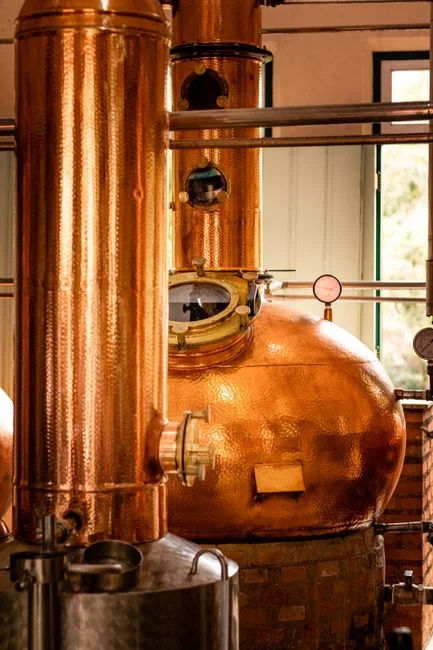
NMP recovery is the first material-recovery step because the supplied cathode stream contains roughly 1–5 wt% NMP, giving solvent recovery a process function beyond pollution control. HydropureWater’s 2026 CATL analysis gives the operating basis as vacuum distillation at 50–100 mbar and 80–120 °C, producing above 99.5% reusable NMP for return to cathode-slurry mixing.
That performance should not be treated as an automatic guarantee for a Texas installation. The source does not establish a universal recovery percentage, so bidders should provide guarantees for solvent purity, recovery rate, energy demand, fouling tolerance, and materials compatibility under the proposed wastewater matrix and operating schedule.
Feed preparation is integral to the column. HydropureWater’s 2026 analysis identifies PVDF binder residues as potential reboiler foulants and specifies suspended-solids removal and activated-carbon polishing before distillation. The pretreatment sequence should therefore include pH control, a solids-removal step, and carbon polishing, with evidence from vendor testing that demonstrates stable solvent purity and manageable fouling.
Equipment selection should reflect the treatment objective. A high-efficiency sedimentation tank can remove entrained coating solids before recovery, while a DAF system for cathode and general industrial wastewater can address lighter floatable material where testing confirms that need.
The aqueous distillation bottoms should continue to fluoride removal, metal precipitation, and biological treatment. They should not enter the biological system at the original cathode-stream COD. This separation protects biomass loading and preserves a clearer mass balance for solvent loss, recovered NMP, residual COD, and concentrate generation.
Remove fluoride and metals with staged chemical treatment
Fluoride and metals require different precipitation mechanisms, so the treatment sequence should not assume that one coagulant dose handles both. HydropureWater’s 2026 CATL analysis follows this order: adjust pH, remove suspended solids, precipitate fluoride with calcium chloride, and use staged pH precipitation for nickel, cobalt, and manganese.
| Pollutant | Supplied treatment basis | Design action |
|---|---|---|
| Fluoride | CaCl₂; target residual below 10 mg/L | Set dose by jar testing and control through pH and fluoride feedback |
| Nickel and cobalt | Hydroxide precipitation at pH 9.5–10.5 | Stage pH control and hydroxide-solids separation |
| Manganese | Oxidation at pH above 10 using NaClO or KMnO₄ | Test oxidation demand and retain insoluble solids for separation |
| Lithium | Remains soluble in hydroxide precipitation | Account for lithium in the RO concentrate and residual-management route |
HydropureWater’s 2026 analysis specifies PAC at 50–200 mg/L plus anionic polyacrylamide at 1–5 mg/L for coagulation. Those are design-basis values, not final doses for CATL in Texas. Jar testing must establish the actual matrix response because pH, fluoride, metals, organics, and solids interactions may change dose and settling behavior during production ramp-up.
Solids separation should match sludge characteristics. A DAF system for cathode and general industrial wastewater is appropriate where testing identifies lighter floc or floatable material, while a lamella sedimentation tank can handle denser hydroxide sludge. The supplied CATL source gives a lamella surface-loading rate of 20–40 m/h; the selected rate must still be checked against the actual sludge settleability and hydraulic profile.
Route the resulting hydroxide sludge to a plate-and-frame filter press. HydropureWater’s 2026 analysis reports dewatered cake at 25–35% dry solids for licensed disposal or a metal-recovery off-taker. That disposition route must be qualified for the waste code and leachate characteristics; a filter press does not resolve the ultimate disposal question.
Lithium requires separate accounting. The supplied analysis states that lithium remains soluble through hydroxide precipitation and reports to the RO concentrate. Claims of lithium removal by hydroxide precipitation should therefore be rejected unless supported by project-specific testing.
Treat residual organics with MBR and protect downstream reuse equipment
The MBR stage should remove residual biodegradable organics and provide a controlled membrane barrier before reuse or RO. HydropureWater’s 2026 CATL analysis gives the biological basis as A²/O or sequencing-batch treatment at MLSS 8,000–12,000 mg/L, HRT 12–24 hours, SRT 20–40 days, COD removal of 90–95%, and total nitrogen below 15 mg/L.
| Parameter | Supplied CATL concept basis | Engineering implication |
|---|---|---|
| Membrane | Submerged PVDF, 0.1–0.4 μm | Solid-barrier separation replaces reliance on final clarifier performance |
| Permeate suspended solids | Below 1 mg/L | Supports downstream polishing and reuse qualification |
| RO feed SDI | Below 3 | Must be demonstrated continuously, not only during acceptance testing |
| Membrane air scour | 0.3–0.5 Nm³/hr per m² | Confirm against flux, temperature, and fouling behavior |
| Packaged MBR reference | 10–2,000 m³/day | Catalog range only; not a CATL Texas flow estimate |
An integrated MBR membrane bioreactor is a candidate train, not a predetermined requirement for the Texas project. Final selection depends on discharge limits, reuse targets, footprint, process variability, and the wastewater characteristics confirmed through sampling. HydropureWater’s MBR catalog range of 10–2,000 m³/day is an equipment reference only and must not be treated as an estimate of CATL’s Texas flow.
RO protection requires more than an average SDI result. Operators should verify membrane flux, cleaning frequency, soluble microbial growth indicators, conductivity, and behavior during production and cleaning cycles. If pilot data shows that MBR permeate cannot reliably maintain SDI below 3, additional UF or cartridge filtration should be evaluated. An ultrafiltration system is one possible barrier before RO, and its selection should follow membrane-fouling evidence rather than automatic inclusion.
The MBR versus conventional activated sludge for chemical wastewater comparison is relevant during concept selection because the biological stage must handle variable industrial loads while meeting the quality required for downstream membranes. However, no biological configuration should be finalized until the recovered-NMP stream, batch cleaning water, electrolyte flush, and general effluent have representative mass and load profiles.
Compare direct discharge, POTW discharge, reuse, and ZLD routes
Four overall routes should be compared before the wastewater plant is designed: direct surface-water discharge, indirect discharge to a publicly owned treatment works, high reuse with a permitted residual discharge, and zero liquid discharge using mechanical vapor recompression followed by crystallization. Each route has a different permit, brine, equipment, and operating burden.
| Route | Main advantage | Principal constraint | Decision test |
|---|---|---|---|
| Direct discharge | Conventional outfall solution | TPDES authorization, receiving-water limits, stormwater and monitoring exposure | Can the applicable permit cover each discharge point and variable load? |
| POTW discharge | Avoids a direct surface-water outfall | Local pretreatment limits, capacity and prohibited constituents | Will the POTW accept the complete segregated stream matrix? |
| High reuse | Reduces freshwater demand and residual discharge | RO feed quality, concentrate fate and disinfection needs | Which uses can accept the resulting water quality? |
| ZLD | Converts residual liquid to a saleable or disposable solid stream | High energy demand and concentrated brine management | Does the water-recovery objective justify MVR and crystallization? |
For permit context, HydropureWater’s 2026 Texas analogue identifies individual TPDES coverage for combined flow above 50,000 gallons per day, references 30 TAC Chapter 307 discharge standards, and notes quarterly DMR reporting through EPA ECHO. This is analogue evidence, not confirmation of CATL’s permit class. The applicable Texas path must be checked against the actual site flow, receiving water, industrial classification, discharge points, and construction and operating conditions.
The supplied CATL RO basis is 70–80% recovery, producing 20–30% concentrate and permeate conductivity below 50 μS/cm. Feed requirements are SDI below 3, free chlorine below 0.1 mg/L, and iron below 0.05 mg/L. An industrial reverse-osmosis system can close the reuse loop only if pretreatment remains stable through batch-production variability.
For zero liquid discharge, HydropureWater’s 2026 CATL analysis gives MVR electrical consumption of 20–35 kWh per m³ of distillate and identifies brine at 200,000–250,000 mg/L TDS before crystallization. The concept reports 70–90% reuse and 10–30% residual solid salt cake, but actual recovery depends on stream chemistry, membrane performance, and the selected residual route. Operators must also evaluate the disinfection stage where reuse or discharge requires it.
For capital planning, the only supplied cost band is the Tesla analogue’s $1.5 million–$6 million for an MBR-plus-RO backbone excluding NMP distillation. HydropureWater’s 2026 Texas analogue states that the figure depends on flow, effluent limits, and reuse target; it is not a CATL Texas estimate and should not be transferred without a scoped design basis.
Build a phased Texas permitting and procurement plan
Pilot testing should follow the factory ramp-up, not precede it with an incomplete production profile. Characterize each stream during representative batch coating, cleaning cycles, electrolyte flushing, and ramp-up operation. Wet-weather and construction discharges require separate assessment because they can differ materially from production wastewater.
Develop the wastewater basis of design alongside the factory phasing plan. A temporary low-flow condition can make a large biological system look unnecessary, while future production lines can exceed the permitted or engineered envelope. Design assumptions should identify average flow, peak flow, batch duration, solvent concentration, fluoride loading, metals loading, COD variability, and the point at which each production line enters service.
For Texas permitting, identify the potential TPDES authorization path, receiving-water or POTW route, 30 TAC Chapter 307 considerations, stormwater controls, monitoring points, and discharge-reporting obligations. The supplied research does not establish CATL’s actual permit class, so this is a regulatory work plan rather than a permit determination.
Issue separate equipment packages for source control, chemical pretreatment, solids dewatering, biological treatment, membranes, disinfection, and residual-brine handling. Separate scopes allow performance interfaces to be tested and avoid hiding an unresolved stream-segregation issue inside one turnkey package.
- Characterize each stream during representative production and ramp-up periods.
- Establish the wastewater flow and load forecast by factory phase.
- Run bench and pilot tests for solvent recovery, fluoride removal, metal precipitation, biological treatment, and membrane handoff.
- Confirm the receiving-water, POTW, stormwater, and residual-management route with the appropriate authorities.
- Issue performance-based equipment packages with defined guarantees and operating interfaces.
Bidder demonstrations should cover solvent recovery performance, fluoride and metals removal, MBR permeate quality, RO recovery, concentrate fate, energy use, automatic controls, chemical storage, redundancy, and O&M staffing. The Austin industrial wastewater planning guide can support local discharge and treatment discussions, while the 2025 DAF versus sedimentation comparison provides additional context for solids-separation selection.
Do not finalize discharge targets or reuse percentages until pilot data, permit limits, and the production ramp-up forecast are available. If discharge performance or recovery changes materially, the permit route, equipment scope, and residual balance must be revisited together.
Frequently Asked Questions
What is the available cost benchmark for wastewater treatment at a Texas battery gigafactory?
The only supplied benchmark is HydropureWater’s 2026 Tesla analogue: $1.5 million–$6 million for an MBR-plus-RO backbone excluding NMP distillation. HydropureWater states that this range depends on flow, effluent limits, and reuse target. It is not a CATL Texas estimate. A CATL budget request should include segregated peak and average flows, batch schedules, pilot results, discharge or reuse targets, solids concentration, brine route, and the required NMP-recovery performance.
How should MBR equipment be sized for the CATL Texas expansion?
HydropureWater’s supplied MBR catalog range is 10–2,000 m³/day, but that is an equipment-capacity reference rather than a Texas design flow. Actual sizing requires average and peak flows for each stream, production batch schedules, cleaning and flushing periods, required hydraulic retention and solids-retention targets, reuse or discharge criteria, and redundancy requirements. Pilot data should then confirm biological treatability and membrane fouling behavior.
What should procurement teams require when selecting a wastewater-treatment supplier?
Require demonstrated performance on the actual CATL wastewater matrix rather than generic contaminant-removal claims. For NMP recovery, request solvent purity, recovery rate, energy use, fouling tolerance, and materials-compatibility evidence. For the remaining train, request fluoride and metals removal data, MBR permeate quality, RO recovery, concentrate fate, automatic-control functionality, redundancy, and O&M staffing. Pilot data and production-representative samples should form the acceptance basis.
What compliance risks should be checked before selecting a discharge route?
TPDES and POTW requirements cannot be selected from flow alone. Verify receiving-water capacity, local pretreatment limits, stormwater obligations, discharge points, monitoring requirements, and the fate of RO concentrate and treatment sludge. HydropureWater’s 2026 Texas analogue uses a 50,000-gallon-per-day threshold for individual TPDES coverage, 30 TAC Chapter 307 standards, and quarterly DMR reporting, but it does not establish CATL’s actual permit class.
When is zero liquid discharge technically credible for this application?
ZLD becomes credible when the residual treatment objective warrants MVR followed by crystallization and the project can manage the resulting salt stream. HydropureWater’s 2026 CATL analysis gives MVR energy consumption of 20–35 kWh per m³ of distillate and identifies brine at 200,000–250,000 mg/L TDS before crystallization. A feasibility study must therefore test brine chemistry, crystal formation, fouling, energy availability, and the final salt-cake disposal route rather than treating zero liquid discharge as an automatic outcome.
Related Equipment
- DAF system for cathode and general industrial wastewater — specifications, capacity range, and technical data