What Changes When Tesla Acquires a Texas Gigafactory?
Wastewater from a Tesla-acquired Texas Gigafactory should remain under TPDES controls throughout the transaction, with permit assignment, conveyance rights, stormwater coverage, monitoring history and EPCRA obligations treated as separate liabilities. The acquired plant should segregate cathode coating, anode rinse, body-shop, electrolyte-salt and sanitary streams before designing a common treatment train. A defensible benchmark is equalization and pH control, DAF, coagulation and clarification, NMP recovery where applicable, MBR biological treatment, RO polishing and disinfection. Equipment selection must follow current permits, at least eight quarters of EPA ECHO DMRs, site testing and reuse targets—not assumptions about Tesla’s internal design.
The acquisition objective is straightforward: preserve permit coverage, establish liability boundaries, verify the treatment train and quantify retrofit exposure before closing. A change in corporate control does not erase the site’s environmental compliance history. HydropureWater’s Texas plant acquisition compliance guide states that the buyer must report the change of ownership to TCEQ within 30 days of closing; the permit is then reissued in the successor’s legal name.
The process sequence described here is not a Tesla-confirmed Giga Texas configuration. HydropureWater’s Texas plant acquisition wastewater requirements presents it as a probable reconstruction based on permit structure, Tesla disclosures and practice at other gigafactories.
| Evidence tier | Acquisition use | Decision confidence |
|---|---|---|
| Current TPDES permit and attachments | Identify covered operations, discharge points, limits, monitoring and authorization conditions. | Controlling document |
| EPA ECHO DMRs | Review at least eight quarters of reported performance and exceedances. | Site history, but requires reconciliation |
| TCEQ orders, violations and enforcement | Identify unresolved corrective actions and historical noncompliance. | Material liability indicator |
| Site mass balance, P&IDs and laboratory records | Verify streams, equipment condition, reuse claims and actual operating range. | Needed for final design |
| Publicly inferred treatment benchmark | Frame the gap analysis and vendor questions. | Not a site design |
Verify Permits, Conveyance Rights and Environmental Liabilities
A valid discharge permit does not establish the legal right to convey wastewater to the discharge point. HydropureWater’s Texas acquisition guide uses the Robstown lithium refinery as the warning: TPDES-TX was issued on January 15, 2025, authorized up to 231,000 gpd, and expressly stated that issuance did not grant rights to use public or private property for wastewater conveyance. A buyer must therefore map every segment of the discharge route before treating permit coverage as transferable operational risk.
The permit-status boundary is equally important. According to HydropureWater’s acquisition guide, combined flow above 50,000 gpd points toward an individual TPDES permit; smaller satellite operations may qualify for multi-sector general permit TXR050000 if their SIC codes, flows and Notices of Intent meet the applicable conditions. The buyer must verify both because one campus can contain multiple permitted activities.
Start with the current permit, application and engineering report. Obtain at least eight quarters of Discharge Monitoring Reports from EPA ECHO and reconcile them against TCEQ’s Notice of Violation ledger, open Enforcement Actions and Agreed Orders. Then map pipeline easements, drainage-district approvals, receiving-water authority requirements and the legal operator of every pipeline segment.
| Diligence track | Documents or confirmation required | Liability identified |
|---|---|---|
| TPDES authorization | Individual permit or TXR050000 NOI; permit conditions; discharge-point map | Permit coverage, limits and transfer requirements |
| Compliance history | Eight quarters of EPA ECHO DMRs; NOV, enforcement and agreed-order records | Past exceedances and outstanding corrective action |
| Conveyance | Easements, pipeline agreements, drainage-district correspondence, operator records | Right-to-disconnect and route impairment |
| Stormwater | TPDES stormwater NOIs, current SWPPP and expansion coverage | Construction and industrial stormwater gaps |
| Toxic-release reporting | EPCRA Section 313 inventories and Form R filings | Successor reporting exposure for nickel, cobalt and NMP |
Run stormwater and EPCRA diligence separately. HydropureWater’s 2026 guide identifies TPDES stormwater requirements for construction and site expansion and EPCRA Section 313 reporting for nickel, cobalt and NMP because each exceeds the applicable threshold quantity. Discharge authorization, pipeline rights, stormwater coverage and toxic-release filings are legally distinct obligations; resolving one does not resolve the others.
Segregate Wastewater Before Selecting Treatment Equipment
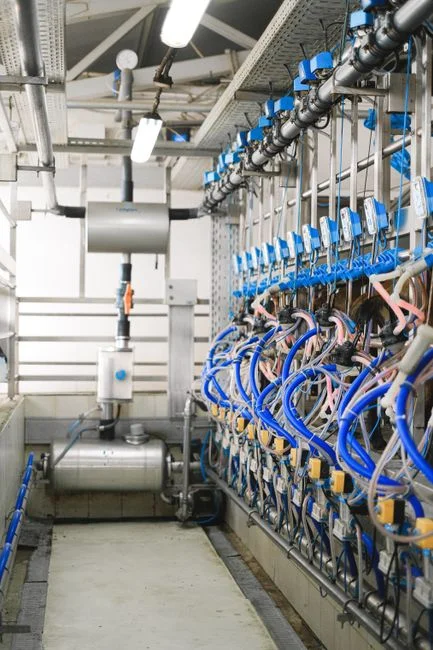
The five-stream framework identified by HydropureWater’s Giga Texas treatment guide is an acquisition diagnostic: cathode coating, anode rinse, body-shop metalworking, electrolyte-salt and sanitary flows should remain identifiable. Their incompatibilities determine pretreatment requirements, and premature mixing can transfer one stream’s treatment burden to the entire plant.
Cathode coating can carry NMP solvent, while anode rinse can carry graphite slurry. Body-shop flows can introduce oil and grease; formation-related flows can introduce electrolyte salts; sanitary wastewater still requires conventional biological treatment. Equalization must precede biological or membrane treatment because the source describes influent pH swings from 2 to 11 and a controlled 6.5–7.5 target before downstream processes.
During a site walk, count the dedicated influent channels entering equalization. HydropureWater’s acquisition guide treats a single combined header as evidence that segregation retrofit should be modeled separately in Phase 1. That same guide reports that one channel can reduce the retrofit estimate by a factor of two or more; this is a screening observation, not a substitute for a flow study.
| Stream | Primary concern | Pre-treatment decision |
|---|---|---|
| Cathode coating | NMP solvent | Confirm whether coating is onsite and whether distillation already exists. |
| Anode rinse | Graphite slurry | Determine solids separation and rinse-water reuse requirements. |
| Body-shop metalworking | Oil and grease | Evaluate DAF as oil-and-grease pretreatment. |
| Electrolyte salt | Conductivity and salt loading | Assess membrane recovery, reject volume and scale risk. |
| Sanitary | Biodegradable organic load | Retain a conventional biological treatment path. |
Before sizing equipment, obtain source-separated data under production, startup, shutdown and dump conditions. The research specifies flow, pH, COD, BOD, TSS, oil and grease, total nickel, total cobalt, lithium, NMP, conductivity, sulfate and chloride as relevant analytical inputs. A blended sample can hide the contaminant peaks that determine chemical demand, sludge loading, membrane fouling and NMP-recovery complexity.
For preliminary pretreatment concepts, a DAF system for oil and grease pretreatment addresses the body-shop pretreatment question, while an automatic chemical dosing system is relevant where controlled pH and coagulant feed must integrate with plant controls.
Build the Treatment Train from Contaminants and Reuse Goals
The probable benchmark sequence is equalization and neutralization, DAF, coagulation, flocculation and lamella clarification, NMP recovery where applicable, MBR biological treatment, RO polishing and disinfection. Each stage addresses a defined contaminant or reuse objective, but the sequence remains a design hypothesis until matched against the acquired permit, P&IDs and influent characterization.
DAF removes free oil, grease and floated solids before clarification. HydropureWater’s 2026 process guide states 80–95% FOG removal and TSS typically below 100 mg/L downstream; its DAF catalog spans 4–300 m³/h. That catalog range is product capability, not Giga Texas flow. For the preliminary train, review a DAF system for oil and grease pretreatment against measured flow and dumped wastewater conditions.
Coagulation, flocculation and lamella clarification are the benchmark approach for removing dissolved metals before membrane treatment. HydropureWater’s guide gives pH 9–10 and surface loading of 20–40 m/h for the inferred configuration. No site-specific chemical dose is established by that source; jar and pilot tests must determine ferric chloride or polyaluminum chloride demand, residual metals and sludge generation. A high-efficiency sedimentation tank can be evaluated as a clarification candidate, not specified as an installed asset.
NMP recovery is solvent management rather than terminal treatment. Recovered NMP returns to coating operations; aqueous distillation bottoms proceed to biological treatment with lower COD loading. If cathode coating is outsourced, the source indicates that NMP distillation may be unnecessary; if it is in-house, absence of an operating recovery system is a major capital and schedule question.
| Process stage | Source-qualified benchmark | Buyer verification required |
|---|---|---|
| Equalization and neutralization | pH 2–11 incoming; 6.5–7.5 target; 6–12 hours of balancing | Actual stream pH, holding time, surge and dump volume |
| DAF | 80–95% FOG removal; downstream TSS typically below 100 mg/L | Peak flow, oil characteristics and recovered-solids handling |
| Coagulation and clarification | pH 9–10; 20–40 m/h surface loading | Jar tests, pilot response, metal removal and sludge characteristics |
| NMP recovery | Vacuum distillation; recovered solvent returns to coating | Whether coating is onsite; solvent inventory and bottoms chemistry |
| MBR | MLSS 8,000–12,000 mg/L; turbidity below 1 NTU | Organic loading, nutrients, temperature and existing membrane condition |
| RO | 70–85% recovery; 15–30% reject; permeate below 50 µS/cm | Scale constituents, antiscalant approach, reject destination and reuse quality |
| Disinfection | Chlorine dioxide or UV | Disinfection demand, residual needs and receiving-water or reuse requirements |
The MBR benchmark uses 8,000–12,000 mg/L MLSS and effluent turbidity below 1 NTU. HydropureWater describes an approximately 5,000 m³/day reactor for the Giga Texas scenario; that figure is scenario-specific and cannot be transferred to the acquired plant. An integrated MBR wastewater treatment system should be sized only after segment flows, biodegradable load and required clarification performance are established.
The inferred RO stage uses a two-pass configuration, 70–85% recovery and 15–30% reject, with permeate conductivity below 50 µS/cm. HydropureWater’s DAF versus clarifier selection for EV manufacturing wastewater provides a related equipment decision framework. For polishing, evaluate an industrial RO wastewater treatment system only after testing conductivity, sulfate, chloride, hardness and organics. Disinfection can use a chlorine dioxide generator or UV system; no public evidence in the supplied research confirms either is installed at Giga Texas.
Translate the Treatment Plan into an Acquisition Budget
HydropureWater’s 2026 guide places the treatment train for a 1,500 m³/day plant at $1.5 million–$6 million, excluding NMP distillation. The source describes this as a CAPEX envelope that depends on flow, effluent limits and reuse target, so it should remain an order-of-magnitude benchmark rather than a turnkey quotation.
| Budget case | Scope | Evidence-qualified cost position |
|---|---|---|
| Outsourced cathode coating | DAF, MBR and RO; no NMP distillation | Within the $1.5M–$6M benchmark for the stated 1,500 m³/day scope, subject to actual conditions. |
| In-house cathode coating | DAF, MBR, RO and NMP vacuum distillation | At the upper end or above the benchmark; the research provides no turnkey distillation price. |
| ZLD-ready expansion | Base train plus evaporation or crystallization | Above the base benchmark; the research provides no single turnkey price for this addition. |
The RO constraint cannot be treated as an engineering footnote. At the benchmark 15–30% reject, evaporation or off-site disposal becomes a central operating-cost and expansion decision. The study does not provide a universal disposal tariff, so a buyer should request current local hauling, treatment and evaporation quotations using the expected reject chemistry.
Include metal-rich sludge dewatering in the model. The inferred precipitation stage separates nickel-, cobalt- and lithium-bearing solids, and HydropureWater’s budget framework calls for a filter press. A plate-frame filter press for metal-rich sludge should be evaluated on cake moisture, filtrate quality, cake handling and cleaning requirements rather than reactor price alone. The DaaS versus CAPEX lifecycle comparison provides a useful framework for deciding between purchased equipment and service-based alternatives.
Separate mandatory remediation, post-closing verification and expansion-only spending. Segregation may be mandatory if the existing header defeats the permit or reuse plan; NMP distillation depends on onsite cathode coating; evaporation and crystallization are expansion options linked to Tesla’s reported 2030 direction, not confirmed closing requirements.
Protect Reuse Performance Without Overstating Public Data
Tesla’s 2023 Impact Report, as reported by HydropureWater, states that Giga Texas reused approximately 1.4 million gallons of water daily. The same source associates that disclosure with a 60–80% reuse range typical of the inferred MBR-plus-RO configuration. These are separate claims: the daily figure is a reported Tesla disclosure, while the range is an engineering inference.
A buyer should test the operating claim with a dashboard covering flow by stream, recovery rate, conductivity, turbidity, FOG, COD, BOD, TSS, total nickel, total cobalt, NMP and RO reject volume. Meter data must reconcile with DMR reporting before the acquisition model treats reuse as bankable. Membrane condition and RO and UF membrane replacement strategy also belong in the operating-cost model.
Reuse quality is not a single target. Cooling-tower makeup, process rinse, sanitary reuse and permitted discharge impose different acceptance criteria. A process that meets one reuse specification may still fail another because conductivity, organics, disinfection residual or trace metals differ by application.
HydropureWater’s 2026 guide links Tesla’s published 2030 zero-liquid-discharge direction at gigafactories to adding evaporation or crystallization for RO reject. That supports reserving space and utilities during expansion planning, but it does not establish that a specific zero-liquid-discharge installation exists at Giga Texas.
Recommended Acquisition and Commissioning Sequence
The acquisition sequence should move from document verification to physical confirmation, then to pilot-based treatment decisions. Public records can identify exposure; only site-specific records and testing can establish the retrofit scope.
- Pre-signing: Request the current TPDES permit and attachments, at least eight quarters of EPA ECHO DMRs, enforcement history, stormwater NOIs and SWPPP, EPCRA filings, laboratory influent and effluent data, P&IDs, equipment condition records and the conveyance and easement map.
- Resolve cathode coating: Obtain written confirmation of whether coating is performed onsite and whether NMP recovery already exists. This fact determines whether the budget includes distillation.
- Closing: Submit the TCEQ change-of-ownership notice within the cited 30-day window and preserve the permit, DMR history and enforcement records in the closing checklist.
- Post-closing: Complete a mass-balance walkdown, count dedicated influent channels, reconcile meters with DMRs and perform confirmatory source characterization.
- Pilot: Test representative peak and dump streams for DAF, chemical precipitation, MBR and RO changes before accepting equipment performance guarantees.
- Expansion: Reserve space and utilities for sludge dewatering and, where the reuse strategy requires it, evaporation or crystallization for RO reject.
| Phase | Decision gate | Deliverable |
|---|---|---|
| Pre-signing | Are permit, conveyance and compliance liabilities bounded? | Source-qualified liability and gap register |
| Closing | Is permit coverage preserved? | Change-of-ownership record and retained compliance history |
| Post-closing verification | Do streams, flows and chemistry match the public inference? | Verified mass balance and influent/effluent characterization |
| Pilot design | Which stages and capacities meet permit and reuse targets? | Site-specific process basis and equipment sizing |
| Expansion | Is additional reuse or ZLD capacity justified? | Expansion CAPEX, utilities and reject-management plan |
For DAF versus clarification, use the supplied DAF versus clarifier selection for EV manufacturing wastewater as a screening resource, not as a substitute for the acquired site’s oil, solids, flow and metal data.
Frequently Asked Questions
How is a TPDES permit transferred after Tesla acquires a Gigafactory in Texas?
Report the change of ownership to TCEQ within 30 days of closing. The existing permit number transfers, but the permit is reissued in the successor’s legal name. The buyer must verify whether the operation holds an individual permit or whether smaller satellite activities require TXR050000 NOI coverage, while retaining the seller’s DMR and enforcement history in the diligence record (HydropureWater, 2026).
What budget should a buyer reserve for wastewater treatment?
Use $1.5 million–$6 million as an order-of-magnitude guide for a 1,500 m³/day treatment train excluding NMP distillation, not as a quotation (HydropureWater, 2026). Request a vendor budget based on verified segment flows, permit limits, reuse targets, cathode-coating scope, solids handling and reject disposal. Distillation, evaporation or crystallization may move the project above the stated range and require separate pricing.
How should DAF, MBR and RO capacity be sized?
Size from source-separated flows, current permit limits and end-use quality—not the inferred Giga Texas reactor volume. Request production, startup, shutdown and dump-condition data for flow, pH, COD, BOD, TSS, oil and grease, metals, NMP, conductivity, sulfate and chloride. Use pilot results to confirm hydraulic loading, chemical demand, recovery and fouling assumptions before selecting DAF, MBR or RO equipment.
How should an acquisition team evaluate wastewater-equipment suppliers?
Require evidence that the proposed process fits the acquired site’s chemistry and permit conditions. Check demonstrated operating data, control narratives, materials selection, guarantees tied to representative wastewater, service support and spare-parts planning. Separate vendor benchmark performance from site-specific commitments, and require a vendor to explain how performance changes across production and dump conditions.
What compliance risks remain if the TPDES permit is valid?
Four separate risks remain: legal rights to use the conveyance route, stormwater NOI and SWPPP coverage, EPCRA Section 313 reporting for threshold chemicals, and enforcement or exceedances in the historical record. The Robstown permit example shows why permit issuance cannot substitute for an easement and route review. Request these records separately before signing and track them through closing (HydropureWater, 2026).
Related Equipment
- DAF system for oil and grease pretreatment — specifications, capacity range, and technical data