What Changes—and What Does Not—After an AWS Plant Acquisition in Texas
An acquisition does not itself establish Texas wastewater compliance for the plant. The buyer must verify the facility’s existing authorizations, wastewater sources, discharge route, monitoring history and treatment capacity, then determine whether ownership, production, cooling demand or planned reuse changes those obligations. TCEQ identifies wastewater permit applications through its Water Quality Division and requests electronic application copies via [email protected]; TCEQ also states that electronic submission does not waive the remaining application requirements. Neither AWS identity nor the buyer’s separate permits authorizes the acquired plant’s discharges.
The supplied evidence establishes AWS’s public-sector procurement presence in Texas, including AWS participation under DIR Contract # DIR-CPO-5172, according to the AWS “Cloud Services for the State of Texas” contract page. It does not provide the acquired plant’s wastewater permits, permit limits, permit-transfer conditions or discharge authorization. Those records belong to the facility and must be obtained during transaction diligence.
The transaction and the subsequent operating change are separate questions. A change of ownership may require agency action, a name change, transfer, reapplication or confirmation that the existing authorization remains effective. A later expansion or data-center load can alter flow, chemistry, cooling-water demand and stormwater exposure even when ownership has not changed. The detailed sequence for Texas plant-acquisition wastewater requirements should be completed before the buyer treats the existing treatment train as transferable capital.
Build the Texas Regulatory and Permit Due-Diligence File
The permit file must establish the legal discharge route before the technical team evaluates treatment alternatives. A buyer should obtain the current authorization, its status, the named permittee, authorized conditions, compliance record and the agency’s position on the proposed ownership change.
- Request the current TCEQ wastewater permit, permittee correspondence, renewal status, approved flow and quality parameters, monitoring reports, deviations, enforcement records and wastewater-related correspondence.
- Use TCEQ’s March 25, 2025 “Applicable Rules and Regulations for Wastewater” page as a screening tool. It identifies Title 30, Chapter 115, Subchapter B, Division 4 among rules that may apply, but the facility-specific rule set depends on the process, discharge route and regulatory status.
- Ask the seller to map every outlet: direct surface-water discharge, groundwater disposal, municipal or industrial sewer discharge, on-site reclamation, land application or another route.
- Submit electronic copies of individual wastewater permit applications through TCEQ’s file-transfer protocol to [email protected]. TCEQ states that providing electronic copies does not remove the applicant’s obligation to satisfy the other application requirements.
- Request written confirmation from TCEQ and any receiving utility concerning permit transfer, permittee name changes, ownership changes and whether reapplication or revised plans are required.
| Diligence record | What the buyer must establish | Decision supported |
|---|---|---|
| TCEQ permit and correspondence file | Permittee, authorization status, conditions, flow, monitoring and compliance history | Transfer, amendment, reapplication or confirmation of coverage |
| Approved plans and design basis | Whether the existing assets were designed for the present operations and anticipated change | Treatment adequacy and capital need |
| Utility or sewer agreement | Acceptance criteria, local limits, monitoring, surcharges and connection conditions | Acceptance of the post-acquisition discharge |
| Discharge-route map | All direct, indirect, reused and stormwater outlets | Applicable permits and treatment boundaries |
| Compliance records | Monitoring results, deviations, enforcement, training and operating controls | Closing conditions, reserves and post-closing actions |
Characterize the Wastewater Before Selecting Treatment Equipment

Treatment selection begins with the plant’s actual wastewater balance, not with assumptions derived from an AWS identity or a generic data-center profile. Each stream must be identified, measured, segregated and connected to its legal treatment and discharge path.
Request source-by-source flow measurements, operating ranges, water-balance drawings, chemical-use records, cooling-system information and laboratory results for present operations and the proposed expansion. The scope should include process wastewater, cooling blowdown, sanitary sewage, stormwater, laboratory drains and other utility wastes. Where data are incomplete, identify the missing parameter and responsible party rather than assigning a default concentration or flow.
The analytical program should follow the proposed discharge route. For direct or sewer discharge, evaluate the parameters addressed by the permit or utility requirements. For on-site reuse, evaluate the parameters needed for the intended reuse application and the equipment’s treatment objectives. For a closed-loop proposal, verify whether chemical addition, concentration and blowdown create another regulated stream.
| Wastewater stream | Records required | Key decision |
|---|---|---|
| Industrial process wastewater | Source flow, operating range, batch and continuous discharge pattern, chemical inventory and analytical results | Equalization, segregation, contaminant removal and discharge compliance |
| Cooling blowdown | System configuration, makeup and blowdown flows, chemical dosing, temperature-related operating data and water chemistry | Concentration management, reuse feasibility and pretreatment needs |
| Sanitary sewage | Fixture population or design basis, flow generation, collection route and receiving arrangement | Separate sanitary treatment or authorized sewer discharge |
| Stormwater | Outfall map, drainage areas, exposed materials, existing controls and monitoring records | Stormwater authorization and prevention of process-system cross-connection |
| Laboratory and utility waste | Waste inventory, segregation, sampling records and treatment history | Compatible collection and treatment route |
Cooling systems require particular care because blowdown can alter both volume and chemistry. The broader data-center wastewater and cooling-blowdown treatment planning provides a useful technical reference, but it does not establish the Texas plant’s permit basis. Compare any reuse proposal with the plant’s asset records, sewer agreement and permit conditions to determine whether reuse changes pretreatment, monitoring or reporting duties.
Choose the Legal Treatment Route by Discharge Destination
The correct treatment route follows from the verified destination of each stream. The buyer should compare permit and utility duties before selecting a unit operation, and should evaluate stormwater separately from process wastewater.
| Discharge route | Evidence to obtain | Treatment decision |
|---|---|---|
| Direct discharge to surface water | Current permit, permittee status, approved flow and quality parameters, monitoring history and transfer requirements | Confirm existing treatment complies; add or revise treatment only against permit-specific requirements |
| Municipal or industrial sewer | Industrial discharge permit, local limits, monitoring and surcharge provisions, acceptance tests and post-acquisition capacity confirmation | Meet industrial sewer pretreatment limits and acceptance testing |
| On-site treatment and reuse | Treatment objectives, reuse application, residual discharge route, monitoring plan and authorization status | Provide on-site treatment and preserve any separate pretreatment or discharge obligations |
| Zero-discharge concept | Water balance, evaporation balance, residuals, condensate and landfill or disposal pathways | Test whether the concept is legally required, technically supportable and economically defensible |
| Stormwater | Authorization, outfall inventory, drainage-area characterization and control records | Maintain or revise stormwater controls separately; do not use process treatment as an unsupported substitute |
For direct discharge, compare the proposed post-acquisition flow and analytical profile with the facility’s permit conditions. The supplied research contains no plant-specific limits, so generic limits should not be inserted into the decision brief. For sewer discharge, the receiving utility must confirm whether the proposed flow and pollutant profile remain acceptable and identify all monitoring, surcharge and pretreatment requirements.
An on-site treatment system may reduce the load sent to a public system, but it does not automatically remove the duty to meet sewer acceptance criteria where residual discharge remains. Likewise, reuse or zero-discharge terminology cannot replace permit compliance. The commercial comparison should include residual disposal, operator requirements, monitoring, residuals management and the consequences of failing acceptance criteria.
Match Treatment and Reuse Equipment to the Verified Wastewater Profile
Equipment selection translates verified treatment duties into a capacity and process-fit check. The buyer should evaluate unit operations against actual flow, contaminant load, operating variability and required effluent quality, then reconcile the result with the permit or sewer authorization.
- Headworks: Evaluate screening where rags, plastics, fibers or high suspended-solids loads could damage downstream equipment or exceed an applicable pretreatment requirement.
- DAF: Evaluate a DAF system for characterized industrial wastewater pretreatment when the analytical profile supports removal of suspended solids, oil and grease, FOG or colloidal material. Verify the selected model against the verified flow and load; the research supplies no facility capacity data.
- MBR: Evaluate an MBR membrane bioreactor for reuse-oriented treatment when biological treatment and membrane separation are required. Configuration must follow the facility’s flow, load, reuse targets and disposal route.
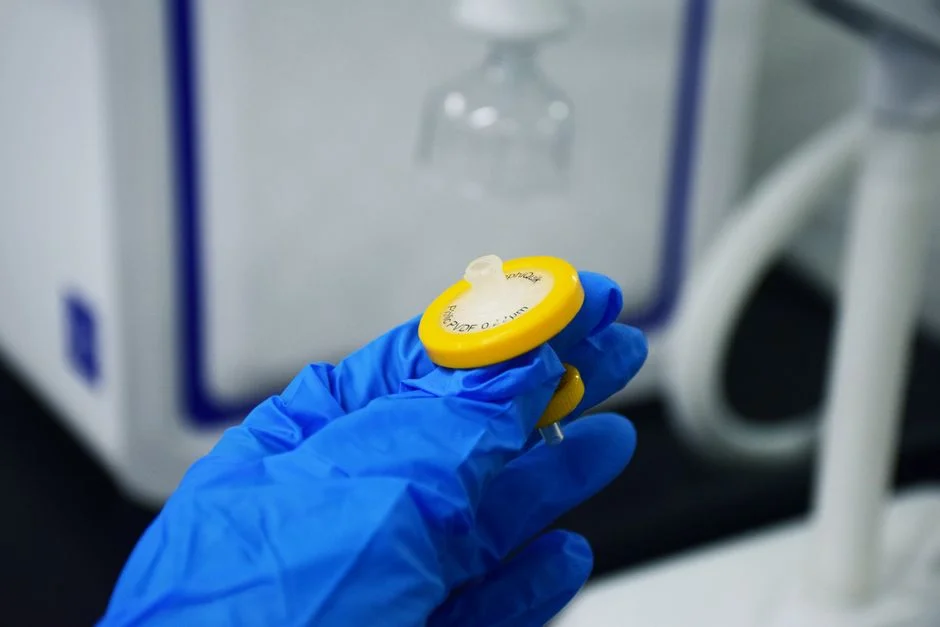
- UF: Evaluate ultrafiltration as pretreatment or polishing where the design basis supports removal of colloids, suspended solids and microorganisms before the next treatment step.
- Sludge dewatering: Keep dewatering as a separate workstream after the selected process establishes residual-solids volume and characteristics. A filter press cannot be sized from wastewater flow alone.
Procurement should require each vendor to identify its design inputs, duty assumptions, flow and load basis, process guarantees, redundancy, controls, operator interface, commissioning tests, start-up support and maintenance obligations. The treatment proposal must also show how it integrates with the existing collection system and remains compatible with the verified discharge or reuse route.
Reuse should be assessed as a water-balance and regulatory problem, not only as equipment selection. The team must account for process demand, contaminant buildup, blowdown, residuals, chemical recovery and the treatment required for any residual discharge. A treatment train that meets a reuse target but leaves an unauthorized or inadequately characterized residual stream has not resolved the project.
Use a Closing-Readiness Plan to Control Compliance and Procurement Risk
A transaction-readiness plan converts permit, characterization and procurement findings into owned actions. The purpose is to prevent an unresolved authorization, sewer acceptance issue or undersized treatment asset from becoming an operating surprise at closing.
- Assign owners: Name responsible personnel for permit records, wastewater characterization, utility correspondence, treatment operation, sampling, reporting and stormwater controls.
- Sequence work: Tie laboratory work, applications, agency responses, vendor design, procurement, installation and commissioning to the regulatory and operating milestones established in the diligence plan.
- Define acceptance: Put permit conditions, utility local limits, vendor guarantees, commissioning tests, operator training, monitoring, spare parts, sludge handling and contingency duties into the purchase and vendor documents.
- Track exceptions: List unresolved permit transfers, missing analytical data, sewer acceptance questions, stormwater gaps and treatment-capacity constraints as explicit closing conditions or post-closing obligations with accountable dates and acceptance criteria.
Regulatory approval does not follow construction automatically. A plant may need an agency decision, utility acceptance, revised plans, updated monitoring or operating changes before the new owner can operate as intended. The treatment plan should therefore include a decision path for each unresolved item: proceed, condition closing on resolution, defer the operational change or select another discharge and reuse route.
The same sequence applies when AWS is evaluating a broader acquisition or development rather than a simple asset transfer. The wastewater requirements for a plant acquisition illustrates the need to frame compliance as a transaction workstream; the cross-border acquisition requirements reinforces that site-specific authorizations must be verified rather than inferred from corporate identity.
Frequently Asked Questions
Does a Texas wastewater permit transfer automatically when AWS acquires the plant?
The supplied evidence does not establish automatic transfer. The buyer must obtain the current permit and permittee records and request written confirmation from TCEQ and any receiving utility about transfer, name-change, ownership-change or reapplication obligations. AWS’s Texas procurement presence under DIR Contract # DIR
Frequently Asked Questions
Does an Amazon AWS acquisition automatically transfer the plant's Texas wastewater permit?
No, Texas Commission on Environmental Quality (TCEQ) wastewater permits do not automatically transfer upon acquisition. Under 30 Texas Administrative Code (TAC) Chapter 305, the new owner must submit a formal application for a permit transfer (ownership change) to the TCEQ Executive Director.
This process requires the submission of TCEQ Form 10405, and the new owner must demonstrate the financial and technical capability to comply with existing Texas Pollutant Discharge Elimination System (TPDES) permit conditions. Operations cannot legally continue under the previous owner's permit until the transfer is officially approved by the agency.
How much does it cost to treat wastewater at an acquired industrial plant in Texas?
Operational costs for industrial wastewater treatment in Texas typically range from $2.00 to $8.50 per 1,000 gallons, depending on the influent constituent concentrations and the required effluent quality. Facilities with high Total Dissolved Solids (TDS) or specific heavy metal requirements may see costs exceed $12.00 per 1,000 gallons due to energy-intensive processes like Reverse Osmosis (RO) or advanced oxidation.
These figures include electricity for aeration, chemical dosing (coagulants, polymers, pH adjusters), sludge dewatering, and hazardous waste disposal fees. Budgeting must also account for laboratory analytical testing fees, which average $500 to $2,000 per sampling event to ensure compliance with 30 TAC Chapter 319 monitoring requirements.
What wastewater treatment equipment should we size for an AWS plant acquisition in Texas?
Equipment sizing must be based on a hydraulic loading analysis and a pollutant mass balance calculation specific to data center or industrial cooling operations. For cooling tower blowdown, systems should be sized for high-flow, low-BOD streams, typically incorporating automated pH neutralization, scale inhibition dosing, and potentially side-stream filtration units capable of handling 50-200 gallons per minute (GPM).
If the facility involves process water for server cooling, equipment must also include redundant oil-water separators and potentially Membrane Bioreactor (MBR) technology if the plant is required to meet strict Total Nitrogen (TN) or Total Phosphorus (TP) limits. Engineers should calculate peak hourly flow rates to ensure surge tanks provide a minimum of 24-hour hydraulic retention time to accommodate discharge fluctuations.
How do we choose a wastewater treatment supplier for a Texas industrial facility?
When selecting a supplier, prioritize vendors with demonstrated experience in TCEQ-regulated industrial wastewater systems and familiarity with the specific regional water quality standards of the Texas watershed where the plant is located. Verify that the supplier holds active certifications for the installation of industrial-grade instrumentation and can provide 24/7 technical support for automated SCADA-linked treatment controls.
Due diligence should include reviewing the supplier’s track record for meeting TPDES discharge limits in similar high-tech manufacturing environments. Ensure the vendor can provide documented performance data for chemical consumption rates and equipment longevity under Texas ambient temperature conditions, which often reach 100°F+, affecting biological treatment efficiency.
Where do we submit a wastewater permit application electronically to TCEQ?
TCEQ permit applications and associated documents must be submitted through the STEERS (State of Texas Environmental Electronic Reporting System) portal. This platform is the mandatory interface for filing electronic notices of intent (NOI), applications for individual TPDES permits, and required Discharge Monitoring Reports (DMRs).
Users must register for a STEERS account and ensure that the authorized representative for the AWS acquisition has the appropriate permissions to sign and submit legal environmental documents. For complex permit amendments, the agency may require supplemental hard-copy submittals in addition to the digital uploads processed through the STEERS interface.