What Changes When Google Takes Ownership of a Mexican Plant?
When Google acquires a plant in Mexico, the wastewater obligations are generally tied to the plant, its permits, discharge route and operating conditions—not simply to Google’s ownership. During diligence, the buyer should verify NOM-001 applicability, any discharge authorization to federal waterways, sewer or state requirements, permit-transfer conditions, monitoring records and evidence of treatment performance. The review must also characterize industrial wastewater streams and evaluate whether the installed system can reliably meet applicable limits and support reuse.
No supplied source establishes a separate Google-specific wastewater regime. The practical question is whether the site’s activities, permits and receiving arrangements remain valid and adequate after the change of wastewater ownership. A corporate acquisition is therefore not merely a change in equipment or production: the buyer should test whether the existing treatment train remains appropriate for current flows, planned production, batch discharges and the proposed operating model.
The material risks are usually visible in the transaction record rather than in the corporate structure: lapsed or mismatched permits, unreported exceedances, inadequate monitoring, untreated side streams, contaminated sludge, undocumented bypasses and capital work needed before compliance can be demonstrated. The buyer should also identify closure obligations and liabilities that may follow the site or the equipment.
Legal title alone does not establish compliance. Request the complete permit file, operating and sampling records, inspection findings, maintenance history, treatment-performance data and the identity of every party responsible for discharge or reuse. This is the point to use the wastewater requirements for a plant acquisition framework and compare it with the Arizona plant-acquisition wastewater guide, while keeping Mexico-specific requirements tied to the site and current official sources.
Mexico Wastewater Rules to Verify During Due Diligence
CCN identifies a Mexican official standard regulating wastewater discharges to federal waterways, but that standard is a starting point for legal navigation rather than a substitute for the plant’s current permits. Genesis Water Technologies describes NOM-001 as regulating wastewater-discharge parameters into water bodies and affecting industries across Mexico; the supplied research does not provide verified numeric limits. The buyer should therefore obtain the current official text and reconcile it with the site-specific authorization rather than rely on a secondary summary.
The legal review should proceed through six linked questions:
- Which national requirements apply to the plant’s discharges and activities?
- Is there a federal wastewater discharge authorization, and does it cover the actual discharge point?
- Do state or local rules apply to groundwater, water use, treatment, sludge or the selected receiving system?
- Do municipal or industrial sewer rules impose pretreatment controls, acceptance limits or monitoring duties?
- Are there sector-specific conditions in addition to the general permit?
- Does the proposed reuse activity comply with the existing permit and any separate process, health or sector requirements?
For each route, request the discharge authorization, permit conditions, applicable-limit tables, monitoring and reporting obligations, inspection correspondence, enforcement history, amendment approvals and evidence of fee or infrastructure-payment compliance. Determine from the authority’s current procedure whether the ownership or operating change requires notification, amendment or transfer approval. The supplied research establishes no universal deadline or rule for that process.
This permit-chain review should also distinguish a discharge authorization from a permit to reuse water. The latter may require confirmation that the intended use is within the permitted operation. For a Mexico-specific industrial treatment review, see the Mexico pharmaceutical wastewater treatment guide, while treating its sector context separately from the acquired plant’s actual obligations.
| Evidence item | What the buyer must establish | Closing treatment if unresolved |
|---|---|---|
| Current official requirements | Applicable scope, limits, monitoring and current procedural requirements | Obtain written interpretation from the responsible authority or qualified Mexican counsel |
| Site discharge authorization | Permitted stream, route, point, operator, conditions and amendments | Condition precedent, transfer condition or post-closing permit action |
| State and local requirements | Additional obligations affecting treatment, reuse, sludge and the receiving system | Add a jurisdiction-specific remediation item |
| Sewer or utility requirements | Acceptance limits, pretreatment controls and monitoring obligations | Confirm compliance before accepting the corresponding discharge route |
| Reuse requirements | Permitted use and any separate process, health or sector controls | Validate the reuse case before including it in the investment case |
Confirm the Wastewater Discharge Route and Permit Chain
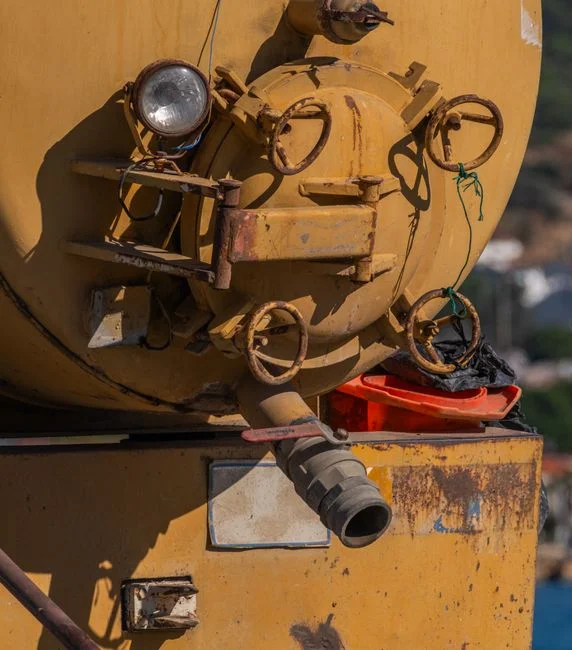
The buyer should map each wastewater stream to its physical destination before evaluating equipment. A permit description that says “sanitary discharge,” “process discharge” or “storm water” is not enough unless the diagram identifies the final receiving point and the legal operator responsible for it.
Start with process wastewater, cooling and washing water, sanitary sewage, storm water, floor drainage, laboratory drains, washdown, slug loads and contaminated sludge. For every stream, record its source, flow variability, treatment unit, discharge point, authorization, monitoring point and responsible operator. Then compare direct discharge to a water body, discharge to a municipal or industrial sewer, on-site treatment followed by reuse and off-site transport.
A sewer discharge can create a separate pretreatment obligation. The receiving utility may impose acceptance limits, local controls, monitoring duties or restrictions that are not visible in the plant’s direct-discharge permit. If the site sends flow to an industrial sewer, confirm whether that downstream system is itself a regulated treatment or collection operation and obtain the applicable acceptance requirements.
Walk the site for unmapped bypasses, equalization-tank overflows, temporary hoses, storm drains and direct connections. A bypass may reveal both an unauthorized route and a treatment-capacity weakness. Check permit expiry, renewal status, historical amendments and the authorized operator against the proposed post-acquisition owner and operating model. CCN’s reference confirms the existence of a federal-waterway discharge standard; it does not establish that this plant discharges directly to a federal waterway.
| Receiving route | Diligence questions | Critical supporting evidence |
|---|---|---|
| Water body | Is the discharge point covered by the current authorization? Are all contributing streams included? | Permit, flow map, monitoring results and inspection correspondence |
| Municipal or industrial sewer | What acceptance and pretreatment limits apply to the receiving system? | Utility agreement, written acceptance conditions and sampling records |
| On-site reuse | Is the reuse activity permitted, and does its quality match the intended process? | Permit review, reuse specification and validation results |
| Off-site transport | Who receives the waste, and is its destination documented? | Waste manifests, transporter records and disposal receipts |
Characterize Every Wastewater Stream Before Selecting Equipment
The engineering case should be built from source-specific wastewater data, not from equipment nameplates or the fact that the treatment plant currently operates. Request a process-by-process inventory covering flow variability, production conditions, seasonality, batch discharges and future production under the post-acquisition operating plan.
The analytical program should match the permit, sector risks and intended reuse. Depending on the plant, relevant characteristics may include oil and grease, suspended solids, pH, temperature, chemical oxygen demand, nutrients, metals, toxicity and sector-specific constituents. Do not assign limits, operating ranges or expected results unless they are established by the permit, current rule or confirmed site data.
Segregation matters. An oil-bearing process stream, cooling blowdown and sanitary sewage may have different treatment objectives. Combining them can dilute one contaminant while increasing the hydraulic and contaminant load that the treatment train must handle. Check whether equalization actually protects downstream units and whether slug loads are captured before they reach a discharge point.
Evaluate the installed system against actual duty: hydraulic capacity, redundancy, bypasses, controls, reagent supply, sludge handling, laboratory support, monitoring equipment and maintenance records. Performance should be compared with the applicable discharge or reuse specification under normal production, batch releases, maximum flow, start-up conditions and maintenance outages. The relevant mechanical screening solution may fit a defined stream condition, but it does not establish compliance for the remaining treatment units.
Use the research-supported technology list as a shortlist, not a selection: electrochemical treatment, flocculant and coagulant treatment, advanced oxidation, filtration and membrane systems. Genesis Water Technologies identifies electrochemical, flocculant/coagulant, advanced oxidation and filtration approaches among technologies being implemented in Mexico for water reuse and recycling. Selection must follow the confirmed contaminant profile and discharge objective.
| Diligence field | Evidence to request | Engineering decision supported |
|---|---|---|
| Wastewater inventory | Source-level flows, variability, batch releases and production forecasts | Hydraulic basis and equalization need |
| Analytical data | Permit-relevant constituents, reuse criteria and representative operating samples | Treatment objectives and acceptance test basis |
| Equipment condition | Condition assessment, maintenance, bypass events and controls records | Repair, retrofit or replacement decision |
| Sludge and residuals | Characterization, handling records, disposal route and contracts | Residual-management and closure exposure |
| Future operating plan | Planned production and process changes | Capacity reserve and modular expansion |
Choose a Treatment and Reuse Route That Survives Scrutiny

Treatment selection should follow the verified objective: remove a specific contaminant, meet a discharge route, produce reusable process water or reduce dependence on a constrained supply. Genesis Water Technologies identifies water recycling and reuse as alternatives for Mexican industrial companies facing drought and dependence on municipal water utilities. That is a strategic rationale, not evidence that reuse is automatically economical or permitted at the acquired site.
Start with an industrial DAF wastewater treatment system when the confirmed objective is suspended-solids, oil-and-grease, FOG or colloidal-material removal and the site has oil-bearing or high-solids flows. Use an integrated MBR wastewater treatment system when biological treatment and membrane separation are required and a compact system with near-reuse-quality effluent is appropriate. The supplied MBR specification is 10–2,000 m³/day with filtration below 1 μm; those are catalogue parameters, not guarantees for a particular acquisition.
Consider ultrafiltration where solids removal and membrane pretreatment are required. The supplied UF specification is 2,000–40,000 L/h, uses 0.03 μm PVDF membranes and accepts up to 300 ppm turbidity. Chemical dosing, oxidation and disinfection may support the selected process, but they do not correct inadequate hydraulic capacity, poorly managed solids or an unverified bypass.
| If the confirmed objective is… | Initial route to evaluate | Decision check |
|---|---|---|
| Oil, FOG, suspended solids or colloidal material | DAF | Does the verified stream profile justify flotation, and how will recovered solids be handled? |
| Biological treatment plus membrane separation | MBR | Can the confirmed duty fit the catalogue envelope and planned production changes? |
| Fine solids removal or membrane pretreatment | UF | Will feed turbidity and pretreatment remain within specified conditions? |
| Specific chemical or microbiological control | Dosing, oxidation or disinfection | Is the objective confirmed by analytical evidence, and what residual handling is required? |
| Industrial reuse | Treatment train plus reuse validation | Is the use legally permitted and technically supported by representative data? |
Evaluate reuse economics using local water stress, utility reliability, raw-water cost and disposal constraints. The whole-life case should include equipment, installation, permitting, media, chemicals, sludge handling, energy, monitoring, operator requirements, redundancy and planned production changes. The industrial ETP and DAF selection guide provides a useful route-selection reference, but local utility and permit terms must determine the project economics.
Build the Acquisition Closing and Remediation Plan
Diligence findings become transaction value only when they are assigned to a decision, an owner and a date. Create a red-amber-green register covering permits, transfer actions, sampling, inspections, enforcement, treatment capacity, monitoring, sludge, reuse and capital requirements.
Material gaps may justify conditions precedent. Examples include an expired discharge authorization, unresolved enforcement, missing monitoring records, an unidentified side stream or a treatment train that cannot demonstrate the applicable discharge requirements. The closing agreement should distinguish obligations that must be satisfied before closing from post-closing actions that can be escrowed, guaranteed or scheduled with defined completion tests.
Set post-closing actions in a written plan. Examples include obtaining permit clarification, completing laboratory confirmation, repairing equipment, modifying the treatment train, validating reuse, resolving sludge disposition and upgrading controls. Each item should have a responsible owner, due date, acceptance evidence and escalation consequence if incomplete. Unverified costs and deadlines should not be inserted into the plan; obtain them from current permits, site records, supplier quotations and written regulator or utility confirmation.
Require an agreed baseline sampling protocol that captures normal production, batch releases, maximum flow and representative operating variability. Select analytes and frequencies from permit and sector requirements. After closing, preserve analytical results, calibration records, maintenance, bypass events, reagent use, sludge transfers and corrective actions. Equipment support should be tied to those controls: filtration of residual sludge and controlled reagent dosing may support the operating plan, but neither establishes permit compliance without verified performance.
| Priority | Representative finding | Transaction response |
|---|---|---|
| Red | Expired or mismatched authorization; unresolved enforcement; treatment incapable of meeting the applicable requirement | Condition precedent, retained liability or funded remediation before closing |
| Amber | Incomplete sampling history; undocumented bypass; uncertain sludge route; reuse not yet validated | Post-closing action with owner, date, test and financial protection |
| Green | Permit chain, operating evidence, treatment performance and residual handling are documented and consistent | Complete diligence file and preserve records under the compliance program |
Before signing, the transaction team should have, in one indexed set: the current official requirements; all discharge and sewer authorizations; the utility or pretreatment agreement; permit-transfer correspondence; sampling and inspection records; the wastewater flow map; treatment and maintenance records; sludge documentation; the risk register; and quotations and schedules for every unresolved capital item. For process decisions within the site, catalogue options such as a plate-and-frame filter press for residual dewatering or an automatic chemical dosing system for controlled treatment should be evaluated against verified stream data—not used as substitutes for that evidence.
Frequently Asked Questions
Does Google’s ownership trigger a new Mexican wastewater permit?
The supplied research does not establish a universal rule for a Google acquisition or a universal transfer deadline. Before closing, obtain the current procedure from the issuing authority and identify whether the change requires notification, permit amendment, transfer approval or another confirmation. Include the proposed owner and operating model in that request, then check that the permit, discharge route and monitoring obligations remain aligned after closing.
Does NOM-001 apply if the plant discharges to a sewer?
Do not infer that a sewer discharge is outside the review. CCN describes an official standard for wastewater discharges to federal waterways, while Genesis Water Technologies describes NOM-001 as governing discharge parameters into water bodies. The site-specific route must be confirmed, and any sewer authority’s pretreatment and acceptance requirements must be obtained separately. A plant-acquisition guide to sewer limits can support the structure of that review, but Mexican permit and utility terms control.
How should treatment equipment be sized for the acquired plant?
Size from source-level flow and contaminant data, including variability, batch releases, maximum flow and planned production changes. A supplier should demonstrate that the selected duty fits the verified wastewater profile and the applicable discharge or reuse specification; nominal product ranges are not project guarantees. For example, the supplied MBR catalogue value is 10–2,000 m³/day and the UF catalogue range is 2,000–40,000 L/h, but the buyer still needs the site’s flow, feed-quality and operating data before selecting either route.
How should the buyer compare supplier cost and delivery risk?
Request a scoped quotation that separates equipment, installation, civil works, controls, commissioning, training, media or chemicals, waste or sludge handling, monitoring, warranty and compliance documentation. Ask each supplier to state design inputs, guaranteed performance criteria, assumptions, exclusions, delivery schedule and on-site support. Do not compare a capital-only price with a turnkey compliance solution, and require the supplier to confirm that the proposed scope addresses the confirmed permit and reuse requirements.
What evidence should be obtained before closing?
The minimum evidence set is the current official requirements, site permits and amendments, sewer or utility requirements, transfer correspondence, enforcement and inspection files, monitoring and calibration records, a complete wastewater flow map, treatment operating and maintenance records, sludge records, baseline performance testing, and a costed remediation plan for unresolved findings. Missing evidence should remain an explicit transaction issue rather than being converted into an assumption that the plant is compliant.