What Changes When Google Takes Ownership of a Texas Plant?
When Google acquires a plant in Texas, the buyer inherits the facility’s operating assets and associated environmental liabilities; ownership alone does not establish a new wastewater standard. The diligence team must identify the legal operator and permittee, map every wastewater pathway, and obtain written confirmation from the Texas Commission on Environmental Quality (TCEQ) and the receiving authority about transfer, modification or new-authorization requirements. Google’s water-stewardship policy may shape reuse objectives, but it does not replace site-specific permit conditions, discharge limits or local pretreatment rules.
Three questions should remain separate. First, what Google may commit to corporately is a stewardship or investment decision. Second, what the plant may lawfully discharge is governed by its existing authorizations, applicable discharge route and waste characteristics. Third, whether the transaction requires agency action depends on the permit language and any changes in control, operations, production, treatment or discharge. Do not assume that Google itself automatically becomes the regulated party; confirm whether the permit covers the facility, owner or operator and what documentary evidence the issuing authority requires after closing. The background in Google’s 2026 water-plant investment announcement does not supply Texas industrial permit terms.
Google’s public stewardship disclosure reports support for more than 165 projects across 97 watersheds and an increase in financial investments during the year from $17 million to $77 million across 12 states (Google, 2026). Those are corporate stewardship commitments, not Texas discharge limits. The supplied research contains no site-specific industrial authorization, permit number, effluent limit or compliance history. Every conclusion must therefore remain conditional until the buyer verifies the plant’s records with TCEQ and the receiving authority.
Identify the Plant’s Wastewater Compliance Pathways
A defensible Texas wastewater review begins with a process-flow map, because the same facility can have wastewater subject to different state, sewer and waste-management regimes. A buyer should not use the product catalog or Google’s corporate profile as a substitute for that map. The data center wastewater and cooling-blowdown treatment guide can help identify stream types, but it is not evidence of the acquired Texas plant’s requirements.
Map process wastewater, cooling and wash water, sanitary sewage, stormwater, contaminated soil or groundwater, pretreatment sludge and any water intended for reuse. For each stream, identify its source, flow path, destination, treatment unit, sampling point, monitoring responsibility and authorizing authority. Then request the TCEQ wastewater authorization or permit, POTW discharge or industrial-user permit, stormwater authorization, reuse authorization, hazardous-waste identifications, and any closure or remediation orders. These are inputs to verify, not a conclusion that every plant holds every document.
| Waste stream or destination | Documents and evidence to obtain | Diligence question |
|---|---|---|
| Direct state-authorized discharge | TCEQ authorization, permit, amendments, monitoring records and discharge map | Do the permit conditions still match the plant’s treatment, outfalls and wastes? |
| Discharge to a POTW | Industrial-user permit or agreement, local limits, discharge authorization and pretreatment plan | Is the facility classified as a significant industrial user, and are monitoring and control obligations current? |
| On-site treatment | Treatment-process description, operating records, residuals handling and applicable authorizations | Is treatment owned, operated or maintained by a third party, and who holds the compliance duty? |
| Reuse | Reuse plan, end-use approvals, monitoring and quality-control records | Does the proposed reuse change treatment, monitoring or authorization needs? |
| Stormwater and contaminated media | Stormwater authorization, pollution-prevention plan, remediation files and waste determinations | Are legacy impacts and residual disposal obligations still open? |
The receiving POTW may impose separate duties where industrial pretreatment controls apply, including an industrial wastewater permit or pretreatment plan for a significant industrial user. Confirm the POTW’s role rather than treating it as a passive receiving pipe. Ownership history is not itself a permit pathway: NextEra Water’s July 13, 2022 transaction involved 23 water and five wastewater utility systems in eight counties near Houston and approximately 2,700 customers, as reported by NextEra Energy Resources in 2022. That utility transaction was an ownership precedent, not an industrial-plant precedent and not evidence of automatic permit changes.
Audit Permits, Discharges and Compliance History

A permit register converts scattered records into a defensible compliance review and should be an early closing deliverable. It must identify not only whether a permit exists, but also whether it covers the acquired facility, every discharge point and every changed activity relevant to the transaction.
Request available inspection reports, notices of violation, administrative orders, self-monitoring reports, spill records, sludge-disposal records, laboratory results and correspondence with TCEQ and the POTW. Compare reported flow, pollutant concentrations and production records against permit conditions and applicable sewer requirements. The supplied research contains no plant data, so no finding of compliance or noncompliance can be made from the information currently available.
| Register field | Required verification |
|---|---|
| Authorization identity | Permit number, issuing authority, covered facility, owner or operator and covered outfall |
| Operating conditions | Effective and expiration dates, limits, monitoring, reporting, sampling, discharge points and reuse conditions |
| Transfer status | Administrative change, modification, new authorization or closure evaluation; responsible party and required evidence |
| Compliance history | Violations, orders, exceedances, reporting gaps, spills, unresolved corrective actions and outstanding fees |
| Technical consistency | Production, flow and concentration records compared with authorization and sewer conditions |
Legacy violations, unremediated contamination, closure obligations and unpaid fees should be assessed for purchase-price, indemnity, escrow or remediation treatment. Include wastewater-reuse goals in the register because replacing discharge with reuse may change treatment, monitoring and authorization requirements. A corporate reuse promise does not establish that the plant has the required infrastructure or approval.
The wastewater guide for an acquired beverage plant offers a useful diligence framing, but its site-specific facts cannot be transferred to a Texas industrial facility.
Determine Whether Ownership or Operations Trigger a Permit Action
The acquisition review should proceed through three stages: administrative transfer review, substantive permit-modification review, and new-authorization or closure evaluation. The distinction prevents unnecessary engineering assumptions while ensuring that a changed operation is not hidden behind an administrative update.
Ask the issuing authority whether the proposed transaction requires a transfer application, permit modification or revised operating conditions. Do not claim that every ownership change automatically changes effluent limits. Deeper review may be warranted where there is new ownership or control, a new operator, production expansion, process change, different wastewater volume or composition, altered treatment, a changed discharge point or expanded reuse. The evidence needed is the permit text, the proposed operating plan and the regulator’s written determination.
| Review stage | Trigger or question | Required action |
|---|---|---|
| Administrative transfer review | Does the permit name a facility, owner or operator that changes at closing? | Confirm the correct permittee, filing method, effective date and documentary evidence with the issuing authority |
| Permit-modification review | Will production, process, flow, composition, treatment, outfall or reuse change? | Prepare a change description, revised limits or monitoring information if requested, and obtain written agency direction |
| New-authorization or closure review | Will the activity, discharge route or waste management practice change enough to require a new authorization or closure? | Resolve the regulatory pathway before the operating change takes effect |
| POTW pretreatment review | Could industrial-user status, local limits, monitoring, slug loads, pH controls or sewer permitting change? | Obtain written confirmation from the POTW and reconcile the industrial-user permit or agreement |
For a POTW discharge, review the local industrial-user permit, discharge requirements and pretreatment agreement together. For direct discharge or on-site treatment, determine whether permit duties follow the facility, owner or operator, and who must sign monitoring reports and receive agency notices after closing. If treatment will be contracted out, verify that contracting does not leave the permittee without operational control, data access or reporting responsibility.
Match Treatment Requirements to the Actual Waste Stream
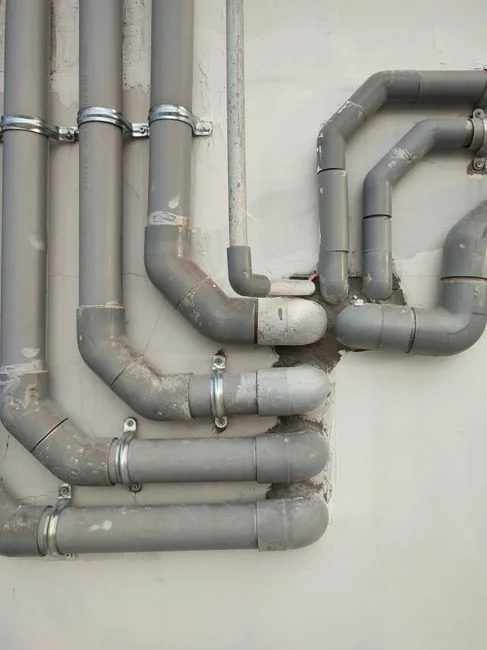
Treatment selection should follow verified wastewater characteristics and applicable limits, not the buyer’s identity. Industrial wastewater characterization should establish flow variability, oil and grease, suspended solids, pH, soluble organics and other relevant contaminants before equipment is selected. The Texas industrial sewer pretreatment requirements should be reviewed with the receiving POTW rather than treated as a universal limit.
Oil, grease and suspended solids may justify evaluation of a DAF system for industrial wastewater pretreatment. The assessment must use actual contaminant loads, receiving-sewer limits, flow variability and required automation. Soluble organics or variable sanitary-industrial flows may justify biological-treatment assessment, but treatment selection requires site data and a process engineer’s design review.
Where advanced treatment, polishing or reuse is justified, evaluate an MBR membrane bioreactor for wastewater reuse against required effluent quality, footprint, flows, reuse objectives and pretreatment needs. Product capacities and treatment characteristics are preliminary inputs, not proof that a unit will satisfy a permit or sewer limit.
Google states that water cooling can reduce data-center energy use by approximately 10% compared with air cooling (Google, 2026). That disclosure supports efficient cooling design for data centers, but it does not establish wastewater technology, treatment capacity or a discharge requirement for an acquired Texas industrial plant. Any equipment proposal should identify which measured contaminant load and authorization condition it satisfies.
Build a Closing and Post-Acquisition Verification Plan
Unresolved environmental findings should become dated closing conditions, purchase-agreement protections or funded post-closing obligations—not informal assumptions that Google will correct them later. Missing permits, unresolved violations, incomplete baseline sampling, treatment-system condition and access to monitoring records all require an assigned owner and a defined disposition.
| Timing | Action | Evidence required at completion |
|---|---|---|
| Before closing | Characterize wastewater; verify permits, violations, treatment condition, meters and laboratory data | Approved baseline, current permit register, agency responses and treatment-condition record |
| Closing condition | Resolve permit gaps, transfer approvals and unresolved environmental matters | Approval, effective authorization, remediation commitment, escrow or specific indemnity |
| At closing | Confirm permittee, responsible contacts, access to records and operating procedures | Updated register, agency notifications and assigned personnel |
| Post-closing | Complete training, chemical and spare-parts continuity, monitoring, reporting and contingency response | Completed training, calibration records, sample results and reporting calendar |
| Early operating review | Verify actual flow, composition and treatment performance against assumptions | Validated operating baseline and escalation plan for exceedances or permit changes |
Establish a pre-closing baseline by characterizing flows and contaminants, verifying equipment condition, calibrating meters and confirming current laboratory data. After closing, assign permit transfers, agency notices, operator training, monitoring, reporting, sampling and contingency response. Use purchase-agreement protections where appropriate: specific indemnities, escrows, remediation obligations, compliance representations and conditions precedent.
Google’s replenishment commitments cannot substitute for plant-level contingency planning. Google’s 2026 disclosure states that actual replenishment volumes may vary because of precipitation changes, permitting delays and third-party construction delays. Keep equivalent uncertainty in the acquisition plan: the permit pathway, treatment performance and contingency funding must be verified independently.
Frequently Asked Questions
Does Google’s acquisition automatically create new wastewater limits for the acquired Texas plant?
No. Applicable requirements remain tied to the facility’s authorizations, discharge pathways and waste characteristics unless TCEQ, the POTW or another issuing authority determines that a transfer, modification or new authorization is required. Obtain that determination in writing and against the plant’s proposed post-closing operations.
What documents should the buyer request during wastewater acquisition due diligence?
Request the complete permit register, authorization conditions, monitoring and violation history, sampling data, process and discharge maps, POTW agreements, pretreatment plans, reuse plans, remediation files, spill records, sludge-disposal records and treatment-system maintenance records. Also request agency correspondence showing whether ownership or operational changes have already been discussed.
How should treatment equipment be sized for an acquired Texas plant?
Size from verified peak and average wastewater flows, industrial wastewater characterization, permit or sewer limits, operating variability and reuse targets. Obtain those inputs before requesting a supplier’s sizing proposal, and require the process engineer to show how each proposed unit satisfies the identified contaminant load and authorization condition.
Which supplier and compliance checks matter most after closing?
Select the treatment supplier and operating contractor only after confirming permit obligations, control-system compatibility, monitoring obligations, chemical supply, spare-parts availability and responsibility for compliance records. The commercial proposal should identify performance criteria, service response, data access and who reports to TCEQ or the POTW; the acquisition agreement should preserve those responsibilities through any subcontracting arrangement.