What Changes When Tesla Takes Over a Hungarian Gigafactory
A change in ownership does not replace the site-specific conditions governing wastewater discharge. Before closing an acquisition in Hungary, the buyer should verify the Hungarian IPPC permit, its amendments, BAT-AEL limits, monitoring history, sewer pretreatment agreement, water allocation and any reuse or freshwater-offset conditions. The permit must cover the legal operator, installed production lines and proposed Tesla conversion. These obligations remain distinct from new treatment decisions: existing liabilities must be audited, while future capacity and reuse projects require their own technical and regulatory basis. Ownership changes the accountable operator; it does not automatically alter the permitted discharge regime.
The initial review should compare the legal entity named in the permit with the proposed acquirer and map every production line to its authorization. That map should include the current monitoring programme, non-compliance notices, renewal conditions, sewer agreement, water-right allocation, pipeline easements and any approved offset commitment. The wastewater due diligence used for a German plant acquisition provides a comparable transition framework.
Some planning assumptions need explicit labels. HydropureWater’s 2026 compliance guide estimates an 18–36-month permit runway for a Tesla-scale Hungarian project, but this is a commercial estimate, not a statutory deadline. It cannot replace confirmation from the county-level Government Office, the National Water Authority or the relevant municipal sewer operator.
Giga Berlin demonstrates the acquisition consequence of unresolved exceedances. According to the 2026 Tesla Gigafactory process guide, local officials sought closure of the wastewater line while repeatedly reported phosphorus and nitrogen exceedances remained unresolved. A Hungarian buyer should therefore treat permit compliance, community objections and the continuity of wastewater operations as closing conditions, not post-closing optimization items.
Map Every Wastewater Stream Before Selecting Equipment
Segregation is the first engineering decision because incompatible streams can make a common treatment train ineffective or non-compliant. HydropureWater’s 2026 process guide identifies sanitary sewage, NMP condensate, electrode rinse water, paint-shop wash water and other industrial flows as distinct streams. The acquisition survey must establish which streams actually exist, how they are collected and whether historical blending has altered the compositions entering the existing plant.
| Wastewater stream | Principal constituents identified in the supplied research | Diligence requirement | Potential treatment step |
|---|---|---|---|
| Sanitary wastewater | Biodegradable domestic waste from offices, kitchens and toilets | Separate flow and composition; sewer connection status | Authorized municipal connection or segregated biological treatment |
| Body-in-white and stamping wash water | Suspended solids, free and emulsified oils, trace zinc, nickel and copper | Source-level flow, oil and grease, metals and batch data | Equalization followed by DAF for automotive and paint-shop wastewater or clarification |
| Paint-shop wastewater | Solvents, pigments, phosphates from zinc-phosphate conversion coating and overspray | Solvent identity, phosphorus, pH and variable batch records | Dedicated physico-chemical treatment before any blending |
| Cathode and anode production water | Lithium, nickel, cobalt, manganese, NMP traces and PFAS-bearing binder residues | Stream-specific metals, solvent and PFAS-indicator testing | Upstream NMP recovery, then precipitation, ion exchange or membrane treatment |
| Cooling-tower and boiler blowdown | High dissolved-solids content with relatively low organic load | Conductivity, scaling constituents and reuse temperature demand | Recovery or membrane treatment where the water balance supports it |
| Paved-area stormwater | Suspended solids and oil sheen | Drainage map, rainfall response and contaminated-area inventory | Segregated collection and solids or oil treatment |
Paint-shop wastewater is the most variable stream in the supplied research, so a single historical average is inadequate. Cathode and anode waters present a different problem: upstream NMP recovery must occur before condensate reaches biology because solvent-bearing flow can overload an MBR or activated-sludge stage. The site’s existing piping, equalization and sampling arrangements should be tested against this source-separation logic rather than accepted as documented.
A DAF versus clarifier comparison for EV factory wastewater is useful when evaluating oil and floatable-solids removal, but equipment selection must follow measured flow and composition. No inherited stream should be routed through the complete plant merely because a connection currently exists.
Build the Treatment Train Around the Effluent Destination
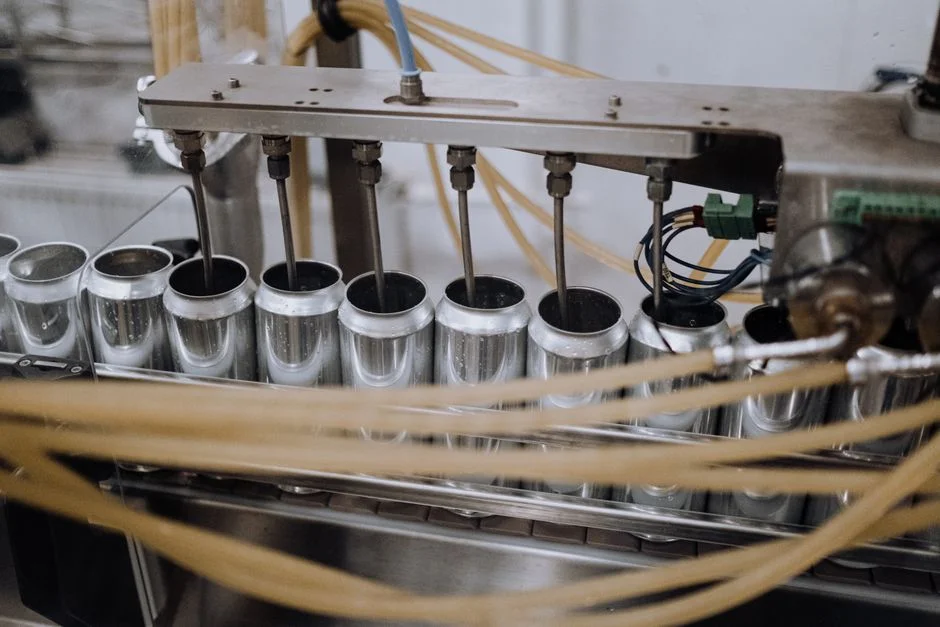
The documented Gigafactory treatment logic has four stages: mechanical screening; DAF or lamella clarification; MBR or MBBR biological treatment; and final polishing selected for discharge or reuse. The destination determines the depth of the fourth stage. Sewer discharge may require authorized polishing and disinfection, whereas reuse can require membrane separation. A four-stage description is therefore not a guaranteed equipment specification.
| Decision point | Preferred route when the condition is met | Evidence required before selection |
|---|---|---|
| Headworks protection | Mechanical screening and flow equalization | Debris inventory, maximum-hour flow and downstream pump requirements |
| Oil and floatable solids | DAF | Oil and grease load, emulsion characteristics and required removal |
| Compact solids separation | Lamella clarification | Solids profile, footprint and sludge-handling route |
| Biological treatment | MBR | Compact footprint, low suspended-solids effluent or downstream reuse requirements |
| Biological treatment | MBBR | Treatment objective, space and retrofit compatibility |
| Sewer polishing | Filtration and disinfection where authorized | Current pretreatment agreement and sewer limits |
| Process reuse | RO or ZLD | Feed chemistry, water balance, permitted concentrate disposal and reuse specification |
HydropureWater’s 2026 guide describes MBR effluent suspended solids below 5 mg/L. That figure supports MBR selection where low-solids effluent or reuse is required, but it is not a site guarantee. RO recovery rates advertised up to 95% likewise require validation against feed chemistry, recovery targets and the permitted disposal route for concentrate.
The acquisition team should not size the plant from a public Tesla benchmark. The 2026 process guide states that Tesla has not publicly disclosed a specific m³/GWh water-use figure for any Gigafactory. Capacity should therefore come from measured source flows, production assumptions and the final permit or reuse specification. The same guide’s four-stage process logic is summarized in the Tesla Gigafactory wastewater process guide.
For sewer pretreatment, the buyer must also reconcile local concentration limits with the downstream treatment plant’s actual performance. The sewer-limit and pretreatment framework provides the correct commercial question: can the receiving utility accept the proposed effluent mass and composition, not merely the individual permit values?
Translate Hungarian Requirements into Permit and Discharge Checks
Hungarian wastewater due diligence requires four linked controls: the integrated IPPC permit, the sewer pretreatment agreement, receiving-water status and the rights supporting water use and conveyance. The supplied 2026 compliance guide identifies Directive 2010/75/EU, Directive 91/271/EEC and Directive 2000/60/EC as the governing EU instruments, implemented through Act LVII of 2016 and Government Decrees 219/2004, 220/2004 and 28/2004.
| Requirement | Value or authority stated in the supplied research | Acquisition check |
|---|---|---|
| Integrated IPPC permit | County-level Government Office; National Water Authority provides technical comment | Current permit, amendments, BAT review, public participation and operating-line coverage |
| Urban Waste Water Treatment Directive | Annex I: BOD₅ ≤25 mg/L, COD ≤125 mg/L and TSS ≤60 mg/L | Applicability to the sewer connection and the results of secondary treatment |
| Water Framework Directive | Receiving-water objectives apply to the Danube and Tisza sub-basins | Site basin, ecological status, mixing-zone conditions and sensitive reaches |
| Hungarian implementation | Act LVII of 2016; Government Decrees 219/2004, 220/2004 and 28/2004 | Current site permit, discharge charges, emission limits and permit procedure |
| Site permit values | The guide lists typical examples including COD ≤75 mg/L and TSS ≤35 mg/L | Treat these as examples only until matched to the site’s enforceable permit |
The EU framework requires the IPPC permit to be based on BAT conclusions. HydropureWater’s 2026 guide identifies the 2016 CWW BREF, the LVIC-S BREF and the STS BREF as relevant references for wastewater, cathode-precursor and metal-surface-treatment activities. The permit review must establish which BAT conclusions apply to the installed process and any Tesla conversion.
Directive 91/271/EEC addresses biodegradable sanitary and industrial wastewater in relevant agglomerations, with the supplied Annex I thresholds shown above. Directive 2000/60/EC links the discharge to receiving-water objectives. Mixing-zone allowances and sensitive reaches must therefore be confirmed site by site; a national value cannot be assumed to apply unchanged to the acquisition.
The document request should include the current permit, BAT technical review, monitoring records, renewal conditions, sewer pretreatment agreement, water-right allocation, easements, force-main rights and any approved freshwater-offset calculation. Any proposed lithium limit must be identified as a confirmed permit condition rather than inferred from the research guide’s discussion of emerging BAT-based practice.
Use Giga Berlin to Test Acquisition and Compliance Risk
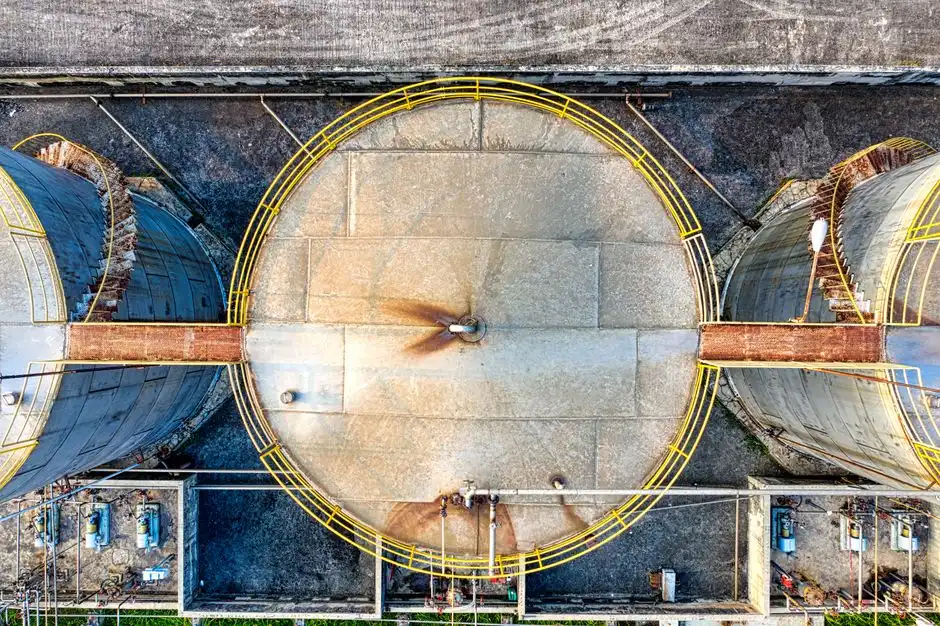
Giga Berlin shows that a wastewater dispute can become a constraint on production and expansion, not merely an environmental compliance issue. The supplied 2026 process guide reports that the plant opened in 2022, received 19 early-start permits under § 8a BImSchG and operated within a drinking-water protection zone, making its permit parameters a unusually useful documentary benchmark.
The supplied report says the local water authority sought closure of the wastewater line until further notice. It also reports repeated phosphorus and nitrogen exceedances and states that Tesla had been warned five times since the preceding March. A separate report attributed to Stern, as described in the 2026 source, claimed that the discharge contained six times more hazardous pollutants than the permits allowed. That figure was a stakeholder claim reported by the media, not a final adjudicated finding, and must be classified as such in diligence.
Tesla reportedly responded that the plant had facilities for full recovery of processed water and that its discharge had no negative impact on local sewage treatment. Both the operator’s response and the underlying permit and sampling data must be preserved; neither should be accepted without primary records. The research also describes a final German draft offering a reduced allocation in exchange for releasing 377,000 m³ of freshwater back to the local system.
For a Hungarian acquisition, those facts convert into seven checks:
- Review every discharge parameter and exceedance against the complete permit history.
- Test sampling integrity, laboratory chain of custody and calibration records.
- Reconcile the water balance, abstraction records, reuse claims and sewer flows.
- Obtain independent evidence of third-party sewer performance.
- Read objections from the municipality, water authority, residents and environmental groups.
- Test whether the expansion case relies on discharge capacity that is not legally available.
- Confirm that the site has operators and engineers capable of maintaining the wastewater system.
The value of the Berlin case is documentary. It shows how repeated exceedances, incomplete operating controls and objections from affected stakeholders can become an obstacle to continued operation or expansion.
Decide Between Sewer Discharge, Reuse and Zero Liquid Discharge
The discharge route should be selected from receiving-water sensitivity, sewer acceptance, reuse demand, permit flexibility and concentrate management. Sewer discharge is normally the less complex option when the municipal utility accepts the proposed concentration and every pretreatment condition is met. It does not remove the obligation to demonstrate compliance at the point of discharge or verify that the sewer has capacity for the proposed mass load.
| Route | Decision conditions | Principal diligence risk | Evidence to obtain |
|---|---|---|---|
| Municipal sewer | Accepted composition; sufficient sewer and treatment capacity; authorization in force | Disagreement between plant performance and sewer acceptance | Pretreatment agreement, capacity confirmation and representative influent data |
| On-site reuse | Constrained allocation, restrictive sewer limits or reliable process-water demand | Water-quality mismatch and variable reuse demand | Water balance, reuse specification, treatment trials and pipeline rights |
| RO | Salinity or contaminant control makes partial recovery feasible | Concentrate has no lawful or practical destination | Feed chemistry, recovery target, brine balance and disposal route |
| ZLD | No acceptable discharge route and the full water and salt balance is technically supportable | High energy demand, salts and operational complexity | Complete water balance, residue destination, utility availability and lifecycle cost |
Reuse should be tested against actual demand. Cooling and selected rinse applications may be candidates, but each requires a defined quality specification and distribution network. HydropureWater’s 2026 guide identifies the Carpathian Basin as drought-prone; the acquisition must nevertheless verify the actual site basin, water allocation and ecological status.
The guide gives a possible freshwater offset of 0.5–1.5 million m³/year at a fully ramped one-million-vehicle plant. It labels this as a scaled estimate rather than an official Hungarian requirement, so it must not be used in equipment sizing or financial modelling without authority confirmation.
Conveyance is a parallel acquisition workstream. A permit does not establish ownership or easement rights for a pipeline, force main or discharge route. The buyer should obtain documentary evidence for the route, access rights and crossings before treating the discharge route as operational. This distinction is also central to the German acquisition wastewater due diligence.
Pre-Close Wastewater Equipment and Compliance Checklist
The pre-close review should connect source data, installed condition and legal operating rights. The decisive evidence is a source-separated flow and influent dataset, the current permit and enforcement record, and confirmation that the sewer and conveyance system can accept the intended discharge. Equipment condition alone cannot resolve a permit or conveyance gap.
| Diligence package | Minimum evidence requested | Decision supported |
|---|---|---|
| Flow and composition | At least twelve months of source-split flow data, including maximum-hour and maximum-day flow; analytical results for the applicable industrial parameters | Hydraulic and process design basis |
| Installed treatment | Condition and capacity of screens, equalization, DAF or clarification, biology, disinfection, membranes, sludge dewatering and reuse distribution | Repair, replacement or expansion scope |
| Controls and competence | Chemical storage, dosing records, laboratory capability, online monitoring, alarms, bypass prevention, maintenance records and operator qualifications | Operational reliability and compliance assurance |
| Legal and community record | Non-compliance notices, regulator correspondence, objections, environmental-impact documentation, offset calculations, pending conditions, sewer agreement and conveyance rights | Conditions precedent and liability allocation |
| Supplier proposal | Design flow, measured influent basis, guaranteed final effluent, sludge or concentrate destination, redundancy, controls and lifecycle cost | Comparable technical and commercial offers |
Source testing should cover COD, BOD₅, TSS, oil and grease, pH, nitrogen, phosphorus, conductivity, metals, solvents and PFAS indicators identified by the current permit or BAT assessment. The buyer should not accept a generic m³/day package when the proposal does not identify its measured influent basis and required final effluent.
For biological reuse, an MBR membrane bioreactor for industrial wastewater reuse should be evaluated on guaranteed effluent, footprint, controls, membrane maintenance and compatibility with the actual process streams. DAF proposals should similarly state the flow basis, oil removal objective, chemical demand and sludge route.
Where the acquired site cannot lawfully operate or expand without them, permit-transfer confirmation, sewer-capacity confirmation and valid conveyance rights should be conditions precedent. This is also where a preventive-maintenance and operator-readiness review can distinguish a serviceable plant from one that merely has intact equipment.
Frequently Asked Questions
How should wastewater treatment be designed for an acquired battery factory in Hungary?
Segregate sanitary, paint-shop, body-in-white, cathode and anode, cooling, boiler and stormwater flows before selecting equipment. Recover NMP upstream, protect biological systems from oil and floatable solids, and use the final discharge or reuse specification to determine whether polishing, RO or ZLD is required. The applicable train must then be reconciled with the site’s Hungarian IPPC permit and sewer agreement.
What data is needed to size treatment equipment?
Require measured source flows and compositions, including maximum-hour and maximum-day conditions, together with the enforceable final discharge or reuse specification. Tesla has not publicly disclosed a specific m³/GWh figure for any Gigafactory, according to HydropureWater’s 2026 process guide. Do not size from a public plant benchmark or an assumed production scale.
How should a buyer select a wastewater treatment supplier?
Compare suppliers on guaranteed final effluent, relevant industrial references, control philosophy, redundancy, maintenance support and documented handling of sludge or concentrate. Require each proposal to state its measured influent basis and destination for residuals. Headline capacity or a generic flow range is not enough for an acquisition decision.
What is the main wastewater acquisition risk in Hungary?
The principal exposure is inherited site liability: the current permit, monitoring and exceedance history, sewer performance, receiving-water constraints and unresolved enforcement matters. Ownership itself does not create the underlying obligation. Before accepting operational or expansion risk, obtain the complete compliance record and confirm permit coverage, sewer acceptance and lawful conveyance.
How should permit confirmation and future reuse or ZLD investment be sequenced?
First confirm the existing operator’s permit, sewer agreement, water allocation and pipeline rights, then resolve any non-compliance that could interrupt operation. Assess capacity expansion separately using measured flows and validated treatment trials. A reuse or ZLD project should follow site-specific water-balance, permit and concentrate-management decisions rather than being assumed from the acquisition.
Related Equipment
- DAF system for automotive and paint-shop wastewater — specifications, capacity range, and technical data