When IFAS Is the Right Choice for Animal Feed Wastewater
IFAS can fit animal feed wastewater when the objective is to add retained biomass for nitrification or retrofit an existing activated-sludge basin, but it is not a complete pretreatment system. The biological process should normally follow source segregation, screening, equalization, and removal of suspended solids and FOG. A 2020 academic study established IFAS as a practical treatment option for continuous-flow dairy wastewater. For preliminary food-industry screening, the supplied pet-food reference uses BOD of 1,500–5,000 mg/L, TKN of 100–400 mg/L, and a 30% media-fill design point. Final selection requires representative animal-feed wastewater testing, production and cleaning data, permit objectives, and site-specific mass balances.
Integrated fixed-film activated sludge combines suspended-growth biomass in the mixed liquor with attached-growth biomass retained on moving carrier media. That distinction matters for animal feed wastewater: the suspended fraction handles part of the carbonaceous load, while the carrier retains slower-growing nitrifiers independently of hydraulic washout. IFAS is therefore credible where an existing activated-sludge basin lacks biological capacity, or where nitrification and denitrification must be integrated without moving directly to a membrane system.
The application boundary is narrower than a product name suggests. Livestock feed mill wastewater may contain washdown, cleaning chemicals, and variable production discharges; pet-food manufacturing may include protein, fat, and extrusion-derived loads; animal rendering wastewater can contain blood, tissue losses, and high-strength organic material. These are different streams. The pet-food values in the IFAS for Pet Food Wastewater: 2026 Engineering Guide are a preliminary screening reference, not transferable design values for every feed or rendering facility.
Experimental evidence exists: a 2020 study by the Portuguese National Funding Agency for Science, Research and Technology evaluated continuous-flow dairy wastewater using activated sludge, IFAS, and MBBR systems, with treatment and nitrogen removal among the study objectives. That supports IFAS as a credible biological option for a food-related wastewater stream, but it does not establish performance for livestock feed mill wastewater. Transfer requires verification of stream composition, loading, temperature, hydraulic variation, and pretreatment compatibility.
A practical go/no-go test is straightforward. Proceed to preliminary design if the site needs more biological capacity in an existing basin, has a controllable biological feed, and can verify solids and FOG removal before IFAS. Do not proceed if the proposal treats IFAS as a substitute for segregation, screening, equalization, or grease control. Related IFAS selection for poultry processing wastewater can help identify which source-specific questions to carry into an animal-feed screening review.
Build the Design Basis Before Selecting Equipment
Flow rate, COD, and BOD had statistically significant effects on modeled total cost in the 2021 Journal of Environmental Management study cited by the supplied meat-processing guide, so daily flow alone cannot support an IFAS comparison.
Ask each bidder to submit a common design basis covering representative flow, COD, BOD, TSS, FOG, pH, and temperature, together with production and cleaning schedules, stream segregation, discharge route, permit criteria, and treatment objectives. The supplier must state the averaging period, sampling frequency, selected design load, and whether batch, washdown, and CIP discharges are included in the biological loading calculation.
Do not merge unlike operations into one generic “animal feed” dataset. Keep livestock feed mill wastewater, pet-food production, and rendering streams separately identified. Rendering operations may introduce blood or tissue losses and high-strength wastewater; feed and pet-food plants may have different washdown and cleaner regimes. Recycled process waters and sanitized CIP discharges should also be identified because they can alter both hydraulic and chemical loading.
| Design-basis item | Why it affects the decision | Information to request |
|---|---|---|
| Flow and production schedule | Defines hydraulic and organic peaks | Average, peak, batch, washdown, and CIP flows with sampling period |
| Organic loading | Drives biological capacity and equalization | COD, BOD, TKN, and selected design load |
| Solids and FOG | Sets pretreatment and carrier-fouling risk | TSS, FOG, material origin, and representative samples |
| Chemical and physical conditions | Influences nitrification and materials | pH, temperature, cleaners, sanitizers, and salinity where relevant |
| Discharge and permit basis | Defines required performance and downstream treatment | Current permit, discharge route, applicable objectives, and reporting requirements |
| Source segregation | May reduce load and equipment size | Which streams are segregated, combined, reused, or intermittent |
The pet-food guide provides a useful preliminary comparison envelope: BOD 1,500–5,000 mg/L, COD 3,000–10,000 mg/L, TSS 800–3,000 mg/L, TKN 100–400 mg/L, and FOG 200–1,500 mg/L. These values should be compared with site results, not copied into a bid as guaranteed design loads. Any transfer to feed manufacturing or rendering requires representative sampling and a source-specific mass balance.
For preliminary monitoring design, use the COD, ammonia, and total phosphorus analyzer selection guide to align monitoring variables with the treatment objectives. The key procurement control is a written, dated design basis shared by every bidder. If that basis changes during evaluation, require the affected hydraulic, biological, pretreatment, and cost calculations to be revised with it.
Control the Wastewater Before It Reaches the IFAS Basin
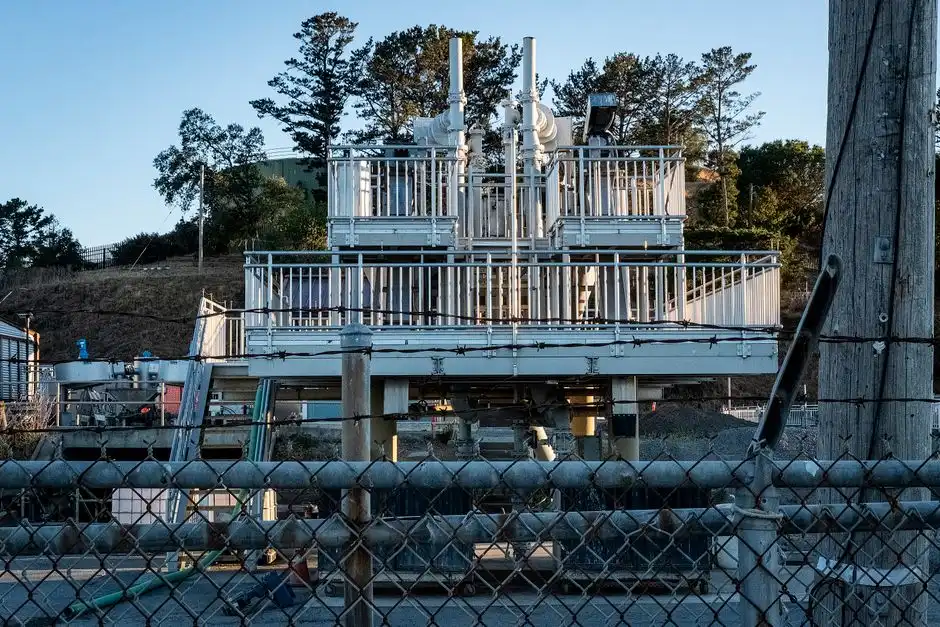
A properly coagulated DAF unit achieves 80–95% FOG removal and 60–90% TSS removal in the pet-food design reference, but the IFAS biological basis assumes feed FOG below 50 mg/L.
The normal process sequence is source segregation, screening, equalization, FOG and solids pretreatment, IFAS, solids separation, and any permit-required downstream treatment. This sequence protects the carrier biofilm and prevents upstream equipment failures from becoming reactor instability.
Start with segregation. Keep washdown, cleaners, sanitizers, blood or tissue losses, and other high-impact streams separate where practical. Then protect the plant with a coarse or fine screening duty appropriate to the material. A GX rotary bar screen for feed-mill wastewater headworks can be evaluated for suspended solids, rags, plastics, and fibrous debris. Final screen selection still depends on the actual debris stream.
Use a DAF system for animal feed wastewater pretreatment where measured FOG and solids justify the duty. The supplied pet-food guide reports 80–95% FOG removal and 60–90% TSS removal for properly coagulated DAF and identifies influent FOG below 50 mg/L as the condition supporting its biological design basis. These are reference-source values, not a guarantee for a feed-mill application.
Equalization follows. The pet-food reference identifies a 6–12 hour basin for preliminary retrofit screening and recommends split feeding or pH control where high-pH, warm discharge slugs threaten nitrification. At a feed or rendering plant, the required detention and reactor feed arrangement must follow actual production, washdown, and CIP schedules rather than the reference value alone.
Chemical dosing should be tied to measured pH, residual characteristics, and treatment objectives. An automatic chemical dosing system is equipment, not a dosing strategy. The proposal must identify the chemical, trigger, dose-control method, target, and operating responsibility.
| Stage | Design function | Acceptable evidence |
|---|---|---|
| Segregation | Reduces avoidable hydraulic and organic peaks | Stream map with flow, production, and cleaning records |
| Screening | Removes solids, fibers, and debris before pumps and retention screens | Representative material survey and selected screen duty |
| Equalization | Smooths production, washdown, and CIP discharges | Hydraulic model and operating strategy for the measured schedule |
| FOG and solids removal | Protects carrier activity and downstream equipment | Representative influent and treated-quality data |
| pH control | Limits free-ammonia toxicity and process instability | Measured pH profile and treatment objective |
Choose the IFAS Reactor Configuration and Operating Window
Type 1 co-current IFAS is commonly used to retrofit CAS basins with downstream cylindrical retention screens, while Type 2 draft-tube IFAS is more often considered for greenfield projects with severe footprint constraints, according to the supplied pet-food engineering reference.
For a retrofit, compare Type 1 against the existing basin geometry, aeration pattern, mixing, screen arrangement, and solids-separation train. For a greenfield plant, compare Type 2’s mixing and footprint implications with Type 1 and other biological technologies under the same treatment objectives. The comparative IFAS and MBR procurement framework provides a useful structure for that comparison, but its meat-processing case is not a universal ranking.
The food-industry retrofit screening point is 30% basin-volume media fill, within a 20–50% reference window. The pet-food guide warns that above 40% aeration efficiency drops sharply and media-escape risk increases. Media fill is therefore not an independent “more biomass” setting: it changes mixing, aeration, retention-screen hydraulic loading, and freeboard.
Use the reference aerobic HRT of 4–6 hours only for preliminary screening. Verify the selected carrier, temperature, nitrification rate, reactor volume, and animal-feed mass balance. The supplied unprotected-HDPE rates are 0.8–1.2 g NH₃-N/m²·d at 20 °C and 0.3–0.5 g/m²·d at 12 °C in the pet-food reference.
SRT has two meanings. The same reference gives mixed-liquor SRT as typically 10–20 days and effective biofilm SRT as 30–60 days because carrier biomass is retained independently of wasting. The supplier must state which biomass population supports each design calculation and how hydraulic washout, wasting, and carrier management are controlled.
| Parameter or configuration | Reference value | Engineering verification required |
|---|---|---|
| Type 1 IFAS | Co-current aeration with downstream cylindrical retention screens | Compatibility with existing basin, mixing, aeration, and solids separation |
| Type 2 IFAS | Draft-tube reactor with central aeration and media circulation | Footprint, mixing power, access, and greenfield layout |
| Media fill | 30% screening point; 20–50% reference window | Aeration efficiency, screen loading, freeboard, and escape risk |
| Aerobic HRT | 4–6 hours | Site mass balance, temperature, carrier rate, and selected zone volumes |
| HDPE nitrification rate | 0.8–1.2 g NH₃-N/m²·d at 20 °C; 0.3–0.5 g/m²·d at 12 °C | Carrier specification, active area, wastewater properties, and operating conditions |
| Mixed-liquor SRT | 10–20 days | Wasting, biomass inventory, and hydraulic washout |
| Effective biofilm SRT | 30–60 days | Carrier retention, biofilm condition, and management plan |
For integrated nitrogen removal, the pet-food reference describes a 2–4 hour pre-anoxic zone below 0.3 mg/L DO followed by a 4–6 hour aerobic zone at 2.0–3.0 mg/L DO. Treat that as a screening configuration, not an animal-feed prescription. Zone performance depends on usable carbon, mixing, temperature, recirculation, and the selected DO profile.
Prevent the Failure Modes That Disable Nitrification
Feed FOG above 80 mg/L was linked to nitrification-capacity loss after 4–8 weeks in the supplied pet-food operating reference, with a reported 20–40% reduction in active biofilm area before visible nitrification decline.
Make troubleshooting symptom-led. Rising ammonia with stable hydraulic loading suggests inhibited or insufficient nitrification. Check FOG, pH, temperature, alkalinity, DO, carrier condition, and screen condition before changing HRT or adding capacity.
FOG fouling is managed at the pretreatment stage and on the carrier. The reference identifies water-only media washing or air scour as corrective actions, while prevention depends on maintaining the pretreatment basis. Do not substitute an operating response for inadequate DAF performance.
Foaming and scumming require a different response. The pet-food guide describes a 0.3–1.0 m foam layer during peak extrusion runs and identifies antifoam and controlled RAS chlorination as operational controls. At an animal-feed facility, protein and surfactant sources must be mapped before chemical use is specified.
Free-ammonia toxicity can develop rapidly. The same reference identifies pH above 8.0 and TAN above 150 mg/L as a condition where nitrification can stall within hours after a high-pH CIP slug. Use feed monitoring and split-feed or pH control to dilute the discharge.
Cold conditions reduce biological rates. The reference states that nitrification rate halves roughly every 10 °C and reports IFAS performance 20–30% better than CAS on the same influent at 12 °C. Treat these as reference-source claims, not guaranteed site performance.
| Failure mode | Indicative condition | Preventive or corrective action |
|---|---|---|
| FOG fouling | Feed FOG above 80 mg/L; capacity loss after 4–8 weeks | Maintain pretreatment; inspect carriers; use water-only wash or air scour where approved |
| Foaming and scumming | 0.3–1.0 m foam layer in the pet-food reference | Identify protein or surfactant sources; apply controlled antifoam and RAS controls |
| Free-ammonia toxicity | pH above 8.0 and TAN above 150 mg/L | Monitor feed, control pH, and split the discharge |
| Cold-weather slowdown | Rate halves roughly every 10 °C in the reference | Verify temperature-corrected loading and winter operating plan |
| Carrier escape | 6–10 mm reference screen slots; screen plugging | Inspect every 2–4 weeks, remove upstream rags, and size project-specific retention screens |
Carrier escape is a mechanical and housekeeping failure, not only a media problem. Upstream debris can plug retention screens and raise basin level. Require a project-specific screen-sizing calculation and anti-escape safeguard. A real-time water-quality monitoring system buyer’s guide can support the operator’s monitoring plan, but monitoring frequency should follow the identified risk.
Compare IFAS with MBBR, MBR, SBR, and Conventional Activated Sludge
In the 2021 Journal of Environmental Management meat-processing comparison summarized by the supplied guide, removal efficiency ranked MBR > IFAS > MBBR > A2O, while modeled total cost ranked MBR > A2O > IFAS > MBBR.
This is one modeled meat-processing case based on daily annual data, not a universal procurement ranking. MBR ranked highest in modeled total cost but was identified as most cost-effective from a biological-treatment cost perspective. That distinction is important: installed cost, biological-stage cost, and whole-plant cost answer different questions.
IFAS is most defensible where the binding constraint is more biology within an existing basin or integrated nitrogen removal. MBBR is worth comparing where capital cost dominates and downstream separation can accommodate its solids output. SBR suits batch flexibility where the discharge arrangement allows it. MBR becomes more credible when fine solids separation or reuse-quality effluent is central to the project, subject to membrane fouling and operating risk.
Conventional activated sludge remains the retrofit baseline. The proposed IFAS train must still account for the existing clarifier, sludge return, wasting, aeration, controls, and downstream solids handling. An integrated MBR treatment proposal should be evaluated as a complete alternative, not merely as a higher-priced module omitted from the balance of plant.
| Technology | Primary screening logic | Scope that must be compared |
|---|---|---|
| IFAS | Existing-basin capacity constraint or integrated nitrogen removal | Carrier, mixing, aeration, retention screens, solids separation, sludge return, controls |
| MBBR | Capital-cost priority and acceptable downstream solids separation | Media, aeration, reactor, solids removal, and downstream treatment |
| SBR | Batch operation and variable loads are acceptable | Basin sequence, controls, decant, sludge handling, and discharge timing |
| MBR | Fine solids separation or reuse-quality effluent justifies membrane cost | Membranes, cleaning, replacement, aeration, pretreatment, controls, and residuals |
| Conventional activated sludge | Existing basin offers adequate capacity | Aeration, clarifier, sludge return, wasting, controls, and energy |
Require every bidder to use the same wastewater characterization, treatment objectives, construction assumptions, energy, chemicals, labor, maintenance, disposal, commissioning, and sludge handling. The 2021 study found total cost and present worth most sensitive to construction-cost changes, so omitted civil work, installation, controls, or utilities can reverse an apparent price advantage.
Specify the Supplier Proposal and Acceptance Tests

Guaranteed equipment values and site acceptance criteria answer different technical questions and must remain separate, according to the supplied 2026 meat-processing IFAS guide.
Require the proposal to identify carrier type and area, reactor configuration, mixing and aeration, retention screens, solids separation, sludge return, wasting, carrier management, controls, utilities, installation, commissioning, training, and permit support. Each omission transfers risk to the owner or makes the bid incomplete.
For every guarantee, require the parameter, test method, sample basis, acceptance condition, and responsible party. For site acceptance, require representative operating periods, feed conditions, sampling points, pretreatment performance, and a defined response to failed tests. Do not accept catalog throughput as a substitute for the site mass balance.
Catalog ranges identify configurations, not project duty. The supplied DAF catalog covers 4–300 m³/h, while the MBR catalog covers 10–2,000 m³/day. Those values cannot size an IFAS basin or demonstrate that either alternative meets the animal-feed discharge objective.
| Proposal item | Required content | Acceptance check |
|---|---|---|
| Design basis | Common flow, load, schedule, permit, and treatment objectives | All bidders used the same documented inputs |
| Equipment scope | Carrier, reactor, aeration, mixing, screens, solids separation, sludge handling, controls, utilities | No critical unit or interface is excluded |
| Guarantees | Value, method, sample basis, and responsibility | Equipment guarantees are distinct from whole-plant acceptance |
| Compliance matrix | Permit obligation assigned to equipment, controls, operation, testing, and party | No obligation is left without an owner |
| Cost schedule | Carriers, aeration, sludge handling, energy, chemicals, maintenance, construction, installation, disposal, and exclusions | All bids use one cost boundary |
| Commissioning plan | Training, startup, testing, performance period, and failure response | Acceptance conditions are measurable before handover |
Where solids handling is relevant, the plate-and-frame filter press can be evaluated within the train, but suitability depends on solids characteristics, operating plan, and disposal route. Build the compliance matrix around the facility’s current permit and discharge route; technology selection alone does not demonstrate compliance.
Frequently Asked Questions
Is IFAS for animal feed wastewater cheaper than MBBR or MBR?
Not as a general conclusion. The supplied 2021 meat-processing study ranked modeled total cost MBR > A2O > IFAS > MBBR, while total cost and present worth were most sensitive to construction-cost changes. Require each bidder to price the same wastewater basis, treatment objective, construction, aeration, sludge handling, energy, chemicals, labor, maintenance, installation, commissioning, and disposal. Request a common lifecycle cost estimate; do not accept an equipment price or catalog range as a project quotation.
Can IFAS meet our permit requirements without an MBR?
Possibly, but technology selection is not permit compliance. The selected train must satisfy the facility’s current permit, regulatory category, discharge route, pretreatment obligations, and reporting requirements. Require a compliance matrix that assigns every obligation to equipment, controls, operating practices, testing, and a responsible party. Confirm the applicable requirements with the authority having jurisdiction before awarding the biological package.
What site data are needed before sizing IFAS?
Obtain representative flow, COD, BOD, TSS, FOG, pH, and temperature data, plus production and cleaning schedules, stream-segregation details, discharge criteria, and treatment objectives. Show the averaging period, sampling frequency, selected design load, and treatment of batch, washdown, and CIP discharges. Reference HRT, media fill, carrier rates, and SRT should remain preliminary until they are checked against that site-specific mass balance.
How should a buyer compare IFAS with MBBR, SBR, MBR, and activated sludge?
Compare them against the same feed data, treatment objectives, construction assumptions, and cost boundary. IFAS is most relevant when existing-basin capacity or integrated nitrogen removal drives the decision; MBBR when capital cost dominates; SBR when batch flexibility fits the discharge route; MBR when fine solids separation or reuse-quality effluent justifies membrane scope; and conventional activated sludge when the existing basin has adequate capacity. Every proposal must also include solids separation, sludge handling, controls, utilities, commissioning, and permit support. The IFAS design guidance for fish processing wastewater offers a useful adjacent screening framework, but its wastewater basis must not replace animal-feed data.