Which wastewater streams does an Ipoh data center need to treat?
An Ipoh data center needs separate treatment for cooling-tower blowdown, sanitary sewage, and construction fill-and-flush wastewater. Blowdown typically contains concentrated hardness, silica, corrosion and scale inhibitors, metals, biocides, and elevated TDS, so a typical reuse train is pretreatment, softening, side-stream RO, and disinfection. Sanitary sewage should remain hydraulically separate and use a biological treatment system. Malaysia's Environmental Quality (Industrial Effluent) Regulations 2009 provide the baseline for any industrial discharge, but the final Ipoh design must also satisfy the current DOE permit and local sewer-acceptance conditions.
Cooling-tower blowdown is the purge used to control accumulated dissolved salts, minerals, corrosion products, and treatment chemicals in a recirculating cooling loop. It is not interchangeable with sanitary sewage from washrooms, canteens, offices, or staff facilities. The sanitary stream carries an organic and ammonia load suited to biological treatment, whereas blowdown carries concentrated treatment chemicals that can interfere with that process.
Construction fill-and-flush wastewater from closed-loop cooling pipes requires its own acceptance route. E&E News reports that some utilities require this wastewater to be sampled, independently verified, or sent to an appropriate disposal facility. The Ipoh project should therefore obtain written acceptance conditions before authorizing sewer discharge.
| Stream | Typical source | Design treatment | Disposal or reuse route |
|---|---|---|---|
| Cooling-tower blowdown | Evaporative cooling loop | Equalization, solids removal, softening, RO, disinfection as required | Cooling makeup or approved discharge |
| Sanitary sewage | Washrooms, canteen, offices, staff facilities | Separate biological package treatment | Approved sewer connection |
| Construction fill-and-flush | Cleaning and commissioning of closed-loop pipes | Testing, neutralization or treatment as specified | Only after written utility acceptance |
Request an Ipoh site water balance covering makeup water, evaporation, drift, blowdown, blowdown recovery, reclaimed-water use, potable demand, sanitary effluent, and construction flushing. Do not import Kuala Lumpur source-water chemistry, cooling assumptions, or flows into the Ipoh design without site-specific verification. The available Ipoh-specific source reviewed does not establish these operating values or local discharge terms, so they must be established through site surveys, utility discussions, and measured water data.
What makes Ipoh cooling blowdown difficult to treat?
Cooling-tower blowdown becomes difficult to treat because evaporation concentrates non-volatile species that can precipitate on membranes or interfere with reuse chemistry. The controlling variables are not adequately represented by a clean-water analysis. HydropureWater's 2026 Kuala Lumpur benchmark identifies hardness, silica, alkalinity, chloride, sulfate, total dissolved solids, and treatment-chemical residues as relevant to CTBD treatment; those values must be replaced with Ipoh measurements before equipment selection.
IDE identifies silica, calcium carbonate, and calcium sulfate as principal CTBD scaling risks. Its 2026 technical article states that conventional brackish-water reverse osmosis commonly encounters scaling constraints at 75–80% recovery, beyond which scaling risk, chemical consumption, and operational instability increase. That observation is a general CTBD technical finding, not an Ipoh recovery guarantee.
HydropureWater's 2026 Kuala Lumpur benchmark uses 4–6 cycles of concentration and warns that silica and calcium sulfate treatment difficulty increases above five cycles. Treat those as Klang Valley benchmarks, not verified Ipoh operating conditions. The number of cycles of concentration is the ratio that governs how much the dissolved chemistry concentrates in the circulating loop.
Obtain seasonal source-water and blowdown analyses covering hardness, silica, alkalinity, chloride, sulfate, conductivity, temperature, and the complete cooling-water chemical programme. Include phosphate or phosphonate, biodispersant, antiscalant, biocide, and residual oxidant measurements. Zinc-, copper-, or chromium-based inhibitors require dedicated removal or control because the supplied Malaysian regulatory benchmark lists corresponding Standard A and Standard B limits.
| Design input | Why it matters | Required Ipoh evidence |
|---|---|---|
| Silica, calcium carbonate, calcium sulfate | Limits membrane recovery and raises precipitation risk | Source and blowdown analyses with temperature and saturation assessment |
| Hardness and alkalinity | Drives softening demand and chemical consumption | Seasonal laboratory dataset |
| Chloride and sulfate | Contributes to concentrate salinity and corrosion risk | Site blowdown analysis |
| Inhibitors, biocides and dispersants | Can foul membranes and affect discharge or reuse chemistry | Complete chemical inventory and residual measurements |
| Zinc, copper or chromium | May require removal depending on the inhibitor programme and permit | Metal analysis tied to the actual chemical programme |
The data center cooling-blowdown treatment guide provides a useful process framework, but its Klang Valley assumptions should not be treated as verified Ipoh inputs.
What treatment train should an Ipoh data center specify?
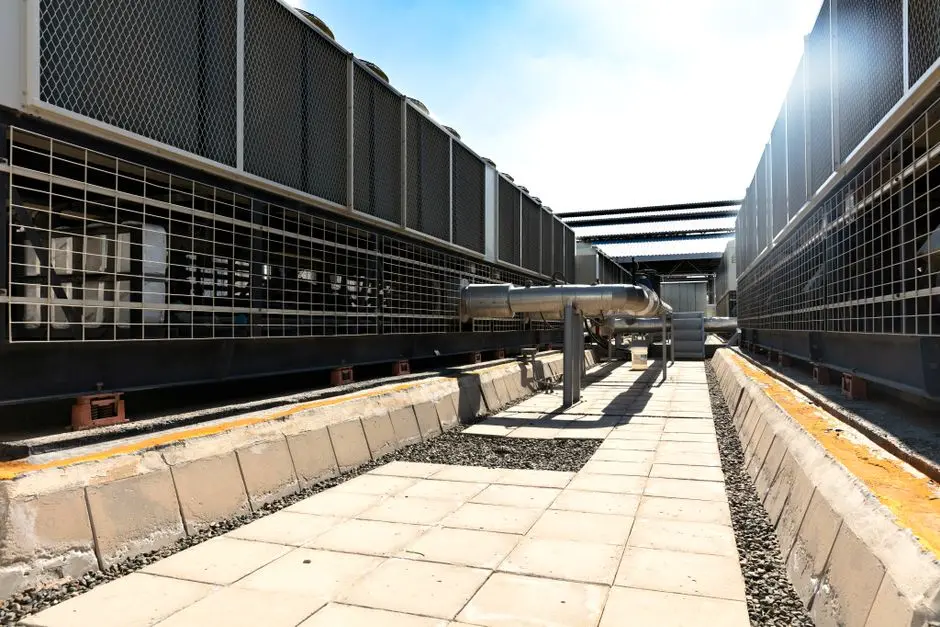
An Ipoh design should specify parallel treatment trains: an industrial blowdown train for controlled discharge or reuse, and a separate biological train for sanitary sewage. HydropureWater's 2026 Kuala Lumpur benchmark gives the industrial sequence as pretreatment, lime/soda or weak-acid-cation softening, side-stream RO, and polishing or disinfection. Final selection must follow Ipoh chemistry, recovery targets, discharge conditions, and utility acceptance.
- Equalization and screening: balance variable blowdown flow and remove debris before chemical dosing or solids separation.
- Chemical conditioning and pH control: prepare the water for the selected clarification and membrane process.
- DAF or engineered alternative: remove suspended material before pressure-driven filtration.
- Multimedia filtration or UF: provide RO feed with controlled turbidity and colloids.
- Softening: reduce hardness before RO while controlling the resulting precipitate and sludge.
- Side-stream RO: separate dissolved salts and produce candidate reuse water.
- Final disinfection and storage: protect the reuse-water system and apply the required residual at the agreed application points.
A multi-media filter is suited to suspended-solids, turbidity, and colloid removal before RO. UF is an alternative pretreatment option for bacteria, colloids, and suspended solids where the selected design requires a 0.03-micron barrier and can accept feed turbidity of up to 300 ppm. That equipment condition is not an Ipoh influent guarantee; pretreatment selection should follow the measured analysis and vendor guarantee.
The core dissolved-salts separation step is an industrial RO system for cooling-tower blowdown reuse. HydropureWater's 2026 Kuala Lumpur benchmark reports 65–85% recovery for blowdown duty. The Ipoh procurement should state whether the guarantee applies to permeate flow, feed flow, or overall recovered blowdown, and whether concentrate volume is included.
Route sanitary sewage to a separate biological package system. HydropureWater's 2026 Kuala Lumpur benchmark describes MBR or underground WSZ treatment for flows from 10–500 m³/day and explains why blowdown should not enter that biological train. If the Ipoh sanitary duty falls outside that benchmark, the supplier must size from the local flow and load data.
Include a segregated chlorine dioxide generator where the reuse or discharge design requires it. Establish the application point, residual target, contact arrangement, and control logic during pilot testing and permit review. The DAF machine and industrial water softener for RO pretreatment should be selected only after confirming local chemistry and residue-handling requirements.
| Train | Procurement scope | Required design file |
|---|---|---|
| Industrial blowdown | Equalization, screening, DAF or alternative, filtration, softening, RO, disinfection, storage | Feed chemistry, recovery definition, concentrate and sludge destinations |
| Sanitary sewage | Separate biological package treatment | Hydraulic flow, organic and nutrient loads, sewer conditions |
| Construction flushing | Sampling, treatment and disposal provision | Written Ipoh utility acceptance route |
| Common resilience | Excursion storage, segregated bypasses, standby power, alarm and diversion logic | Failure modes and approved destination for each stream |
Should the treated stream be discharged or reused?
A discharge-only route can be simpler, but it remains acceptable only after the current DOE permit and receiving utility confirm the receiving route and operating envelope. A reuse route adds softening, RO, disinfection, storage, and blending controls, reducing freshwater demand and discharge volume while increasing dependence on permeate quality and continuity of operations.
Malaysia's Environmental Quality (Industrial Effluent) Regulations 2009 establish the regulatory baseline cited by HydropureWater in 2026. Standard A for inland-water discharge specifies pH 5.5–9.0, TSS no greater than 100 mg/L, temperature no greater than 40°C, and residual chlorine no greater than 1 mg/L. Standard B for sewer discharge tightens TSS to no greater than 50 mg/L. These values are not substitutes for a current Ipoh permit or written sewer-acceptance conditions.
Where corresponding inhibitors are used, the supplied Malaysian benchmark gives conditional heavy-metal limits: zinc at 1.0 mg/L for Standard A and 2.0 mg/L for Standard B; copper at 0.2 and 1.0 mg/L; and chromium at 0.05 and 0.5 mg/L. Confirm the applicable discharge category and parameter schedule before using these values in an equipment guarantee.
| Decision | Treatment scope | Principal acceptance condition |
|---|---|---|
| Controlled discharge | Equalization, solids removal, pH control, dechlorination and required metal control | Current permit, receiving utility acceptance and specified analytical limits |
| Cooling-water reuse | Discharge-route pretreatment plus softening, RO, disinfection, storage and blending | Cooling chemistry, corrosion, biological-control and make-up acceptance tests |
| Hybrid route | Reuse as the operating objective, with segregated disposal contingency | Approved contingency destination and a tested off-spec-water procedure |
Reuse is the preferred long-term strategy when it reduces freshwater demand and discharge volume, but it must satisfy the cooling system's chemistry, corrosion, biological-control, and blending requirements. BDC states in its 2026 Johor announcement that its on-site plant converts effluent into high-grade water suitable for cooling its data centres. This establishes a Malaysian reuse precedent, not an assured Ipoh outcome.
Retain a permitted disposal contingency for RO downtime, slug loads, or off-spec reuse water. Do not specify that contingency as a valid discharge route until the local permit and receiving utility approve it.
How should an Ipoh project size the system and verify performance?
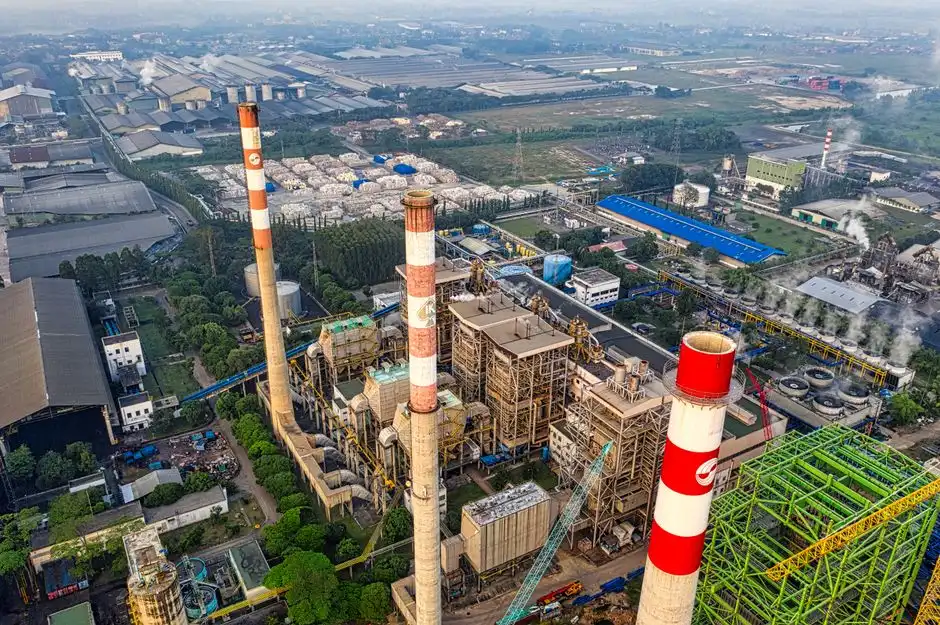
The Ipoh system should be sized from measured site flows and chemistry, not from a copied Kuala Lumpur worked example. Obtain a 12-month source-water and cooling-water chemistry dataset before finalizing the RO, softening, DAF, filtration, or disinfection equipment. The dataset should include seasonal variability, makeup-water quality, cooling programme changes, and any anticipated changes in operating load.
HydropureWater's 2026 Kuala Lumpur article gives roughly 300 m³/day of blowdown for a 20 MW site at PUE 1.4 only as an external benchmark. It also describes a 65% reuse scenario that reduced freshwater makeup by about 190 m³/day. Neither value should be adopted for Ipoh without a site water balance and mass balance.
Specify online monitoring for flow, conductivity, pH, and ORP on the blowdown header. Support it with laboratory analysis for silica, hardness, sulfate, chloride, metals, inhibitors, and residual oxidant. The automatic chemical dosing system should control pretreatment and conditioning from measured water conditions rather than fixed assumptions.
Include membrane cleaning, cartridge or filter replacement, chemical storage, waste-residue handling, standby power, bypass isolation, and operator access in the equipment specification. The digital wastewater KPI monitoring architecture can support operating reviews, but the control philosophy must identify interlocks and the response to each excursion.
For higher-recovery concepts, request a chemistry-based pilot or vendor guarantee. IDE reports approximately 95% recovery and approximately 1 mg/L permeate silica in a specific industrial brine-desalter application in 2026. That result is not a guaranteed outcome for an untested Ipoh CTBD stream.
| Procurement stage | Required deliverable | Acceptance evidence |
|---|---|---|
| Concept design | Ipoh water balance, stream segregation and treatment envelopes | Measured flows and chemistry with stated assumptions |
| Detailed design | Equipment sizing, mass balance, control narratives and waste routes | Vendor guarantees and current permit basis |
| Pilot or validation | Representative feed testing and recovery demonstration | Measured permeate quality, fouling rate and cleaning response |
| Commissioning | Separate acceptance tests for regulated streams and reuse water | Laboratory results, utility acceptance and written disposal authorization |
Make commissioning contingent on analysis of each regulated stream, reuse-water acceptance testing, and written confirmation of sewer or receiving-water acceptance conditions.
What should a buyer request from wastewater treatment suppliers?
A buyer should request one integrated process guarantee for each wastewater stream, supported by site-specific hydraulic and chemical evidence. The supplier brief should require a guaranteed flow and influent/outlet envelope tied to the Ipoh chemistry dataset. Every assumed duty, recovery definition, bypass condition, and utility requirement should be identified rather than left in general performance language.
Require separate treatment scopes and hydraulic interfaces for industrial blowdown and sanitary sewage. The mass balance must cover recovery, concentrate, sludge or precipitate handling, off-spec water, bypasses, storage, utilities, operator attendance, and preventive maintenance.
Ask each supplier to identify which Malaysia DOE requirements, site-specific permit conditions, and sewer-acceptance conditions are included in its compliance basis. Require references or operating evidence for comparable cooling-blowdown duty, but treat the Johor, Kuala Lumpur, and IDE examples as benchmarks rather than automatic guarantees.
The industrial water treatment systems buyer guide provides a useful framework for comparing equipment scope. For Ipoh, the decisive check is whether the supplier can demonstrate a complete, failure-managed treatment train using measured site data rather than transplanted regional assumptions.
Frequently Asked Questions
What wastewater and cooling blowdown treatment does a data center in Ipoh, Malaysia need?
It needs three separately managed streams: industrial cooling-tower blowdown, sanitary sewage, and construction fill-and-flush wastewater. Blowdown generally requires solids removal, softening, RO, and disinfection when the water is reused; sanitary sewage requires a separate biological system; construction flushing needs testing and written utility acceptance before discharge.
What is the best cooling-tower water reuse strategy for an Ipoh data center?
The preferred long-term strategy is to reuse treated blowdown as cooling makeup because it can reduce freshwater demand and discharge volume. The route still depends on Ipoh source-water chemistry, scaling control, permeate quality, cooling acceptance criteria, and a tested off-spec-water contingency. BDC's 2026 Johor plant shows that treated effluent can be used for data-centre cooling, but it does not establish Ipoh recovery or performance.
How much does wastewater and cooling blowdown treatment cost for an Ipoh data center?
The supplied research does not provide an Ipoh equipment price. Request a quotation based on measured flow and chemistry that separately prices pretreatment, softening, RO, disinfection, controls, sludge and concentrate handling, storage, standby power, commissioning, and contingency equipment. Also require the quotation to state what flow, recovery, effluent quality, utility consumption, and operating attendance the price covers.
How should an Ipoh project select and size a wastewater treatment supplier?
Select against a documented treatment envelope: comparable cooling-blowdown references, a defined recovery calculation, membrane-fouling assumptions, concentrate and sludge handling, local commissioning support, and permit-basis documentation. Size from the site blowdown flow and chemistry dataset rather than the Kuala Lumpur benchmark. For compliance risk, treat the Environmental Quality (Industrial Effluent) Regulations 2009 as the baseline while obtaining the current Ipoh DOE permit and written sewer-acceptance requirements.